
UPSC Key: Poompuhar, Integrity in Public Servants and Disaster Management
Why underwater archaeology is relevant to the UPSC exam? What is the significance of topics such as wildlife crime, India-Canada relations and India-Poland relations on both the preliminary and main exams? You can learn more by reading the Indian Express UPSC Key for September 28, 2026.
 UPSC Key August 2026: Here's what you should be reading from the September 28, 2026 edition of The Indian Express.
Important topics and their relevance in UPSC CSE exam for September 28, 2026. If you missed the September 27, 2026 UPSC CSE exam key from the Indian Express, read it here
Front Page

Elephant smuggled from Nepal, trail points to NGO in leopard poaching probe
Syllabus:
Preliminary Examination: General issues on Environmental ecology, Bio-diversity and Climate Change – that do not require subject specialization.
Main Examination: General Studies III: Conservation, environmental pollution and degradation, environmental impact assessment.
What’s the ongoing story: First, it was alleged leopard poaching. Now, it is the alleged purchase of an elephant from Nepal.
Key Points to Ponder:
• What constitutes wildlife crime?
• What are the major forms of illegal wildlife trade prevalent in India?
• What are the ecological and economic significance of elephants and leopards in wildlife conservation framework?
• What is the Wildlife Protection Act, 1972?
• What is the Wildlife Crime Control Bureau (WCCB)?
• What is CITES?
• How international cooperation under CITES can help combat the illegal trade in wildlife and wildlife products?
Key Takeaways:
• The NGO Wildlife SOS, whose two functionaries are in the custody of Madhya Pradesh’s Forest department in a leopard poaching case with its CEO Kartick Satyanarayan due to join the probe, is also allegedly linked to a case of live elephant trade from four years ago, Wildlife Crime Control Bureau (WCCB) records show.
• In March 2022, the WCCB arrested three men with 30 kg of ivory in Jaipur. One of the accused told investigators that a “Mathura resident Suraj Pal”, who is “associated with an Agra NGO”, had bought a female elephant smuggled from Nepal, it is learnt. The mobile phone of another accused contained chats with a contact saved as “SOS.Baigo.Agra” — the chats referred to “Suraj Pal’s elephant”, and the contact wrote he had kept “Kartick sir” informed, records show.
• What’s missing in the WCCB records is this: the number tagged as “SOS.Baigo.Agra” belongs to Baiju Raj, director of conservation at Wildlife SOS, which operates bear and elephant rescue facilities in Agra and Mathura, where Suraj Pal has worked as an elephant keeper since 2011, The Indian Express has found.
Do You Know:
• Wildlife crime refers to the illegal harvesting, poaching, smuggling, capture, or trading of protected wild animals, plants, and their derivatives representing a multi-billion-dollar transnational illicit market.
• The Wild Life (Protection) Act, 1972 is a landmark piece of legislation enacted by the Parliament of India to ensure the ecological and environmental security of the country. Enacted on September 9, 1972, it provides a robust legal framework for protecting wild animal and plant species, managing their natural habitats, and regulating trade in wildlife and derivative products. Prior to this act, India had only five designated national parks.
• The Wildlife Crime Control Bureau (WCCB) is a statutory multi-disciplinary body established by the Government of India under the Ministry of Environment, Forest and Climate Change to combat organized wildlife crime across the country.
• CITES (the Convention on International Trade in Endangered Species of Wild Fauna and Flora) is an international agreement between governments drafted in 1973 and entered into force on July 1, 1975, aimed at ensuring that international trade in wild animals and plants does not threaten their survival.
Other Important Articles Covering the same topic:
📍World Wildlife Day 2023: Why this day and the underlying CITES agreement are significant
Previous year UPSC Prelims Question Covering similar theme:
1) With reference to Indian laws about wildlife protection, consider the following statements: (UPSC, CSE, 2022)
1. Wild animals are the sole property of the government.
2. When a wild animal is declared protected, such animal is entitled for equal protection whether it is found in protected areas or outside.
3. Apprehension of a protected wild animal becoming a danger to human life is sufficient ground for its capture or killing.
Which of the statements given above is/are correct?
(a) 1 and 2
(b) 2 only
(c) 1 and 3
(d) 3 only
2) With reference to Indian elephants, consider the following statements: (UPSC, CSE, 2020)
1. The leader of an elephant group is a female.
2. The maximum gestation period can be 22 months.
3. An elephant can normally go on calving till the age of 40 years only.
4. Among the States in India, the highest elephant population is in Kerala.
Which of the statements given above is/are correct?
(a) 1 and 2 only
(b) 2 and 4 only
(c) 3 only
(d) 1, 3 and 4 only
Previous year UPSC Mains Question Covering similar theme:
📍Discuss the aim and goals of Kunming-Montreal global biodiversity framework. Mention India’s commitments and initiatives to achieve the goals and targets of this framework giving suitable examples. (UPSC, GS3, 2026)
📍How does biodiversity vary in India? How is the Biological Diversity Act, 2002 helpful in conservation of flora and fauna? (UPSC, GS3, 2018)
Trade in focus, India, Canada push to up ties
Syllabus:
Preliminary Examination: Current events of national and international importance.
Mains Examination: General Studies II: Bilateral, regional and global groupings and agreements involving India and/or affecting India’s interests.
What’s the ongoing story: Signalling further moves to improve ties between New Delhi and Ottawa, Canada’s Foreign Minister Anita Anand underlined attempts to build “renewed partnerships” with large economies like India and China, while External Affairs Minister S Jaishankar said the two sides are preparing to take their relationship “to a higher level”.
Key Points to Ponder:
• What is the historical background of India-Canada relations?
• What is the current issue between India and Canada?
• Know the significance of India-Canada relations in India’s contemporary foreign policy.
• What is a Comprehensive Economic Partnership Agreement (CEPA)?
• What are the major areas of economic cooperation between India and Canada?
• Know the importance of Canada’s natural resources and critical minerals for India’s energy transition and industrial development.
• Know the role of the Indian diaspora in Canada in strengthening economic, social and cultural relations between the two countries.
• How can an India-Canada CEPA contribute to diversification of India’s export markets and integration into global value chains?
• What are the opportunities and challenges for India in expanding trade with Canada?
• How can India and Canada use education, talent mobility and AI to deepen their economic relationship beyond merchandise trade?
Key Takeaways:
• This comes ahead of a proposed visit by Prime Minister Narendra Modi to Canada in December this year, when the two sides are aiming to finalise and sign the Comprehensive Economic Partnership Agreement (CEPA).
• Jaishankar met Anand on the sidelines of the United Nations General Assembly (UNGA) on Saturday. “Always a pleasure to meet FM @AnitaAnandMP of Canada… A productive discussion as we prepare to take the relationship to a higher level,” he said in a post on X, as he shared a short video clip of their meeting.
• Meanwhile, in her address at the high-level UNGA General Debate on Saturday, Anand said that in the economic realm, Canada is focused on what it can control: diversifying its trade and catalysing a trillion dollars of investment in the country over the next five years.
• She said for this, Ottawa is exploring new opportunities with partners in the Indo-Pacific, the Gulf region and Latin America. “This includes building renewed partnerships with large economies like India and China,” she said.
• Anand also highlighted efforts with India and other nations to strengthen multilateralism and boost UN reforms. Earlier this week, India co-sponsored an inaugural multilateralism summit at the UN headquarters, with Australia, Barbados, Brazil, Canada and Kenya. While New Delhi and Ottawa have hit a major reset in ties ever since Canadian Prime Minister Mike Carney took over in March 2025, both sides are also aiming at strategic autonomy and trade diversification in the wake of trade and tariff pressures from Washington.
• Earlier this week, Carney said at the UN that Modi was expected to visit Canada around December this year. “We are making good progress in our trade negotiations with India. It is an exceptionally important relationship on many levels, people-to-people levels, security levels, and also trade and economic,” he said at a press conference Tuesday on the sidelines of the UNGA.
• India and Canada had committed at the G20 last year to “look to conclude negotiations by the G20 this year”, he said, while responding to questions on when Modi would visit Canada and how close Ottawa was to concluding a free trade agreement with India.
• Ties between the two countries had nosedived in 2023, during the tenure of former prime minister Justin Trudeau, after he said that Canadian security agencies were pursuing allegations of a potential link between agents of the Indian government and the killing of Canadian citizen Hardeep Singh Nijjar in British Columbia — a claim rejected by India.
The diplomatic row led to reciprocal expulsions of diplomats and a reduction in diplomatic personnel.
• In July this year, the Royal Canadian Mounted Police — as part of a larger investigation into transnational organised crime — said it had found no evidence linking Indian government officials to Nijjar’s killing.
Do You Know:
• In June last year, Carney and Modi agreed to take calibrated steps to restore stability, followed by the return of high commissioners and a series of high-level engagements. Modi visited Canada for the G7 Summit last year. If he travels to Canada in December, it will be his first bilateral visit to the country after 2015.
• Carney made a bilateral visit to India from February 27 to March 2 this year — the first visit by a Canadian Prime Minister to the country since 2018.
• The two sides have been in touch at various levels — including several rounds of discussions and meetings between Commerce Minister Piyush Goyal and Canadian Minister of International Trade Maninder Sidhu. Goyal said earlier that the two sides have agreed to fast-track negotiations for a comprehensive economic partnership, with the next round of talks scheduled to begin on October 5.
• The agreement is engineered to expand bilateral trade to $50 billion by 2030. Additionally, Canadian pension funds remain among the largest global institutional investors in Indian infrastructure, transport networks and commercial real estate.
• To counter global supply chain dependencies and secure resources for next-generation technology, both countries launched a new bilateral strategy based on four core pillars: nuclear energy, critical minerals, clean energy and allied sectors.
• Canada hosts one of the largest Indian diasporas in the world, numbering 16 lakh people of Indian origin, accounting for more than 3 percent of the total Canadian population and 700,000 NRIs. India became the top source of foreign students studying in Canada — 2.3 lakh, according to 2022 data. India’s total trade with Canada (goods and services) in 2021-22 was US $11.68 billion, much below potential, but when it comes to India’s import of pulses, almost 30% of the total import comes from Canada.
• Canadian pension funds have cumulatively invested around US $55 billion in India. Cumulative FDI from Canada since 2000 is about US$4.07 billion. All these have continued despite speed bumps like the recent pause in trade talks — and despite challenges over the Khalistan issue.
Other Important Articles Covering the same topic:
📍India-Canada chill deepens: Flurry of diplomat exits, trading of charges
Previous year UPSC Mains Question Covering similar theme:
📍‘Indian diaspora has a decisive role to play in the politics and economy of America and European Countries’. Comment with examples. (UPSC GS2, 2020)
Politics
Polish PM Donald Tusk likely to visit in October; economic, strategic ties on table
Syllabus:
Preliminary Examination: Current events of national and international importance.
Mains Examination: General Studies II: Bilateral, regional and global groupings and agreements involving India and/or affecting India’s interests.
What’s the ongoing story: Poland’s Prime Minister Donald Tusk is likely to visit India from October 21 to 24, sources have told The Indian Express. Tusk, who has served as the Prime Minister of Poland since 2023 and has held the office from 2007 to 2014, last paid a state visit to India in September 2010 during then Prime Minister Dr Manmohan Singh’s tenure.
Key Points to Ponder:
• Know the historical evolution of India-Poland relations.
• What is meant by a Strategic Partnership in international relations?
• What are the major areas of cooperation between India and Poland?
• Map Work-Poland
• Why is Poland increasingly significant for India’s engagement with Europe?
• Know the importance of Poland’s geographical location in Central Europe for India’s economic and strategic
interests.
• What is the significance of port infrastructure, shipbuilding and marine technology for India’s economic and strategic interests?
Key Takeaways:
• With Poland having emerged as one of the growing and significant economies of Europe and geopolitically at the forefront of the Russia-Ukraine war, Tusk’s visit is aimed at bolstering economic, political and strategic ties with India.
• Tusk was the President of the European Council from 2014 to 2019 and led the European People’s Party from 2019 to 2022. He has been one of the early proponents of the India-European Union (EU) trade deal, which is expected to be signed by December this year when Prime Minister Narendra Modi is expected to visit Brussels.
• Preparations are underway to schedule the Polish PM’s trip to India next month, including visits to Delhi and Bangalore. This will be a reciprocal visit by Tusk, more than two years after Prime Minister Narendra Modi paid an official visit to Poland on August 21-22, 2024, on the occasion of the 70th anniversary of the establishment of diplomatic relations between India and Poland.
• PM Modi’s Poland visit was considered historic as it came 45 years after former PM Morarji Desai visited the country in 1979. The principal outcome of the visit was the decision to elevate India-Poland bilateral relations to the level of a Strategic Partnership.
• In the last few years, India and Poland have strengthened cooperation in defence and space sectors, and officials in Delhi and Warsaw are working towards concluding a series of outcomes in these strategic sectors during the Polish PM’s visit.
• The Indian and Polish officials are also looking at cooperation and collaboration in developing port infrastructure, shipbuilding and marine technology — and this is the connective tissue for a range of services, which can be of dual use, meant for both military and civilian use, sources said.
Do You Know:
• According to MEA website, India & Poland share a long-standing friendly relationship, marked by high level political contacts and vibrant economic engagement. Diplomatic relations were established in 1954, leading to the opening of the Indian Embassy in Warsaw in 1957. The two countries shared common ideological perceptions, based on their opposition to colonialism, imperialism and racism. During the Communist era, bilateral relations were close and cordial, with regular high level visits (several VVIP visits from India – beginning with Pandit Jawaharlal Nehru in 1955 – and four from Poland), coupled with planned trade and economic interactions by state trading organizations, underpinned by the rupee clearing arrangements.
• According to MEA website, The relationship continued to remain close after Poland chose the democratic path in 1989. India and Poland transitioned to hard currency trading arrangements that were sustained by rising levels of trade as both economies grew in size and heft. A cordial political relationship has emerged in the current century, particularly after Poland joined the EU in 2004, and became India’s key economic partner in Central Europe.
• According to MEA website, Poland continues to be India’s largest trading & investment partner in Central & Eastern Europe. Over the period 2010-2020, the total bilateral trade with Poland has witnessed an increase of 107.9% i.e. from US$ 1.32billion in 2010 to US$ 2.73billion in 2020. The balance of trade continues to be largely in favour of India in 2023 as well.
• According to MEA website, A monument, commemorating Jam Saheb Digvijaysinhji Ranjitsinhji Jadeja of Nawanagar, was unveiled in October, 2014 at the Square of the Good Maharaja, Ochota District, Warsaw, Poland. Another plaque commemorating the ValivadeKolhapur camp near the Monte Casino War Memorial was inaugurated in November 2017 in Warsaw. Eight Polish primary and secondary schools are named after Jam Saheb, known as ‘Good Maharaja’ in Poland. The Maharaja had accepted more than 1000 Polish refugees, mainly children, as they escaped the depredations of the Second World War in the 1940’s. The surviving Polish children have formed an Association of Poles, which meets on an annual basis in one of the major Polish cities. In coordination and with the support of ICCR, the Embassy organized a commemorative event entitled ”Remembering the Good Maharajas” (Upamiętnienie Dobrych Maharadźów), was organized in the Old Orangery of the iconic Royal Lazienki park on July 5, 2022.
Other Important Articles Covering the same topic:
Previous year UPSC Prelims Question Covering similar theme:
3) Which of the following countries are members of the European Union? (UPSC, CSE, 2026)
1. Belarus
2. Poland
3. Germany
4. Switzerland
Select the answer using the code given below:
(a) 1, 2 and 4
(b) 1 and 4 only
(c) 2 and 3
(d) 2 and 4 only
Explained
Little to show, much for India to watch
Syllabus:
Preliminary Examination: Current events of national and international importance.
Main Examination: General Studies II: Effect of policies and politics of developed and developing countries on India’s interests.
What’s the ongoing story: It was back in 1962 that US President John F Kennedy had gone to the airport to greet British Prime Minister Harold Macmillan.
Key Points to Ponder:
• Why are US-China economic relations significant for the global economy?
• What is a trade truce?
• Why has Artificial Intelligence emerged as an important area of strategic competition between the United States and China?
• How can China’s dominance in rare-earth mining and processing provide geopolitical leverage?
• What are the opportunities and challenges for India arising from the China+1 strategy of multinational corporations?
• How prolonged US-China trade tensions can affect India’s exports, imports, investment and supply chains.
• What is the Thucydides Trap?
• Know the terms—hegemony, balance of power and multipolarity
• How is the present international system different from the Cold War bipolar order?
Key Takeaways:
• For nearly 65 years since then, no sitting American president welcomed a foreign leader at the airport — until Donald Trump chose to do so for Chinese leader Xi Jinping on September 23, with a military flyover to boot.
• The outcome of the summit, however, was remarkably underwhelming. The two sides agreed to a measly two-month extension to their trade truce, which was due to end this November — alongside a new agreement for China to provide two giant pandas to the Atlanta zoo.
• The big area that was widely expected to be taken up, but was subsequently jettisoned off the agenda, was artificial intelligence (AI) safety.
• For now, two things are clear from the summit: One, it has done little to assuage concerns on AI; and two, the trade relief for China (albeit only for two months) leaves India facing the prospect of tariffs for buying Russian crude oil. It was always unlikely that Trump and Xi would come to an agreement on enhancing the monitoring of large language models and possibly place curbs on the pace of AI progress. Remember, the meeting came after a series of incidents in which AI ‘agents’ (systems that work autonomously) went “rogue”.
• Surveys show that most Americans are scared of AI and they think the technology is going to adversely affect them while most Chinese favour the use of AI and think that this technology will help them move up in life. Apart from AI, there were two other key issues: Taiwan and trade tariffs.
• The US has paused the sale of a record $14-billion dollar arms sale to Taiwan amid Chinese pressure. It is unclear whether that deal will be revived.
• According to Derek J Grossman, Founder and Chief Analyst, Indo-Pacific Solutions, the trust deficit between the two sides is too wide to be bridged by the unusual pomp and show at Xi’s arrival in Washington.
• Just days before the bilateral summit, on September 18, Trump had signed into law a Bill that allows 100% tariffs on top buyers of Russian energy — primarily China and India.
Do You Know:
• Beijing says it has agreed with Washington to launch a new AI dialogue, with further talks scheduled for the end of November.
As both countries race to develop advanced artificial intelligence, the move suggests they see a need for some guardrails around a technology that is increasingly being used in everything from business to military planning.
They have also agreed to establish a communication channel for AI-related incidents, aimed at preventing misunderstandings or unexpected developments from turning into a broader confrontation.
• Chinese state media confirmed for the first time on Monday that the trade truce has been extended until 10 January. The short extension ensures both leaders will meet again at major international gatherings later this year. Trump will attend the Asia Pacific Economic Cooperation summit in Shenzhen in November while Xi is due to travel to Miami for the G20 summit in December.
Other Important Articles Covering the same topic:
📍Reading Sino-US signals: ‘Strategic competition’ vs ‘strategic stability’
📍Living between two hegemons, Delhi must avoid Thucydides Trap
Previous year UPSC Mains Question Covering similar theme:
📍China’s Belt and Road Initiative (BRI) has transformed South Asia from a regional space into a theatre of great power competition.” Analyse the strategic implications of the BRI for India’s security and regional influence in South Asia. (UPSC, GS2, 2026)
📍‘The West is fostering India as an alternative to reduce dependence on China’s supply chain and strategically to counter China’s political and economic dominance.’ Explain this statement with examples. (UPSC, GS2, 2024)
From Nepal to India, how AI is aiding disaster management
Syllabus:
Preliminary Examination: Current events of national and international importance.
Main Examination: General Studies III: Disaster and disaster management.
What’s the ongoing story: During the recent Nepal disaster, an artificial intelligence-powered web portal, which could match crowdsourced data on missing persons with official lists of the dead and injured, came into widespread use. The simple tool developed by Niraj Bhushal, an IT engineer in Nepal’s Finance Ministry, also did the important work of mapping damaged buildings and structures using open-source satellite imagery, according to Nepali news outlets.
Key Points to Ponder:
• What is meant by disaster management?
• What are the major stages of the disaster-management cycle?
• How can AI contribute to disaster preparedness and management?
• Know these terms-hazard, vulnerability, disaster risk and disaster
• What is the significance of Early Warning Systems (EWS) in reducing disaster-related mortality and economic losses?
• What are the major applications of satellite imagery, drones and geospatial technologies in disaster management?
Key Takeaways:
• Similarly, private drone operator Manish Maharjan flew drones equipped with thermal cameras that could detect human-shaped thermal signatures in the debris and guide rescue teams to where people might have been trapped. Though these efforts were small compared to the scale of the calamity, they illustrate the growing utility of new technology, particularly AI-enabled tools, in disaster management.
• Disaster preparedness and management are no longer confined to designated authorities. Companies like Google, national and local telecom providers, satellite companies, and others have now become an integral part of disaster management. Smartphones, and increasingly, drones, act as force multipliers, producing large amounts of data.
Do You Know:
• One of the most effective uses of AI has been in generating timely forecasts and early warnings. In general, weather forecasting is an inexact science. Forecasters routinely run hundreds of physics equations to arrive at local, regional and national weather forecasts. The more local or time-constrained a forecast, the greater the uncertainty.
• For instance, Google’s Flood Hub, a research initiative, takes data from leading weather agencies worldwide and uses a prediction model. This was first used during floods in India in 2018 to forecast flooding events, including localised urban floods. It can generate advisories up to seven days earlier and even predicted recent floods in Thailand, Japan and parts of India. But the forecast has to be combined with hazard maps that show risks of a particular type of event to make a risk assessment. This is where AI shines. It can process multiple datasets from different agencies, combine text, complex graphs and imagery to provide an overall threat assessment, based on which an early warning can be issued
Other Important Articles Covering the same topic:
📍AI can be used to map hazards during disasters like Nepal floods: Kamal Bawa, Founder, ATREE
Previous year UPSC Mains Question Covering similar theme:
📍Discuss the recent measures initiated in disaster management by the Government of India departing from the earlier reactive approach. (UPSC, GS3, 2020)
Tamil links to West Asia: What underwater excavations in Chola capital reveal
Syllabus:
Preliminary Examination: History of India
Main Examination: General Studies I: Indian culture will cover the salient aspects of Art Forms, literature and Architecture from ancient to modern times.
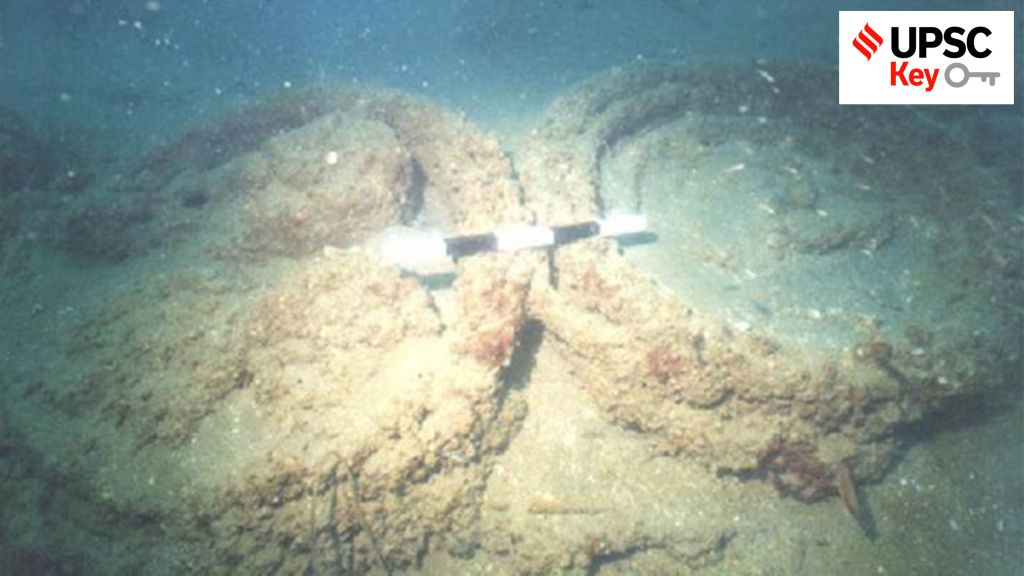
What’s the ongoing story: Fresh underwater excavations off Poompuhar, the ancient Chola port city in Tamil Nadu, have yielded new evidence of the settlement’s maritime connections. The 18-day exploration, conducted by the Tamil Nadu State Department of Archaeology (TNSDA) in collaboration with the Indian Maritime University, recovered a fragment of a West Asian “torpedo jar”, four terracotta ring wells, and more than 250 ceramic fragments, among other finds.
Key Points to Ponder:
• Know the significance of Poompuhar (Kaveripoompattinam) in the history of ancient South India.
• What was the nature of maritime trade during the Sangam period?
• How Sangam literature helps reconstruct the political, economic and social life of ancient Tamilakam?
• What is underwater archaeology?
• What do archaeological discoveries such as ceramic vessels, ring wells and other artefacts reveal about the nature of ancient urban settlements?
• What is the significance of the discovery of a West Asian torpedo jar at Poompuhar for understanding India’s ancient maritime connections with West Asia and the Mediterranean?
• How did geographical location, navigable rivers and coastal access contribute to the emergence of port cities such as Poompuhar in South India?
• How the role of ports in ancient India facilitating not only the movement of commodities but also cultural and technological exchanges?
Key Takeaways:
• Poompuhar, located in present-day Mayiladuthurai district, features prominently in Sangam and post-Sangam literature. Archaeological investigations over the decades have uncovered evidence of its links with wider Indian Ocean trade, while much of the ancient settlement is believed to now lie beneath the sea.
• In In Search of Lost Cities (2025), Sreelata Menon wrote, “Ships from Rome, Egypt, China and Arabia docked and undocked around the clock at the harbour… Cargo of all kinds, including horses, was loaded, unloaded, checked and stamped with the Chola customs seal – a tiger symbol.”
Do You Know:
• Located at the mouth of the 800-km-long Cauvery river, where it empties into the Bay of Bengal, Poompuhar — also known as Kaveripoompattinam — is believed to have been the capital of the early Cholas. In a 2011 archaeology report, R. Poonkundran, K. Sridharan and others write: “This city seems to have been in existence from 5th-4th century BCE as the carbon date of a log of wood recovered from Poompuhar clearly shows.”
• Poompuhar is said to have been divided into three major divisions: Maruvurppakkam, Pattinappakkam, and Nalangadi. Maruvurppakkam was situated along the seashore, Pattinappakkam to the west, while Nalangadi lay between the two.
• The port is described as having been very busy and crowded during the Chola period. Merchandise exported from the city was stamped with a tiger symbol, indicating that it came from Chola country. Merchants from across India and Southeast Asia thronged the city, seeking a market for their commodities. “Articles from Ganges region, food products from Ceylon and spices from Java were imported,” note Poonkundran and Sridharan.
• The recent findings offer further evidence of this. Among the significant discoveries is a fragment of a fine-ceramic West Asian “torpedo jar”, with an estimated total diameter of 30 cm to 35 cm. Historically used to transport liquid cargo such as wine and olive oil across oceanic trade routes, the vessel is proof of Poompuhar’s maritime links with West Asia and the Mediterranean world.
Other Important Articles Covering the same topic:
📍Revisiting Chola grandeur with eyes wide open
Previous year UPSC Prelims Question Covering similar theme:
4) Which of the following pairs of the king and his dynasty in early historical Tamilakam is/are not correctly matched? (UPSC, CSE, 2026)
1. Senguttuvan : Chera
2. Udiyanjeral : Chola
3. Nedunjeliyan : Pandya
Select the answer using the code given below:
(a) 1 and 2
(b) 2 only
(c) 1 and 3
(d) 3 only
5) With reference to ancient South India, Korkai, Poompuhar and Muchiri were well known as (UPSC, CSE, 2024)
(a) capital cities
(b) ports
(c) centres of iron-and-steel making
(d) shrines of Jain Tirthankaras
Previous year UPSC Mains Question Covering similar theme:
📍Though the great Cholas are no more yet their name is still remembered with great pride because of their highest achievements in the domain of art and architecture. Comment. (UPSC, GS1, 2024)
📍Chola architecture represents a high watermark in the evolution of temple architecture. Discuss. (UPSC, GS1, 2013)
The Editorial Page
Public servants must act in favour of the weak, and in fear of their conscience
Syllabus:
Preliminary Examination: Indian Polity and Governance
Main Examination: General Studies IV: Aptitude and foundational values for Civil Service, integrity, Public/Civil service values and Ethics in Public administration
What’s the ongoing story: Ashok Lavasa Writes- Shakespeare’s Hamlet says, “conscience doth make cowards of us all”. What is conscience? How does it make us “cowards”? Hamlet’s outburst is his anger at himself for repeatedly putting off what he needs to do. In real life, things are difficult, confusing and contradictory, as is apparent in the current controversy around the Election Commission of India (ECI), where two Election Commissioners decided to record their “objections” against the ECI’s decisions.
Key Points to Ponder:
• What is conscience?
• Why conscience is significant in ethical decision-making by a public servant?
• What is meant by integrity in public servant?
• What is the ethical significance of the principle “without fear or favour, affection or ill-will” in public
service?
• What is public interest?
• Why public interest is the primary consideration in administrative decision-making?
• How you differentiate between legality and morality?
• Can an action be legally valid yet ethically questionable?
• Why is moral courage essential for public servants?
• How can an officer develop the courage to disagree with a superior?
• Establish the relationship between conscience, constitutional morality and public interest in administrative decision-making.
• “Dissent, when reasoned and institutionally expressed, can strengthen rather than weaken public institutions”-What is your opinion?
Key Takeaways:
Ashok Lavasa Writes-
• Many of us face these dilemmas but are not bound by an oath; public servants are. Whether selected through examination or elected through a popular mandate, those in public office are bound by an oath of “allegiance to the Constitution of India” to “conscientiously discharge my duties…without fear or favour, affection or ill-will”. They also are bound by an oath of secrecy to “not directly or indirectly communicate or reveal to any person or persons any matter… except as may be required for the due discharge of my duties.” High-sounding words that carry only as much weight as individuals are inclined to feel or bear.
• What happens if public servants find themselves in situations where the oath of secrecy and the allegiance to the Constitution are in conflict? Are they guided by their conscience? We have the case of Clive Ponting, the Ministry of Defence official in England, who found the minister in charge had misinformed parliament about the reasons for the sinking of the Argentine cruiser General Belgrano by British torpedoes during the Falklands War.
• Ponting leaked the official documents to an Opposition Labour MP, Tam Dalyell, for which he was dismissed for violating the oath of secrecy and convicted by the trial judge, who ruled that the “interests of the state” were synonymous with the interests of the current government in power. The jury, however, overturned the verdict on February 11, 1985, holding that civil servants have a covenant with the constitution and, in adhering to that, violating the provision of a law was not an offence. By disclosing facts, Ponting was performing his primordial commitment to his oath, the people, and Parliament.
• The call of conscience acts like a beacon when faced with a moral dilemma. Good sense may dictate otherwise and may caution against the risk of swimming against the tide. That makes one timid, a “coward” curbing one’s instinct, guided by the dictum “discretion is the better part of valour”. All those inclined to act according to their conscience must understand that this is a four-step process. Clarity of purpose, conviction that the purpose is right, courage to act, and the capacity to bear the consequences of one’s action. Truth is strong only when it is willing to pay the price of following conscience.
Do You Know:
• The Election Commission derives its powers from Article 324 of the Constitution, which provides for a Commission for the “superintendence, direction and control of the preparation of the electoral rolls for, and the conduct of, all elections to Parliament and to the Legislature of every State and of elections to the offices of President and Vice-President…”
—It further says that the commission will consist of the Chief Election Commissioner (CEC) and “such number of other Election Commissioners” that the President may appoint, subject to provisions of law. The CEC “shall act as the Chairman of the Election Commission”.
—How the Election Commission is supposed to arrive at decisions is laid out in the Chief Election Commissioner and Other Election Commissioners (Appointment, Conditions of Service and Term of Office) Act, 2023. Section 17 of the Act says that the “business of the Election Commission shall be transacted in accordance with the provisions of this Act.”
• “The Election Commission may, by unanimous decision, regulate the procedure for transaction of its business and also allocation of its business amongst the Chief Election Commissioner and other Election Commissioners. All business of the Election Commission shall, as far as possible, be transacted unanimously, and if the Chief Election Commissioner and other Election Commissioners differ in opinion on any matter, such matter shall be decided according to the opinion of the majority,” Section 18 of the Act says.
• Since the Election Commission currently has three members, if the decisions are not unanimous, two of the three members can decide the matter. While the Chief Election Commissioner chairs the poll panel, all three members — the CEC and the two ECs — all have one vote.
• Ever since the Election Commission was permanently expanded from a single-member body to a three-member commission in 1993, differences between the individuals who occupy the posts have emerged. Then Chief Election Commissioner T N Seshan and Election Commissioners M S Gill and G V G Krishnamurthy were known to have clashed. In fact, Seshan had challenged the appointment of the two ECs in the Supreme Court, which upheld the appointment and ruled that the three members would have equal status. The Supreme Court judgment in T.N Seshan vs. Union of India in 1995 made it clear that the three members would have an equal say in decision-making.
• In January 2009, then CEC N Gopalaswami had written to the President seeking the removal of Election Commissioner Navin Chawla, citing a “lack of political neutrality”. With no such action from Rashtrapati Bhavan, Chawla eventually
was appointed CEC.
Other Important Articles Covering the same topic:
📍Chief Election Commissioner is not the Election Commission of India
Previous year UPSC Mains Question Covering similar theme:
📍What do you understand by ‘moral integrity’ and ‘professional efficiency’ in the context of corporate governance in India? Illustrate with suitable examples. (UPSC, GS4, 2023)
📍Is conscience a more reliable guide when compared to laws, rules and regulations in the context of ethical decision-making? Discuss. (UPSC, GS4, 2023)
📍“Max Weber said that it is not wise to apply to public administration the sort of moral and ethical norms we apply to matters of personal conscience. It is important to realize that the state bureaucracy might possess its own independent bureaucratic morality.” Critically analyse this statement. (UPSC, GS4, 2016)
The Ideas Page
Farmers need a share of the solar boom
Syllabus:
Preliminary Examination: Current events of national and international importance
Main Examination: General Studies III: Infrastructure: Energy, Ports, Roads, Airports, Railways etc.
What’s the ongoing story: Ashok Gulati, Subhodeep Basu Writes-The question is no longer whether India can harvest the sun. It is whether India’s farmers can own a meaningful share of that harvest and the PM realise his unfulfilled dream of doubling farmers’ incomes.
Key Points to Ponder:
• India’s renewable energy capacity-know in detail
• Solar power in India-know in detail
• What is the target of solar power in India?
• What is India’s current solar capacity status?
• What is the concept of rooftop solar energy?
• What are the issues and challenges with solar power sector?
• What are the steps and measures taken by GOI to promote Solar power?
• Know about PM Suryaghar Yojana and PM-KUSUM.
• What is agri-photovoltaics (Agri-PV)?
Key Takeaways:
Ashok Gulati, Subhodeep Basu Writes-
• India’s solarising journey is a commendable one. Just before the Narendra Modi government assumed office in 2014, the country had just 2.82 GW of installed solar capacity. By August 2026, this had risen to 168.04 GW, a whopping sixtyfold increase, making India the third-largest player in solar after China and the US. Much of this (74 per cent) is utility-scale, led by big companies like Adani Green Energy, ReNew, NTPC, JSW Energy and Greenko Energy. Tata Power Solar is more into engineering, Procurement, and Construction (EPC). Rooftop solar accounts for roughly 20 per cent, and the remainder (about 6 per cent) consists of off-grid and hybrid projects.
• The utility-scale solar model has enabled rapid, cost-efficient deployment. These are ground-mounted solar parks, largely on degraded land or wasteland provided by the government. The biggest one coming up is the Khavda Solar Park (30 GW) in the Rann of Kutch region of Gujarat.
• Rooftop solar has picked up some momentum under PM Surya Ghar: Muft Bijli Yojana, which aims to bring rooftop solar to 1 crore households. A household installing a 3-kW system gets Rs 78,000 in central subsidy. States such as Uttar Pradesh add another Rs 30,000, taking the total support to Rs 1.08 lakh, against the estimated cost of Rs 1.8 lakh. This amounts to a 60 per cent subsidy. The Delhi government has gone even further and is ready to install free
rooftop solar.
• PM Surya Ghar, by comparison, has an outlay of Rs 75,021 crore. The World Bank has also approved an $820-million loan, including concessional finance and a grant, to support the scheme and mobilise private financing. PM-KUSUM has no equivalent World Bank financing window. It is time for the World Bank to think of solar cooperatives on the lines of the milk cooperatives created under Operation Flood, and help unleash a new rural revolution — call it “PM Surya Khet Kranti”, with solar becoming the farmer’s “third crop”.
Do You Know:
• PM Suryaghar Yojana targets installation of rooftop solar units on one crore households. It offers every beneficiary free electricity up to 300 units every month, and cash subsidy for equipment.
• PM-KUSUM (Pradhan Mantri Kisan Urja Suraksha Evam Utthan Mahabhiyan) is aimed at farmers, helping them set up small solar plants on their unused land, or install grid-connected or standalone solar water pumps for irrigation needs. Farmers can earn additional income by selling solar electricity produced on their land, or save on diesel or power bills on traditional water pumps.
• Together, PM Suryaghar Yojana and PM-KUSUM have resulted in the installation of about 13 GW of decentralised solar power against a target of 40 GW by the end of the current financial year.
• The PM-KUSUM scheme, launched in 2019, was supposed to achieve its targets by 2022, but was extended till the end of this financial year owing to the pandemic disruption.
The most successful component of the programme has been the incentive to farmers to set up standalone, off-grid, solar water pumps. Government figures show that more than 10.9 lakh new solar water pumps have been installed against the target of 14 lakh.
Other Important Articles Covering the same topic:
📍India is rapidly scaling up renewable energy. Now it needs to store it
Previous year UPSC Prelims Question Covering similar theme:
6) Consider the following: (UPSC, CSE, 2024)
1. Battery storage
2. Biomass generators
3. Fuel cells
4. Rooftop solar photovoltaic units
How many of the above are considered “Distributed Energy Resources”?
(a) Only one
(b) Only two
(c) Only three
(d) All four
7) With reference to technologies for solar power production, consider the following statements: (UPSC, CSE, 2014)
1. ‘Photovoltaics’ is a technology that generates electricity by direction conversion of light into electricity, while ‘Solar Thermal’ is a technology that utilizes the Sun’s rays to generate heat which is further used in electricity generation process.
2. Photovoltaics generate Alternating Current (AC), while solar Thermal generates Direct Current (DC).
3. India has manufacturing base for Solar Thermal technology, but not for Photovoltaics.
Which of the statement(s) given above is/are correct?
(a) 1 only
(b) 2 and 3 only
(c) 1, 2 and 3
(d) None
Previous year UPSC Mains Question Covering similar theme:
📍Explain briefly the ecological and economic benefits of solar energy generation in India with suitable examples. (UPSC, GS1, 2025)
📍India has immense potential of solar energy though there are regional variations in its developments. Elaborate. (UPSC, GS1, 2020)
📍To what factors can the recent dramatic fall in equipment costs and tariff of solar energy be attributed? What implications does the trend have for the thermal power producers and the related industry? (UPSC, GS3, 2015)
|
PRELIMS ANSWER KEY |
| 1.(b) 2.(a) 3.(c) 4.(b) 5.(b) 6.(d) 7.(a) |
For any queries and feedback, contact priya.shukla@indianexpress.com
Subscribe to our UPSC newsletter. Stay updated with the latest UPSC articles by joining our Telegram channel – IndianExpress UPSC Hub, and follow us on Instagram and X.


Priya Kumari Shukla is a Senior Copy Editor in the Indian Expre... Read More
 Share


