
UPSC KEY: Plug-in Hybrid EV, Himalayan Monal and Russia Sanction Bill
Why is knowing about the Plug-in Hybrid Electric Vehicle (PHEV) relevant to the UPSC exam? What significance do topics such as the Himalayan Monal, Lindsey O Graham Sanctioning Russia and Iran Act and new draft film certification guidelines hold for both the preliminary and main examinations? You can learn more by reading the Indian Express UPSC Key for September 19, 2026.
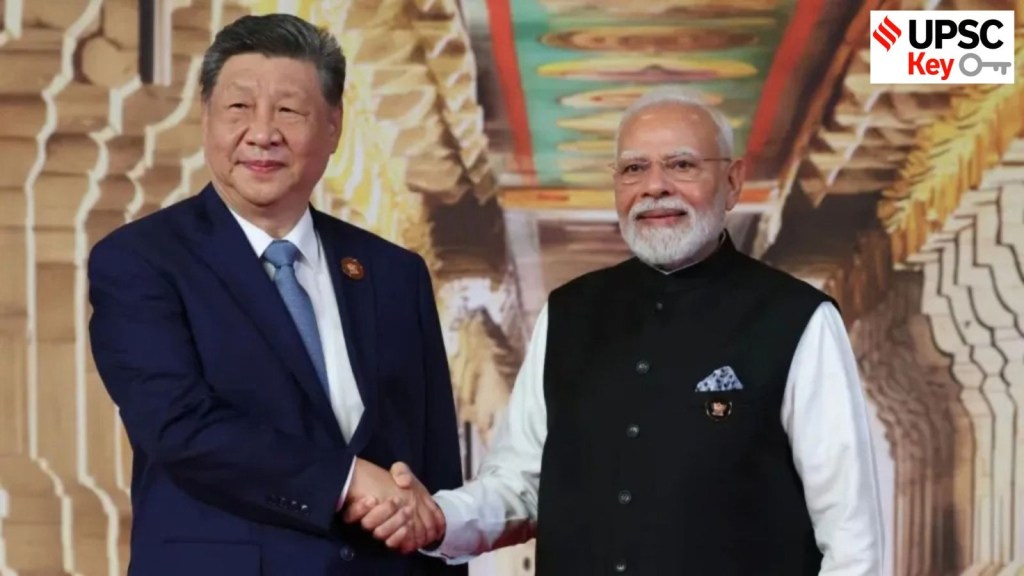 The Modi-Xi meeting on the sidelines of the Summit saw both countries produce their own statement. Comparing the two, there are four noteworthy aspects.
Important topics and their relevance in UPSC CSE exam for September 19, 2026. If you missed the September 18, 2026 UPSC CSE exam key from the Indian Express, read it here
THE IDEAS PAGE
In India-China thaw, Beijing’s signals for Washington
Syllabus:

Preliminary Examination: Current events of national and international importance.
Mains Examination: General Studies II: India and its Neighborhood- Relations; Bilateral, Regional and Global Groupings and Agreements involving India and/or affecting India’s interests.
What’s the ongoing story:
In terms of realpolitik, it is fair to say that the 18th BRICS Summit hosted by New Delhi was really all about whether Communist Party of China General Secretary and Chinese President Xi Jinping would even make it, and then after he did, about the bilateral meeting between him and Indian Prime Minister Narendra Modi.
Key Points to Ponder:
— Trace the evolution of India–China relations since 1950.
— Locate the India–China boundary on the map.
— Read about the 1962 India–China War. Examine its major consequences for bilateral relations and India’s security policy.
— Examine the significance of the 2024 India–China border understanding.
— Examine the major areas of economic interdependence between India and China.
— Understand the China–Pakistan Economic Corridor (CPEC).
— Examine India’s approach towards the United States and China simultaneously. What factors shape India’s engagement?
— Examine the significance of India–China engagement within BRICS.
— Understand how India–China relations are affected by the broader US–China strategic competition.
Key Takeaways:
— For India, this was about sustaining the thaw in bilateral ties for domestic economic reasons and about signalling to the US that it had other friends around the world and could influence those friends.
— For China, however, Xi’s turning up in New Delhi — after skipping the 2023 G20 summit India hosted — was less about India and primarily about signalling to the US less than two weeks before he embarks on a state visit to Washington, DC.
— The Modi-Xi meeting on the sidelines of the Summit saw both countries produce their own statement. Comparing the two, there are four noteworthy aspects.
— One, there is the question of focus. The Chinese statement is longer than the Indian one — the English version is almost thrice as long — but this does not necessarily mean the attention is on India. On the contrary, the Chinese seem to be speaking as much to the Americans as to the Indians.
— While there is no substantive reference to BRICS in the Indian statement, the Chinese statement has references to “great[er] BRICS cooperation” as well as to the Global South, the Shanghai Cooperation Organisation and the G20.
— If India was trying to walk a fine line between promoting its strategic autonomy through BRICS and keeping ties with the US on an even keel, China was less concerned about such niceties, using the BRICS shoulder to fire at the US.
Do You Know:
— On April 1, 1950, India became the first non-socialist bloc nation to establish diplomatic ties with the People’s Republic of China (PRC).
— These were the early days of the Cold War, when the world was mostly divided into two camps. The communist Chinese state under Mao Zedong had been set up just six months ago, after a bloody civil war.
— The “non-aligned” India under Jawaharlal Nehru had reasons for reaching out to China — the two had much in common, both ancient civilizations emerging from a long and repressive colonial rule. In his writings, Nehru referred to China as “India’s old-time friend”, admiring its rich culture and history.
— The initial enthusiasm notwithstanding, the ties were marked by mutual distrust and differences over the 3,000-km shared border early on. The 1962 war — independent India’s only military defeat — marked the lowest point of the ties.
Other Important Articles Covering the same topic:
📍Xi, Modi reached ‘most important consensus’ that India, China should be partners: Wang Yi
📍New China-Pakistan boundary joint commission: What it is, why India has objected
📍Ties with China guided by 3 mutuals — respect, interest, sensitivity: India
Previous year UPSC Mains Question Covering similar theme:
China is using its economic relations and positive trade surplus as tools to develop potential military power status in Asia. Justify (UPSC CSE, 2017)
EXPLAINED
Hawkish or dovish? The varying interpretations of US Fed rate hike
Syllabus:
Preliminary Examination: Current events of national and international importance.
Mains Examination: General Studies II: Effect of Policies and Politics of Developed and Developing Countries on India’s interests.
What’s the ongoing story: The Federal Reserve (or Fed), which controls monetary policy in the US, has decided to raise the Federal Funds Rate (FFR) by 25 basis points (one basis point is one-hundredth of a percentage point).
Key Points to Ponder:
— Distinguish monetary policy and fiscal policy
— Know about the Federal Funds Rate (FFR). How does it influence borrowing costs and financial conditions in the US economy?
— Understand the role of the Federal Open Market Committee (FOMC) and Monetary Policy Committee
— Understand the terms “hawkish” and “dovish” in monetary policy.
— Examine the factors considered by the RBI while deciding its monetary-policy stance.
— Examine the significance of the India–US interest-rate differential.
— Understand the relationship between tighter US monetary policy and capital flows to emerging markets like India.
— Know about External Commercial Borrowings (ECBs).
— How can changes in interest rates and exchange rates affect Indian firms with foreign-currency borrowings?
— Examine the possible consequences of divergent monetary-policy stances between the Federal Reserve and the RBI.
Key Takeaways:
— Raising the FFR makes it costly for banks to borrow from each other and, thus, makes all loans extended by US banks costlier as well. Higher cost of credit drags down economic activity as it discourages overall demand in the economy. Lower demand for goods and services helps cool down prices in the economy.
— This decision is typically taken when a central bank is concerned about curbing inflation (the rate at which the general price level goes up from one year to another). The Fed’s decision is keenly watched the world over because by tweaking the cost of credit, it also affects stock markets both in the US and the world over.
— What stood out about the Fed’s decision was that even though it was taken unanimously, which has been a rarity in the recent past, its interpretation is ambiguous. Was it hawkish, not so hawkish, actually dovish or not dovish enough?
— On the face of it, an increase in the FFR — the first in three years — suggest that the new Fed Chair Kevin Warsh has seen enough of price rise in the wake of the West Asia crisis and tariffs, etc, and is even willing to go against the wishes of President Donald Trump by raising interest rates — and that too less than two months before the crucial midterm elections that could make or break the Trump presidency.
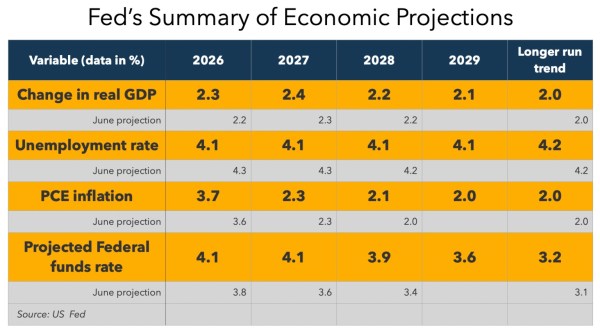
Do You Know:
— The US Fed has a dual mandate: Pursuing both price stability and maximum employment. For price stability, the Fed has a target of 2% inflation (as measured by Personal Consumption Expenditures or PCE Price Index). In other words the PCE Index should not rise by more than 2% from one year to another.
— On maximum employment, there is no numerical target. According to the Fed, “it is the highest level of employment or lowest level of unemployment that the economy can sustain while maintaining a stable inflation rate”.
— Notwithstanding the dual mandate, often the Fed’s focus is either more curbing inflation or boosting employment, depending on what it thinks is the bigger concern.
— A hawkish central bank or hawkish policy decision is one that is primarily focused on maintaining price stability and not letting inflation go above 2%.
Other Important Articles Covering the same topic:
📍US Federal Reserve hikes interest rates — but will RBI follow suit?
📍ExplainSpeaking: How RBI decides to do, or not do, anything in its monetary policy review
Previous year UPSC Prelims Question Covering similar theme:
(1) Consider the following statements: (UPSC CSE, 2022)
1. Tight monetary policy of US Federal Reserve could lead to capital flight.
2. Capital flight may increase the interest cost of firms with existing External Commercial Borrowings (ECBs).
3. Devaluation of domestic currency decreases the currency risk associated with ECBs.
Which of the statements given above are correct?
(a) 1 and 2 only
(b) 2 and 3 only
(c) 1 and 3 only
(d) 1, 2 and 3
What next for Tata after boardroom showdown
Syllabus:
Preliminary Examination: Current events of national and international importance.
Mains Examination: General Studies III: Effects of Liberalization on the Economy, Changes in Industrial Policy and their Effects on Industrial Growth.
What’s the ongoing story: The Tata Sons board meeting on Thursday (September 17) was expected to resolve some of the biggest questions confronting the holding company of the Tata group. Instead, it has opened a new chapter in a new — and an increasingly — bitter power struggle.
Key Points to Ponder:
— Understand what a corporation is. How does a corporation differ from a sole proprietorship, partnership and other forms of business organisation?
— Understand the concept of separate legal personality.
— Read about the Companies Act, 2013.
— Distinguish between a private company and a public company.
— Understand the basic structure of a company.
— Understand the composition and role of a company’s Board of Directors.
— Know about the role of shareholders in corporate decision-making.
— Understand the distinction between executive, non-executive and independent directors.
— Distinguish between the Memorandum of Association and the Articles of Association.
— Understand the role of the Securities and Exchange Board of India (SEBI) in corporate governance of listed companies.
— Examine the Tata Sons boardroom dispute in the context of corporate governance.
— Understand the role of the RBI in regulating NBFCs.
Key Takeaways:
— The board approved a fresh five-year term for N Chandrasekaran as Executive Chairman despite Tata Trusts Chairman Noel Tata voting against the proposal.
— It also decided to proceed with the listing of Tata Sons after the Reserve Bank of India rejected the company’s request to surrender its registration as a Core Investment Company.
— Both decisions, however, face another test — the annual general meeting (AGM). And that is where the balance of power changes dramatically. Tata Trusts hold 66% of Tata Sons. Noel Tata has opposed Chandrasekaran’s continuation and has argued that the company should remain unlisted.
— But Venu Srinivasan, the other Tata Trusts nominee on the Tata Sons board, backed both decisions. The result is a potentially prolonged battle involving the board, Tata Trusts, the AGM, the Articles of Association, and the RBI.
From IDEAS page: In boardroom rebellion in Tata Sons, a modern-day Greek tragedy
— For over half a century, an invisible shadow has hung over the House of Tatas: The possibility of a hostile takeover. Last Thursday, the custodians of one of India’s most respected and largest business conglomerates feared their worst nightmare could eventually unfold.
— At Thursday’s Tata Sons board meeting, a majority of members, including a nominee of the Tata Trusts, businessman Venu Srinivasan, defied the chairperson of the Tata Trusts and a Tata family member, Noel Tata, to vote to retain the services of N Chandrasekharan as executive head of the group.
Do You Know:
— The rebellion reflects the vulnerability of the venerable 158-year-old business house, founded by the visionary Parsi businessman Jamsetji Tata, which was at the forefront of India’s industrial revolution and whose brand name is synonymous with honourable business practices and quality products.
— Apprehensions of a future change in ownership first surfaced in 1969 after the government introduced the Monopolies and Restrictive Trade Practices Act under which companies could no longer be run by a managing agency.
— Tata Sons, the group’s managing agency, appeared to lose its relevance as its shareholding in the group’s companies was minimal. The actual owners of most of the listed Tata companies were family charitable trusts, most notably the Sir Dorabji Tata and the Sir Ratanji Tata trusts.
— The snag is that under Section 153 A of the Companies Act of 1956, the charities commissioner is expected to appoint a public trustee to act on behalf of charities in corporate matters. A special exception was made for the Tatas since their holdings preceded the framing of the rules in independent India.
Other Important Articles Covering the same topic:
📍The rise of Noel Tata: How he emerged as power centre in Tata Group
📍Explained: The many fault lines at the top of the Tata group
Previous year UPSC Mains Question Covering similar theme:
In the light of the Satyam Scandal (2009), discuss the changes brought in corporate governance to ensure transparency and accountability. (UPSC CSE, 2015)
A Himalayan bird’s calls are changing due to human noise: Why this matters
Syllabus:
Preliminary Examination: General issues on Environmental ecology, Biodiversity and Climate Change – that do not require subject specialization.
Mains Examination: General Studies III: Conservation, Environmental Pollution and Degradation, Environmental Impact Assessment.
What’s the ongoing story: The Himalayan monal, the state bird of Uttarakhand, is a striking landfowl found across the Himalayan mountains, including in Jammu and Kashmir, Himachal Pradesh, Uttarakhand and Sikkim.
Key Points to Ponder:
— Identify the Himalayan monal and locate its distribution in India.
— Read about the taxonomic classification and ecological characteristics of the Himalayan monal.
— Distinguish between global conservation status and local population status.
— Examine the ecological effects of anthropogenic noise on wildlife.
— Understand the IUCN Red List categories. What does each category mean?
— Locate the Kedarnath Musk Deer Sanctuary.
— Understand the concept of habitat fragmentation.
— Understand the major sources and ecological effects of environmental noise.
— Examine how climate change can alter the geographic distribution of suitable habitats.
Key Takeaways:
— While the ground-dwelling bird is not endangered, two studies carried out by researchers at Hemvathi Bahuguna Garhwal University (HBGU) have flagged key threats to it.
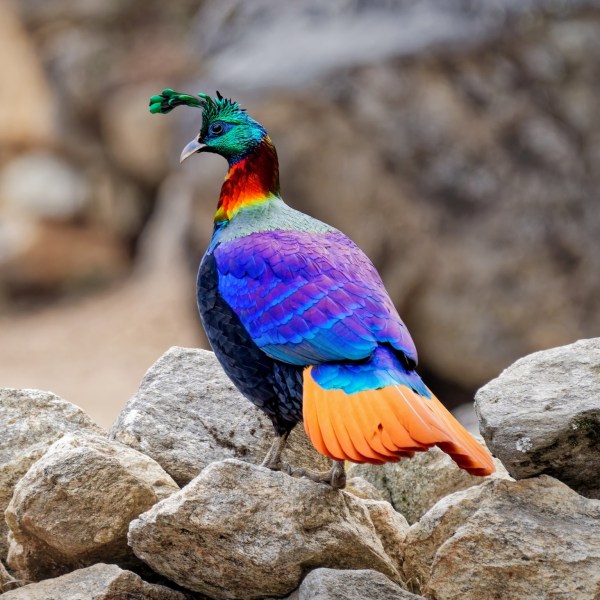 The bird is found across the Himalayan mountains. Wikimedia Commons.
— Both studies, by Rajeev Lochan, Dinesh Kumar Sharma and Anand Kumar from HBGU, were carried out over five years. One study examines how climate change could alter its habitat in the coming decades.
— The other has found that the bird is changing its calls because tourism and traffic are making its surroundings noisier. This could have implications for its success in mating, though the researchers have not established this.
— For the noise study, the researchers compared two areas within the Kedarnath Musk Deer Sanctuary — the Madmaheshwar Valley, which has relatively little human activity, and Chopta Valley, which has roads, tourists, pilgrims and other visitors.
— They recorded hundreds of monal calls and compared them. The striking finding was that monals in the noisier area used higher-frequency calls. To study the calls, the researchers used passive acoustic monitoring devices, along with a microphone, across different seasons.
— “Since we could not remain in the high-altitude habitat throughout the year, passive acoustic monitoring allowed us to record the birds even when weather conditions such as snowfall, rain and fog made fieldwork difficult,” co-author Lochan, a researcher at HBGU, told The Indian Express.
Do You Know:
— Globally, the Himalayan monal is classified as Least Concern on the IUCN Red List. But researchers say there is a lack of reliable information on the bird’s population at the local level.
— For the monal, calls are important for communication, including reproduction and social behaviour. The researchers worry that increasing human noise could make such communication more difficult.
— “The male makes the mating call and the female responds to that call,” said Lochan. But with more tourism and noise, “it will not be able to reach females because it will be masked with noise.”
Other Important Articles Covering the same topic:
📍Centre defers green nod to limestone mining near Great Indian Bustard habitat
📍Why elephants need long corridors, and why SC has stepped in for them
Previous year UPSC Prelims Question Covering similar theme:
(2) If you walk through the countryside, you are likely to see some birds stalking alongside the cattle to seize the insects disturbed by their movement through grasses. Which one of the following is/are such bird/birds? (UPSC CSE 2014)
1. Painted Stork
2. Common Myna
3. Black-necked Crane
Select the correct answer using the code given below:
(a) 1 and 2
(b) 2 only
(c) 2 and 3
(d) 3 only
POLITICS
Centre’s fresh ‘red entry’ move to act against farmers burning stubble
Syllabus:
Preliminary Examination: Current events of national and international importance.
Mains Examination: General Studies III: Conservation, Environmental Pollution and Degradation
What’s the ongoing story: Stepping up its efforts to tackle Delhi-NCR’s winter air pollution, the Centre has decided to strengthen the red entry system to penalise farmers burning stubble. A red entry in the revenue records can potentially land farmers in trouble, making it difficult for them to avail loans and mortgages.
Key Points to Ponder:
— What is crop residue and stubble burning?
— Examine why farmers resort to stubble burning.
— Examine why stubble burning is particularly prevalent in parts of north-western India.
— Know about the pollutants released by burning crop residue.
— Understand the environmental effects of stubble burning beyond air pollution.
— Discuss the major in-situ and ex-situ methods of crop-residue management.
— Examine the economic barriers to adopting alternative residue-management methods.
— Understand the role of Commission for Air Quality Management (CAQM) in NCR and Adjoining Areas.
— Understand the concept of a ‘red entry’ in land or revenue records. What are its potential implications for farmers?
— Examine the policy challenge of balancing air-quality objectives with farmers’ economic and operational constraints.
Key Takeaways:
— In its latest move to address choking air pollution in Delhi every winter, the Centre has brought a new draft of Rules governing the fight against crop residue burning, a key contributor to air pollution in the national capital.
— Under the draft Rules, land belonging to farmers found to burn stubble would be marked with a red entry in revenue records for up to 15 months. If they continue to set fields on fire or don’t pay compensation, this period could extend for another 15 months.
— These Rules, first notified in 2023, included the red entry provisions. The red entry system has faced strong opposition from farm unions.
— The Centre’s changes are unlikely to take effect until the end of the upcoming paddy harvest season, owing to the window for seeking comments on the new draft.
— This is the first time the Ministry of Environment, Forest and Climate Change has specified the validity of red entries under the draft Commission for Air Quality Management in National Capital Region and Adjoining Areas (Imposition, Collection and Utilization of Environmental Compensation for Stubble Burning) Rules, 2026.
— These Rules, brought in 2023, spell out the quantum of compensation for burning crop stubble, its collection, and utilisation.
Do You Know:
— The short and long-duration paddy varieties have a height of 4 feet and over 5, respectively. The combined harvesters that farmers use to harvest paddy, cut off the upper portion of the paddy and leave behind a standing stubble of around 15 to 18 inches, which is called standing stubble.
— It throws the chopped 2.5 feet loose stubble on the field after taking the grain portion from the shaved part of the stubble. This loose straw gets accumulated in several small dumps in the field which is called the loose straw.
— After harvesting, farmers opting for partial burning let the loose straw dry for a couple of days and then they set these dumps on fire to prepare the field for the next crop. In such cases, the standing stubble, which is mostly green, does not get burnt fully but it gets scorched close to those places in the field where loose straw is burnt.
Other Important Articles Covering the same topic:
📍What is partial stubble burning and why do many farmers resort to this?
📍Punjab records 136% jump in wheat stubble burning and highest number of incidents in 3 years
Previous year UPSC Prelims Question Covering similar theme:
(3) Consider the following statements: (UPSC CSE, 2019)
1. Carbon monoxide
2. Methane
3. Ozone
4. Sulphur dioxide
Which of the above are released into the atmosphere by the burning of crop/biomass residue?
(a) 1 and 2 only
(b) 2, 3 and 4 only
(c) 1, 4 only
(d) 1, 2, 3 and 4
NATION
I&B Ministry notifies new film certification guidelines for CBFC
Syllabus:
Preliminary Examination: Current events of national and international importance.
Mains Examination: General Studies II: Statutory, Regulatory and various Quasi-judicial Bodies.
What’s the ongoing story: The Ministry of Information and Broadcasting (I&B) has notified new film certification guidelines for the Central Board of Film Certification (CBFC) earlier this week.
Key Points to Ponder:
— What is the role of CBFC in the certification of films for public exhibition in India?
— How are the Board and its members appointed?
— Read about the Cinematograph Act, 1952 and Cinematograph (Certification) Rules, 2024.
— Understand how film certification is carried out.
— Identify the different categories of film certification in India.
— Examine the major principles governing film certification.
— Examine the relationship between film certification and freedom of speech and expression.
— Discuss how film certification balances freedom of expression with public-interest concerns.
Key Takeaways:
— These revised guidelines retain all the aspects of its detailed 1991 version, save for the addition of two new points.
— One calls for a disclaimer or statutory warning in scenes depicting or involving the use, consumption or trafficking of narcotic drugs or other psychotropic substances. These scenes must now carry the warning ‘Illicit Narcotics Destroy Health and Guarantees Imprisonment, Say No to Drugs.’
— The other point pertains to the specification of new-age markers in line with the three new categories under the UA (Unrestricted Public Exhibition With Parental Guidance) certification, as notified in the Cinematograph Rules, 2024
— The latest guidelines state that if the Board thinks that it is necessary to caution the parents or the child’s guardian to consider as to whether their wards may be allowed to see such a film, the same shall be certified for unrestricted public exhibition with an endorsement to that effect.
— The three categories are UA 7+, UA 13+, and UA 16+ — to mark content suitable for children in the age group of seven, 13 and 16, respectively.
Do You Know:
— Central Board of Film Certification (CBFC) comprises up to 25 members and 60 advisory panel members from across India, all of whom are appointed by the Information & Broadcasting Ministry.
— Generally, the board members are film and TV professionals whereas the advisory panel is composed of members who are often from outside the industry.
— The tenure of service of the chairperson and board members ranges to three years and that of the advisory panel members is up to two years from the date of appointment.
— The CEO is chiefly in charge of administrative functions, and regional officers are part of the examining committees that certify films.
Other Important Articles Covering the same topic:
📍CBFC rules explained: What the new guidelines say about China, violence, drugs and titles
📍Certification of films: Govt notifies age-based categories
📍Simply put: How does the Censor Board work; why is it controversial?
UPSC Prelims Practice Question Covering similar theme:
(4) Consider the following statements about the Central Board of Film Certification (CBFC):
1. The Board consists of a Chairperson and not less than 12 and not more than 25 other members, appointed by the Central Government.
2. The CBFC is a statutory body constituted under the Cinematograph Act, 1952.
3. The CBFC provides age-based certification categories of UA 7+, UA 13+ and UA 16+.
Which one of the following conclusions based on the above statements is correct?
(a) All the three statements are correct
(b) Only two statements are correct
(c) Only one statement is correct
(d) None of the statements is correct
ECONOMY
India’s first mainstream PHEV, and the gap it plugs in the EV ecosystem
Syllabus:
Preliminary Examination: General Science.
Mains Examination: General Studies III: Science and Technology- Developments and their Applications and Effects in Everyday Life.
What’s the ongoing story: The Tomahawk Land Attack Missile is an iconic American long-range, jet-powered, subsonic cruise missile that is used by the United States Navy in ship and submarine-based land-attack operations.
Key Points to Ponder:
— Understand the basic working of an internal combustion engine (ICE) vehicle and an electric vehicle.
— Identify and distinguish major types of electrified vehicles.
— What is regenerative braking in electrified vehicles?
— Understand how a Plug-in Hybrid Electric Vehicle (PHEV) works. How does its powertrain differ from that of a conventional hybrid?
— Understand how a Fuel Cell Electric Vehicle (FCEV) generates electricity.
— Distinguish between battery-electric and hydrogen fuel-cell propulsion.
— Know about the concept of range anxiety in electric mobility.
— Examine the importance of critical minerals for the EV ecosystem.
— Discuss the major policy measures supporting electric mobility in India.
— Examine the role of EVs in reducing emissions and dependence on fossil fuels.
Key Takeaways:
— The long-range analogy is perhaps what JSW MG Motor India wanted to play on when it decided to christen its newly launched Hector Tomahawk plug-in hybrid vehicle (PHEV), alongside an all-electric version of this new SUV, to emphasise range efficiency.
— The vehicle is India’s first mainstream plug-in hybrid SUV, claimed to deliver over 115km of electric-only range and a combined fuel efficiency figure of over 40kmpl. MG claims the Tomahawk PHEV can cover over 1,100km with a full tank of fuel and a fully charged battery.
— Unlike BEVs, which are typically battery electric vehicles such as the Tesla Model S or the Tata Nexon electric that need to be plugged in before the battery is discharged, technologies such as HEVs and PHEVs bring together the best of both worlds.
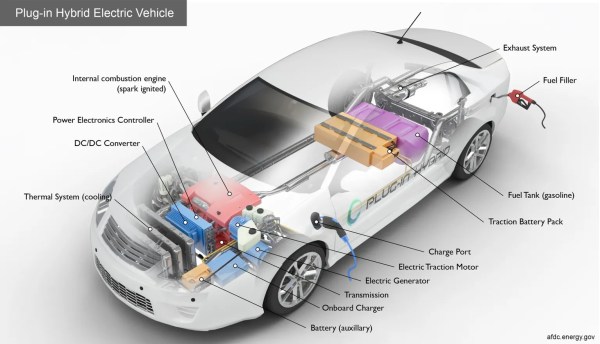 Image: PHEV (US Dept of Energy)
— For instance, HEVs, or conventional hybrid electric vehicles, such as strong hybrid variants of the Toyota Hycross Hybrid and the Honda City e:HEV in India, or the Toyota Prius HEV sold abroad, combine a conventional internal combustion engine (ICE) system, like in a regular petrol car, with an electric propulsion system to produce a hybrid drivetrain that substantially lowers fossil fuel usage.
Do You Know:
— EV is a vehicle that can be powered by an electric motor, which draws electricity from a battery and can be charged from an external source. Beyond this broad classification, though, across most parts of the world, a range of vehicle categories are subsumed as EVs.
— Globally, the EV segment covers, besides battery electric vehicles or BEVs, an alphabet soup of some other technologies that incorporate electrification in some form: HEVs or hybrid electric vehicles, PHEVs or plug-in hybrid electric vehicles, and FCEVs or hydrogen fuel cell electric vehicles.
— All these technologies are part of a broad basket of low-emission vehicular platforms that the Chinese now term as New Energy Vehicles.
Other Important Articles Covering the same topic:
📍Knowledge Nugget: Battery Electric Vehicles (BEVs) – Key facts for UPSC Exam
📍Knowledge Nugget | India’s Push for Electric Vehicles: Types of EVs and policy measures
Previous year UPSC Prelims Question Covering similar theme:
(5) Consider the following types of vehicles: (UPSC CSE, 2025)
1. Full battery electric vehicles
2. Hydrogen fuel cell vehicles
3. Fuel cell electric hybrid vehicles
How many of the above are considered as alternative powertrain vehicles?
(a) Only one
(b) Only two
(c) All the three
(d) None
EDITORIAL
Pratap Bhanu Mehta writes: Graham Bill is America confusing its power with virtue — yet again
Syllabus:
Preliminary Examination: Current events of national and international importance.
Mains Examination: General Studies II: Effect of Policies and Politics of Developed and Developing Countries on India’s interests
What’s the ongoing story: The Graham Bill, targeting India and China for oil purchases from Russia, is a grotesque exercise in selectively applying international morality. The problem with the Bill is not just that it targets third countries with sanctions. It is that it once again enacts American imperial privilege.
Key Points to Ponder:
— What are sanctions, and what objectives can states seek to achieve through them?
— Distinguish between sanctions, tariffs, embargoes and export controls
— Understand the concept of secondary sanctions.
— Read about the Lindsey O. Graham Sanctioning Russia and Iran Act, 2026.
— Understand the objectives behind US sanctions on Russia
— How can a country’s domestic legislation affect entities and countries outside its jurisdiction?
— Examine how sanctions imposed by a third country constrain India’s foreign-policy and economic choices?
— Understand the significance of the Strait of Hormuz for India’s energy security.
— Understand how sanctions and restrictions on Russian oil can affect global oil markets.
— Read about the Countering America’s Adversaries Through Sanctions Act (CAATSA).
— What is weaponisation of economic interdependence?
Key Takeaways:
— Even if you believe that Russia is the aggressor in Ukraine and the mistakes of the West do not justify, in any measure, Russia’s casus belli; even if you have no sympathy for Iran’s regime; even if you think China and India should play a different and more proactive role in ending the wars in Russia and Ukraine, you should find the Graham Bill obscene.
— The most disconcerting part of the Bill is what it puts on full display about American democracy. The war on Iran is unpopular in the US. Criticism of Donald Trump’s conduct of the war is quite vocal.
— The war has caused immeasurable disruption to the global economic system. Its secondary security and political effects are playing out, plunging an entire region into instability and conflict.
— Yet, the American political system does not seem to have the means to hold its own President accountable for these consequences. It is a pathetic attempt to convert the failure of democratic accountability at home into a form of imperial privilege over the rest of the world.
Do You Know:
— US President Donald Trump Friday signed into law the ‘Lindsey O. Graham Sanctioning Russia and Iran Act of 2026’, giving the president the authority to impose tariffs of up to 100% on countries, including India and China, that continue buying Russian oil and gas.
— The move came after the US House of Representatives on Wednesday passed the sweeping sanctions legislation, aimed at cutting Russia’s revenues from oil and gas exports and increasing economic pressure on Moscow over the war in Ukraine.
— The development is significant for India as it depends on imports to meet over 88% of its crude oil needs, and Russia currently accounts for nearly half of these imports.
— According to vessel tracking data from commodity market analytics firm Kpler, India imported 2.08 million barrels per day (bpd) of Russian oil in August, accounting for 45% of the country’s total oil imports. The share was even higher, at over 50%, in the preceding two months.
Other Important Articles Covering the same topic:
📍As Trump gets 100% tariff power, why India will find it tough to cut Russian oil imports
📍US sanctions policy — on India and beyond — is reckless and blunt
Previous year UPSC Prelims Question Covering similar theme:
(6) The term ‘West Texas Intermediate’, sometimes found in news, refers to a grade of
(a) Crude oil
(b) Bullion
(c) Rare earth elements
(d) Uranium
ALSO IN NEWS
INS Kolkata was on routine patrol, Pak vessel conduct wrong: MEA
— Three days after a frontline warship of the Indian Navy and a Pakistani Navy vessel were involved in a collision in international waters in the North Arabian Sea, Delhi on Friday officially identified the ship as INS Kolkata and said that the Pakistani Naval Ship Hunain conducted itself in an “unacceptable and unprofessional manner at sea” that resulted in the collision
— Ministry of External Affairs’ official spokesperson Randhir Jaiswal on Friday said: “Let me reiterate the facts of the matter. INS Kolkata was on a routine deployment in the western Arabian Sea when Pakistani Naval Ship Hunain conducted itself in an unacceptable and unprofessional manner at sea that resulted in a collision.”
— “The dangerous overtaking manoeuvre by PNS Hunain was in gross violation of Article 10 of the Agreement between India and Pakistan on Advance Notice on Military Exercises, Manoeuvres and Troops Movements of April 1991, which specifies that naval units at sea are not to be within 3 nautical miles of each other. In addition, the Pakistani ship also infringed the International Regulations for Preventing Collisions at Sea,” he said.
Anthropic sets up bio lab as it looks to ramp up AI drug programme
— Anthropic has quietly set up a laboratory to do physical biology work as it pushes its artificial-intelligence ambitions into the world of drug science.
— At a time when fears of AI are gripping the public, the startup has built a wet lab, or place for physical experiments, in the San Francisco Bay Area, two people familiar with the matter said. Anthropic has said it wants to unlock treatments for rare diseases, and its biology work has gone beyond “in silico” or computer evaluations.
— In a Reuters interview on Tuesday, Anthropic’s head of life sciences, Eric Kauderer-Abrams, confirmed the startup’s wet lab.”We believe that to do biology, the final test is still and will be for a while in real lab work,” he said.
‘Largest theft of labour’: Open AI, Microsoft raise concerns over AI training
— Newly unsealed court documents showed considerable concern within Microsoft and its close partner OpenAI over the use of millions of news articles to develop artificial intelligence systems.
— As OpenAI was forging ahead with its work, Microsoft employees debated whether what OpenAI was doing represented the “largest theft of labor in human history” and could create a “doom loop” that could ultimately threaten the quality of the large language models they were building.
— “Millions of people around the world will soon consider large models ‘hoovering up’ all their work to be an astonishing theft of unprecedented proportions,” said one internal Microsoft document from 2023.
PRELIMS ANSWER KEY
1.(a) 2.(b) 3.(d) 4.(a) 5.(c) 6.(a)
🚨 Click Here to read the UPSC Essentials magazine for August 2026. Share your views and suggestions in the comment box or at raveena.baneta@indianexpress.com🚨
Subscribe to our UPSC newsletter. Stay updated with the latest UPSC articles by joining our Telegram channel – IndianExpress UPSC Hub, and follow us on Instagram and X.


Raveena Baneta is a consultant with the UPSC section of The Indian Express where she writes on Ethic... Read More
 Share


