
UPSC Key: NCERT Textbooks, Deep Technology and Article 370
Why glacial early warning systems is relevant to the UPSC exam? What is the significance of topics such as National Security Act, ECINET and air pollution in Delhi on both the preliminary and main exams? You can learn more by reading the Indian Express UPSC Key for September 30, 2026.
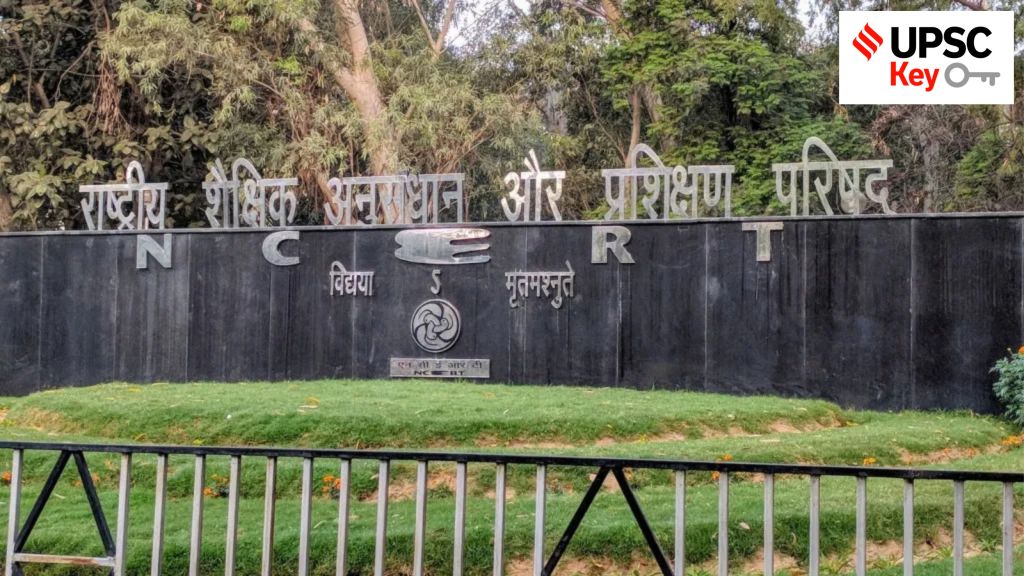 UPSC Key September 2026: Here's what you should be reading from the September 30, 2026 edition of the Indian Express.
Important topics and their relevance in UPSC CSE exam for September 30, 2026. If you missed the September 29, 2026 UPSC CSE exam key from the Indian Express, read it here
Front Page

SC to hear petition questioning CEC decisions, seeking EC records review
Syllabus:
Preliminary Examination: Indian Polity and Governance-Constitution, Political System, Panchayati Raj, Public Policy, Rights Issues, etc.
Main Examination: General Studies II: Appointment to various Constitutional posts, powers, functions and responsibilities of various Constitutional Bodies.
What’s the ongoing story: The Supreme Court Tuesday agreed to take up next week a petition questioning the functioning of Chief Election Commissioner Gyanesh Kumar and seeking to declare the nationwide Special Intensive Revision (SIR) of electoral rolls illegal.
Key Points to Ponder:
• What Constitution of India says for the Election Commission of India?
• Know the composition, appointment and tenure of the Chief Election Commissioner and Election Commissioners.
• What are the powers and functions of Election Commission of India under Article 324 of the Constitution?
• How Election Commission of India ensures free and fair elections in India?
• What are the constitutional, statutory and administrative functions of the Election Commission of India?
• What is Special Intensive Revision (SIR) of electoral rolls?
• What is the respective roles of the Election Commission, Electoral Registration Officers and Chief Electoral Officers in the preparation and revision of electoral rolls?
• Know the significance of Article 326 in guaranteeing adult suffrage in India.
• What are ECINET and ERONET?
• What concerns were raised and how has the EC responded?
Key Takeaways:
• The petition comes days after The Indian Express reported that Election Commissioners Sukhbir Singh Sandhu and Vivek Joshi had recorded objections at least 14 times over the past 10 months to decisions and orders concerning the SIR of electoral rolls. The two commissioners said some of the decisions were taken without their knowledge or recommendation.
• The Election Commission, however, said the letters sent by Sandhu and Joshi to the Cabinet Secretary concerned an officer on deputation and were not related to policy or IT division matters.
• Senior Advocate Vikas Singh, appearing for petitioner Rakesh Kumar Singh, urged a three-judge bench presided over by Chief Justice of India Surya Kant to hear the matter early.
Do You Know:
• The petition referred to alleged differences between CEC Kumar and Sandhu and Joshi, and the objections they raised.
“Article 324(1) of the Constitution does not vest the superintendence, direction and control of elections in an individual Chief Election Commissioner. It vests those powers in a Commission,” said the plea.
• Singh pointed out that Article 324(2) provides that the Election Commission comprises the Chief Election Commissioner and such number of other Election Commissioners as the President may determine from time to time. Article 324(3) further stipulates that, when other Election Commissioners are appointed, the Chief Election Commissioner shall serve as the Commission’s Chairman.
• The plea urged the court to issue a quo warranto writ “calling upon” Kumar “to show under what authority he has acted, and continues to act, as though entitled individually to exercise the collective decision-making power vested by Article 324 of the Constitution in the Election Commission as a body, notwithstanding that Article 324(3) constitutes him only Chairman of the Commission and vests in him no individual title to the Commission’s collective authority”.
• It requested the court to seek the “complete original and primary records relating to the matters” from the Commission “and enforce the constitutional and statutory principle that a power vested by Article 324 in the Election Commission as a constitutional body cannot be exercised, or represented to the public, the courts or the country as an act of the Commission, except in accordance with the constitutional and statutory framework governing the Commission, including Section 18 of the Chief Election Commissioner and Other Election Commissioners (Appointment, Conditions of Service and Term of Office) Act, 2023.”
Other Important Articles Covering the same topic:
📍ECINET, ERONET: How the Election Commission’s roll systems work, and why they matter
Previous year UPSC Prelims Question Covering similar theme:
1) Consider the following statements: (UPSC, CSE, 2017)
1. The Election Commission of India is a five-member body.
2. Union Ministry of Home Affairs decides the election schedule for the conduct of both general elections and bye-elections.
3. Election Commission resolves the disputes relating to splits/mergers of recognised political parties.
Which of the statements given above is/are correct?
(a) 1 and 2 only
(b) 2 only
(c) 2 and 3 only
(d) 3 only
Previous year UPSC Mains Question Covering similar theme:
📍Discuss the role of the Election Commission of India in the light of the evolution of the Model Code of Conduct. (UPSC, GS2, 2022)
Resisting invaders to swords of goddesses: NCERT revises book on medieval history for Class 9
Syllabus:
Preliminary Examination: Indian Polity and Governance-Constitution, Political System, Panchayati Raj, Public Policy, Rights Issues, etc.
Mains Examination: General Studies II: Government policies and interventions for development in various sectors and issues arising out of their design and implementation and Issues relating to development and management of Social Sector/Services relating to Health, Education, Human Resources.
What’s the ongoing story: The NCERT’s new social science textbook for Class 9, released Tuesday, describes 700 years of medieval Indian history from 1000 to 1700 AD as a period of “Resistance and Resilience”, one during which “Indian society not only defended itself from external threats but also preserved its traditions”.
Key Points to Ponder:
• What are some of the key changes carried out in the new social science textbook for Class 9?
• What are the most sweeping changes in social science school textbooks since 2014 in India?
• How ‘ideology’ influences the course of Indian history?
• How the content of NCERT textbooks are decided?
• Who decides the content of NCERT textbooks?
• Who writes the NCERT books?
• Who prepares the National Curriculum Framework for school education?
• What are the reasons given by the Government for the textbook “rationalisation” exercise?
• “History is always written by the winners”-How this statement is relevant in present Context?
• How ‘ideology’ influenced the course of Indian history?
• National Policy on Education (NPE) and National Curriculum Framework (NCF)-Connect the dot
• “If NEP is the guiding philosophy, then NCF is the pathway”-Elaborate
Key Takeaways:
• Part 2 of the social science textbook Understanding Society: India And Beyond — Part 1 was introduced in June and dealt with themes across disciplines, including history, political science, geography and economics — while mentioning “both conflict and cooperation” focuses on acts of resistance, not of cooperation or the development of a composite culture, themes that were central to Indian historiography for over 50 years.
• Documenting successive invasions of the subcontinent, the history section describes religious traditions in warfare, and how Indian rulers — be it the Rajputs, the kingdom of the Ahom, the Vijayanagara empire, Marathas, Sikhs, Jats and others — put up strong resistance against the Turks, Mughals and European forces at different points of time.
• “Worship of goddesses was a long standing tradition in India and many kings and princes since the seventh century continued to invoke goddesses such as Kali, Durga, Bhavani and other forms of Shakti as protectors in times of conflict,” states the ‘Don’t miss out’ column in the sub-section (Bhakti Tradition: affirmation of the spirit of resilience) of the chapter “Resistance and Resilience”.
• “Annamaraja, ruler of Bastar is believed to have received his sword from Manikyadevi (Danteshvari) while Kumara Kampana (Vijayanagara) was believed to have used a goddess-given sword against the Sultanate forces at Madurai. Similarly, Shivaji is also traditionally believed to have obtained a sword from goddess Tulja Bhavani,” it states.
• In the foreword to the textbook, NCERT chief Dinesh Saklani writes: “Social Science learning at this stage is expected to cultivate analytical and discursive abilities, encourage critical inquiry, promote intercultural understanding, and enable learners to participate with confidence and responsibility in civic and social life.” “It is in this spirit that Understanding Society: India and Beyond, the Grade 9 Social Science textbook for the Secondary Stage, has been conceptualised and developed,” he writes.
• The new textbooks replace four older textbooks: ‘India and The Contemporary World’ which dealt with themes like French Revolution, Socialism in Europe, Russian Revolution, the Rise of Nazism, and Democratic Politics-1, a book on political institutions, geography and economics. The new chapters frame the medieval period largely as a story of “resistance” against foreign forces. “The Indian subcontinent experienced repeated invasions and wars accompanied by religious discrimination and social distress. Regional powers frequently resisted invaders who were making inroads into their territories. This resistance took both military and cultural forms,” it states. “Nonetheless, this period manifested the resilience of the Indian civilisation, which safeguarded its core ideas and values. Indian society not only defended itself from external threats but also preserved its traditions.”
Do You Know:
• Education as a subject comes under both the state and central governments according to the Constitution, meaning both the states and central governments have a role to play here. Further, India has multiple education boards across the country that decide crucial matters such as conducting exams and deciding the syllabus in schools. State education boards, the Central Board of Secondary Education (CBSE), Council for the Indian School Certificate Examinations (CISCE), are a few examples. They are autonomous or independent bodies. They make decisions based on the guidelines laid down by The National Council of Educational Research and Training (NCERT).
—An autonomous organisation, set up in 1961 by the government “to assist and advise the Central and state governments” for improving the quality of education, NCERT’s objectives include the task of preparing and publishing model textbooks. Its chairman is appointed by the central government. For deciding the content of textbooks, the NCERT is currently preparing a document called the National Curriculum Framework (NCF). It was last prepared in 2005 under the UPA government, and before that, it was revised in 1975, 1988 and 2000.
Other Important Articles Covering the same topic:
📍NCERT Class 9 social science book lists kings using swords given by goddesses
Previous year UPSC Prelims Question Covering similar theme:
2) Which of the following provisions of the Constitution of India have a bearing on Education? (UPSC, CSE, 2012)
1. Directive Principles of State Policy
2. Rural and Urban Local Bodies
3. Fifth Schedule
4. Sixth Schedule
5. Seventh Schedule
Select the correct answer using the codes given below:
(a) 1 and 2 only
(b) 3, 4 and 5 only
(c) 1, 2 and 5 only
(d) 1, 2, 3, 4 and 5
Previous year UPSC Mains Question Covering similar theme:
📍“Education is not an injunction, it is an effective and pervasive tool for all-round development of an individual and social transformation”. Examine the New Education Policy, 2020 (NEP, 2020) in light of the above statement. (UPSC, GS4, 2020)
Funds awaited, Govt showpiece deep-tech initiative hits pause
Syllabus:
Preliminary Examination: Current events of national and international importance.
Mains Examination: General Studies III: Science and Technology- developments and their applications and effects in everyday life.
What’s the ongoing story: A showpiece Government initiative to make funds available to emerging private companies engaged in deep-tech research has hit pause after the only agency selecting beneficiaries decided to stop inviting applications — because it hasn’t received the money needed to proceed after one round of funding.
Key Points to Ponder:
• What is deep technology (deep-tech)?
• How deep technology is different from conventional technology-driven start-ups?
• What are the major characteristics of deep technology?
• What is the Research, Development and Innovation (RDI) Fund?
• Who administers the fund?
• What is the role of the Anusandhan National Research Foundation (ANRF) in strengthening deep technology (deep-tech)?
• How is the fund disbursed?
• Who decides which companies get funded?
• What is the role of government funding in crowding in private investment in high-risk and capital-intensive technologies?
Key Takeaways:
• On Tuesday, the Technology Development Board (TDB), a statutory body under the Department of Science and Technology (DST), issued a notice on its official website informing that invitations for funding would be closed after this month “due to administrative reasons”.
• However, multiple sources told this newspaper that TDB, which is the only agency currently involved in selecting beneficiaries for the Rs 1 lakh-crore Research, Development and Innovation (RDI) Fund, is yet to receive the money needed to extend fresh offers to companies.
• According to rules, the money has to be allotted by the DST, which is the administrative custodian of the RDI Fund. The DST has already been allocated Rs 23,000 crore to fund the programme, including Rs 3,000 crore in last year’s Budget and Rs 20,000 crore this year.
• DST Secretary Umesh Waghmare was not available for comment despite multiple requests from The Indian Express, including queries sent to his official email ID.
• The TDB received Rs 2,000 crore earlier this year under the Fund, which was exhausted during the first round of selection in April when 22 companies were offered soft loans worth a total of Rs 2,192 crore.
• The TDB finalised the next round of selections in August and proceeded with shortlisting more applicants before pausing the process, sources said. The Board has not even been able to issue letters of intent to companies selected in the second round, they said.
Do You Know:
• The Government created the RDI Fund in November 2025 for companies engaged in frontline research in critical sunrise sectors like quantum, space, robotics and artificial intelligence, including start-ups building their first products. The objective was to help raise money for technologies that have been marked crucial for the growth and strategic independence of the country’s economy.
• The Fund promised Rs 1 lakh crore over a six-year period, largely as low-cost long-term loans, and was housed under the Anusandhan National Research Foundation (ANRF), an independent statutory body administratively under DST.
• It seeks to provide long-term soft loans to private sector research up to 50 per cent of the project cost. The selected company is mandated to mobilise the remaining 50 per cent from non-government sources.
• According to rules, eligible companies are to be selected by third-party agencies called Second Level Fund Managers (SLFMs). Initially, two government entities with prior experience in funding private ventures — TDB and Biotechnology Industry Research Assistance Council (BIRAC) under the Department of Biotechnology — were nominated as SLFMs. About 30-40 other entities from the private sector were also expected to be appointed as SLFMs, considering the large corpus of money to be utilised.
• However, nearly a year since the launch of the Fund, only the Rs 2,192 crore committed to companies selected by TDB in the first round has been made available.
Other Important Articles Covering the same topic:
📍Proof of a deep-tech fund is in its outcomes. That’s the audit worth doing
📍Explained: Who gets India’s Rs 1-lakh crore deep-tech fund, and how
Previous year UPSC Prelims Question Covering similar theme:
3) Atal Innovation Mission is set up under the (UPSC, CSE, 2019)
(a) Department of Science and Technology
(b) Ministry of Labour and Employment
(c) NITI Aayog
(d) Ministry of Skill Development and Entrepreneurship
Nation
Confession can’t be sole basis for detention under NSA: SC
Syllabus:
Preliminary Examination: Indian Polity and Governance
Mains Examination: General Studies II: Indian Constitution—historical underpinnings, evolution, features, amendments, significant provisions and basic structure.
What’s the ongoing story: The Supreme Court on Tuesday quashed the preventive detention of Mulla Afroz, the alleged mastermind of the violence that broke out in Uttar Pradesh’s Sambhal district in November 2024 during the visit of a court-ordered team for a survey of the Jama Masjid. Afroz was detained under the National Security Act (NSA), 1980.
Key Points to Ponder:
• The Jama Masjid in Sambhal-What you know about the same?
• Why Sambhal holds religious significance?
• Is a confession made to a police officer admissible in court?
• Why do you think there is a rule that confessions made during police custody cannot be used as evidence against the accused?
• What is Preventive detention law?
• Under what laws can the state order preventive detention?
• What are the principal objectives and provisions of the National Security Act, 1980?
• What is meant by public order?
• How public order is different from law and order and security of the State?
• What are the safeguards provided under Article 22 of the Constitution against arbitrary preventive detention?
• Compare and Contrast—preventive and punitive detention
• What is the Supreme Court’s judgement on preventive detention?
Key Takeaways:
• A bench of Justices Dipankar Datta and Sheel Nagu set aside the June 8, 2026, judgment of the Allahabad High Court upholding his detention. The court agreed with Afroz’s contention that the detention order was passed on the basis of an extra-judicial confession made by him while in police custody and imposed a cost of Rs 10 lakh on the Uttar Pradesh government.
• Afroz was arrested on January 17, 2025 in connection with the violence which rocked Sambhal and led to four deaths. He was detained under the NSA on October 13, 2025, while he was in judicial custody in the case.
• According to the prosecution, Afroz had instigated the crowd which turned violent and in turn “the public order of the entire Sambhal city as well as the surrounding areas was completely disrupted, an atmosphere of chaos was created, shopkeepers pulled down their shutters and the public closed the doors and windows of their houses due to fear and everyone started looking for a place to hide and the people who were shopping ran away or hide inside the shops due to fear.”
• Afroz challenged the detention before the high court, alleging that he had made the extra-judicial confession before the police, after torture and threat of encounter and as such, the confession was not admissible in law.
• The Allahabad High Court upheld the detention order, saying “In the present case, we find that the impugned detention order dated 13.10.2025 is based on application of mind and proper exercise of jurisdiction by the respondent no. 3 (District Magistrate, Sambhal).”
Do You Know:
• Article 22 prescribes protection against arrest and detention but has a major exception. It says in Article 22 (3) (b) that none of those safeguards apply “to any person who is arrested or detained under any law providing for preventive detention.” The remaining clauses — Article 22(4)-(7) — deal with how preventive detention operationalises.
• The use of the NSA has brought focus back on one of India’s most stringent preventive detention laws. Invoked in the past against separatists, gangsters and radical preachers, the NSA empowers governments to act pre-emptively against individuals seen as a threat to public order or national security.
• Preventive detention has a long history in India, dating back to colonial times when it was used to control dissent during wars. After Independence, Parliament passed the Preventive Detention Act, 1950, followed by the Maintenance of Internal Security Act (MISA), 1971, which became notorious for misuse during the Emergency. MISA was repealed in 1978, and two years later, the National Security Act was enacted.
• The NSA, 1980, empowers the Centre and states to detain individuals to prevent them from acting in a manner “prejudicial to the defence of India, relations with foreign powers, the security of India, or the maintenance of public order or essential supplies”.
• District Magistrates and Police Commissioners can also exercise these powers when authorised. Unlike an arrest under criminal law, NSA detention is preventive, not punitive—it is designed to prevent an individual from committing an act deemed harmful.
• The stated purpose of the NSA was to give the government wide ranging powers to deal with threats to security, law and order, and essential supplies, while building in some procedural safeguards. A detention order under the NSA can be executed like a warrant of arrest. Once detained, a person can be held in specified places, moved across states, and subjected to conditions set by the government.
Other Important Articles Covering the same topic:
📍What is NSA, under which Sonam Wangchuk was detained
📍UP Sambhal violence: what is the row around the Shahi Jama Masjid
Previous year UPSC Prelims Question Covering similar theme:
4) Consider the following statements: (UPSC, CSE, 2023)
1. According to the Constitution of India, the Central Government has a duty to protect States from internal disturbances.
2. The Constitution of India exempts the States from providing legal counsel to a person being held for preventive detention.
3. According to the Prevention of Terrorism Act, 2002, confession of the accused before the police cannot be used as evidence.
How many of the above statements are correct?
(a) Only one
(b) Only two
(c) All three
(d) None
Uttarakhand’s first glacial lake early-warning system in Vasundhara Tal, Chamoli
Syllabus:
Preliminary Examination: Indian and World Geography-Physical, Social, Economic Geography of India and the World.
Mains Examination:
• General Studies I: Important Geophysical phenomena such as earthquakes, Tsunami, Volcanic activity, cyclone etc., geographical features and their location-changes in critical geographical features (including water-bodies and ice-caps) and in flora and fauna and the effects of such changes.
• General Studies III: Disaster and disaster management
What’s the ongoing story: Weeks after the Nepal disaster, the Himalayan state of Uttarakhand is moving from mapping its vulnerable glacial lakes to monitoring them in real time, with the state’s first early-warning system for a glacial lake being installed at Vasundhara Tal in Chamoli from Tuesday.
Key Points to Ponder:
• What is a glacial?
• What are Glaciers?
• What is glacial collapse?
• What is a glacial lake outburst flood (GLOF)?
• How vulnerable are the Himalayas to glacial lake outburst flood?
• How can the risks from GLOFs be reduced?
• How well is India prepared to handle situations such as these?
• What is the status of glacial early warning systems for such situations?
• What are the guidelines for rescue operations in case of a disaster?
Key Takeaways:
• A scientific and technical team comprising experts from the Central Building Research Institute (CBRI), Roorkee, and the Wadia Institute of Himalayan Geology, Dehradun, left for the high-altitude lake on Tuesday. The operation, scheduled from September 29 to October 15, is being supported by the State Disaster Response Force (SDRF), the National Disaster Response Force (NDRF), and the Indo Tibetan Border Police (ITBP).
• On Tuesday, Chief Secretary Anand Bardhan, who flagged off the team, said the initiative would help reduce the risk posed by glacial lake outburst floods (GLOFs). “This initiative will prove to be a milestone in reducing the dangers of GLOFs in the coming years and in understanding the risks,” he said.
• In August, a massive flood in Nepal’s Lhende Khola and Bhote Koshi river system was initially linked to a possible earthquake. Subsequent analysis by the US Geological Survey found that the seismic energy was instead generated by a glacial collapse and debris flow. The disaster killed hundreds and swept away roads, bridges and houses.
• A year earlier, Uttarakhand itself witnessed the devastating Dharali flash flood in Uttarkashi. While some experts suspected a glacial lake breach, others pointed to rainfall, glacier-related processes and the possibility of an avalanche or landslide. The exact trigger remains unclear.
• In January 2025, The Indian Express reported that the Uttarakhand State Disaster Management Authority (USDMA) was preparing a comprehensive plan to study and regularly monitor the state’s glacial lakes.
Do You Know:
• The National Disaster Management Authority (NDMA) had identified 13 high-risk glacial lakes in Uttarakhand, of which five were classified as Category A, the highest-risk category. Vasundhara Tal was among them.
At the time, USDMA officials had said the first step was to establish the physical characteristics of the lakes – including their length, width, terrain and depth – and assess downstream flow. The next stage was to deploy instruments for real-time monitoring, which is now beginning.
• According to the latest government data, 344 glacial lakes were identified in Uttarakhand in 2023 by the National Remote Sensing Centre. Of the 13 high-risk lakes, six are in Pithoragarh, four in Chamoli and one each in Bageshwar, Tehri Garhwal and Uttarkashi.
Bathymetric surveys have already been completed at six lakes – Saraswati Tal and Vasundhara Tal in Chamoli; Kedartal in Uttarkashi; and Mabang, Pyungru and Syunkti Yankti proglacial lakes in Pithoragarh’s Darma Valley.
These surveys establish the depth and water-holding capacity of the lakes – information that can be used to assess the potential scale of a GLOF.
• The system being installed at Vasundhara will track water level, weather, snow conditions, water flow and movement around the lake. A water-level sensor will monitor fluctuations and abnormal changes. An automatic weather station will record temperature, humidity, rainfall, wind speed and direction, atmospheric pressure and light intensity. Snow-depth and sub-surface temperature sensors will monitor changes in snow conditions. Tilt and accelerometer sensors will detect movement and vibrations at selected locations, while a water-flow sensor will monitor changes in discharge.
The equipment will be powered through a solar-energy system, and data will be transmitted by satellite because conventional mobile networks are unavailable in the remote high-altitude region. A data logger and monitoring dashboard will record the readings and generate alerts when predetermined thresholds are crossed.
Other Important Articles Covering the same topic:
📍Uttarkashi tragedy is a warning. Respect the mountain
Previous year UPSC Prelims Question Covering similar theme:
5) Consider the following pairs (UPSC CSE, 2019)
GLACIER RIVER
1. Bandarpunch Yamuna
2. Bara Shigri Chenab
3. Milam Mandakini
4. Siachen Nubra
5. Zemu Manas
Which of the pairs correctly matched?
(a) 1, 2 and 4
(b) 1, 3 and 4
(c) 2 and 5
(d) 3 and 5
Previous year UPSC Mains Question Covering similar theme:
📍How do the melting of the Arctic ice and glaciers of the Antarctic differently affect the weather patterns and human activities on the Earth? Explain. (UPSC GS1, 2021)
📍How will the melting of Himalayan glaciers have a far-reaching impact on the water resources of India? (UPSC GS1, 2020)
📍Bring out the relationship between the shrinking Himalayan glaciers and the symptoms of climate change in the Indian sub-continent. (UPSC GS1, 2014)
The Editorial Page
Ghosts of 1945 are being recruited in US-China contest over Asia
Syllabus:
Preliminary Examination: Current events of national and international importance.
Mains Examination: General Studies I: History of the world will include events from 18th century such as industrial revolution, world wars, redrawal of national boundaries, colonization, decolonization, political philosophies like communism, capitalism, socialism etc.— their forms and effect on the society.
What’s the ongoing story: C Raja Mohan writes: World War II and its expansive impact on the Subcontinent is largely forgotten by India’s strategic community. But its ghosts still shape Asia’s great-power politics. They surfaced last week when US President Donald Trump and Chinese President Xi Jinping met in Washington.
Key Points to Ponder:
• What were the major geopolitical consequences of the Second World War for Asia?
• How World War II contributed to the transformation of the Asia?
• How Yalta Conference and the San Francisco Conference shaped the post-Second World War international order?
• What was the role of China and Japan in the Second World War?
• What was India’s role in World War II?
• Know the contribution of Indian soldiers to the Second World War.
• “The legacy of 1945 continues to shape the strategic competition among the United States, China and Japan”—What is your take?
• How did the Second World War reshape the concepts of sovereignty, territorial integrity and collective security in international relations?
Key Takeaways:
C Raja Mohan writes:
• In India, there has been little attention to the affirmation of Trump and Xi that the US and China were victorious allies during World War II. References to history are rarely innocent. The past is interpreted and reinterpreted to serve the politics of the present.
• Since returning to power, Trump has invoked America’s wartime cooperation with both Russia and China. His critics see these references as a way to justify his leader-level outreach to Vladimir Putin and Xi that is unsettling US allies in Europe and Asia. For Putin, the memory of victory supports Russia’s claim to a leading role in European security and the restoration of the “Yalta System” led by the US and the Soviet Union that shaped the European and global order. For Xi, it strengthens Beijing’s effort to present China as a victor of 1945 and undermine the “San Francisco System” of US alliances that defined the post-War Asian order.
• The US-China wartime partnership is a historical fact, but it needs qualification. Washington’s ally in the war was the Republic of China (RoC) led by Jiang Jieshi (Chiang Kai-shek) that now endures in Taiwan. The People’s Republic of China (PRC), led by Mao Zedong, emerged only in 1949. That distinction lies at the heart of Taipei’s response. Taiwanese officials have accused Beijing of using “narrative diplomacy” to undermine the historical identity of Taiwan.
• Tokyo’s response reflected deep political unease. Imperial Japan was the wartime adversary against which America and China cooperated; it is now Washington’s principal Asian ally. Prime Minister Sanae Takaichi spoke to Trump after his meeting with Xi. Japan’s foreign ministry said Trump explained the talks in detail, and the two reaffirmed their alliance and strategic coordination on China.
• China also opposes Japan’s call to remove the obsolete “enemy state” clauses in the UN Charter directed at Japan,
Germany and Italy after 1945. This is despite the UN’s earlier consensus to remove them. The stratagem is about pushing Japan onto the political defensive.
Do You Know:
C Raja Mohan writes:
• The Trump-Xi declaration on World War II also raises questions about the future of America’s San Francisco System, built around the 1951 peace settlement with Japan. That system placed Japan at the centre of Washington’s regional strategy. Beijing’s invocation of the wartime alliance is part of the Chinese push to build a different dynamic among the three countries, nudge America towards a “China-First” policy in Asia and weaken the US-Japan alliance.
• Where is India in this debate over 1945? Barely visible. But Delhi is surely concerned. At a Russia-India-China foreign ministers’ meeting in June 2020, Subrahmanyam Jaishankar reminded his counterparts that 2.3 million Indians had served under arms and another 14 million had participated in war production. Indians fought from North Africa and Italy to Southeast Asia. The Indian Army’s stellar role in rolling back imperial Japan’s armies in Burma and Southeast Asia has largely been forgotten. Jaishankar argued India received little recognition when the victors shaped the post-war order. He called it an uncorrected “historical injustice”.
Other Important Articles Covering the same topic:
📍Post-World War II norms cannot fix today’s problems
Previous year UPSC Mains Question Covering similar theme:
📍“There arose a serious challenge to the Democratic State System between the two World Wars.” Evaluate the statement. (UPSC, GS1, 2021)
Delhi has a winter plan, but clean air needs more
Syllabus:
Preliminary Examination:
Mains Examination: General Studies III: Conservation, environmental pollution and degradation, environmental impact assessment.
What’s the ongoing story: The Delhi government has done the right thing in framing an anti-pollution plan before the dreaded smog sets in. Unlike the usual pattern of enforcing emergency measures, it has announced a set of restrictions in advance.
Key Points to Ponder:
• What are the major sources of air pollution in Delhi during winter?
• Why winter conditions aggravate the concentration of pollutants in Delhi?
• What is winter smog?
• What is the role of temperature, wind speed and atmospheric conditions in the persistence of air pollution over
Delhi-NCR?
• What are the contribution of vehicular emissions, construction activities and industrial pollution to Delhi’s air-quality crisis?
• What is stubble burning?
• Why does agricultural residue burning in neighbouring States affect Delhi’s air quality?
Key Takeaways:
• The plan, which will come into effect from November 1, includes curbs on construction activities, tighter checks on vehicles and industries, higher parking charges, staggered office timings and work-from-home mandates.
• Most of these measures have been part of the city’s pollution-control arsenal for at least half a decade. By all accounts, they have had only a partial mitigating effect on Delhi’s pollution.
• A fragmented approach to pollution control has often proved to be the undoing of past plans. By setting the ball rolling early, the city’s administration has given itself valuable time to put in place coordination mechanisms between agencies in charge of waste management, air-quality monitoring, transport and law enforcement. Even so, it will have its task cut out.
• In recent years, scholarly work has underlined that municipal limits or even the National Capital Region (NCR) boundaries are structurally insufficient to tackle Delhi’s wintertime crisis. The plan talks of coordinated action “on pollution arising from agricultural activities”, including discussions between agriculture ministers of NCR states. However, it seems the Delhi government has already been late in getting off the block.
• Stubble-burning season has started, and initial reports have indicated farm-fire incidents across Punjab, Haryana, Uttar Pradesh and Rajasthan. Experts also believe that the Super El Niño will complicate matters this year — it could reduce the rain-causing western disturbances, making even the temporary clearing of pollutants difficult. Peak stubble-burning could coincide with Diwali this year. As temperatures fall and wind speeds come down, Delhi will need to prepare for pollutants from multiple sources to overlap.
Do You Know:
• A complete ban will be imposed on all construction-demolition activities from December 10 to January 20 to combat Delhi’s winter pollution.
• The government also said that petrol, diesel, and CNG pumps will sell fuel only to vehicles with a valid Pollution Under Control Certificate (PUCC) throughout the year. It has separately announced an enforcement drive against vehicles with invalid PUCCs from October 1 across 500 petrol pumps using Automatic Number Plate Recognition (ANPR) systems, alongside strict action against end-of-life vehicles.
• A January 2026 report by a panel of top experts constituted by the Commission for Air Quality Management (CAQM) identified road dust as a major pollution source in Delhi because it acts as “both a primary emission and a persistent source”. The panel defined road dust broadly to include airborne dust from roads and shoulders, vehicle movement, dry soil, and road wear. It said poor road surfaces, potholes, broken edges, unpaved stretches, road-tyre-brake wear, and debris falling from the transport of construction and demolition (C&D) material all contribute to the dust load.
Other Important Articles Covering the same topic:
📍Winter action plan: Delhi to get 30 smaller road sweeping machines for narrow streets
Previous year UPSC Prelims Question Covering similar theme:
6) Artificial way of causing rainfall to reduce air pollution makes use of (UPSC, CSE, 2025)
(a) Silver iodide and potassium iodide
(b) Silver nitrate and potassium iodide
(c) Silver iodide and potassium nitrate
(d) Silver nitrate and potassium chloride
Previous year UPSC Mains Question Covering similar theme:
📍Mumbai, Delhi and Kolkata are the three mega cities of the country but the air pollution is much more serious problem in Delhi as compared to the other two. Why is this so? (UPSC, GS1, 2015)
Explained
J&K’s evolving status, from Article 370 to UT
Syllabus:
Preliminary Examination: Indian Polity and Governance-Constitution, Political System, Panchayati Raj, Public Policy, Rights Issues, etc.
Mains Examination: General Studies II: Indian Constitution—historical underpinnings, evolution, features, amendments, significant provisions and basic structure.
What’s the ongoing story: As Chief Minister Omar Abdullah brought a resolution seeking immediate restoration of statehood for Jammu and Kashmir in the Assembly on Monday (September 28), several amendments were moved, some of which sought the inclusion of Articles 370 and 35 A, which existed before August 5, 2019. The amendments were later withdrawn, but brought under the spotlight the various constitutional provisions associated with Jammu and Kashmir.
Key Points to Ponder:
• What is Article 370?
• Which constitutional mechanism was used to interpret “Constituent Assembly of the State” as Legislative Assembly?
• Know the constitutional legality of abrogating Article 370 and Article 35A on the basis of the 2019 Presidential Orders.
• What special status was given to Jammu and Kashmir?
• How was Article 370 enacted?
Key Takeaways:
• Article 370 of the Indian Constitution provided for special status to Jammu and Kashmir, ensuring that Parliament could legislate on just three subjects in relation to the state — defence, foreign relations and communication. These were mentioned in the Instrument of Accession that made the princely state of Jammu and Kashmir a part of India. Jammu and Kashmir was allowed to have its own constitution, standing apart from other states of the Union. Only Article 1, defining the territory of India, and Article 370 itself applied to the state, apart from extension of subjects under the aforesaid three subjects.
• On August 5, 2019, the government rendered Article 370 inoperative through the Constitution (Application to Jammu and Kashmir) Order, 2019, which superseded the Constitution (Application to Jammu and Kashmir) Order, 1954. This rendered null and void the separate constitution of the state and extended all provisions of the Indian Constitution to it.
Do You Know:
• After the ruler of Jammu and Kashmir, Raja Hari Singh, tried to stay independent amid the Partition of India, Pakistan, which laid claim to the province on account of it having a Muslim majority population, sent irregular troops, or Kabailis, to capture Kashmir in October 1947. A worried Hari Singh signed the Instrument of Accession on October 26, 1947, and Indian soldiers began pushing back the invaders.
India took the Kashmir case to the United Nations Security Council in January 1948, and the newly established UN Commission for India and Pakistan (UNCIP) mediated a ceasefire.
• UN Security Council Resolution 47 asked both sides to demilitarise so that a plebiscite could be held to determine the wishes of the people of Jammu and Kashmir. Since demilitarisation never happened on either side, the resolution remained a dead letter.
• Article 370 was adopted by the Constituent Assembly on October 17, 1949. During the debate, member of the Drafting Committee of the Constituent Assembly, N Gopalaswami Ayyangar, said: “That particular State is not yet ripe for this kind of integration. It is the hope of everybody here that in due course even Jammu and Kashmir will become ripe for the same sort of integration as has taken place in the case of other States. At present it is not possible to achieve that integration.” He said: “Part of the State is still in the hands of rebels and enemies. We are entangled with the United Nations in regard to Jammu and Kashmir and it is not possible to say now when we shall be free from this entanglement. That can take place only when the Kashmir problem is satisfactorily settled.”
Other Important Articles Covering the same topic:
📍Six years without Article 370
Previous year UPSC Mains Question Covering similar theme:
📍To what extent is Article 370 of the Indian Constitution, bearing marginal note “Temporary provision with respect to the State of Jammu and Kashmir”, temporary? Discuss The future prospects of this provision in the context of Indian polity. (UPSC, GS2, 2016)
|
PRELIMS ANSWER KEY |
|
1.(d) 2.(d) 3.(c) 4.(b) 5.(a) 6.(a) |
For any queries and feedback, contact priya.shukla@indianexpress.com
Subscribe to our UPSC newsletter. Stay updated with the latest UPSC articles by joining our Telegram channel – IndianExpress UPSC Hub, and follow us on Instagram and X.


Priya Kumari Shukla is a Senior Copy Editor in the Indian Expre... Read More
 Share


