
UPSC KEY: ISRO staff’s letter to its chief, GDP politics and linguistic identity
Why is the debate over ISRO’s future role in India’s space-sector reforms relevant to the UPSC exam? What significance do topics such as GDP calculation methodology, linguistic reorganisation of states, GIFT IFSC, and CBI’s consent for investigations hold for the Preliminary and Main examinations? You can learn more by reading the Indian Express UPSC Key for September 6, 2026.
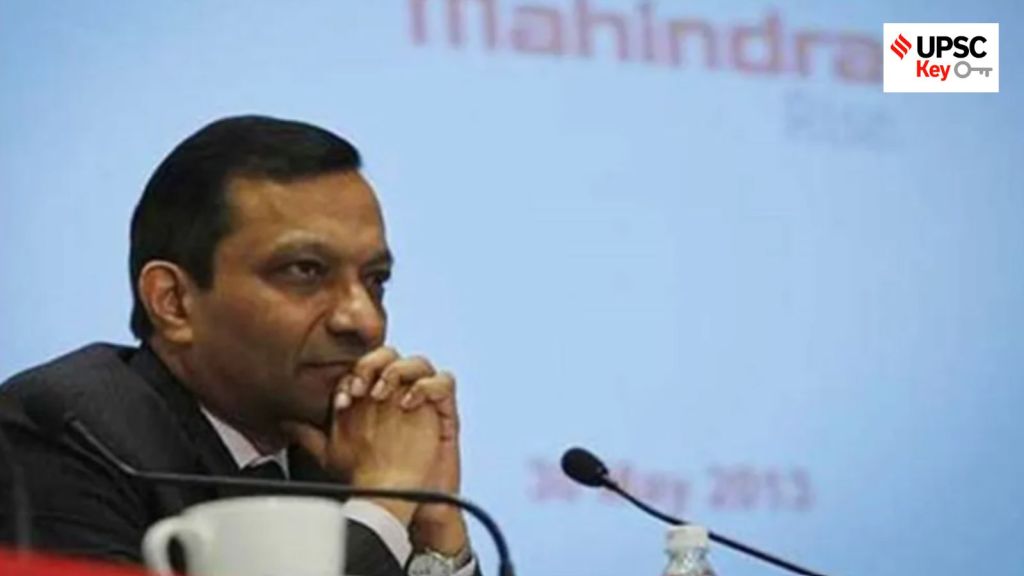 Pawan Goenka, chairperson of the Indian National Space Promotion and Authorization Centre (IN-SPACe), the nodal body, under the Deparment of Space (File)
Important topics and their relevance in UPSC CSE exam for September 6, 2026. If you missed the September 5, 2026 UPSC CSE exam key from the Indian Express, read it here.
FRONT
ISRO staff question trajectory of space privatisation
Syllabus:

Preliminary Examination: Science & Technology: General issues on Environmental Ecology, Bio-diversity and Climate Change – that do not require subject specialisation.
General Studies III:
Science and Technology: Awareness in the fields of IT, Space, Computers, Robotics, Nano-technology, Bio-technology and issues relating to Intellectual Property Rights.
Economy: Effects of liberalization on the economy, changes in industrial policy and their effects on industrial growth.
What’s the ongoing story:
Following the successful launch of the EOS-05 earth observation satellite aboard the GSLV-F17 on September 4, employee associations within ISRO have written to Chairman V Narayanan seeking clarity on the future direction of the government’s space-sector reforms.
The concerns follow remarks by IN-SPACe Chairman Pawan Goenka suggesting that ISRO may eventually stop manufacturing launch vehicles and routine satellites, with such activities being undertaken by private companies or PSUs. Employees have sought clarification on whether this represents an officially approved government policy and what it would mean for ISRO’s workforce, recruitment and future role.
The issue is important because India’s space reforms since 2020 have sought to move routine and commercial activities towards industry while allowing ISRO to concentrate more on advanced technology, capacity building, scientific exploration and strategic missions. ISRO’s own reform framework envisages private participation, with ISRO focusing on developing new technologies and capabilities.
The debate, therefore, is not simply about privatisation of ISRO, but about how responsibilities should be divided between ISRO, public-sector entities and private players while preserving technological capability and strategic autonomy.
Key Points to Ponder
— Should ISRO continue undertaking routine manufacturing and launch activities or increasingly focus on advanced research and strategic missions?
— How can India expand its commercial space industry without becoming excessively dependent on private entities for critical capabilities?
— How does a dedicated regulatory and promotional institution facilitate private participation in the space sector?
— What should be the framework for transferring technologies developed with public funds to private companies?
— Could a shift away from routine production affect recruitment, institutional knowledge and the long-term talent pipeline?
— Can greater private participation help India increase its share of the global space economy?
— What should remain within the domain of ISRO given projects such as Gaganyaan, the Bharatiya Antariksh Station and future human lunar missions?
— Should PSUs also play a greater role alongside private companies in India’s space manufacturing ecosystem?
Key Takeaways:
— India opened its space sector to private participation in 2020, seeking to expand the role of non-government entities while allowing ISRO to focus more on advanced capabilities.
— IN-SPACe was created as an institutional mechanism to promote, enable and regulate the participation of private players in India’s space sector.
— ISRO has already transferred around 120 technologies to industry, including technologies related to launch vehicles.
— The current debate concerns whether routine launch-vehicle and satellite manufacturing should increasingly move to private companies and PSUs.
— ISRO’s supporters of reform argue that moving routine activities to industry can allow the organisation to concentrate on scientific research, advanced technologies and strategic missions.
— Employee associations, however, have raised concerns about job security, recruitment, institutional capacity and the future role of ISRO.
— The larger policy challenge is to find a balance between commercialisation, innovation, private-sector participation and strategic autonomy.
— The successful GSLV-F17 launch carrying EOS-05 comes at an important moment in this debate. The mission restored confidence in the GSLV after a difficult period for ISRO.
Do You Know:
— The Indian Space Research Organisation is India’s principal space agency, responsible for space science, exploration, satellite applications and launch capabilities.
— Indian National Space Promotion and Authorisation Centre. It facilitates and regulates the participation of non-government entities in India’s space activities.
— NewSpace India Limited is the commercial arm of the Department of Space and is responsible for commercialising space technologies and services.
— Geosynchronous Satellite Launch Vehicle is designed primarily to place heavier satellites into geosynchronous transfer orbits.
— Polar Satellite Launch Vehicle is widely used for launching Earth-observation and other satellites into polar and sun-synchronous orbits.
— An earth-observation satellite launched by GSLV-F17 in September 2026. It is India’s first dedicated imaging satellite to be placed in geosynchronous orbit.
— The objective is not officially to privatise ISRO as an organisation. Earlier, former ISRO Chairman K Sivan had clarified that reforms were intended to enable private players to undertake activities that were otherwise being done by ISRO, allowing ISRO to focus on developmental and capacity-building activities.
— The case raises a broader question of how governments can combine public institutions, private enterprise and strategic national interests in emerging technologies.
Other Important Articles Covering the same topic:
📍Space sector reforms are not aimed at privatising ISRO
OPINION
The economy, its math and politics
Syllabus:
Preliminary Examination: Indian Economy and issues relating to planning, mobilisation of resources, growth, development and employment.
Mains Examination: General Studies III:Indian Economy and issues relating to planning, mobilisation of resources, growth, development and employment.
What’s the ongoing story:
India’s GDP growth figures for April-June 2026 have triggered a debate after former Finance Secretary Subhash Chandra Garg questioned the official estimates.
The Ministry of Statistics and Programme Implementation (MoSPI) estimated real GDP growth at 7.8 per cent and nominal GDP growth at 10.3 per cent for Q1 of 2026-27. Garg argued for a much lower growth rate. However, his calculation compared GDP figures from two different statistical series, one based on the old 2011-12 base year and the other on the new 2022-23 base year.
The article explains that when the base year is changed, GDP values for previous years are also recalculated under the new methodology. Therefore, growth should be calculated using comparable figures from the same series.
Key Points to Ponder:
— What is a base year and why is it needed while calculating real GDP growth?
— Why does India periodically revise the base year of GDP?
— What is the difference between nominal GDP and real GDP?
— Why can GDP figures from two different base-year series not be directly compared?
— What is the GDP deflator and how is it related to real and nominal GDP?
— What is the significance of changing India’s GDP base year from 2011-12 to 2022-23?
— How can GDP data influence perceptions of economic performance and policymaking?
— Why is transparency and credibility of official statistics important for economic governance?
— Does a high GDP growth rate necessarily translate into better employment, incomes and living standards?
Key Takeaways:
— A base year provides a common price reference to assess whether output has actually increased rather than merely becoming more valuable because of higher prices.
— MoSPI shifted from the earlier 2011-12 base year to 2022-23 in February 2026.
— Changes in consumption patterns, products, technology, economic structure and statistical methodology make it necessary to periodically update the base year.
— When the base year and methodology change, GDP estimates for earlier years are recalculated, which can alter both the size of GDP and historical growth rates.
— Growth rates must be calculated using GDP values from the same statistical series. Mixing an old-series figure with a new-series figure can produce a misleading growth rate.
— The official estimate for real GDP growth in Q1 of 2026-27 was 7.8 per cent, while nominal GDP growth was 10.3 per cent.
Do You Know:
— GDP measures the market value of final goods and services produced within the domestic territory of an economy during a given period.
— Real GDP measures economic output after removing the effect of price changes.
— Nominal GDP measures output at current prices and therefore reflects both changes in output and prices.
— Base year is the reference year whose prices are used to calculate GDP at constant prices.
— India’s current GDP base year is 2022-23, replacing 2011-12.
— GDP deflator is a broad measure of price changes in domestically produced goods and services. It is calculated as: GDP Deflator = (Nominal GDP / Real GDP) × 100
— MoSPI is responsible for compiling India’s national accounts and releasing official GDP estimates.
— A change in the base year does not mean that the economy itself has suddenly changed. It changes the statistical reference and methodology used to measure economic activity.
— GDP growth is not the same as development. A complete assessment of economic well-being also requires looking at employment, income distribution, productivity, poverty, health and other social indicators.
Other Important Articles Covering the same topic:
Previous year UPSC Prelims Question Covering similar theme:
(1) GDP at constant prices is calculated using:
(a) Current year prices
(b) Base year prices
(c) International prices
(d) Market prices only
India held together by making room for linguistic identity
Syllabus:
Preliminary Examination: Indian History – History of India and Indian National Movement.
Indian Polity and Governance – Constitution, Political System, Panchayati Raj, Public Policy, Rights Issues, etc.
Mains Examination: General Studies I: Post-independence consolidation and reorganization within the country.
What’s the ongoing story:
India’s decision to reorganise states largely along linguistic lines, beginning with the creation of Andhra State in 1953, was initially seen by many national leaders as a potential threat to national unity. The death of Potti Sriramulu after a 58-day fast for a Telugu-speaking state triggered widespread protests and pushed the Union government to act.
The subsequent States Reorganisation Commission (SRC), headed by Justice Fazl Ali, examined demands for linguistic states while also considering administrative, economic and minority-protection concerns. Its recommendations led to the States Reorganisation Act, 1956 and the Seventh Constitutional Amendment, creating 14 states and six Union Territories.
The experience suggested that accommodating linguistic identities within the constitutional framework could, rather than weaken India, help strengthen national integration.
Key Points to Ponder:
— Why did India initially hesitate to reorganise states on linguistic lines?
— How did the creation of Andhra State change the debate over linguistic reorganisation?
— What was the role of the States Reorganisation Commission?
— Why was language considered an important basis for state formation?
— Was linguistic reorganisation a threat to national unity or a means of strengthening it?
— How does linguistic reorganisation reflect the federal character of the Indian Constitution?
— What other factors, apart from language, should be considered while creating a new state?
— How can regional identities be accommodated without weakening national integration?
— How has the nature of demands for new states changed from the 1950s to the present?
Key Takeaways:
— Potti Sriramulu: He undertook a fast demanding a separate state for Telugu-speaking areas of the erstwhile Madras State and died after 58 days of fasting in December 1952. His death triggered widespread protests.
— Andhra State: The Union government eventually agreed to the creation of Andhra State, which came into existence on October 1, 1953. It became the first major linguistic state created after Independence.
— States Reorganisation Commission: The government constituted the SRC in 1953, headed by Justice Fazl Ali, with K M Panikkar and H N Kunzru as members.
— Language was not the sole criterion: The SRC also considered administrative viability, economic factors and safeguards for linguistic minorities while examining demands for reorganisation.
— 1956 reorganisation: The States Reorganisation Act, 1956, along with the Seventh Constitutional Amendment, reorganised India into 14 states and six Union Territories.
— Bombay question: The 1956 arrangement created a bilingual Bombay State comprising Marathi- and Gujarati-speaking regions. Continued tensions eventually led to the creation of Maharashtra and Gujarat in 1960.
— Linguistic identity and national unity: The experience of post-Independence India showed that giving institutional space to regional and linguistic identities could help accommodate diversity within the Union rather than necessarily encouraging separatism.
Do You Know:
— Dhar Commission (1948): Also known as the Linguistic Provinces Commission, it examined the question of linguistic provinces and did not favour language as the primary basis for reorganisation.
— JVP Committee (1949): Comprising Jawaharlal Nehru, Vallabhbhai Patel and Pattabhi Sitaramayya, it also advised postponing linguistic reorganisation.
— States Reorganisation Commission (1953): Unlike the earlier bodies, it undertook a detailed examination of the demand for reorganising India’s states.
— Article 3: Parliament can form new states and alter the area, boundaries or names of existing states. The concerned state legislature is asked to express its views, but its consent is not binding on Parliament.
— Seventh Constitutional Amendment, 1956: It accompanied the States Reorganisation Act and altered the constitutional classification of states and territories.
— Linguistic reorganisation did not end state formation: Later states such as Haryana, Himachal Pradesh, Uttarakhand, Chhattisgarh, Jharkhand and Telangana emerged for a variety of political, administrative, cultural and developmental reasons.
— Regionalism need not be anti-national: In the Indian context, regional identities can be accommodated within the constitutional framework while maintaining a broader sense of national identity.
Other Important Articles Covering the same topic:
📍Understanding regionalism: India’s approach to managing diverse identities
Previous year UPSC Mains Question Covering similar theme:
Has the formation of linguistic states strengthened the cause of Indian Unity? (UPSC CSE 2016)
ECONOMY
GIFT IFSC funds see retail rush amid outperforming global markets
Syllabus:
Preliminary Examination: Indian Economy and issues relating to planning, mobilisation of resources, growth, development and employment.
Mains Examination: General Studies III: Indian Economy and issues relating to planning, mobilisation of resources, growth, development and employment.
What’s the ongoing story:
GIFT IFSC funds are witnessing a sharp rise in retail participation, as Indian investors increasingly seek exposure to global markets that have outperformed Indian equities this year. The number of retail investors in international fund schemes at GIFT City rose from 3,483 in the January-March quarter to 8,467 in April-June 2026, with retail investors accounting for more than 52% of the total investor base for the first time.
The trend has also been supported by greater access to international investments through GIFT City, clarity around taxation of retail schemes and ETFs, and restrictions on overseas investments through conventional mutual funds after industry-wide limits were reached.
Key Points to Ponder:
— What is GIFT City and why was an International Financial Services Centre established there?
— What is the role of the International Financial Services Centres Authority (IFSCA)?
— What is the difference between an IFSC fund and an overseas fund of fund regulated by SEBI?
— What is the Liberalised Remittance Scheme (LRS)?
— Why are Indian retail investors increasingly seeking international diversification?
— How can international investment help diversify portfolio risk?
— What are the risks associated with greater exposure to global markets?
— How does GIFT IFSC help India emerge as an international financial hub?
— Why have domestic limits on overseas investments created additional demand for GIFT IFSC funds?
Key Takeaways:
— Retail participation is rising. Investors in GIFT City’s international retail schemes increased from 3,483 to 8,467 between the January-March and April-June quarters of 2026.
— Retail investors crossed 50%: They accounted for more than 52% of the total investor base in international funds, becoming the largest investor segment for the first time.
— Stronger performance by several global markets compared with Indian markets has encouraged Indian investors to seek international exposure.
— Investors can access global markets and international products through GIFT City without directly investing overseas.
— IFSC funds are regulated by IFSCA, while overseas fund of funds operating in India are regulated by SEBI.
— IFSC funds are subject to the $250,000 limit under the Liberalised Remittance Scheme, while the mutual fund industry has separate limits for overseas investments.
— Fund houses that initially focused largely on AIFs and wealthy investors are increasingly launching retail-oriented IFSC funds, some with minimum subscriptions as low as $500.
— Attractive recent returns do not eliminate risks such as market volatility and concentration in themes such as AI, semiconductors and data centres.
Do You Know:
— GIFT City stands for Gujarat International Finance Tec-City and is located in Gujarat’s Gandhinagar district.
— IFSC stands for International Financial Services Centre. It is designed to provide financial services to customers outside the domestic economy, broadly comparable with international financial centres elsewhere.
— IFSCA is the unified regulator for financial products, financial services and financial institutions in India’s IFSC.
— GIFT IFSC allows investors and financial institutions to access international financial products and markets from an Indian financial centre.
— Liberalised Remittance Scheme (LRS) is an RBI scheme that allows resident individuals to remit money abroad for permitted transactions, subject to a prescribed annual limit.
— AIF stands for Alternative Investment Fund. It is a privately pooled investment vehicle that invests according to a defined investment strategy.
— International diversification means spreading investments across different countries or markets instead of concentrating them in one domestic market.
— GIFT City is not the same as an SEZ in its regulatory function: its IFSC has a specialised financial regulatory framework under IFSCA.
Other Important Articles Covering the same topic:
📍Why too much money in the banking system is a problem for the RBI
Previous year UPSC Prelims Question Covering similar theme:
NATION
Bihar makes consent mandatory for CBI to probe public servants
Syllabus:
Preliminary Examination: Indian Polity and Governance – Constitution, Political System, Panchayati Raj, Public Policy, Rights Issues, etc.
Mains Examination: General Studies II: Functions and responsibilities of the Union and the States, issues and challenges pertaining to the federal structure, devolution of powers and finances up to local levels and challenges therein.
Statutory, regulatory and various quasi-judicial bodies
What’s the ongoing story: The Bihar government has expanded the CBI’s standing consent to investigate a wider range of offences involving Central government employees, Central PSUs and private persons in the state. The notification, issued under Section 6 of the Delhi Special Police Establishment (DSPE) Act, 1946, covers offences under the Bharatiya Nyaya Sanhita (BNS), Bharatiya Nagarik Suraksha Sanhita (BNSS), Bharatiya Sakshya Adhiniyam (BSA), Information Technology Act, cybercrime provisions and the Prevention of Corruption Act.
However, the Bihar government has retained the requirement of prior state consent when the investigation concerns public servants working under the Bihar government or institutions controlled, owned or financially assisted by the state.
Key Points to Ponder:
— Why does the CBI require the consent of a state government to investigate cases within that state?
— What is the legal basis of the CBI’s investigative powers?
— What is the difference between general consent and specific consent?
— How does the issue of CBI consent reflect the federal structure of the Indian Constitution?
— Can a High Court or the Supreme Court order a CBI investigation without the consent of the state government?
— Does state consent strengthen federalism or potentially constrain independent investigation?
— What challenges arise when investigative agencies operate across the Centre-State divide?
Key Takeaways:
— The CBI derives its investigative powers from the Delhi Special Police Establishment Act, 1946. The DSPE was originally constituted to investigate certain offences in Delhi, and its jurisdiction was subsequently extended to other areas with the consent of the concerned state government.
— Under Section 6 of the DSPE Act, the CBI cannot ordinarily exercise its powers and jurisdiction in a state without the consent of that state government. This is linked to India’s federal structure, where police and public order are primarily State List subjects.
— States can withdraw general consent, after which the CBI generally needs specific consent to investigate cases falling within the state’s jurisdiction.
— The requirement of state consent does not prevent the Supreme Court or High Courts from ordering a CBI investigation. The courts can direct such an investigation without state consent in appropriate circumstances.
— The issue reflects a larger constitutional balancing act: while states have jurisdiction over policing, certain investigations may have implications beyond state boundaries or involve Central government personnel. The consent mechanism attempts to balance state autonomy with the need for independent investigation.
Do You Know:
— The CBI is not a statutory body created by a separate CBI Act. Its investigative powers are rooted in the DSPE Act, 1946.
— Section 3 of the DSPE Act empowers the Central Government to specify the offences or classes of offences that the DSPE can investigate.
— Section 5 deals with the extension of the powers and jurisdiction of DSPE to areas beyond Union Territories.
— Section 6 requires the consent of the concerned state government for the exercise of DSPE powers and jurisdiction in that state.
— State withdrawal of general consent does not mean that the CBI becomes completely barred from investigating every matter connected to that state. Court-directed investigations constitute an important exception.
Other Important Articles Covering the same topic:
📍What is ‘general consent’ for the CBI, now withdrawn by Meghalaya?
📍State government’s consent mandatory for CBI investigation in its jurisdiction: SC
Previous year UPSC Prelims Question Covering similar theme:
(2) Which one of the following is not a feature of Indian federalism?
(a) There is an independent judiciary in India.
(b) Powers have been clearly divided between the Centre and the States.
(c) The federating units have been given unequal representation in the Rajya Sabha.
(d) It is the result of an agreement among the federating units.
Previous year UPSC Mains Questions Covering similar theme:
The jurisdiction of the Central Bureau of Investigation (CBI) regarding lodging an FIR and conducting probes within a particular state is being questioned by various States. However, the power of States to withhold consent to the CBI is not absolute. Explain with special reference to the federal character of India. (UPSC CSE 2021)
Drug regulator tells states to watchout for ‘counterfeit’ batch of anti-rabies vaccine
Syllabus:
Preliminary Examination: General Science
Mains Examination: GS Paper III: Science and Technology – developments and their applications and effects in everyday life
What’s the ongoing story: India’s apex drug regulator, the Central Drugs Standard Control Organisation (CDSCO), has alerted states about a counterfeit batch of Abhayrab, a widely used anti-rabies vaccine. The suspicious batch was identified through samples collected in Delhi in 2026. The regulator found several discrepancies in packaging, including spelling errors, font differences and an altered company logo. The manufacturer, Indian Immunologicals, confirmed that the vaccine was not produced by it.
The development has raised concerns over drug safety, counterfeit medicines, regulatory surveillance and public health, particularly because rabies is almost invariably fatal once clinical symptoms appear.
Key Points to Ponder:
— What makes rabies a major public health concern despite being preventable through vaccination?
— How does India regulate the quality and safety of vaccines and other medicines?
— What are counterfeit medicines and how do they differ from substandard or misbranded drugs?
— What role does CDSCO play in India’s pharmaceutical regulatory system?
— Why is effective pharmacovigilance and post-market surveillance important?
— How can counterfeit vaccines affect public confidence in immunisation programmes?
— What are the challenges in ensuring the integrity of India’s pharmaceutical supply chain?
Key Takeaways:
— The drug regulator has asked states to remain vigilant against the counterfeit Abhayrab batch.
— Samples collected in Delhi showed multiple packaging discrepancies, including spelling and font differences and an altered company logo.
— Indian Immunologicals, the manufacturer of Abhayrab, said the suspicious batch was not manufactured by it.
— The regulator confirmed that the batch had not been exported from India.
— Rabies is almost 100 per cent fatal once clinical symptoms develop, making timely and effective post-exposure vaccination critical.
— The same vaccine had come under scrutiny from drug regulators in the UK, US and Australia in 2025 over concerns about counterfeit batches.
Do You Know:
— Rabies is a viral zoonotic disease that affects the central nervous system and is transmitted mainly through the saliva of infected animals, commonly through bites.
— Once clinical symptoms appear, rabies is almost invariably fatal, but the disease is preventable through timely post-exposure prophylaxis.
— CDSCO is India’s national regulatory authority for drugs, cosmetics and medical devices and functions under the Ministry of Health and Family Welfare.
— The Drugs and Cosmetics Act, 1940 and the Drugs and Cosmetics Rules, 1945 form the principal legal framework for regulation of drugs and cosmetics in India.
— Counterfeit/spurious drugs pose a distinct public health challenge because patients may receive products that do not contain the claimed medicine or vaccine, or may have been falsely represented as genuine.
Other Important Articles Covering the same topic:
📍Every cancer drug vial, vaccine, antibiotic to get unique QR code under new anti-counterfeit rules
📍Fake rabies vaccine available in India since 2023, claims Australia: Pharma co refutes charges
Gujarat couple in their 50s, who lost their doctor son to suicide, win IVF legal battle
Syllabus:
Preliminary Examination: Indian Polity and Governance – Constitution, Political System, Panchayati Raj, Public Policy, Rights Issues, etc.
General Science
Mains Examination: GS Paper II: Issues relating to development and management of Social Sector or Services relating to Health, Education, Human Resources.
GS Paper II: Government policies and interventions for development in various sectors and issues arising out of their design and implementation.
What’s the ongoing story: The Gujarat High Court has allowed a couple in their 50s to seek assisted reproductive technology (ART) services, after their request for IVF treatment was rejected because the woman had crossed the statutory age limit under the Assisted Reproductive Technology (Regulation) Act, 2021.
Under Section 21(g) of the Act, women between 21 and 50 years and men between 21 and 55 years are eligible to use ART services. In this case, the woman was above 50, while her 54-year-old husband remained within the prescribed age limit.
The court held that the age-related ineligibility of one spouse need not automatically disqualify the couple, particularly when the husband remained within the statutory age bracket. It relied on a series of earlier High Court judgments taking a similar view. The court, however, clarified that the judgment does not guarantee a particular IVF procedure; medical suitability and the manner of treatment remain with the authorised clinic and treating doctors.
Key Points to Ponder:
— What is Assisted Reproductive Technology (ART) and how is it regulated in India?
— Why did India introduce the ART (Regulation) Act, 2021?
— What are the age limits prescribed under the ART Act?
— Should statutory age limits for IVF be applied to individual spouses or the commissioning couple as a unit?
— How does the issue of IVF access relate to the right to privacy, dignity and personal liberty under Article 21?
— Can a court relax or reinterpret a statutory restriction without striking down the law?
— How should public policy balance reproductive autonomy with maternal and child health concerns?
— What ethical questions arise when advances in reproductive technology expand the possibilities of parenthood beyond natural fertility?
— Does a blanket age restriction ensure safety, or should eligibility be determined through individual medical assessment?
Key Takeaways:
— The court set aside the July 2026 rejection of the couple’s request and permitted them to avail themselves of ART services.
— The woman had crossed the upper age limit of 50 years, while her husband was 54, within the statutory limit of 55 years for men.
— The couple’s argument rested on the ART Act’s definition of a “commissioning couple”, meaning an infertile married couple approaching an authorised ART clinic or bank for treatment.
— The court accepted the reasoning that eligibility could be considered in the context of the couple rather than automatically disqualifying both partners because one spouse had crossed the age limit.
— The Gujarat High Court noted that several High Courts had already taken a similar view. A key precedent from the Calcutta High Court held that the age-related ineligibility of one spouse need not necessarily affect the eligibility of the other spouse.
— The judgment only removes the legal barrier. Whether IVF can actually be undertaken, and how it should be carried out, remains a matter for the authorised ART clinic and treating doctors.
— The case comes amid a wider debate over whether IVF eligibility should depend on fixed statutory age limits or individual medical assessment. Medical experts have pointed to higher risks associated with pregnancy at advanced ages, including gestational diabetes and hypertension.
Do You Know:
— ART stands for Assisted Reproductive Technology. It includes techniques used to achieve pregnancy by handling sperm or eggs outside the human body.
— IVF (In Vitro Fertilisation) is a type of ART in which an egg and sperm are fertilised outside the body and the resulting embryo is transferred to the uterus.
— The Assisted Reproductive Technology (Regulation) Act, 2021 regulates ART clinics and ART banks in India.
— Under the ART Act, a woman between 21 and 50 years and a man between 21 and 55 years can access ART services.
— ART and surrogacy are different. ART involves medical techniques to achieve pregnancy, while surrogacy involves another woman carrying a pregnancy for intending parent(s).
— India regulates surrogacy through a separate law called the Surrogacy (Regulation) Act, 2021.
— The ART framework seeks to ensure the ethical and safe use of reproductive technologies and regulate ART clinics and banks.
—The issue of IVF also raises questions related to reproductive autonomy, privacy, dignity and personal liberty under Article 21.
Other Important Articles Covering the same topic:
📍Who gets to be a parent? Changing family dynamics challenge IVF, surrogacy laws
ALSO IN NEWS
Jaishankar pays tribute to Indian rulers who sheltered Polish refugees during WWII
— External Affairs Minister S Jaishankar paid tribute to Indian rulers who sheltered Polish refugees during World War II, highlighting this little-known chapter in India-Poland ties.
— Maharaja Digvijaysinhji Jadeja of Nawanagar sheltered Polish children at Balachadi, while the Kolhapur State provided refuge to Polish civilians at Valivade.
World map we use is ‘lying’ about size of Africa. The UN wants to fix it
— The UN General Assembly backed a non-binding resolution supporting more accurate world maps. The Equal Earth projection represents the relative size of land masses more accurately than the Mercator projection, under which Africa appears much smaller than its actual size.
Jhiram Ghati massacre verdict out: Why this attack was a turning point in the Red Corridor battle
— An NIA court convicted 10 accused in the 2013 Jhiram Ghati massacre, in which 27 people were killed. The attack became a turning point in the political understanding of the Maoist conflict and strengthened the Centre’s resolve to push its counter-Maoist strategy.
PRELIMS ANSWER KEY
1.(b) 2.(d)
🚨 Click Here to read the UPSC Essentials magazine for August 2026. Share your views and suggestions in the comment box or at manas.srivastava@indianexpress.com🚨
Subscribe to our UPSC newsletter. Stay updated with the latest UPSC articles by joining our Telegram channel – IndianExpress UPSC Hub, and follow us on Instagram and X.


Manas Srivastava is an Assistant Editor at The Indian Express Read More
 Share


