
UPSC Key: Gross Domestic Product, Enemy State and Impeachment
Why procedure for removal of Chief Election Commissioner of India is relevant to the UPSC exam? What is the significance of topics such as UN Charter, compound annual growth rate and merchant discount rate on both the preliminary and main exams? You can learn more by reading the Indian Express UPSC Key for September 25, 2026.
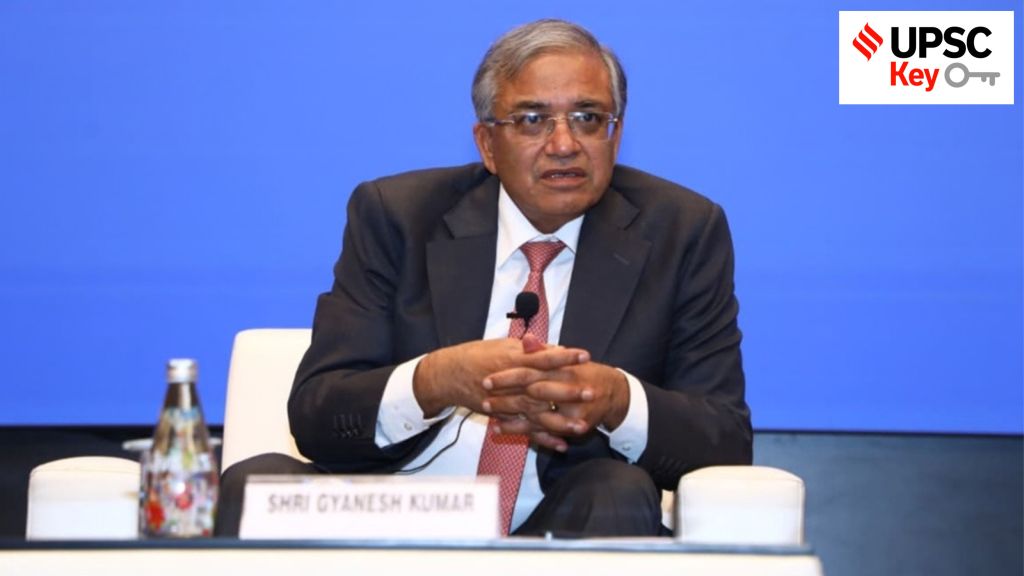 UPSC Key August 2026: Here's what you should be reading from the September 25, 2026 edition of The Indian Express.
Important topics and their relevance in UPSC CSE exam for September 25, 2026. If you missed the September 24, 2026 UPSC CSE exam key from the Indian Express, read it here
Explained

What would it take to triple the size of India’s economy
Syllabus:
Preliminary Examination: Economic and Social Development
Main Examination: General Studies III: Indian Economy and issues relating to planning, mobilization, of resources, growth, development and employment.
What’s the ongoing story: In a recent interview, Jamie Dimon, the Chairman of the Board and Chief Executive Officer of JPMorgan Chase & Co., said that India’s economy could be three times its current size over the next decade.
Key Points to Ponder:
• What is Gross Domestic Product (GDP)?
• What is the difference between real GDP and nominal GDP?
• What is meant by GDP at current prices and GDP at constant prices?
• What is the difference between GDP measured in domestic currency and GDP measured in US-dollar terms?
• What is Compound Annual Growth Rate (CAGR)?
• Why achieving a threefold increase in India’s GDP in US-dollar terms substantially more demanding than achieving the same increase in rupee terms?
• What are the major factors that determine India’s ability to sustain high economic growth over a prolonged period?
Key Takeaways:
• Dimon’s words carry weight because JPMorgan Chase is one of the biggest banks in the world, if not the biggest. As a financial firm, it operates across the world and has assets of $3.2 trillion.
• In India, by its own account, JPMorgan Chase has provided over $80 billion (or Rs 7.7 lakh crore or trillion) as credit and capital to clients across various industries since 2019. Additionally it has spent $90 million (Rs 861 crore) in philanthropic contributions since 2015.
• This is not the first time someone in authority has given a projection for India’s economy. For a while now, the current government has been chasing the $5-trillion economy mark.
• The initial reference to the $5-trillion mark was made by Prime Minister Narendra Modi in a speech at the World Economic Forum in 2018. At that time, he had said that the size of India’s economy will be $5 trillion by 2025. In 2018, India’s annual gross domestic product (or GDP, which is the measure of the size of any economy) was $2.7 trillion.
• In a speech later in 2018, the PM advanced this target to 2022. According to the data from the International Monetary Fund (IMF), as of the end of 2025-26 (which IMF refers to as 2025), India’s GDP was $3.9 trillion.
Do You Know:
• Gross Domestic Product (GDP) quantifies the overall economic activity and strength of a country by calculating the monetary value of all finished goods and services produced within its borders in a specific timeframe.
• Gross domestic product (GDP) measured in domestic currency reflects local economic output using native prices, while GDP measured in US-dollar terms converts that local value using exchange rates to allow for global comparisons.
• The GDP at current prices (Nominal GDP) measures the total value of all goods and services produced within a country using the market prices of that exact year. In contrast, GDP at constant prices (Real GDP) measures economic output by fixing prices to a specific base year, which completely removes the distortionary effects of inflation or deflation.
Other Important Articles Covering the same topic:
📍From rooftop solar to household gold: 5 lesser-known changes in India’s new GDP series
Previous year UPSC Prelims Question Covering similar theme:
1) Consider the following statements: (UPSC, CSE, 2017)
1. Tax revenue as a percent of GDP of India has steadily increased in the last decade.
2. Fiscal deficit as a percent of GDP of India has steadily increased in the last decade.
Which of the statements given above is/are correct?
(a) 1 only
(b) 2 only
(c) Both 1 and 2
(d) Neither I nor 2
Previous year UPSC Mains Question Covering similar theme:
📍What are the challenges before the Indian economy when the world is moving away from free trade and multilateralism to protectionism and bilateralism? How can these challenges be met? (UPSC, GS3, 2025)
‘Enemy state’ in UN charter: What is it, why Japan wants it removed
Syllabus:
Preliminary Examination: Current events of national and international importance.
Mains Examination: General Studies II: Important International institutions, agencies and fora- their structure, mandate.
What’s the ongoing story: In her first-ever address to the United Nations General Assembly (UNGA) on Tuesday (September 22), Japan’s Prime Minister Sanae Takaichi called on the UN to remove references to “enemy states” in its Charter. The label has recently been used by China and Russia to attack Japan’s plans to ramp up its defence spending.
Key Points to Ponder:
• ‘Enemy state’: What UN Charter says
• Why the provision ‘Enemy state’ was incorporated when the United Nations was established?
• Which provisions of the UN Charter contain references to ‘enemy states’?
• What is the significance of Article 53 and Article 107 in understanding the security architecture created by the UN Charter after the Second World War?
• ‘Japan’s demand for removal of the ‘enemy state’ clauses raises questions about the relationship between historical accountability and sovereign equality’—How far you agree with this?
• Why have attempts to reform or amend the UN Charter generally been difficult?
• What is the United Nations General Assembly (UNGA)?
• Know the composition, voting system and principal functions of United Nations General Assembly (UNGA).
• The United Nations General Assembly and the United Nations Security Council—Compare and Contrast
• What is the significance of the annual general debate of the UNGA?
Key Takeaways:
• World War II (1939-45) was fought primarily between two international coalitions: the Allied Powers on one side (Great Britain, the Soviet Union, and the United States) and the Axis Powers on the other (Germany, Italy, and Japan). The Allied Powers emerged victorious after Japan was the last constituent of the Axis coalition to surrender in September 1945.
• The UN Charter, which was drafted towards the end of World War II and came into force in its immediate aftermath on October 24, 1945, includes numerous references to “enemy states”. The Allies, who were instrumental in the drafting process and subsequently occupied permanent seats on the UN Security Council (UNSC), viewed it as a mechanism to counter the re-emergence of militarism or fascist politics in the erstwhile Axis Powers without having to seek recourse to the newly established UNSC.
• Paragraph 1 of Article 53 of the Charter states: “The Security Council shall, where appropriate, utilize such regional arrangements or agencies for enforcement action under its authority. But no enforcement action shall be taken under regional arrangements or by regional agencies without the authorization of the Security Council, with the exception of measures against any enemy state, as defined in paragraph 2 of this Article, provided for pursuant to Article 107 or in regional arrangements directed against renewal of aggressive policy on the part of any such state, until such time as the Organization may, on request of the Governments concerned, be charged with the responsibility for preventing further aggression by such a state.”
• Paragraph 2 of Article 53 says: “The term enemy state as used in paragraph 1 of this Article applies to any state which during the Second World War has been an enemy of any signatory of the present Charter.”
• Article 107 states: “Nothing in the present Charter shall invalidate or preclude action, in relation to any state which during the Second World War has been an enemy of any signatory to the present Charter, taken or authorized as a result of that war by the Governments having responsibility for such action.” In simple terms, it allows the Allied Powers the legal right to take enforcement actions against the vanquished Axis “enemy states” without needing prior approval from the UNSC. This acts as an exception to the general rule that bans the use of military force without UN approval.
• Paragraph 1(b) of Article 77 pertains to the application of the “trusteeship system” to “…territories which may be detached from enemy states as a result of the Second World War”. Under the Charter, the UN was to establish an “international trusteeship system for the administration and supervision” of “trust territories” (Article 75), which refer to “territories whose peoples have not yet attained a full measure of self-government” (Article 73). There were 11 such territories, located across Africa and the Pacific Islands.
Do You Know:
• In the past, Japanese leaders have criticised the presence of these clauses in the UN Charter. The UNGA had recognised the clauses as “obsolete” in 1995, and adopted a resolution in 2005 to delete references to “enemy States” from the Charter.
• But support from the UNSC, especially the five permanent members (also called the Big Five), has been lacking. The Big Five — the US, the UK, France, Russia, and China — can veto any measure.
• “The problem with a UN Charter Resolution is that it needs all five permanent members to approve it in their national capacity — not just in their votes in the General Assembly but they must also ratify it back home,” Manjeev Singh Puri, former Indian ambassador and Deputy Permanent Representative to the UN (2009-12), told The Indian Express.
• As to why these clauses have persisted for over eight decades, Puri said, “The world hasn’t really changed, has it? Has it not been a kind of Pax Americana in a certain way, with the permanent members having a certain sway on the ultimate state of geopolitics in the world through the Security Council veto?”
• According to him, the clauses have been in a “moribund situation” since 1995 but they remain a talking point in domestic politics, especially in Japan. “Another reason why the clauses have not been dropped is that Japan continues to host US troops on its soil,” Puri said, pointing to reservations that China and Russia might have.
Other Important Articles Covering the same topic:
📍81 years of the UN Charter: How did it come about?
Previous year UPSC Prelims Question Covering similar theme:
2) With reference to the United Nations General Assembly, consider the following statements: (UPSC, CSE, 2022)
1. The UN General Assembly can grant observer status to the non-member States.
2. Inter-governmental organisations can seek observer status in the UN General Assembly.
3. Permanent Observers in the UN General Assembly can maintain missions at the UN headquarters.
Which of the statements given above are correct?
(a) 1 and 2 only
(b) 2 and 3 only
(c) 1 and 3 only
(d) 1, 2 and 3
Previous year UPSC Mains Question Covering similar theme:
📍“The reform process in the United Nations remains unresolved, because of the delicate imbalance of East and West and entanglement of the USA vs. Russo-Chinese alliance.” Examine and critically evaluate the East-West policy confrontations in this regard. (UPSC, GS2, 2025)
Motion in both Houses, 2/3rds majority: Process to remove CEC
Syllabus:
Preliminary Examination: Indian Polity and Governance-Constitution, Political System, Panchayati Raj, Public Policy, Rights Issues, etc.
Main Examination: General Studies II: Appointment to various Constitutional posts, powers, functions and responsibilities of various Constitutional Bodies.
What’s the ongoing story: Congress sources told The Indian Express on Thursday (September 24) that the Opposition will soon move a motion in both Houses of Parliament to remove Chief Election Commissioner (CEC) Gyanesh Kumar. “The motion is being drafted with legal experts and we’ll soon submit notices in both Houses on behalf of joint Opposition,” said a source.
Key Points to Ponder:
• What are the constitutional position, composition and functions of the Chief Election Commissioner of India?
• What is the Procedure for Removal of Chief Election Commissioner of India?
• What is Impeachment?
• What’s the difference between being impeached and removed from office?
• What are the constitutional provisions and procedures governing the impeachment of Chief Election Commissioner of India?
• What are the Grounds of Impeachment?
• What role do parliamentary Houses and presiding officers play in the impeachment of Chief Election Commissioner of India?
Key Takeaways:
• It comes a day after The Indian Express revealed the criticisms that Election Commissioners Sukhbir Singh Sandhu and Vivek Joshi raised internally against the decisions and processes of the Election Commission of India (ECI) over the last few months. The ECI has three Election Commissioners and the CEC is first among equals — not the seniormost — and decisions are to be taken unanimously by all three as far as possible.
• The ECI is entrusted with the responsibility of conducting free and fair elections in the country. Article 324 of the Constitution and the CEC and Other Election Commissioners (Appointment, Conditions of Service and Term of Office) Act, 2023 lay down provisions regarding the appointment, tenure, and removal of the CEC.
• The President appoints the CEC and Election Commissioners upon the recommendation from a three-member selection committee comprising the Prime Minister, the Leader of the Opposition (LoP), and one member of the Union Cabinet. Those appointed should have previously held secretary-level positions in the Government and be “persons of integrity, who have knowledge of and experience in management and conduct of elections,” according to the 2023 Act.
• The appointments are made for a tenure of six years or until the age of 65 years, whichever comes first. The CEC enjoys the same services and monetary benefits extended to justices of the Supreme Court.
Do You Know:
• In the Indian Constitution, impeachment specifically refers to the formal removal process of the President, while removal is the general term used for other constitutional officeholders like Supreme Court and High Court judges.
• Article 324(5) of the Constitution states that the CEC can be removed from office only “in like manner and on the like grounds as a Judge of the Supreme Court.” This framing can also be found in Section 11(2) of the 2023 Act. The article further states that “any other Election Commissioner or a Regional Commissioner shall not be removed from office except on the recommendation of the Chief Election Commissioner”.
• With the view of shielding the ECI from political pressures, the bar for removing the CEC is purposefully set to be very high. Going by Article 124(4) of the Constitution, which contains the process for removing a Supreme Court judge, removal can only be “on the ground of proved misbehavior or incapacity.”
• Misbehaviour can comprise any corrupt practices or abuse of office. Over the years, courts have interpreted this to include actions which are incompatible with the office of the CEC or the CEC’s failure to discharge her official duties. Incapacity refers to a situation where the officer is unable to perform her duties.
• To initiate the removal of the CEC, members of both Houses must bring a notice of motion explicitly alleging misbehaviour or incapacity. To be admitted, an impeachment motion needs to be signed by at least 100 MPs in the Lok Sabha and 50 in the Rajya Sabha. They can consult people and materials to refuse or admit the motion. If the motion is admitted, an enquiry is conducted to examine the validity of the charges. This involves forming a committee to investigate evidence of misbehaviour or incapacity.
• The motion for removal must secure the support of a majority of the total membership of each House and be passed by a two-thirds majority “present and voting” in both Houses of Parliament. Once passed successfully, the President orders the removal of the CEC.
There is no discretion once the constitutional requirements are met, since the President acts on the advice of Parliament in this context.
Other Important Articles Covering the same topic:
📍Why is the 2023 Election Commissioner appointment law controversial, and why did SC refer it to CJI?
Previous year UPSC Prelims Question Covering similar theme:
3) Consider the following statements: (UPSC, CSE, 2017)
1. The Election Commission of India is a five-member body.
2. Union Ministry of Home Affairs decides the election schedule for the conduct of both general elections and bye-elections.
3. Election Commission resolves the disputes relating to splits/mergers of recognised political parties.
Which of the statements given above is/are correct?
(a) 1 and 2 only
(b) 2 only
(c) 2 and 3 only
(d) 3 only
Previous year UPSC Mains Question Covering similar theme:
📍Discuss the role of the Election Commission of India in the light of the evolution of the Model Code of Conduct. (UPSC, GS2, 2022)
Front Page
Can help our partners deal with energy crisis: Rubio
Syllabus:
Preliminary Examination: Current events of national and international importance.
Mains Examination: General Studies II: Bilateral, regional and global groupings and agreements involving India and/or affecting India’s interests.
What’s the ongoing story: In remarks after his meeting Wednesday with External Affairs Minister S Jaishankar who flagged India’s concerns over the new US law to punish Russia’s energy buyers, Secretary of State Marco Rubio said the US was “well-positioned to help regional partners address their energy security challenges”.
Key Points to Ponder:
• What is meant by energy security?
• What are the key highlights from the Lindsey O. Graham Sanctioning Russia and Iran Act of 2026?
• Why economic sanctions on Russian energy purchasers, including India and China?
• What has been India’s immediate response?
• How proposed US sanctions Bill against major buyers of Russian energy can impact India-US economic relations?
• US sanctions on countries purchasing Russian energy can have consequences beyond the targeted country—Asses implications for developing economies?
Key Takeaways:
• A US Department of State statement after the Rubio-Jaishankar meeting on the sidelines of the UN General Assembly said, “The two also discussed sanctions that could be levelled against states that engage economically with Russia and Iran. The Secretary emphasised that the United States remains well-positioned to help regional partners address their energy security challenges.”
• In his talks with Rubio, Jaishankar conveyed India’s economic and strategic concerns regarding the Russia sanctions Bill. He said they also discussed the situation in the Gulf and Ukraine.
• In his address to world leaders at the United Nations, Trump said he signed the “powerful new law” that provides him with “enormous new tariff authorities” on major buyers of Russian oil. “If necessary, I will have to use them. It’s time to stop the killing,” he said.
• These developments come at a time when Delhi and Washington are working to finalise a bilateral trade deal. From India’s point of view, the Russia sanctions Bill does give powers to the US President to waive the application of its provisions. India will almost certainly push for a waiver.
• Meaningfully reducing Russian oil imports is just not an option for Delhi given the prevailing global energy situation due to the crisis in West Asia. Analysts believe that even for Washington, removing millions of barrels of Russian oil from the global market when energy flows from West Asia remain highly constrained will not be prudent.
Do You Know:
• The Lindsey O. Graham Sanctioning Russia and Iran Act, which was signed into law by President Donald Trump last week, authorises the US to impose up to 100 per cent tariffs on Russian energy purchasers, including India and China. India depends on imports to meet over 88 per cent of its crude oil needs, and Russia currently accounts for nearly half of these imports.
• The ‘Lindsey O. Graham Sanctioning Russia and Iran Act of 2026’ gives Trump the powers to slap duties of up to 100% on foreign nations that purchase Russian oil and natural gas — India and China are among its biggest importers.
• The Bill had been cleared by a wide majority by the US Senate (the country’s upper house) last month. On Wednesday, the US House (the lower house) passed it by 262 votes to 159, as 58 Democrats broke with party leaders to join all but seven Republicans in favour. All that’s needed now is Trump’s approval.
• India’s hefty imports of Russian oil have been a point of friction in the bilateral relationship between Delhi and Washington. The Trump administration has been trying to push Delhi to cut down on Russian oil purchases and increase energy imports from the US.
• In March this year, when India was granted a waiver on Russian imports amid the war in West Asia, US Treasury Secretary Scott Bessent said, “India is an essential partner of the United States, and we fully anticipate that New Delhi will ramp up purchases of US oil.”
Over the past few years, the US has consistently featured among the top five-six suppliers of crude oil to India. In the first eight months of 2026, it was India’s sixth-largest supplier of crude oil behind Russia, Saudi Arabia, the UAE, Iraq and Brazil, according to tanker data from commodity market analytics firm Kpler. India’s oil imports from the US in the January-August period averaged at 177,000 barrels per day (bpd).
• While the US has also been among the large suppliers of LNG to India in recent years, the West Asia conflict has made it the top supplier because import volumes from traditional West Asian suppliers have plummeted. Kpler data shows that India’s LNG imports from the US surged 172% year-on-year in April-July to 2.39 million tonnes.
Other Important Articles Covering the same topic:
📍Russia sanctions Bill: Tool for Trump, worry for India
Previous year UPSC main Question Covering similar theme:
📍What is the significance of Indo-US defence deals over Indo-Russian defence deals? Discuss with reference to stability in the Indo-Pacific region. (UPSC, GS2, 2020)
📍Explain the key challenges for India’s energy security. What measures do you suggest for ensuring energy security along with economic growth and sustainability ? (UPSC, GS3, 2026)
Economy
Fear of shift to cash due to merchant fee on UPI ‘100% misplaced’: Govt sources
Syllabus:
Preliminary Examination: Economic and Social Development
Mains Examination:
• General Studies II: Government policies and interventions for development in various sectors and issues arising out of their design and implementation.
• General Studies III: Indian Economy and issues relating to planning, mobilization, of resources, growth, development and employment.
What’s the ongoing story: Fears of the public shifting to cash because of the merchant fee on UPI transactions of more than Rs 2,000 are “100% misplaced”, government sources said on Thursday, arguing that a Merchant Discount Rate (MDR) already exists on credit and debit cards other than RuPay debit cards and “no one is giving them up”.
Key Points to Ponder:
• What is the Unified Payments Interface (UPI)?
• What is Merchant Discount Rate (MDR)?
• How Merchant Discount Rate (MDR differs from a tax, cess and surcharge?
• Compare and Contrast Person-to-Person (P2P) and Person-to-Merchant (P2M) UPI transactions.
• What is the role of the National Payments Corporation of India (NPCI) in India’s retail digital payments ecosystem?
• What is meant by Digital Public Infrastructure (DPI)?
• How can introducing MDR on selected high-value merchant transactions affect small businesses, consumers and digital-payment adoption?
Key Takeaways:
• “How long can someone provide a service for free? We would be killing our golden goose!” an official said, requesting anonymity. “Merchants have always absorbed the MDR on credit cards. But people are still getting Visa, Mastercard, and Amex cards. The merchant fee on debit and credit cards is significantly higher than what has been proposed on UPI and is broadly in the range of 1-3%.
• On the subject of a Goods and Services Tax (GST) of 18% applying on the MDR on person-to-merchant UPI payments, the official said it was hoped that the GST Council “will take a favorable view and be reasonable”. The GST Council is scheduled to meet on October 7. The merchant fee on person-to-merchant UPI transactions of more than Rs 2,000 will begin from October 15. The GST Council is not expected to discuss the indirect tax rate on MDR.
• The National Payments Corporation of India’s (NPCI) decision that a 0.4% fee will apply on merchants on UPI payments of over Rs 2,000 has led to concerns that shopkeepers will stop accepting UPI as a mode of payment. Consumers, meanwhile, think sellers will pass on the fee to them and increase prices.
• Only 4% of person-to-merchant UPI transactions are for more than Rs 2,000 and will attract a merchant fee. However, this small number of payements account for two-thirds of person-to-merchant UPI payments when they are measured in value terms. All person-to-person UPI payments will remain without any MDR. Payments made via RuPay debit cards, even those of more than Rs 2,000, will attract no MDR.
• Authorities have repeatedly said they will look to ensure that merchants don’t pass on the fee to consumers, with sources saying on Thursday that the government is willing to talk with the Indian Banks’ Association (IBA) to set up a mechanism through which it can be monitored if shopkeepers are passing on the MDR to buyers.
Do You Know:
• Merchant Discount Rate (alternatively referred to as the Transaction Discount Rate or TDR) is the sum total of all the charges and taxes that a digital payment entails. For instance, the MDR includes bank charges, which a bank charges customers and merchants for allowing payments to be made digitally. Similarly, MDR also includes the processing charges that a payments aggregator has to pay to online or mobile wallets or indeed to banks for their service.
• UPI will continue to remain “completely free for all person-to-person transactions, irrespective of the amount transferred”, NPCI said. This means that payments made to individuals, family, friends, and personal contacts will remain completely free for the sender as well as the receiver.
• Payments to merchants, or person-to-merchant (P2M) transactions, of up to Rs 2,000, will remain free, but payments above this threshold will attract o.4% MDR. For high-value UPI payments to merchants exceeding Rs 75,000, the 0.4% MDR will be capped at Rs 300 per transaction.
• Payments for essential services like railways, telecommunications, insurance, fuel, utility bill payments (including electricity, water, piped gas), educational transactions and agricultural inputs will attract a flat MDR of Rs 5 per transaction, instead of the 0.4% levy.
• UPI’s costs have been borne by banks and other payments industry players. For years now, they have sought to be compensated for bearing this cost, which is as high as Rs 20,000 crore every year and goes towards maintaining the payments infrastructure, which includes cloud storage, the payment app itself and customer support features. The government says MDR will, therefore, be used to invest in the digital payments infrastructure.
Other Important Articles Covering the same topic:
📍MDR charges announced: Who will pay how much for UPI transactions
Previous year UPSC Prelims Question Covering similar theme:
4) Which one of the following best describes the term “Merchant Discount Rate” sometimes seen in news? (UPSC CSE, 2018)
1. The incentive given by a bank to a merchant for accepting payments through debit cards pertaining to that bank.
2. The amount paid back by banks to their customers when they use debit cards for financial transactions for purchasing goods or services.
3. The charge to a merchant by a bank for accepting payments from his customers through the bank’s debit cards.
4. The incentive given by the Government to merchants for promoting digital payments by their customers through Point of Sale (PoS) machines and debit cards.
5) Which one of the following statements about Unified Payments Interface (UPI) and Central Bank Digital Currency (Digital Rupee) is not correct ? (UPSC CSE, 2026)
(a) UPI is a real-time payment system but Digital Rupee is akin to sovereign paper currency.
(b) In case of UPI, settlement for end users happens instantly as the money gets immediately debited or credited but in case of Digital Rupee, there is no settlement as the wallet balance gets transferred to another wallet.
(c) UPI transactions are recorded by banks and reflected in bank statements but in the case of Digital Rupee, no data is captured in bank statements as transactions are from one wallet to another.
(d) In both the cases (UPI and Digital Rupee), the liability lies with the users and their respective banks.
Previous year UPSC main Question Covering similar theme:
📍How can the ‘Digital India’ programme help farmers to improve farm productivity and income? What steps has the Government taken in this regard? (UPSC, GS3, 2015)
|
PRELIMS ANSWER KEY |
|
1.(d) 2.(d) 3.(d) 4.(c) 5.(d) |
For any queries and feedback, contact priya.shukla@indianexpress.com
Subscribe to our UPSC newsletter. Stay updated with the latest UPSC articles by joining our Telegram channel – IndianExpress UPSC Hub, and follow us on Instagram and X.


Priya Kumari Shukla is a Senior Copy Editor in the Indian Expre... Read More
 Share


