© IE Online Media Services Pvt Ltd
 31 min read


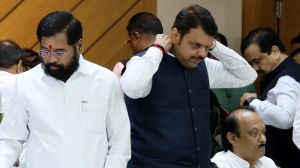
 India is examining Bangladesh’s request to extradite Sheikh Hasina. Know more in our UPSC Key. (File photo)
Important topics and their relevance in UPSC CSE exam for November 27, 2025. If you missed the November 26, 2025, UPSC CSE exam key from the Indian Express, read it here.
Syllabus:
Preliminary Examination: Current events of national and international importance
Mains Examination: General Studies-II: India and its neighbourhood- relations, Bilateral, regional and global groupings and agreements involving India and/or affecting India’s interests.
What’s the ongoing story: India on Wednesday confirmed that Bangladesh has sent a request for extradition of ousted Prime Minister of Bangladesh Sheikh Hasina. This is the second time that Dhaka has sent the extradition request.
Key Points to Ponder:
— What is the history of India-Bangladesh bilateral relations?
— What are the areas of cooperation between India and Bangladesh?
— What are the challenges in India and Bangladesh ties?
— How does growing Chinese influence in Bangladesh pose a new challenge for India?
— How does the political transition in Bangladesh and its impact on India’s foreign policy underscores the importance of neighbourhood diplomacy?
— Map work: Location of Bangladesh and Indian states sharing boundaries with Bangladesh.
Key Takeaways:
— The Ministry of External Affairs’ official spokesperson Randhir Jaiswal said, “Yes we have received a request. The request is being examined as part of ongoing judicial and internal legal processes.”
— “We remain committed to the best interests of the people of Bangladesh, including peace, democracy, inclusion and stability in that country and will continue to engage constructively in this regard with all stakeholders,” he said.
— In December last year, about four months after Hasina fled to India following massive protests that brought down her 16-year-old regime, Dhaka had sent a diplomatic note asking New Delhi to send her back.
— The development has the potential to impact bilateral ties – already under strain since Hasina’s arrival on August 5 — and will need some deft diplomacy.
— “We have sent a note verbale (diplomatic message) to the Indian government saying that Bangladesh wants her back here for the judicial process,” Touhid Hossain, Foreign Affairs Advisor in Bangladesh’s interim government, had said last Friday.
— The International Crimes Tribunal (ICT) in Dhaka had convicted Hasina and sentenced her to death penalty last week for “crimes against humanity and genocide”.
— Hasina’s presence in India and her public statements have strained India-Bangladesh ties over the past one year and four months. Bangladesh interim government’s Chief Advisor Prof Muhammad Yunus had flagged this concern during his meeting with Foreign Secretary Vikram Misri in Dhaka on December 9 last year as well.
Do You Know:
— India has not yet rejected the extradition request, but there are provisions within the extradition treaty that allows for denying her extradition on the grounds of it being political in nature. Also, Delhi can question the due process of the trial.
Other Important Articles Covering the same topic:
📍Sheikh Hasina sentenced to death: what happens now
📍ICT: tribunal which has convicted Hasina
Previous year UPSC Prelims Question Covering similar theme:
(1) With reference to river Teesta, consider the following statements: (UPSC CSE 2017)
1. The source of river Teesta is the same as that of Brahmaputra but it flows through Sikkim.
2. River Rangeet originates in Sikkim and it is a tributary of river Teesta.
3. River Teesta flows into Bay of Bengal on the border of India and Bangladesh.
Which of the statements given above is/are correct?
(a) 1 and 3 only
(b) 2 only
(c) 2 and 3 only
(d) 1, 2 and 3
Previous year UPSC Prelims Question Covering similar theme:
Critically examine the compulsions which prompted India to play a decisive role in the emergence of Bangladesh. (UPSC CSE 2013)
The protests in Shahbag Square in Dhaka in Bangladesh reveal a fundamental split in society between the nationalists and Islamic forces. What is its significance for India? ( UPSC CSE 2013)
Syllabus:
Preliminary Examination: Current events of national and international importance
Mains Examination: General Studies-II, III: Government policies and interventions for development in various sectors and issues arising out of their design and implementation; Indian Economy and issues relating to planning, mobilisation of resources, growth, development and employment.
What’s the ongoing story: The Union Cabinet Wednesday approved a Rs 7,280-crore rare earth manufacturing programme, as India looks to cut reliance on imports for the critical elements crucial to sectors ranging from electric vehicles and aerospace to defence and electronics.
Key Points to Ponder:
— What are rare earth magnets?
— What is the use of rare earth magnets?
— How do China’s restrictions on rare earth magnets impact the supply chain?
— What are the initiatives taken by the Indian government for self-reliance in rare minerals?
— What are the rare earth minerals found in India?
Key Takeaways:
— The government said that the ‘Scheme to Promote Manufacturing of Sintered Rare Earth Permanent Magnets’ is a first-of-its-kind initiative, and aims to establish 6,000 metric tonnes per annum (MTPA) of integrated rare earth permanent magnet (REPM) manufacturing in India, to enhance the country’s self-reliance and position it as a key player in the global REPM market.
— India’s consumption of rare earth permanent magnets is expected to double by 2030, but it currently meets its demand primarily through imports, the government said. Currently, China has a stranglehold over these critical elements, and it had introduced export controls on the magnets in April, in response to the tariffs imposed on it by the US.
— India imported over 53,000 metric tonnes of rare earth magnets during the fiscal year ending March 2025.
— In a press release, the government said the scheme will support the creation of integrated REPM manufacturing facilities, involving conversion of rare earth oxides to metals, metals to alloys, and alloys to finished REPMs. The total duration of the scheme will be 7 years from the date of award, including a two-year gestation period.
— New restrictions on rare earth magnet and related materials from China that kicked in from April 4 have impacted automakers across the world, including vehicle manufacturers in India.
— Rare earth magnets, especially neodymium-iron-boron (NdFeB) magnets, are crucial for EV manufacturing, particularly in electric motors. They provide the strong magnetic fields needed for efficient and powerful electric motors, including traction motors that drive EVs. These magnets also play a major role in other EV components like power steering systems, wiper motors, and braking systems.
Do You Know:
— While the availability of rare earth metals is not limited to China, it is in the efficient processing of these critical elements where Beijing has a substantial lead, which was once enjoyed by the US and Japan.
— In recent years, Japan has been able to restart some of its minerals’ processing industry owing to government policies, but countries like the US and India are heavily dependent on Chinese exports of these metals.
— India imported 2,270 tonnes of REEs in 2023-24, up 23 per cent from 1,848 tonnes in 2019-20, according to a recent press release from the Ministry of Mines. Imports from China accounted for 65 per cent, and another 10 per cent came from Hong Kong.
— The 17 rare earth elements (REE) include the 15 Lanthanides (atomic numbers 57 — which is Lanthanum — to 71 in the periodic table) plus Scandium (atomic number 21) and Yttrium (39). REEs are classified as light RE elements (LREE) and heavy RE elements (HREE).
Other Important Articles Covering the same topic:
📍What is India’s share in rare earth elements, the backbone of modern technologies?
Previous year UPSC Prelims Question Covering similar theme:
(2) With reference to the Rare Earth Elements, consider the following statements:
1. These are crucial for manufacturing high-value goods in defence and clean energy.
2. The United States dominated rare earth elements, supplying 85 to 95 per cent of the world’s demand.
3. Gadolinium (Gd) and holmium (Ho) are considered Rare Earth Elements.
Which of the statements given above are correct?
(a) 1 and 2 only
(b) 2 and 3 only
(c) 1 and 3 only
(d) 1, 2 and 3
Syllabus:
Preliminary Examination: General issues on Environmental Ecology, Biodiversity and Climate Change – that do not require subject specialisation
Mains Examination: General Studies-III: Conservation, environmental pollution and degradation, environmental impact assessment.
What’s the ongoing story: On November 20, the Supreme Court accepted the recommendations of a Union Environment Ministry panel on the definition of Aravalli Hills ostensibly to restrict mining: any landform that is at an elevation of 100 m or more above the local relief will be considered as part of Aravalli Hills along with its slopes and adjacent land.
Key Points to Ponder:
— Read about the Aravali Hills.
— What is the significance of the Aravalli Hills?
— Read about the Forest Survey of India (FSI), Geological Survey of India (GSI), and Survey of India (SOI) and their role in framing a uniform definition of the Aravalli Hills.
— What are the threats to the Aravalli Hills?
— How does mining impact the Aravalli ecosystem?
— What steps should be taken to protect the Aravalli Hills?
Key Takeaways:
— What the panel did not mention is that by this definition, more than 90% of the Aravali Hills will not be counted as Aravalli anymore and be potentially open to mining and construction with severe environmental ramifications, including the quality of air in the National Capital Region.
— Aravalli extends from Delhi in the north to Gujarat in the south through Haryana and Rajasthan. Rajasthan accounts for nearly two-thirds of the mountain range. For decades, the hills have been under severe pressure from mining, both legal and illegal, and other development activities such as construction.
— Last year, the SC had asked the government to come up with an uniform definition of the Aravalli. While the FSI has been using a 3-degree slope yardstick to define Aravalli Hills since 2010, a technical committee formed for the purpose in 2024 modified the benchmark and proposed to identify as Aravalli Hills any landform with a slope of at least 4.57 degrees and a height of at least 30m. These yardsticks would effectively cover upto 40% of the Aravallis.
— Yet, the ministry prescribed the 100-m definition to the SC in an unsigned report as part of its affidavit. It also conflated slope and height parameters to justify the new definition, proposed subjective height references that, experts red-flag, may lead to the exclusion even of many hills 100-m or higher.
— The Hon’ble Court has accepted the committee’s recommendations relating to: (i) the uniform definition of the Aravalli Hills and Ranges; (ii) prohibition of mining in core/ inviolate areas; and (iii) measures for enabling sustainable mining and preventing illegal mining in the Aravalli Hills and Ranges.”
— In May 2024, the SC had asked the ministry to form a committee under the Environment Secretary to “come out with a uniform definition” for Aravalli to protect the hills from mining. This committee, in turn, formed a technical sub-committee (TSC) in June 2024 under the FSI with Geological Survey of India (GSI) and Survey of India (SOI) as members.
— Back in 2010, the FSI had proposed that all areas above the minimum elevation of an Aravalli district — 115m in case of Rajasthan — with a slope of at least 3 degrees be delineated as hills together with a uniform 100-metre-wide buffer downhill. A succession of such hills within 500m intervals were to be considered a hill range.
— In October 2024, the FSI-led sub-committee modified this benchmark to define Aravalli Hills and Ranges as “the Proterozoic fold belt… forming a linear series of alternate hills (including tablelands) and valley” with a slope of at least 8% (4.57 degree) and elevation of at least 30m.
— In September 2025, the FSI submitted a report to the Environment Secretary, presenting districtwise hill maps of the entire Aravalli region. “Even modest hills of 10-30 m act as strong natural windbreaks, creating sheltered zones that extend many times their height downwind and thereby effectively halting near-surface sand transport,” the report said.
— In October, however, the ministry submitted to the SC that the Aravalli states “have agreed to the criteria of elevation of 100 m and above from the local relief/ ground level, along with supporting slopes, presently followed by Rajasthan for regulating mining in the Aravalli Hills and Ranges.”
— Accepting the 100-m height definition last week, the apex court has asked the ministry to develop a Management Plan for Sustainable Mining with the help of Indian Council of Forestry Research and Education (ICFRE) for the Aravalli Hills under the new definition.
Do You Know:
— The Aravalli Mountains, one of the world’s oldest ranges, are a prominent geological feature shaping western and northwestern India.
— It serves as a natural barrier against desertification, preventing the expansion of the Thar Desert and protecting cities like Delhi, Jaipur, and Gurgaon.
— The range also supports water recharge systems and is the source of important rivers such as Chambal, Sabarmati, and Luni. Its forests, grasslands, and wetlands harbour endangered flora and fauna, contributing to biodiversity and regulating precipitation through evapotranspiration, which helps mitigate droughts.
— The highest peak of the Aravalli mountain range is Guru Shikhar, located in the Sirohi district of Rajasthan.
UPSC Prelims Practice Question Covering similar theme:
(3) With reference to the Aravalli ranges, consider the following statements:
1. These are one of the world’s oldest ranges.
2. It lies in western and northwestern India.
3. It acts as a natural barrier against desertification.
4. The highest peak of the Aravalli mountain range is Arma Konda.
How many of the statements given above are correct?
(a) Only one
(b) Only two
(c) Only three
(d) All four
Syllabus:
Preliminary Examination: Current events of national and international importance
Mains Examination: General Studies-II: Government policies and interventions for development in various sectors and issues arising out of their design and implementation.
What’s the ongoing story: Shashi Tharoor writes: The tectonic plates of global power have shifted. No longer is control over oil fields or naval chokepoints the principal determinant of geopolitical pre-eminence; data is the new currency of the realm.
Key Points to Ponder:
— Data is the new currency– What do you understand?
— What is SWIFT?
— What is Digital capitulation?
— What is data localisation?
— What is Digital sovereignty? Why is it important?
— What are the Digital Personal Data Protection Rules?
Key Takeaways:
— A nation’s digital footprint is now the primary source of wealth and the most effective tool of diplomacy. For a burgeoning economic power like India, this reality presents a stark, defining choice.
— We must navigate a trilemma of digital governance: Digital ascendancy, digital capitulation, or genuine digital sovereignty. Our future prosperity, and indeed our national dignity, hangs in the balance.
— The current global digital order is dominated by the digital ascendancy model, wielded almost exclusively by the United States. This model is characterised by the near-total control of the world’s fundamental information, data, and financial highways.
— The weaponisation of this technological hegemony is a demonstrable fact, witnessed in the expulsion of both Iran and Russia from the global financial system, facilitated by control over systems like SWIFT.
— India is not immune to this pressure. Our ability to secure cheap Russian crude was curtailed because no company wished to risk the commercial paralysis that being shut out of the dollar-denominated financial architecture would entail.
— Equally egregious were the pre-emptive concessions made on digital taxation and digital trade, where the subtle but persistent pressure from Western negotiating partners compelled us to withdraw provisions designed to secure revenue from mega-firms operating within our borders.
— This brings us to the second, and arguably most perilous, option for India: Digital capitulation. The recent actions of Indonesia and Malaysia serve as a cautionary tale. These nations, in their haste to secure trade agreements, have traded away digital autonomy for immediate (and often ephemeral) commercial gains.
— Self-respecting and self-reliant India must, therefore, resolutely choose the third path: Digital sovereignty. This model involves creating legal and regulatory structures that ensure sovereign control over data exports and unhindered rights to regulate the national digital space.
— India is a democracy, unlike China; but China’s decision to largely exclude Big Tech from its market, while often criticised, provided the fertile soil for companies like Alibaba, Tencent, and Didi to flourish into multi-billion-dollar global entities.
— Through deliberate domestic procurement and industrial policy, China built a sovereign compute stack, from hardware to cloud services, that today powers a digital economy accounting for an astonishing 40 per cent of its GDP, valued at over $7 trillion.
— Contrast this with India’s $224 billion in software exports. While valuable, this revenue often fails to create the commensurate feedback loops of high-value job creation, sovereign data capital, and proprietary AI development within our own economy.
— Our exceptional pool of software and semiconductor design engineers has contributed significantly to the creation of trillion-dollar valuations and explosive global growth abroad.
— However, as a democracy with open interactions with the free world, India cannot simply replicate the Chinese model.
— The notification of the Digital Personal Data Protection Rules — even if some of us may quibble over their details — is a welcome development, ensuring that domestic law prevails over international commitments.
— The foundations for a sovereign digital future have already been laid through initiatives like the Digital Public Infrastructure (DPI), the Aadhaar system, the India Stack, and strategic focus on AI, semiconductors, and quantum computing.
— These indigenous capabilities must be protected fiercely. Any attempt in ongoing free trade agreement (FTA) negotiations to insert clauses that mandate “refraining from adopting or maintaining measures that discriminate against digital services or products of the other party” will be tantamount to digital self-sabotage.
— India’s path to atmanirbharta in the digital domain requires a clear, unambiguous stance. We must emerge from negotiations in the category of a truly digital sovereign, empowered to promote our own digital giants and capture the wealth generated by our own data.
Do You Know:
— The Ministry of Electronics and IT (MeitY) has notified the long awaited data protection rules, paving the way for India to have a functional privacy law, eight years after the Supreme Court ruled it as a fundamental right. The notification of the rules comes over two years after the Digital Personal Data Protection Act (DPDP Act) received the President’s assent in August 2023.
— The DPDP Rules, 2025, say that the Centre will specify the kind of personal data which can be processed by “significant data fiduciaries” subject to the restriction that such personal data and traffic data related to its flow is not transferred outside the territory of India. A committee, to be formed by the government, will determine it.
— Data localisation relates to measures that result in restricting data flow within a jurisdiction’s boundaries.
Other Important Articles Covering the same topic:
📍Govt will shorten data protection compliance timeline from 18 months: IT Minister Vaishnaw
📍Digital Personal Data Protection Act: The speedbumps ahead
Previous year UPSC Prelims Question Covering similar theme:
(4) ‘Right to Privacy’ is protected under which Article of the Constitution of India? (UPSC CSE 2021)
(a) Article 15
(b) Article 19
(c) Article 21
(d) Article 29
Syllabus:
Preliminary Examination: Current events of national and international importance
Mains Examination: General Studies-II: Government policies and interventions for development in various sectors and issues arising out of their design and implementation
What’s the ongoing story: Five years after the National Education Policy (NEP) 2020 recommended it, the central government is set to table a draft law for a single regulatory authority for higher education.
Key Points to Ponder:
— What is the National Education Policy 2020?
— Is education a state list or union list?
— How are higher education institutions regulated in India?
— What are the challenges in the regulation of higher education?
— What are the major concerns related to this Bill?
— What are the objectives of this Bill? How is it different from the 2018 Bill?
— Understand the problems facing the Higher educations and steps taken by the government to address these
Key Takeaways:
— The Higher Education Commission of India Bill 2025, to be introduced in the Winter Session of Parliament next month, seeks to merge the functions of three statutory bodies — the University Grants Commission (UGC), the National Council for Teacher Education (NCTE), and the All India Council for Technical Education (AICTE).
— According to officials, the Bill is likely to follow NEP 2020’s recommendations. The NEP proposed a single overarching regulator subsuming the functions of the UGC, AICTE, and NCTE.
— While the UGC regulates higher education, the AICTE oversees technical education in engineering and management, and the NCTE sets standards for teacher education.
— The NEP proposes four verticals under HECI: the National Higher Education Regulatory Council to regulate all fields except medical and legal education; the National Accreditation Council as an accrediting body; the General Education Council to frame learning outcomes; and the Higher Education Grants Council for funding.
— The commission aims to reduce red tape. Pointing to the “heavy-handed” nature of the current system.
— This is the Modi government’s second attempt at replacing the UGC. The earlier Bill — the Higher Education Commission of India (Repeal of University Grants Commission Act) Bill, 2018 — envisioned a commission replacing the UGC with a HECI that would comprise a chairperson, vice-chairperson, and 12 members appointed by the Centre. Since this version did not subsume AICTE and NCTE, their chairpersons were to be commission members.
— After the draft was released for feedback, it faced pushback over concerns that it could centralise power and lead to overregulation. It saw no progress thereafter, with the government taking it back to the drawing board to align it with NEP 2020.
Do You Know:
— The National Education Policy, 2020 is the third national education policy of the country. The first came in 1968 and the second in 1986, under Indira Gandhi and Rajiv Gandhi respectively; the NEP of 1986 was revised in 1992 when P V Narasimha Rao was Prime Minister. The third NEP is released under the Prime Ministership of Narendra Modi.
— The NEP proposes sweeping changes including opening up of Indian higher education to foreign universities, dismantling of the UGC and the All India Council for Technical Education (AICTE), introduction of a four-year multidisciplinary undergraduate programme with multiple exit options, and discontinuation of the M Phil programme.
Other Important Articles Covering the same topic:
📍Explained: India’s National Education Policy, 2020
📍‘Vexed issue’: SC says it can’t compel any state to adopt National Education Policy
Previous year UPSC Prelims Question Covering similar theme:
(5) Which of the following provisions of the Constitution does India have a bearing on Education? (UPSC CSE 2012)
1. Directive Principles of State Policy
2. Rural and Urban Local Bodies
3. Fifth Schedule
4. Sixth Schedule
5. Seventh Schedule
Select the correct answer using the codes given below:
(a) 1 and 2 only
(b) 3, 4 and 5 only
(c) 1, 2 and 5 only
(d) 1, 2, 3, 4 and 5
Previous year UPSC Mains Question Covering similar theme:
How have digital initiatives in India contributed to the functioning of the education system in the country? Elaborate on your answer. (UPSC CSE 2020)
Syllabus:
Preliminary Examination: General issues on Environmental ecology, Biodiversity and Climate Change – that do not require subject specialization.
Main Examination: General Studies-III: Conservation, environmental pollution and degradation, environmental impact assessment.
What’s the ongoing story: Earlier this week, the Supreme Court asked authorities to explain the equipment used in Delhi air-quality monitoring stations and whether it is suited to the city’s conditions — a question raised at a time when Delhi relies heavily on AQI readings to gauge daily exposure to pollution.
Key Points to Ponder:
— What is air pollution and what are its sources?
— What are the impacts of poor air quality?
— What is the Air Quality Index (AQI)?
— Read about the Continuous Ambient Air Quality Monitoring Stations (CAAQMS).
— What are the key initiatives taken by the Indian government to control air pollution?
— What steps should be taken to control air pollution?
Key Takeaways:
— The city’s network comprises 40 Continuous Ambient Air Quality Monitoring Stations (CAAQMS) — compact, temperature-controlled cabins that function as automated laboratories.
Spread across the city for representative measurement, each station must track eight pollutants: PM2.5, PM10, nitrogen dioxide, sulphur dioxide, carbon monoxide, ozone, ammonia and lead.
— They operate under Central Pollution Control Board (CPCB) guidelines issued in 2012, which specify the principles, calibration steps and quality-control procedures all instruments must follow.
— Each air-conditioned, dust-proof station contains racks of analysers, pumps and data loggers, with sampling inlets mounted on a mast above the roof.
— Particulate matter is measured using Beta Attenuation Monitors (BAM), which rely on the beta ray attenuation principle. A small Carbon-14 or Krypton-85 source emits beta rays through a clean patch of filter tape. After air is drawn through and dust collects on the tape, the instrument re-measures the spot. Fewer beta rays pass through, and the decline in signal is used to calculate PM2.5 and PM10 concentrations.
— For gaseous pollutants, stations mainly use optical methods because gases absorb or emit specific wavelengths of light. Sulphur dioxide is measured by UV fluorescence, which detects the weak glow SO2 emits under ultraviolet light. Ozone is measured by UV photometry, which tracks how much UV light it absorbs. Carbon monoxide is measured using non-dispersive infrared (NDIR) absorption, based on how much infrared light CO absorbs.
— Nitrogen oxides are measured through chemiluminescence, where instruments detect the faint light produced when the gases react with ozone inside the analyser. Ammonia is measured using optical spectroscopy based on its characteristic absorption of light. These methods are approved under the National Ambient Air Quality Standards (NAAQS) of 2009, which list “gravimetric, wet-chemical (for manual stations) and automatic instrument-based techniques” to ensure comparable data across India.
— AQI quality depends on both equipment performance and the amount of validated data recorded. CPCB requires at least 16 hours of reliable daily data for at least three pollutants — one of which must be PM2.5 or PM10. If instruments shut down due to calibration, power issues or extreme weather, a station may miss this threshold.
— Technical and operational issues can also affect accuracy. High humidity can interfere with particulate monitors, causing particles to absorb water and appear heavier. Instruments may drift if not calibrated frequently enough. Station location matters too: if installed too close to buildings, trees or exhaust vents, distorted airflow can skew readings. Power fluctuations or data-transmission failures can interrupt real-time updates.
Do You Know:
— The AQI in India is a standardized system that measures and reports air quality based on the concentration of major air pollutants, including PM10, PM2.5, nitrogen dioxide (NO₂), sulfur dioxide (SO₂), ozone (O₃), carbon monoxide (CO), and ammonia (NH₃).
— The AQI is categorized into six levels: Good, Satisfactory, Moderately Polluted, Poor, Very Poor, and Severe, with associated health advisories. This system helps inform the public about local air quality and its potential health effects.
— Among the more harmful pollutants are those of a smaller size, such as particulate matter (PM) 2.5, which is an atmospheric particulate matter of a diameter smaller than 2.5 micrometres (or around 3 per cent of the diameter of a human hair). It causes respiratory problems and reduces visibility. The particles can only be detected with the help of an electron microscope because they are so small.
| Pollutants | Source | Impact |
| Nitrogen dioxide (NO2) | Burning of fuel, with sources including emissions from vehicles and power plants. | Short-term exposure to high levels of NO2 can aggravate respiratory diseases. Long-term exposure may also contribute to the development of asthma and could increase susceptibility to respiratory infections. |
| Ozone (O3) | Surface ozone pollutant is formed by the reaction of atmospheric pollutants in the presence of sunlight. | Increase in risk of hospital admissions for Chronic Obstructive Pulmonary Diseases (COPD) and the number of cardiovascular and respiratory deaths |
| Sulfur dioxide (SO2) | Burning of fossil fuels by power plants and other industrial facilities. Additional sources are industrial processes and natural sources such as volcanoes. | Harmful to the cardiovascular system and can lead to the development of respiratory illnesses. SO2 can also react with other compounds to form particulate matter. |
| Ammonia (NH3) | Increase in fertilizer use coupled with large contributions from livestock waste have resulted in the world’s highest concentrations of atmospheric ammonia | Excess ammonia is harmful to plants and reduces air and water quality |
| Lead (Pb) | It is a naturally occurring toxic metal found in the Earth’s crust exposed through mining, smelting, manufacturing and even recycling activities | Children who survive severe lead poisoning may be left with permanent intellectual disability and behavioural disorders. |
| Carbon Monoxide (CO) | It is given off when fuel containing carbon, such as wood, coal and petrol, is burned | If CO levels are high enough, a person may become unconscious and die. Long-term exposure has been linked with an increased risk of heart disease. |
Other Important Articles Covering the same topic:
📍UPSC Issue at a Glance | Air Pollution: 4 Key Questions You Must Know for Prelims and Mains
Previous year UPSC Prelims Question Covering Similar Theme:
(6) In the cities of our country, which among the following atmospheric gases are normally considered in calculating the value of Air Quality Index? (UPSC CSE 2016)
1. Carbon dioxide
2. Carbon monoxide
3. Nitrogen dioxide
4. Sulfur dioxide
5. Methane
Select the correct answer using the code given below:
(a) 1, 2 and 3 only
(b) 2, 3 and 4 only
(c) 1, 4 and 5 only
(d) 1, 2, 3, 4 and 5
Previous year UPSC Mains Question Covering Similar Theme:
Describe the key points of the revised Global Air Quality Guidelines (AQGs) recently released by the World Health Organisation (WHO). How are these different from its last update in 2005? What changes in India’s National Clean Air Programme are required to achieve revised standards? (UPSC CSE 2021)
| ALSO IN NEWS | |
| Constitution, the guiding document to shun colonial mindset and adopt nationalistic outlook: President Murmu | President Droupadi Murmu on Wednesday said the Constitution is the guiding document to shun the colonial mindset and adopt a nationalistic thinking. Addressing the Constitution Day event at the Central Hall of the Old Parliament building, now called ‘Samvidhan Sadan’, Murmu said India is presenting a new model of development for the world.
On November 26, 1949, the Constituent Assembly adopted the Constitution of India, which came into effect on January 26, 1950, While January 26 is celebrated as Republic Day, since 2015, November 26 has been observed as the Constitution Day of India, or Samvidhan Divas. In May 2015, the Union Cabinet announced that November 26 would be observed as Constitution Day to promote “constitutional values amongst citizens”. That year also marked the 125th birth anniversary of BR Ambedkar, the Chairman of the Drafting Committee of the Constitution. “This year, the country is celebrating the 125th birth Anniversary of Dr. B.R. Ambedkar. The ‘Constitution Day’ will be a part of these year-long nationwide celebrations. This will be a tribute to Dr. Ambedkar, who played a seminal role in the framing of the Indian Constitution as the Chairman of the Drafting Committee of Constituent Assembly,” a Press Information Bureau release said in 2015. |
| Hayli Gubbi eruption: Why some volcanoes spew gas & ash, others lava | After laying dormant for 12,000 years, the Hayli Gubbi volcano in northeastern Ethiopia erupted on Sunday (November 23). But instead of molten hot lava flowing down the mountainside, thick plumes of ash and gaseous matter dominated visuals of the eruption.
Contrary to popular imaginations of volcanic eruptions, all volcanoes do not eject streams of glowing, molten lava. The nature of an eruption is determined by the viscosity of the magma and its dissolved gas content. Hetu Sheth, Professor, Department of Earth Sciences at IIT Bombay, told The Indian Express, “In case the magma is poor in silica, it is more fluid in nature that allows the volatiles to easily escape as opposed to silica-rich magma, which keeps the volatiles trapped.” The silica content of the magma determines its viscosity, that is, how “sticky” or “runny” it is. “Runny” magma is associated with more gentle, effusive eruptions where lava simply flows or oozes out of a volcanic vent. Sticky, silica-rich magma results in explosive, ash-heavy eruptions. “The explosive nature of any volcanic eruption indicates the accumulation of gas rich volatilities and pressurisation that has reached the breaking point, leading to a sudden blast. In such cases, the fragmented magma (tephra) gets ejected instead of flowing lava,” Dr Sheth said. |
| Tata Memorial finds way to kill drug-resistant cancer cells: What this breakthrough means for aggressive breast cancer | Triple-negative breast cancer is a particularly challenging malignancy because it lacks the three receptors — estrogen, progesterone and HER2 — that traditional targeted therapies rely on for treating more than 70% of breast cancer patients. Therefore, triple negative breast cancer patients can only be treated with combinations of intensive chemotherapy. While this often works initially, nearly half of patients with residual disease experience a rapid relapse, typically within two to five years. The resistant tumour cell then spreads to the lungs, liver and brain.
The new study focussed on these residual cancer cells, known as Drug-Tolerant Persisters (DTPs), to spot their vulnerabilities in their weakest moments. |
| PRELIMS ANSWER KEY |
| 1. (b) 2. (c) 3. (c) 4. (c) 5. (d) 6. (b) |
Subscribe to our UPSC newsletter. Stay updated with the latest UPSC articles by joining our Telegram channel – IndianExpress UPSC Hub, and follow us on Instagram and X.
🚨 Click Here to read the UPSC Essentials magazine for November 2025. Share your views and suggestions in the comment box or at manas.srivastava@indianexpress.com🚨

Read UPSC Magazine