
UPSC Key: Chief Justice of High Court, Salwa Judum and Sovereign Credit Rating
Why India-China Relations is relevant to the UPSC exam? What is the significance of topics such as GDP debate, excess liquidity and economic sanctions on both the preliminary and main exams? You can learn more by reading the Indian Express UPSC Key for September 7, 2026.
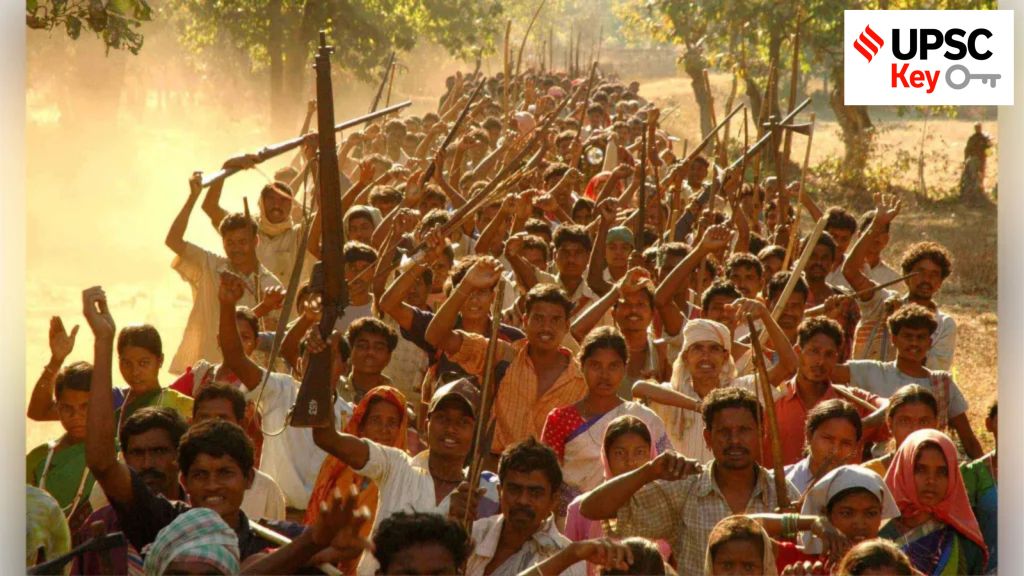 UPSC Key August 2026: Here's what you should be reading from the September 7, 2026 edition of The Indian Express.
Important topics and their relevance in UPSC CSE exam for September 7, 2026. If you missed the September 6, 2026 UPSC CSE exam key from the Indian Express, read it here
FRONT PAGE

India, China Corps Commanders hold talks at LAC meeting point in Arunachal
Syllabus:
Preliminary Examination: Current events of national and international importance.
Main Examination: General Studies II: India and its neighbourhood- relations.
What’s the ongoing story: India and China were conducting Corps Commander-level talks in Arunachal Pradesh Sunday amid reports of recent tensions in the Taksing area of the Upper Subansiri district.
Key Points to Ponder:
• Map Work-Taksing area of the Upper Subansiri district, Wacha, Line of Control, Line of Actual Control, Chang Chenmo river, Gogra-Hot Springs, Kongka Pass, Galwan Valley, Depsang Plains, and Charding Nala region
• Standoff between India and China-what you know about the same?
• Friction between India and China-what are the reasons?
• India-China Relations during Nehruvian Era-Know in detail
• The 1962 India-China War-Know the background
• India-China Border Dispute- Know the background
• Know the terms ‘De-induction’ ‘Disengagement’ and ‘De-escalation’?
• What ‘De-induction’, ‘Disengagement’ and ‘De-escalation’ means in India-China Context?
• What is the present situation?
Key Takeaways:
• Lt General Girish Kalia, commander of the Army’s III Corps, also called the Spear Corps, with its headquarters at Rangapahar near Dimapur in Nagaland, was meeting his Chinese counterpart and other officers.
• The talks were being held at the Wacha-Damai border meeting point on the Indian side to address ongoing issues along the LAC in the area. Wacha is India’s easternmost border personnel meeting point, located in the Kibithoo sector in Arunachal Pradesh.
• The Indian Express first reported on Saturday about the holding of Corps Commander-level talks following multiple meetings between local commanders of the two sides in recent weeks to resolve issues. According to sources, Indian troops continue to remain deployed in large numbers in the area to prevent any escalation.
• What makes the talks significant is that it is the first senior military commander-level talks between India and China in recent months amid tensions along the LAC in Arunachal Pradesh. These talks follow a meeting in Beijing on August 25 between National Security Advisor Ajit Doval and Chinese Foreign Minister Wang Yi who are the special representatives of the two countries for the boundary talks.
• Moreover, Chinese President Xi Jinping is expected to attend the BRICS summit in New Delhi on September 12-13. Xi last visited India in October 2019 when he travelled to Mamallapuram near Chennai for the second informal bilateral summit of leaders.
• New Delhi and Beijing have been trying to restore ties that plummeted after the start of the military standoff along the LAC in eastern Ladakh in 2020.
• This is the first senior military commander-level talks between India and China in recent months amid tensions along the LAC in Arunachal Pradesh. Tensions between Indian and Chinese troops along the LAC are typically res¬olved through meetings between the local commanders.
Do You Know:
• India and China have held 23 rounds of Corps Commander-level meetings at the Chushul-Moldo border meeting point in eastern Ladakh to resolve issues related to the military standoff along the LAC.
• The 23rd round of talks were held in October 2025, a year after both sides formally agreed on patrolling arrangements in the Depsang Plains and Demchok, the two friction points along the LAC. Prime Minister Narendra Modi and President Xi met on the sidelines of the BRICS Summit in Kazan, Russia, in October 2024, and their talks resulted in the disengagement of troops from the friction points.
• India and China have differing perceptions of the LAC, which has historically caused issues between their troops on the ground.
Other Important Articles Covering the same topic:
📍Explained: China-India state of play
Previous year UPSC Mains Question Covering similar theme:
📍‘China is using its economic relations and positive trade surplus as tools to develop potential military power status in Asia’, In the light of this statement, discuss its impact on India as her neighbour. (UPSC CSE GS2, 2017)
📍With respect to the South China sea, maritime territorial disputes and rising tension affirm the need for safeguarding maritime security to ensure freedom of navigation and over flight throughout the region. In this context, discuss the bilateral issues between India and China. (UPSC CSE GS2, 2014)
State consent not taken, put HC Chief Justice appointment on hold: Punjab Govt
Syllabus:
Preliminary Examination: Indian Polity and Governance
Mains Examination: General Studies II: Structure, organization and functioning of the Executive and the Judiciary and Appointment to various Constitutional posts
What’s the ongoing story: Saying that the Centre appointed Justice Ashwani Kumar Mishra as the Chief Justice of the Punjab and Haryana High Court without awaiting the state government’s views as required under the Memorandum of Procedure (MoP) for appointment of High Court Judges, the Punjab Cabinet on Sunday passed a resolution demanding that his “appointment and administration of oath… be put on hold”.
Key Points to Ponder:
• What is the process of appointment of Chief Justice of High Court?
• Does CM have any role in the appointment of High Court judges?
• Who is responsible for appointing the Chief Justice of a High Court in India?
• What is the procedure for appointment of High Court judges in India?
• What is article 124 and 217 of the Constitution?
• The appointment of the Chief Justice of the Punjab and Haryana High Court highlights the tension between judicial independence and federal consultation-do you agree?
• How does the Collegium system protects judicial independence but raises questions of transparency and accountability?
• What is the role of the Memorandum of Procedure in judicial appointments?
• What are the differences between consultation, concurrence and consent in the context of judicial appointments?
Key Takeaways:
• The resolution was passed at an emergency meeting chaired by Chief Minister Bhagwant Singh Mann, a day after the Centre notified the appointment. The state government said the appointment was “yet another instance” of the Centre “bypassing Punjab’s constitutional rights and established procedure”.
• “This appointment has been made without obtaining the consent of the state government, thereby bypassing all Constitutional norms and set procedures,” it said in a statement. “The Cabinet resolved that the appointment and administration of oath should be put on hold until Punjab’s views are obtained and duly considered,” it said.
• Justice Mishra, whose parent court is the Allahabad High Court, is expected to be sworn in on Monday.
• “Today, the Punjab Cabinet unanimously passed an important resolution against the continued assault on Punjab’s rights by the Central Government and the violation of constitutional norms. Appointing the new Chief Justice of the Punjab and Haryana High Court without obtaining the consent of the State Government is a direct violation of the prescribed procedures (Memorandum of Procedure) and constitutional norms,” Mann said on X.
• He later wrote to President Droupadi Murmu, Prime Minister Narendra Modi and Punjab Governor Gulab Chand Kataria, enclosing a copy of the resolution adopted by the Cabinet.
• The Punjab Cabinet said the appointment reflected a pattern of the Centre’s “infringement of Punjab’s constitutional rights”.
• As Acting CJ, a bench led by Justice Mishra had in August directed the Punjab government to clear pending instalments of dearness allowance and dearness relief owed to its employees and pensioners, observing that the state continued to spend on advertisements and other discretionary items even as it cited financial constraints to withhold the dues.
• Meanwhile, the Punjab and Haryana High Court Bar Association has opposed the state government’s stand. It said the move risked being seen as Executive overreach into a matter governed by the constitutional process for judicial appointments, cautioning that any impression of political pressure on the judiciary could erode public confidence in the justice system.
Do You Know:
• The Chief Justice of a High Court is appointed by the President of India under Article 217(1) of the Constitution of India.
• The SC Collegium had recommended the appointment of four Chief Justices of High Courts, including Justice Mishra’s candidature, on August 6. On August 12, the Centre had sought the views of the Chief Ministers and Governors of the four states.
• While the MoP does not stipulate a time period, conventionally, it is learnt that the consent for appointment of a Chief Justice is dealt with immediately. For appointment of HC Judges, it takes four to six weeks for inputs from the Chief Minister. It is learnt that normally, the Secretary of the Department of Justice dials the Principal Secretary to the Chief Minister to facilitate the process. After a certain time period, the Law Ministry deems that there was no objection from the state government.
• It is learnt that the Law Ministry had received inputs from Bihar, West Bengal and Maharashtra — the three other states concerned — immediately, but the delay by the Punjab Chief Minister held up the other appointments too. The appointments were notified on September 5.
• Justice Mishra has been serving as Acting Chief Justice of the Punjab and Haryana High Court since June 1, when he took over following the elevation of then Chief Justice Sheel Nagu to the Supreme Court.
Other Important Articles Covering the same topic:
📍Row brews in Punjab as Centre bypasses state response to appoint High Court Chief Justice
Previous year UPSC Prelims Question Covering similar theme:
1) Which one of the following statements is correct? (UPSC CSE, 2013)
(a) In India, the same person cannot be appointed as Governor for two or more States at the same time
(b) The Judges of the High Court of the States in India are appointed by the Governor of the State just as the Judges of the Supreme Court are appointed by the President
(c) Nor procedure has been laid down in the Constitution of India for the removal of a Governor from his/her post
(d) In the case of a Union Territory having a legislative setup, the Chief Minister is appointed by the Lt. Governor on the basis of majority support.
Previous year UPSC Mains Question Covering similar theme:
📍Discuss the evolution of the collegium system in India. Critically examine the advantages and disadvantages of the system of appointment of the Judges of the Supreme Court of India and that of the USA. (UPSC, GS2, 2025)
NATION
Syllabus:
Preliminary Examination: Current events of national and international importance.
Mains Examination: General Studies III: Linkages between development and spread of extremism.
What’s the ongoing story: As the verdict came in on Saturday convicting all the 10 Maoists accused in the Jhiram Ghati attack of May 2013, the family of their prime target, Mahendra Karma, said they are still waiting for justice.
Key Points to Ponder:
• Personality in News-Mahendra Karma
• Jhiram Ghati, Mahendra Karma, Salwa Judum—Connect the dots
• What was Salwa Judum?
• Left-Wing Extremism and Salwa Judum-Connect the dots
• Why did the Supreme Court intervene?
• What was the Nandini Sundar judgment?
• What is the role of development and connectivity in India’s strategy against Left-Wing Extremism?
Key Takeaways:
• Karma, 62, who was killed along with 27 others in the Jhiram Ghati attack, was one of the foremost tribal voices against Maoists in Chhattisgarh. He was also the face behind the Salwa Judum, a force of civilians who were made Special Police Officers (SPOs) and armed to fight the Maoists, and later ran into controversy.
• Salwa Judum members were accused of human rights abuses, even as its members themselves became targets of Maoist attacks and were forced to move into secure “camps”. Within six years of its founding, the Salwa Judum was struck down by the Supreme Court in 2011, saying it was unconstitutional and violated fundamental rights to equality and protection of life.
• Karma emerged as a rare anti-Maoist tribal voice in Bastar around the end 1970s, with his supporters calling him the “Bastar Tiger”. He stood up against the Maoists first through the Jan Jagran Abhiyan of the 1990s and then the Danteshwari Samiti in the 2000s – both movements seeking to build public opinion against the Maoists.
• Calling the Danteshwari Samiti “a soft precursor to Salwa Judum” in some ways, journalist-turned-activist Shubranshu Choudhary said Karma’s role in the history of the anti-Maoist fight in Chhattisgarh can’t be ignored. The special anti-Naxal District Reserve Guard (DRG), which took the lead eventually in the final push against the Maoists, is “part of Karma’s controversial legacy”, he pointed out. “Its roots lie in the SPOs who emerged during the Salwa Judum period.”
Do You Know:
• Salwa Judum was mobilised in 2005 by the late Congress leader Mahendra Karma, who was assassinated by Naxals in 2013, and deployed in parts of Chhattisgarh. Those in favour of the idea claim that the Judum was a “spontaneous uprising” of tribal people against Maoist violence in Bastar, and helped in countering Naxals in the region.
• On 5 July 2011, the Supreme Court declared Salwa Judum illegal and unconstitutional in a historic ruling stemming from a PIL filed by sociologist Nandini Sundar and others.
Other Important Articles Covering the same topic:
Previous year UPSC Mains Question Covering similar theme:
📍Naxalism is a social, economic and developmental issue manifesting as a violent internal security threat. In this context, discuss the emerging issues and suggest a multilayered strategy to tackle the menace of Naxalism. (UPSC CSE, GS3, 2022)
THE EDITORIAL PAGE
Lost and found: An ‘A’ for India’s long game
Syllabus:
Preliminary Examination: Economic and Social Development
Mains Examination: General Studies III: Indian Economy and issues relating to planning, mobilization, of resources, growth, development and employment.
What’s the ongoing story: N.K. Singh Writes- For decades, our unrealised quest was to be an “A”-rated sovereign. This eluded us. Many of us who interacted with rating agencies remained perplexed by their opaque methodology.
Key Points to Ponder:
• What is a sovereign credit rating?
• What did the Japan Credit Rating Agency did?
• What does BBB+ → A- actually mean?
• India’s previous A-grade and the 1991 crisis-know in detail
• Why does sovereign rating matter?
• What does a rating agency assess?
• “Credit-rating methodologies have significant influence over capital flows to developing countries”—Discuss
• What factors determine a country’s sovereign credit rating?
• What is the significance and limitations of sovereign ratings for a developing economy like India?
Key Takeaways:
• The predilections and biases successively penalised fast-growing emerging markets even with low external debt and sound macroeconomic frameworks. The duality of standards, often based on territorial location of economic activity, influenced the outcomes.
• Finally, on September 2, came a breakthrough. The Japan Credit Rating Agency upgraded India’s long-term sovereign rating, from BBB+ to A-, and the country ceiling was raised to A.
• The last time India held an A-grade was January 1988, when Moody’s assigned us the A2 rating. However, our borrowing fuelled growth of the 1980s meant the A-grade did not last.
• The central government’s fiscal deficit reached 9.1 per cent of GDP and the current account deficit rose to 3.1 per cent of GDP in FY 1989-90. The continued political instability of three prime ministers in as many years inevitably delayed reforms. The prospect of fiscal rectitude was not in sight. Thereafter came the First Gulf War, rising oil prices and India’s Balance of Payment crisis.
• By October 1990, India was downgraded to Baa1. By mid-1991, our reserves barely covered a few weeks of imports and investor psychology was weak. We were further downgraded to non-investment grade. Notwithstanding credible progress through successive governments thereon, efforts to secure the A-grade were not accepted. Thirty-six years passed by since the A-grade was lost.
Do You Know:
• Sovereign credit ratings are independent assessments of a country’s creditworthiness by leading global rating agencies. They range from the coveted AAA to “junk” status, with BB+ and below classified as non-investment grade (junk). It is a probability of default, expressed as a letter grade.
• Under Basel III regulations, they remain embedded in the capital rules of banks. A sovereign upgrade potentially lowers the “risk weights” or the capital that banks must hold against government debt. Lower risk weights mean stronger demand for sovereign bonds and cheaper funding. A downgrade would mean the opposite.
• The industry itself dates to 1909, when John Moody began grading American railroad bonds, with sovereign ratings following in the 1920s. The agencies that dominate: S&P Global, Moody’s, Fitch, Japan Credit Rating Agency, R&I of Japan and Morningstar DBRS. Agencies assess institutional strength and governance, economic structure and growth. External accounts and reserve adequacy, the fiscal position, the foreclosure of revenue for servicing debt and debt path, and monetary flexibility come into play. This framework can, however, be opaque with judgement. A territorial divide emerges between advanced economies and the Global South.
Other Important Articles Covering the same topic:
📍Japanese rating agency upgrades India’s rating to A-; finance ministry says reflects solid growth
Previous year UPSC Prelims Question Covering similar theme:
2) Consider the following statements: (UPSC CSE, 2022)
1. In India, credit rating agencies are regulated by Reserve Bank of India.
2. The rating agency popularly known as ICRA is a public limited company.
3. Brickwork Ratings is an Indian credit rating agency.
Which of the statements given above are correct?
(a) 1 and 2 only
(b) 2 and 3 only
(c) 1 and 3 only
(d) 1, 2 and 3
THE IDEAS PAGE
GDP debate is not about numbers alone. it is about trust deficit
Syllabus:
Preliminary Examination: Economic and Social Development
Mains Examination: General Studies III: Indian Economy and issues relating to planning, mobilization, of resources, growth, development and employment.
What’s the ongoing story: Abhishek Anand, Josh Felman, Arvind Subramanian Writes-The release of new GDP data, always contentious, has again sparked a lively debate. Most prominently, former Finance Secretary Subhash Garg has asserted that the Ministry of Statistics and Programme Implementation (MoSPI), headed by Saurabh Garg, has vastly overstated growth by the simple expedient of reducing the previous year’s output. In response, MoSPI has argued that Subash Garg is comparing apples to oranges.
Key Points to Ponder:
• What exactly is GDP?
• What are the ways of measuring GDP?
• What is the current controversy regarding the GDP?
• What is a GDP deflator?
• What is the new base year?
• Why does India change the base year?
• What is Double Deflation?
• Why can a GVA deflator become negative even when prices rise?
• What should India do to improve GDP-data credibility?
• What is the significance of changing the GDP base year and adopting double deflation in India’s new national accounts series?
• What are the challenges of measuring economic activity in India’s large informal and unorganised sector?
Key Takeaways:
Abhishek Anand, Josh Felman, Arvind Subramanian Writes-Consider our five-fold assessment:
• MOSPI’s response is plausible on some technicalities. On the face of it, the MoSPI is certainly correct on the technicalities. Subhash Garg is comparing 2026-27 GDP numbers, calculated using the new base and the latest methodology, to 2025-26 numbers produced using the old base and previous methodology. This is indeed like comparing apples to oranges. If one applies the new methodology to both years, the real growth rate is indeed 7.8 percent.
• The government’s handling of data has created a fundamental trust deficit. The GDP numbers have been met with skepticism for quite some time now, ever since 2016-17, when the official data showed that growth accelerated to a dizzying 8.2 percent in a year when 86 per cent of cash was withdrawn. And the problems go well beyond GDP: The Census has been delayed, the 2017 consumption survey was withdrawn, the deaths from Covid were seriously understated, and exaggerated claims were made about open defecation.
• The numbers seem decoupled from reality and economic reasoning. After all, April and May 2026 were months of shortages, when fuel was being rationed, thereby crimping travel and forcing businesses such as restaurants to purchase LPG cylinders on the black market or shut down entirely. And this was against a background of tepid wage growth, poor job creation, a sagging stock market, and a currency under intense pressure, all of which generated considerable unrest and anxiety amongst the young, reflected in the recent student protests.
Figure 1. Energy Shock, June 2024-June 2026
(Year-on-year percentage change in the price of Indian oil imports multiplied by the share of energy imports in GDP)
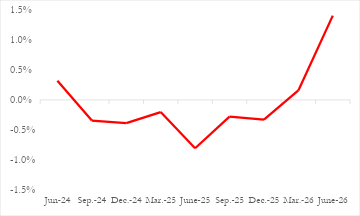
• Rebuilding credibility. How can the government achieve this? The most urgent need is to provide a credible story, backed by economic research, to explain what caused the economy to accelerate amidst the energy troubles. This story should also address certain puzzles. If the economy was booming, why did nominal net GST revenue grow just 5 per cent, even allowing for the GST rate cuts? And why did import volumes fall? And how could the manufacturing deflator have been negative when RBI data show that business margins actually improved?
• Acknowledging the past. As a final step, the government should be consistent in its claims. Right now, the government and its supporters argue in favour of the current numbers by pointing to the performance of a few co-incident macro-indicators, as mentioned above. By the same logic, the government could then acknowledge doubts about the 7-8 per cent growth in the previous 14 years.
Do You Know:
• On February 27 this year, MoSPI unveiled a new series of GDP data after changing the “base year” from 2011-12 to 2022-23. Every economy undergoes regular base year revisions to incorporate new data sources, improve methodology and capture data more accurately.
While rebasing, the ministry overhauled its methods of calculating the GDP, including how it removes the effect of inflation from “nominal” GDP to arrive at the “real” GDP.
• GDP is calculated by summing together the value created — or Gross Value Added (GVA) — by each sector, adding indirect taxes collected by the government, and subtracting subsidies given.
This GVA is the difference between the value of what a sector produces (output) and the raw materials (inputs) it uses. This is the “nominal” GVA, or GVA in current prices. The trouble begins while calculating “real” GVA. Until now, the value of inputs and outputs for each sector and the various subcategories were “deflated” by the same number, except for agriculture and mining and quarrying. This number was either the Consumer Price Index (retail inflation), the Wholesale Price Index (wholesale inflation) or one of their sub-indices, depending on what is to be deflated. Then the “real” input value was subtracted from the “real” output value to arrive at “real” GVA. This process is called “single deflation”.
• The single deflation method works fine when prices of inputs and outputs are changing at the same rate; when they don’t, there’s a problem. Ideally, the value of inputs should be adjusted by input inflation and outputs by output inflation. This is called double deflation and ensures that the real GVA is accurate. In the 2022-23 GDP series, MoSPI made the move to double deflation after repeated criticism that single deflation was leading to either underestimation or overestimation of real growth, depending on how input and output prices were moving.
Other Important Articles Covering the same topic:
📍India’s latest GDP revisions: How, and why, does GDP data get updated?
Previous year UPSC Prelims Question Covering similar theme:
3) With reference to Indian economy, consider the following statements: (UPSC CSE, 2015)
1. The rate of growth of Real Gross Domestic Product has steadily increased in the last decade.
2. The Gross Domestic Product at market prices (in rupees) has steadily increased in the last decade.
Which of the statements given above is/are correct?
(a) 1 only
(b) 2 only
(c) Both 1 and 2
(d) Neither1 nor 2
Previous year UPSC Mains Question Covering similar theme:
📍Explain the difference between computing methodology of India’s Gross Domestic Product (GDP) before the year 2015 and after the year 2015. (UPSC, GS3, 2021)
ECONOMY
RBI faces liquidity deluge as surplus climbs to 4-yr high of Rs 10.3 lakh crore
Syllabus:
Preliminary Examination: Economic and Social Development
Mains Examination: General Studies III: Indian Economy and issues relating to planning, mobilization, of resources, growth, development and employment.
What’s the ongoing story: The Reserve Bank of India is faced with an unusual monetary-policy headache: there is simply too much money, or liquidity, in the banking system with the banking-system liquidity climbing to a four-year high of about Rs 10.3 lakh crore on September 3, its highest level since May 2022.
Key Points to Ponder:
• What do you understand by ‘RBI dividend’ or ‘RBI surplus’?
• Why is “too much money” a problem?
• How much excess does RBI have now?
• Why does the RBI care about the overnight rate?
• Where did the excess liquidity come from?
• ‘Excess liquidity in the banking system can complicate monetary-policy transmission’—Know the mechanisms involved and discuss the tools available to the RBI
• How does a central bank like the RBI make profits?
• Does excess liquidity automatically cause inflation?
Key Takeaways:
• Foreign-currency inflows through the recent swap facility on a large scale, combined with the liquidity released through the RBI’s foreign-exchange operations, have resulted in a huge pool of rupee funds chasing relatively limited avenues for deployment. While core liquidity crossed to Rs 10 lakh crore, the daily average surplus stood at Rs 3.67 lakh crore in August, more than three times July’s Rs 1.07 lakh crore, said Sneha Pandey, fund manager, Equity, Quantum AMC.
• The central bank must now drain this excess liquidity without triggering a sharp rise in interest rates or unsettling the government securities market. Huge liquidity in the banking system generally puts downward pressure on overnight money-market rates, potentially pushing them below the repo rate unless the RBI actively absorbs the excess liquidity. Persistently loose liquidity conditions can also add to inflationary pressures.
• The unusual situation has come at a time when global central banks are keeping rates high or tightening cautiously to curb inflation, and members of the RBI’s Monetary Policy Committee have indicated that, as headline inflation is projected to peak at as high as 5.9% in Q3 2026-27, a “case for a hike may emerge” during the course of the year.
• Beyond strengthening the capital account and the overall balance of payments, these sizeable inflows are also likely to add significantly to domestic liquidity. However, some of this impact could be offset by seasonal currency demand and the RBI’s maturing forward book. “We estimate that currency in circulation (CiC) could rise by around Rs 1.1 lakh crore from June levels by December amid the seasonal uptick during the festive period,” CareEdge Ratings said.
Do You Know:
• An excess of money or liquidity in the banking system—such as the recent four-year high of roughly ₹9.7 to ₹10.3 lakh crore recorded by the Reserve Bank of India in September 2026—occurs when large foreign-currency inflows and
central bank operations leave a massive pool of funds chasing limited deployment avenues
• Large-scale dollar or foreign currency inflows and forex swap operations inject vast amounts of local currency into the domestic market. Liquidity released through foreign-exchange interventions or government spending can temporarily oversaturate commercial lenders with cash.
• “Liquidity” refers to the money held by commercial banks. Some liquidity is kept as cash in banks’ own vaults but it is mainly money that they keep in accounts with the central bank. These liquid funds that commercial banks hold with a central bank are often called “central bank reserves”.
Other Important Articles Covering the same topic:
📍Needed: More stable foreign capital
Previous year UPSC Prelims Question Covering similar theme:
4) The lowering of Bank Rate by the Reserve Bank of India leads to (UPSC CSE, 2011)
(a) More liquidity in the market
(b) Less liquidity in the market
(c) No change in the liquidity in the market
(d) Mobilization of more deposits by commercial banks
EXPLAINED
Banque Misr sanctions: US widens economic war with Iran
Syllabus:
Preliminary Examination: Current events of national and international importance.
Mains Examination: General Studies II: Effect of policies and politics of developed and developing countries on India’s interests,
What’s the ongoing story: On August 28, the Secretary of the United States Department of Treasury, Scott Bessent, expanded the scope of “Operation Economic Outcast” by issuing an order that identified the United Arab Emirates (UAE) branches of Banque Misr — Egypt’s second-largest state-owned financial institution — as a financial institution operating outside the US of “primary money laundering concern”. The Treasury found that the bank’s UAE operations were processing transactions for accounts linked to Iran’s shadow-banking networks.
Key Points to Ponder:
• How Iran used the Egyptian bank’s UAE branches, its underlying reasons, and the financial impact it would have on Iran and across West Asia?
• How Economic sanctions have increasingly become an instrument of statecraft in international relations?
• How does the correspondent banking system facilitate international trade and finance?
• How can India preserve strategic autonomy while remaining deeply integrated with the global financial system?
• Chabahar Port gives India a strategic stake in maintaining engagement with Iran. Discuss the challenges posed by the US sanctions regime.
Key Takeaways:
• The US Treasury’s Financial Crimes Enforcement Network (FinCEN) proposed invoking Special Measure Five under Section 311, which bars US financial institutions from opening or maintaining correspondent banking accounts for, or on behalf of, Banque Misr UAE.
• The FinCEN described the bank as a key point of access to US dollar correspondent banking services for the Iranian regime and alleged that certain customers included front companies associated with Iran’s Ministry of Defense and the Islamic Revolutionary Guard Corps (IRGC).
• The proposal applies only to Banque Misr UAE, which includes five branches in Abu Dhabi, Dubai, Sharjah, and Ras Al Khaimah. Banque Misr’s operations in Egypt and other countries are outside its scope.
Do You Know:
• As the ongoing war against Iran seems far from any negotiated end, the US would like to choke all the possible financial sources for its adversary. Over the last few months, Iran appears to have seized every single opportunity to secure its finances, while its economy is getting worse by the day. Deprived of hard-currency inflows, the Iranian rial faces rapid devaluation, exacerbating hyperinflation and squeezing domestic consumer purchasing power toward a subsistence economy.
• The move leaves Iran with not many choices. Currently, Tehran is testing its endurance against an escalating fiscal insolvency and a severe domestic economic strain. The US hopes that the fresh sanctions would push Iran further into crisis and force it to capitulate on its regional proxy activities and nuclear efforts to prevent complete systemic isolation.
Other Important Articles Covering the same topic:
📍Trump’s Iran ‘economic pressure’ plan: 5 ways he could squeeze Tehran
|
PRELIMS ANSWER KEY |
|
1.(c) 2.(b) 3.(b) 4.(a) |
For any queries and feedback, contact priya.shukla@indianexpress.com
Subscribe to our UPSC newsletter. Stay updated with the latest UPSC articles by joining our Telegram channel – IndianExpress UPSC Hub, and follow us on Instagram and X.


Priya Kumari Shukla is a Senior Copy Editor in the Indian Expre... Read More
 Share


