
UPSC Key: BRICS Summit 2026, Nash equilibrium and Anganwadis
Why Free Trade Agreement is relevant to the UPSC exam? What is the significance of topics such as copper, weaponisation of technology, and Confidence-Building Measures on both the preliminary and main exams? You can learn more by reading the Indian Express UPSC Key for September 14, 2026.
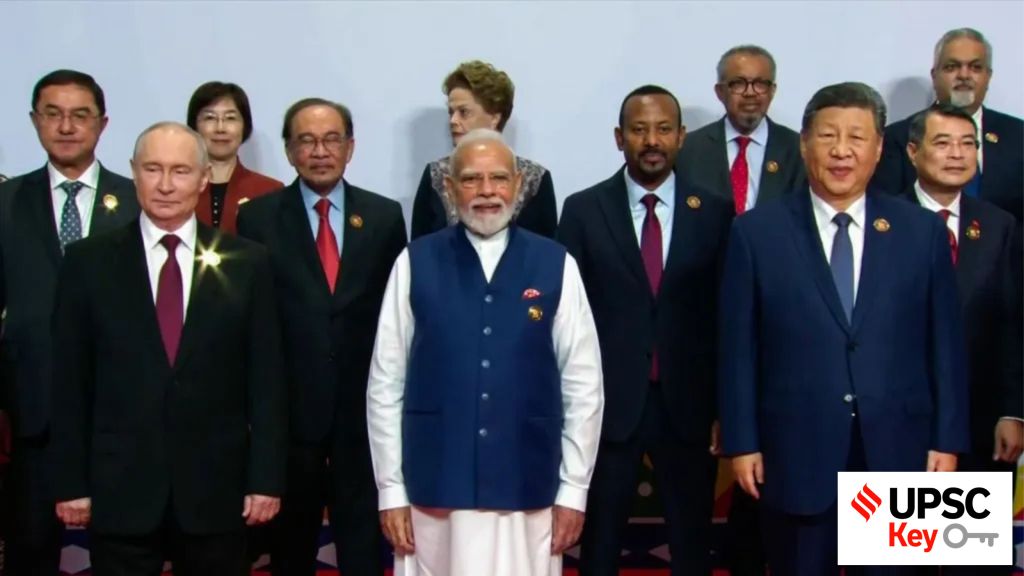 UPSC Key August 2026: Here's what you should be reading from the September 14, 2026 edition of The Indian Express. (DD News/ANI Video Grab)
Important topics and their relevance in UPSC CSE exam for September 14, 2026. If you missed the September 13, 2026 UPSC CSE exam key from the Indian Express, read it here
Front Page

Modi flags ‘weaponisation’ of tech; Xi announces open-source AI for BRICS
Syllabus:
Preliminary Examination: Current events of national and international importance.
Mains Examination: General Studies II: Bilateral, regional and global groupings and agreements involving India and/or affecting India’s interests.
What’s the ongoing story: On a day when Prime Minister Narendra Modi warned that “the weaponisation of technology and critical minerals” could hinder progress and underlined the need for “inclusivity”, Chinese President Xi Jinping on Sunday announced that Beijing would lead the creation of an open-source AI ecosystem for BRICS member nations.
Key Points to Ponder:
• What are the key takeaways from the BRICS Summit, 2026?
• What does the BRICS Declaration 2026 said?
• What BRICS declaration said on trade wars, weaponisation of technology and critical minerals, open-source AI ecosystem, Iran-US war, tariffs, terrorism?
• What is Global South?
• What is the four important pillars on which India focused?
• What were the Chinese Premier’s 5-point plan?
• What is meant by the ‘weaponisation of technology’?
• What is open-source Artificial Intelligence? How does it differ from proprietary AI systems?
• Why has technological cooperation become increasingly important for developing countries?
• What is the significance of BRICS 2026, for India’s foreign policy and geopolitical stature?
• How India and BRICS is articulating the developmental and political concerns of the Global South?
• What are the opportunities and challenges associated with promoting trade and cross-border payments in local
currencies among BRICS countries?
• Do you think that BRICS is at a crossroads? (Hint: BRICS expanding membership and economic weight enhance its relevance, while its internal diversity constrains collective action)
Key Takeaways:
• Modi’s remarks are seen as an oblique reference to Beijing’s control over the critical mineral supply chain and the US-China leverage battle over access to technology. He was speaking at the concluding session of the two-day BRICS Summit, with Xi, Russian President Vladimir Putin and Iranian President Masoud Pezeshkian, among other leaders, in attendance.
• Xi, who spoke after Modi, made the announcement as part of a five-point initiative to boost cooperation in technology, manufacturing and trade, even as he called on the bloc to focus on building a large integrated market comprising emerging economies. This is seen as an effort to position Beijing as a central technology partner for BRICS amid its growing AI competition with the US.
• In a statement, the Chinese Foreign Ministry said Xi called upon BRICS leaders to work towards writing a “new chapter of strength through unity for the Global South”, and asserted that the logic that “might makes right” should have been discarded long ago.
• Putin, in his address, urged the Global South countries to “jointly advance better (global) governance structure and tackle both traditional and non-traditional security threats.”
• Addressing the BRICS leaders’ outreach summit, attended by the grouping’s full member countries as well as its partner countries, Modi said the trust of Global South countries in BRICS has grown because their voices are heard and their experiences are respected.
• He said that with rising global tensions impacting lives, the emphasis is on enhancing resilience within the bloc.
In this context, he announced a slew of initiatives — BRICS Integrated Early Warning System for prevention of and response to infectious diseases, BRICS Logistics Supply Chain Cooperation Framework, BRICS Incubator Network, Startup Innovation Fund, BRICS MSME Cooperation Portal, Digital Centre of Excellence for Smart Grids and Energy Storage, Urban Mobility Hub, and Centres of Excellence for Agro-Ecology and Regenerative Agriculture.
• “The BRICS Network on Digital Agriculture will create new opportunities for farmers. Through this initiative, AI, geospatial technology, and Digital Public Infrastructure will be connected to the real needs of farmers. The weaponisation of technology and critical minerals can hinder our shared progress. Therefore, we have emphasised inclusivity in the adoption of technology,” he said.
• Framing the global situation, he said: “Tensions across the world are constantly rising, having a significant negative and far-reaching impact on the lives of ordinary people… Pandemics, climate disasters, and supply-chain disruptions have demonstrated that in today’s interconnected world, no crisis remains confined to a single region. That is why we have placed special emphasis on enhancing resilience within the BRICS group. Identifying challenges in time, preparing for them, and taking immediate action are equally essential,” he said.
• Under the pillar of innovation, he said the BRICS Incubator Network would connect start-ups and incubators. “We have proposed a BRICS Startup Innovation Fund to promote innovative and scalable solutions,” Modi said.
• “Under India’s chairmanship, we have focused all our efforts on four pillars: Resilience, Innovation, Cooperation and Sustainability. I am pleased that, with your cooperation and support, we have been able to transform our shared vision into a win-win collaboration,” Modi said.
• Elaborating on the open-source AI proposal, Xi, in his address, said: “China will be a pioneer in establishing a BRICS AI open-source community, support cooperation in developing and applying large language models, hold specialised AI seminars and training courses, and build an open ecosystem for AI.”
—China has partnered with around 30 countries to establish the World AI Cooperation Organisation. Beijing is focusing on establishing a cost-effective international AI ecosystem based on open models, unlike major US developers such as OpenAI and Anthropic, which rely on closed frameworks.
—The five-point initiative, Xi said, is aimed at boosting cooperation in manufacturing, trade and technology across member states. The initiative focuses on establishing an inclusive artificial intelligence framework, facilitating trade and investment, deepening digital industry ties, advancing “intelligent manufacturing,” and launching a joint science and technology development initiative.
• South Africa President Cyril Ramaphosa, Egypt President Abdel Fattah el-Sisi, Indonesia President Prabowo Subianto, Ethiopia Prime Minister Abiy Ahmed, foreign ministers from Brazil and Saudi Arabia, leaders or representatives of BRICS partner countries and guest countries, and heads of international organisations like UN Secretary-General António Guterres were among those who attended the outreach summit on Sunday.
Do You Know:
• The BRICS grouping on September 12 adopted the New Delhi Declaration, laying out common positions on issues ranging from trade and terrorism to artificial intelligence and institutional reform.
—Set against the backdrop of tariffs, trade tensions, and geopolitical fragmentation, the grouping expressed its opposition to unilateral trade restrictions amid efforts to ease cross-border payments and investments across BRICS countries.
—The declaration also contained several India-specific outcomes, from harsher language on cross-border terrorism to new cooperation mechanisms spanning digital public infrastructure, health and finance.
—Reaching consensus was itself significant. BRICS foreign ministers had failed to issue a joint statement in May amid differences between Iran and the UAE, and diplomats had spent the run-up to the summit trying to find language on the conflict that both countries could accept. —The final declaration reflects that balancing act, addressing the wars and tensions across West Asia without directly assigning responsibility to individual countries.
• Here are the key takeaways:
—Pushback against unilateral tariffs and restrictive trade measures: Since early 2025, US President Donald Trump has announced a series of escalating tariffs against several US trading partners to extract concessions from them and correct a perceived imbalance — and “return” money — to the US. The declaration expresses its condemnation of “unilateral coercive measures” which are contrary to international law and the United Nations Charter, and calls for their elimination.
—Strong condemnation of terrorism, especially Pahalgam attack: The declaration expresses its commitment to combating terrorism in “all its forms and manifestations”. In a diplomatic victory for India, the declaration specifically condemns in the “strongest terms” the April 2025 terrorist attack in Pahalgam in Jammu and Kashmir, in which 26 people were killed, and several others were injured. The declaration also singles out the cross-border movement of terrorists, terrorism financing and safe havens, while expressing zero tolerance for terrorism and rejecting double standards in countering terrorism.
The declaration also reiterated that terrorism is not to be associated with any specific religion, nationality, civilisation, or ethnic group, and called for closer international counter-terrorism cooperation. In this light, it acknowledged the cooperation among member nations as part of the BRICS Counter-Terrorism Working Group (CTWG), the BRICS mechanism for coordinating counter-terrorism cooperation. It identified extremism and radicalisation among the younger generations as a specific issue that needed to be addressed.
—Common ground on the war in West Asia: The presence of Iran and the United Arab Emirates, two sides that have found themselves on competing sides of the war in West Asia, raised concerns about finding a consensus. Against this backdrop, the declaration expresses “deep concern” over the escalation of tensions across West Asia and calls for maximum restraint and the resolution of disputes through dialogue and diplomacy. Without assigning responsibility to individual countries, it condemns attacks on civilian infrastructure and safeguarded nuclear facilities, while stressing the importance of maintaining uninterrupted trade, supply chains and energy flows. The declaration also expressed grave concern over the humanitarian situation in Gaza and the Occupied Palestinian Territory. It calls for maintaining the Gaza ceasefire and unhindered humanitarian access, and opposes forced displacement of Palestinians.
The declaration affirmed its support for UNRWA (United Nations Relief and Works Agency for Palestine Refugees in the Near East) and noted the International Court of Justice’s provisional measures in South Africa’s case against Israel, which reaffirmed Israel’s legal obligation to ensure the provision of humanitarian aid in Gaza.
The declaration reiterated the group’s support for a two-state solution, with a Palestinian state within the 1967 borders, with East Jerusalem as its capital. It called on Israel to adhere to the Lebanon ceasefire and for Israeli withdrawal from remaining Lebanese territory, as well as an inclusive political transition in Syria.
—Local currencies, but no common BRICS currency: While speculation about a unified BRICS currency has been rife for years, the declaration steered clear of the subject. Instead, BRICS continued to focus on a more incremental goal: making it easier for members to promote trade settlements and investments in their own currencies to achieve faster, cheaper and safer cross-border payments. The declaration acknowledged discussions on promoting the use of BRICS local currencies while respecting national priorities and recognising that there is “no one-size-fits-all approach”.
—A Global South position on AI: The declaration specifically addresses artificial intelligence as an economic and governance opportunity for the Global South. It broadly calls for wider access to AI resources while stressing safety, security, inclusiveness, reliability, energy efficiency and “trustworthy AI”, while emphasising the needs of the Global South. It also congratulates India on hosting the AI Impact Summit in February 2026 and commits members to implementing the BRICS Leaders’ Statement on the Global Governance of Artificial Intelligence.
—The Indian imprint on the summit: The declaration contains several initiatives that India has prioritised as BRICS chair, particularly in digital infrastructure, health and development cooperation. In digital public infrastructure, the declaration notes a proposal to create a BRICS repository for digital public infrastructure (DPI) and undertake pilot projects using DPI solutions across member countries.
Other Important Articles Covering the same topic:
📍What BRICS Declaration in Delhi says on wars and tariffs
Previous year UPSC Prelims Question Covering similar theme:
1) Consider the following statements with regard to BRICS: (UPSC CSE, 2025)
I. The 16th BRICS Summit was held under the Chairship of Russia in Kazan.
II. Indonesia has become a full member of BRICS.
III. The theme of the 16th BRICS Summit was Strengthening Multiculturalism for Just Global Development and Security.
Which of the statements given above is/are correct?
(a) I and II
(b) II and III
(c) I and III
(d) I only
Previous year UPSC Mains Question Covering similar theme:
📍Compare the significance of IBSA and BRICS in the context of India’s multilateral diplomacy. (UPSC, GS2, 2012)
📍“BRICS acts as a powerful counterweight in global governance, actively amplifying the voice and influence of the Global South.” Explain the role of BRICS in projecting itself as an alternative to other groupings (UPSC, GS2, 2026)
The Editorial Page
India & China are at a Nash equilibrium. Will it hold—that’s the question
Syllabus:
Preliminary Examination: Current events of national and international importance.
Mains Examination: General Studies II: India and its neighborhood- relations.
What’s the ongoing story: Kanti Bajpai Writes- Two things can disturb the Nash equilibrium (apart from bad defence or internal political collapse): The transition to a successor Dalai Lama, and an India-Pakistan fight that draws China directly in and leads to a two-front war for India
Key Points to Ponder:
• What is a Nash equilibrium?
• Why the author applied Nash equilibrium concept in India-China relations?
• What are the major phases in the evolution of India-China relations?
• What factors have shaped the relationship in the post-Cold War period in India-China relations?
• What is the Line of Actual Control (LAC)?
• How Line of Actual Control (LAC) is different from an internationally recognised international boundary?
• What are Confidence-Building Measures (CBMs)?
• What is the significance of Confidence-Building Measures (CBMs) in managing India-China border tensions?
• What are the major factors responsible for the persistence of the India-China boundary dispute despite decades of negotiations?
• What is the significance of the 2005 Agreement on Political Parameters and Guiding Principles for the Settlement of the India-China Boundary Question?
• How has infrastructure development along the India-China border altered the strategic balance and nature of border management?
• What explains India’s persistent trade deficit with China?
• How does the India-China relationship illustrate the concept of the security dilemma?
• “India and China are at a Nash equilibrium along the disputed border, but equilibrium does not necessarily imply stability.”—What is your take?
• What policy measures can reduce India’s structural dependence without completely severing economic engagement?
Key Takeaways:
Kanti Bajpai Writes-
• What the August statement and the two readouts from India and China after the summit indicate is that, with respect to the border, the two sides are at a Nash equilibrium. For the Economics 101-challenged like me, a Nash equilibrium is an outcome in a non-cooperative game in which “no player’s expected outcome can be improved by changing one’s own strategy” (according to Britannica online). In essence, India and China, at least tacitly, recognise that in any foreseeable future they cannot aspire to and achieve a better position in the border quarrel. They may well spar diplomatically and militarily occasionally, as they have since 2013. But the intermittent war of words and of hardware over control of the high Himalaya can only move the Line of Actual Control slightly.
• The border quarrel can only be solved to the maximal satisfaction of India and China by negotiation or by force. India and China have been negotiating a border deal almost without interruption since 1981 — the Secretary/Vice Minister-level talks (1981-88), the Joint Working Group (1989-2005), and the Special Representative Mechanism (2003-present). Over more than 45 years, they have met once a year on average.
• After all those years of talking, the only agreement of substance is the 2005 “Political Parameters and Guiding Principles for the Settlement of the India-China Boundary Question”. The most important parameters and guidelines were that a settlement would be reached as a package (nothing is settled until everything on the border is settled). The final agreement would be a “political settlement” that would consider strategic concerns, history, national sentiment, practicality, geography, and the interests of settled populations in the borderlands.
• The August 2026 eight-point statement, enjoining the negotiators to seek an early and substantial harvest with respect to the border, does not violate the idea of a package deal. Rather, it suggests that the two sides should focus on success in one area instead of negotiating everything everywhere all at once. Having achieved success in one section, they should then move on to another section of the border. Yet, as per the 2005 agreement, each sectional success would only be finally accepted and ratified when the entire border is settled.
• Nothing in the Modi-Xi BRICS readouts alters the basic 2005 agreement or the eight-point early harvest statement. The negotiation process has been somewhat nudged by the eight-point statement, but it is hard to imagine that diplomatic bargaining now or in the future can give India or China their maximal objective. For India, the maximal objective is to get back Aksai Chin up to its original claim and to keep everything it has in the other sectors. For China, it is to get Arunachal Pradesh all the way to the southern slopes (which is most of the state) and to keep everything else it has in the other sectors. It is inconceivable that Indian or Chinese negotiators can achieve their maximal objectives.
• Two things can disturb the Nash equilibrium (apart from bad defence or internal political collapse): The transition to a successor Dalai Lama, and an India-Pakistan fight that draws China directly in and leads to a two-front war for India.
Do You Know:
• The evolution of India-China relations since 1950 can be broadly structured into five major phases. The relationship has transitioned from early idealistic camaraderie to an era of conflict, followed by decades of strategic management, and ultimately leading to the complex geopolitical competition seen today.
—The Era of Optimism and Bonhomie (1950–1959): This initial phase was defined by high idealistic expectations and shared anti-colonial solidarity. On 1 April 1950, India became the first non-socialist bloc country to establish formal diplomatic relations with the People’s Republic of China (PRC). Signed in 1954, the Five Principles of Peaceful Coexistence (Panchsheel) served as the bedrock of bilateral ties. This era popularized the slogan “Hindi-Chini Bhai-Bhai” (Indians and Chinese are brothers). Despite the public cordiality, cracks began to surface following China’s annexation of Tibet in 1950 and the construction of a highway through the disputed Aksai Chin region.
—Escalation and the Border Conflict (1959–1962): Tensions rapidly reached a boiling point over territorial boundaries and sovereignty issues.
—The Cold Peace and Diplomatic Freeze (1962–1976): For nearly a decade and a half, formal ties were minimal, and both nations viewed each other through a lens of deep suspicion
—Normalisation and the Dual-Track Approach (1976–2017): This lengthy phase focused on separating border disputes from broader economic and diplomatic engagement to maintain a stable coexistence
—Armed Standoffs and Tactical Stabilisation (2017–Present): The modern era is defined by systemic strategic rivalry, major border crises, and recent cautious efforts to avoid open escalation.
Other Important Articles Covering the same topic:
📍BRICS summit: What trajectory of China-India ties means for the grouping
Previous year UPSC Mains Question Covering similar theme:
📍The West is fostering India as an alternative to reduce dependence on China’s supply chain and strategically to counter China’s political and economic dominance.’ Explain this statement with examples. (UPSC, GS2, 2024)
📍‘China is using its economic relations and positive trade surplus as tools to develop potential military power status in Asia’. In the light of this statement, discuss its impact on India as her neighbour. (UPSC, GS2, 2017)
The Ideas Page
Anganwadis shape the future. They are our responsibility
Syllabus:
Preliminary Examination: Economic and Social Development
Mains Examination: General Studies II: Issues relating to development and management of Social Sector/Services relating to Health, Education, Human Resources.
What’s the ongoing story: Annpurna Devi Writes: When every community takes responsibility for its anganwadi, Bharat takes responsibility for every child’s future.
Key Points to Ponder:
• What is the role of Anganwadi Centres in India’s child development and nutrition architecture?
• What are the objectives and major components of the Integrated Child Development Services (ICDS)?
• How do Anganwadi Centres contribute to the implementation of the Integrated Child Development Services (ICDS)?
• Why is early childhood development considered critical for India’s human capital formation?
• What is the relationship between child malnutrition, maternal health and early childhood development in India?
• Why is the Anganwadi worker considered an important frontline functionary in India’s social-sector delivery system?
• What are the major challenges faced by Anganwadi Centres?
• How can early childhood care and education through Anganwadi Centres help address educational inequality in India?
Key Takeaways:
Annpurna Devi Writes:
• The Bharat of 2047 will be built by children who have not yet entered school. Their journey towards a healthy, confident and capable adulthood begins much earlier, most decisively in the first 1,000 days of life. For millions of Indian children and their mothers, that journey is supported by a familiar neighbourhood institution: The anganwadi.
• Long before entering the classroom, children are weighed and measured at an anganwadi, get a warm meal and hear rhymes outside the home. Expectant parents also receive counselling. Today, 14 lakh anganwadi centres serve as the first point of contact between the citizens and the state, reaching over 8.9 crore children, women and adolescent girls. The 25.2 lakh anganwadi workers and helpers are drawn from the communities they serve. The anganwadi has always belonged to the neighbourhood.
• This institution became the foundation of a national movement when Prime Minister Narendra Modi launched POSHAN Abhiyaan in March 2018. The ninth Rashtriya Poshan Maah began on September 9 with the theme “Hamari Anganwadi, Hamari Jimmedari”. The government’s commitment to providing quality services is unwavering. But an anganwadi centre truly flourishes when the community embraces it as its own. A Viksit Bharat can be built only through sabka prayas (everyone’s effort). Nutrition cannot be seen only as a government service.
• Community ownership has too often remained an appeal. This year, it becomes an institution. Anganwadi management committees bring parents, panchayat representatives and self-help groups into the centre to ensure every eligible child is reached. Social audits enable communities to review services, verify entitlements and record findings. Accountability becomes verification from within by the families served.
• Mothers are at the heart of this process. The menu board of the Supplementary Nutrition Programme (SNP) displays daily entitlements for the hot meals and take-home rations. When a mother knows what her child is entitled to, transparency becomes a habit. The community becomes an informed partner in ensuring quality. During Poshan Maah 2026, committees, social audits and menu boards are being activated, alongside Tithi Bhoj, tasting sessions and recipe demonstrations.
• A Suposhit Bharat requires balanced meals — cereals and millets, pulses, nuts and seeds, milk and milk products, eggs, fruits and green vegetables. The Comprehensive Guidelines for SNP 2026, released in July, define hot cooked meals and reinforce micronutrient norms under the National Food Security Act, 2013.
• The second is early learning. What a child eats and learns are deeply connected. Anganwadi workers track 34 developmental milestones in a child’s first three years. The Navchetna and Aadharshila curricula carry nutrition and care into school readiness.
• The third begins before the child arrives. A mother’s nutrition in pregnancy shapes her child’s start in life. This Poshan Maah marks 10 years of the Pradhan Mantri Matru Vandana Yojana, reflecting the Prime Minister’s conviction that no woman should have to choose between earnings and health.
• A decade on, 4.65 crore beneficiaries have received Rs 21,511 crore directly into their accounts. Strengthened under Mission Shakti, it provides an additional benefit for a second girl child. The Economic Survey 2025-26 makes clear that such a transfer achieves its full purpose when it travels with counselling that enables informed decisions within the household. Reviewing Rajasthan’s Cash Plus model, which paired these transfers with sustained behaviour change communication, it records that the share of women spending the benefit on food rose from 30 per cent to 89 per cent, and that myths surrounding maternal nutrition receded as husbands and families were drawn into the conversation. Partnership grows around anganwadis because a mother’s nutrition was never hers to secure alone.
Do You Know:
• According to CRY Website, the Anganwadi system in India (Umbrella Integrated Child Development Services Scheme) is a comprehensive government initiative aimed at improving the overall well-being of children under six years of age, pregnant women, and lactating mothers. These centres are typically run by trained Anganwadi workers in India, who serve as vital links between the community and various government initiatives. Anganwadi Centres provides a package of six essential services:
—Supplementary Nutrition: Providing nutritious meals to children and pregnant/lactating women.
—Pre-school Education: Offering early childhood education and learning activities.
—Nutrition and Health Education: Providing guidance on healthy eating habits and preventive healthcare.
—Immunization: Administering essential vaccines to children.
—Health Check-ups: Conducting regular health assessments for children and mothers.
—Referral Services: Connecting individuals to specialized healthcare services when needed.
• In addition, immunization, health check-ups, and referrals are three health services offered in partnership with NRHM (National Rural Health Mission) and public health infrastructure.
Other Important Articles Covering the same topic:
📍Anganwadis should provide early childhood care and education
Previous year UPSC Prelims Question Covering similar theme:
2) Consider the following statements in the context interventions being undertaken under Anaemin Mukt Bharat Strategy: (UPSC, CSE, 2023)
1. It provides prophylactic calcium supplementation for pre-school children, adolescents and pregnant women.
2. It runs a campaign for delayed cord clamping at the time of child-birth.
3. It provides for periodic deworming to children and adolescents.
4. It addresses non-nutritional causes of anaemia in endemic pockets with special focus on malaria, hemoglobinopathies and fluorosis.
How many of the statements given above are correct?
(a) Only one
(b) Only two
(c) Only three
(d) All four
3) Which of the following are the objectives of ‘National Nutrition Mission’? (UPSC CSE, 2017)
1. To create awareness relating to malnutrition among pregnant women and lactating mothers.
2. To reduce the incidence of anemia among young children, adolescent girls and women.
3. To promote the consumption of millets, coarse cereals and unpolished rice.
4. To promote the consumption of poultry eggs.
Select the correct answer using the code given below:
(a) 1 and 2 only
(b) 1, 2 and 3 only
(c) 1, 2 and 4 only
(d) 3 and 4 only
Previous year UPSC Mains Question Covering similar theme:
📍The Right of Children to Free and Compulsory Education Act, 2009 remains inadequate in promoting incentive-based system for children’s education without generating awareness about the importance of schooling. Analyse. (UPSC, GS1, 2022)
Economy
India gets 1.64 mt EU steel quota, imports of EU cars may rise 6-fold
Syllabus:
Preliminary Examination: Current events of national and international importance.
Mains Examination: General Studies II: Bilateral, regional and global groupings and agreements involving India and/or affecting India’s interests.
What’s the ongoing story: Amid tensions over steel exports to the European Union due to regulations such as the Carbon Border Adjustment Mechanism (CBAM), India has secured 1.64 million tonnes of steel export quota, across 16 categories, including specialised items like metallic coated sheets and stainless hot-rolled quarto plates, to the European Union under the free trade agreement, as per the draft India-EU deal released by Brussels.
Key Points to Ponder:
• What is a Free Trade Agreement (FTA)?
• How tariff reductions and preferential market access under an FTA can influence bilateral trade between India and the European Union?
• What are Tariff Rate Quotas (TRQs)?
• How Tariff Rate Quotas different from complete tariff elimination under a Free Trade Agreement?
• What are the major advantages and disadvantages of reducing import tariffs on automobiles?
• Indian automobile industry-Know in brief
• How can greater access to the European market help India’s steel industry move from commodity exports towards higher-value manufacturing?
• How can the India-EU FTA contribute to the integration of Indian manufacturing into global value chains?
Key Takeaways:
• The total country-specific quota falls under two parts, whereby the FTA component comes in at 0.69 million tonnes and the most favoured nation component, available to all partner countries, stands at 0.95 million tonnes. This means that only the FTA component of the quota is assured and India’s products will have to compete with other countries in the rest of the categories. India’s steel exports to the EU, which currently stand at 4 million tonnes.
• The TRQs (Tariff rate quota’s) follow the European Union’s Steel Overcapacity Regulation, which came into force on July 1 this year. It is aimed at ensuring protection for the EU’s steel industry against the effects of global overcapacity. It sets free-of-duty quotas at 18.3 million tonnes, with a 50 per cent duty for out-of-quota imports and a melt-and-pour regime to enhance transparency.
• According to an Indian Council for Research on International Economic Relations (ICRIER) note, shifting toward higher-value-added steel products would reduce the applicable CBAM tax burden and improve India’s competitive position in the EU market. India has received quotas on several value-added categories too.
• The draft also showed that the EU has won a first-year tariff-rate quota of 100,000 completely built-up internal-combustion and non-plug-in hybrid cars, which is almost six times current imports. India imported only 17,191 cars from the EU in 2025. The quota rises to 160,000 cars by the 10th year.
• On electric vehicles (EVs), the draft deal said that concessions on battery-electric vehicles, plug-in hybrids and cars using other technologies beginning in the 5th year apply only to vehicles priced at €20,000 or more. Their Completely Built Unit (CBU) quota starts at 20,000 cars in the fifth year, rises to 50,000 in the 10th year and reaches 90,000 from the 14th year onward. Electric and other eligible cars priced below €20,000 receive no concession. The European Commission on Friday forwarded its proposal for the conclusion of a Free Trade Agreement (FTA) between the European Union and India to the European Council (EC), a clear indication that the deal could be officially signed soon.
Do You Know:
According to PIB,
• The European Union is India’s one of the largest trading partner, with bilateral trade in goods and services growing steadily over the years. In 2024–25, India’s bilateral trade in goods with the EU stood at INR 11.5 Lakh Crore (USD 136.54 billion) with exports worth INR 6.4 Lakh Crore (USD 75.85 billion) and imports amounting to INR 5.1 Lakh Crore (USD 60.68 billion). India-EU trade in services reached INR 7.2 Lakh Crore (USD 83.10 billion) in 2024.
• India and EU are 4th and 2nd largest economies, comprising 25% of Global GDP and account for one third of global trade. Integration of the two large diverse and complementary economies will create unprecedented trade and investment opportunities.
• The India–EU FTA gives a decisive boost to its labour-intensive sectors such as textiles, apparel, leather, footwear, marine products, gems and jewellery, handicrafts, engineering goods, and automobiles bringing down tariffs up to 10% on almost 33 bn USD of exports to zero on entry into force of the Agreement. Beyond enhancing competitiveness, it empowers workers, artisans, women, youth, and MSMEs, while integrating Indian businesses more deeply into global value chains and reinforcing India’s role as a key player and supplier in global trade.
• On automobiles, calibrated and carefully crafted quota based auto liberalisation package will not only allow EU auto makers to introduce their models in India in higher price bands but also open the possibilities for Make in India and exports from India in future. Indian consumers to benefit from high tech products and greater competition. The reciprocal market access in EU market will also open up opportunities for India made automobiles to access EU market. India’s agricultural and processed food sectors are poised for a transformative boost under the India–EU FTA, creating a level playing field for Indian farmers and agrarian enterprises. Key commodities such as tea, coffee, spices, fresh fruits and vegetables, and processed foods will gain enhanced competitiveness, strengthening rural livelihoods, promoting inclusive growth, and reinforcing India’s position as a trusted global supplier. India has prudently safeguarded sensitive sectors, including dairy, cereals, poultry, soymeal, certain fruits and vegetables, balancing export growth with domestic priorities.
• The India–EU FTA marks a new chapter in bilateral economic engagement, strengthening trade, and strategic cooperation between India and the 27-member EU bloc. Cognizant of multifarious objectives placed on trade, dynamic nature of trade, fast evolving technologies and increasing regulatory complexities, the Agreement embeds multiple review, consultation and response mechanisms to deal with new, sudden challenges which emerge in future. The Agreement relies on strong stewardship and trust to deliver gains for both sides. EU becomes India’s 22nd FTA partner. The Government since 2014 has signed trade deals with Mauritius, UAE, UK, EFTA, Oman and Australia, and announced trade deal with New Zealand. In 2025, India signed trade deal with Oman and UK and announced conclusion of trade deal with NZ.
The India-EU trade deal, along with India’s FTA with the UK and the EFTA effectively opens up the entire European market for Indian businesses, exporters and entrepreneurs.
Other Important Articles Covering the same topic:
📍India and EU close to sealing trade deal, await nod from top Council in Brussels
Previous year UPSC Prelims Question Covering similar theme:
4) Consider the following statements: (UPSC CSE, 2023)
Statements-I: Recently, the United States of America (USA) and the European Union (EU) have launched the ‘Trade and Technology Council’.
Statement-II: The USA and the EU claim that through this they are trying to bring technological progress and physical productivity under their control.
Which one of the following is correct in respect of the above statements?
(a) Both Statement-I and Statement-II are correct and Statement-II is the correct explanation for Statement-I
(b) Both Statement-I and Statement-II are correct and Statement-II is not the correct explanation for Statement-I
(c) Statement-I is correct but Statement-II is incorrect
(d) Statement-I is incorrect but Statement-II is correct
Previous year UPSC Mains Question Covering similar theme:
📍What are the challenges before the Indian economy when the world is moving away from free trade and multilateralism to protectionism and bilateralism? How can these challenges be met? (UPSC, GS3, 2025)
Explained
Copper prices up: Fear of Trump tariffs amid US-China tensions
Syllabus:
Preliminary Examination: Current events of national and international importance
Mains Examination: General Studies II: Effect of policies and politics of developed and developing countries on India’s interests
What’s the ongoing story: Despite prospects of steady global economic growth being clouded by trade tensions, the West Asia conflict, and uncertainty, copper prices have surged in recent months to hit a record high of $14,708 per tonne on September 8, 2026.
Key Points to Ponder:
• What makes copper an important industrial metal?
• What are the major applications of Copper in infrastructure, electrical equipment, transportation and renewable energy?
• Why is copper increasingly being regarded as strategically important for the global energy transition?
• What are the major factors responsible for the recent rise in global copper prices?
• Why is copper often considered a ‘barometer’ of global economic activity?
• What are the limitations of using copper prices as an indicator of economic growth?
• Compare and contrast between copper ore, copper concentrate and refined copper.
• What are the major challenges faced by India in securing adequate supplies of copper for its long-term developmental and energy-transition requirements?
Key Takeaways:
• Three-month copper futures, which are contracts for future purchase, on the London Metal Exchange (LME) remained above the $14,000-per-tonne mark for most of August before climbing in September. The rally comes after a period of volatility. Copper prices crossed the $12,000-per-tonne mark in December last year, recording their biggest annual gain since 2009, before cooling to $11,929.5 per tonne in March. The decline came amid concerns that higher energy costs stemming from the West Asia conflict could weigh on global economic growth and weaken demand for industrial commodities
• The red metal is essential to the modern economy, with uses ranging from housing and manufacturing to power grids, clean energy, artificial intelligence and defence. Thus, its price is often seen as a barometer of economic health. A rise in copper prices is considered a signal of robust economic growth, while falling prices tend to raise concerns about an economic slowdown.
• According to industry insiders, the surge is less about expectations of stronger global economic growth and more about concerns over potential tariffs by the United States, which could come into effect from January 2027 and are already influencing copper trade flows and inventories.
• While US President Donald Trump imposed a 50% tariff on semi-finished and derivative copper imports in August last year, refined copper has so far been exempted from these duties. However, there is a proposal to impose a 15% tariff on refined copper imports from January, which will be further increased to 30% in 2028.
Do You Know:
• Copper is essential to the modern economy, with uses ranging from housing and manufacturing to power grids, clean energy, artificial intelligence and defence. Thus, it is often seen as a barometer of economic health. A rise in copper prices is considered a signal of robust economic growth, while falling prices tend to raise concerns about an economic slowdown.
• With the demand for copper, led by electric vehicle (EV) batteries and clean energy technologies, projected to outstrip supply from mines by 2035, countries such as India, China, and the United States are scrambling to secure supply chains and strengthen domestic capabilities. The race for copper will only intensify over the next decade.
• In the copper value chain, ore is processed into concentrate, smelted into anode, and refined into cathode – this is essential to produce rods, sheets, wires, and other industrial inputs.
• Copper is listed as a critical mineral in India. Domestic ore production in 2023-24 was 3.78 million tonnes (mt), 8% lower than in 2018-19. Between April and January in the current financial year, ore production by government-owned Hindustan Copper Ltd (HCL), the sole domestic copper miner, was 6% lower year-on-year. Due to stagnant domestic ore production, India’s copper concentrate imports have doubled in value terms to Rs 26,000 crore in 2023-24 from 2018-19.
Other Important Articles Covering the same topic:
Previous year UPSC Prelims Question Covering similar theme:
5) With reference to the mineral resources of India, consider the following pairs: (UPSC CSE, 2010)
Mineral : 90% Natural sources in
1. Copper : Jharkhand
2. Nickel : Orissa
3. Tungsten : Kerala
Which of the pairs given above is/are correctly matched?
(a) 1 and 2 only
(b) 2 only
(c) 1 and 3 only
(d) 1, 2 and 3
Previous year UPSC Main Question Covering similar theme:
📍Despite India being one of the countries of Gondwanaland, its mining industry contributes much less to its Gross Domestic Product (GDP) in percentage. Discuss. (UPSC, GS3, 2021)
|
PRELIMS ANSWER KEY |
|
1.(a) 2.(c) 3.(a) 4.(c) 5.(b) |
For any queries and feedback, contact priya.shukla@indianexpress.com
Subscribe to our UPSC newsletter. Stay updated with the latest UPSC articles by joining our Telegram channel – IndianExpress UPSC Hub, and follow us on Instagram and X.


Priya Kumari Shukla is a Senior Copy Editor in the Indian Expre... Read More
 Share


