
UPSC daily subject quiz | History and Culture (Week 164) : From Plassey to UNESCO, test your knowledge
UPSC Prelims 2027 History MCQs: Can you crack today’s History and Culture quiz? From battles that shaped Indian history and a lesser-known author to UNESCO World Heritage Sites, test your knowledge of key topics in India’s history and culture.
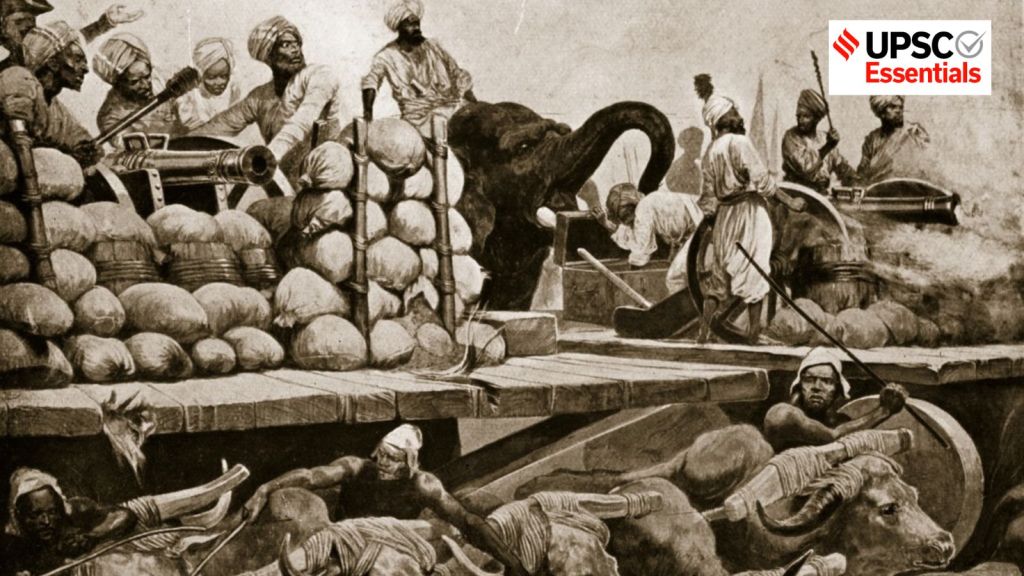 The Nawab's artillery at Plassey. Find a question in our UPSC quiz today. (wikimedia commons)
UPSC Essentials brings to you its initiative of daily subject-wise quizzes. These quizzes are designed to help you revise some of the most important topics from the static part of the syllabus. Attempt today’s subject quiz on History and Culture to check your progress. Find links to previous quizzes for UPSC towards the end of the article.
🚨 Click Here to read the UPSC Essentials magazine for August 2026. Share your views and suggestions in the comment box or at manas.srivastava@indianexpress.com🚨

QUESTION 1
Who among the following was the author of Sindhudo, a collection of patriotic poems that inspired the youth participating in India’s freedom struggle?
(a) Jhaverchand Meghani
(b) Narmadashankar Dave
(c) Umashankar Joshi
(d) Ramdhari Singh Dinkar
Relevance:
This question is relevant to UPSC Prelims as it tests knowledge of lesser-known personalities and their contributions to India’s freedom struggle. It also highlights the role of literature, poetry and patriotic songs in mobilising people during the national movement.
Explanation:
Sindhudo is a Gujarati Poem book by Jhaverchand Meghani first publisehd in 1930. In 1930, he was sentenced for 2 years in jail for writing the book ‘Sindhudo’ that contained songs to inspire the youth of India that was participating in the struggle for Independence against the British Raj. He was a journalist and later he participated in the independence struggle under Mahatma Gandhi.
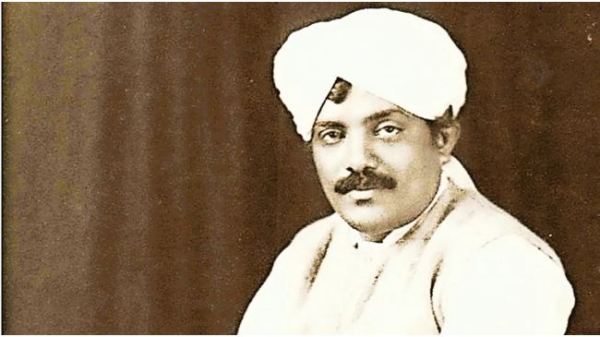 Javerchand Meghani
Therefore, option (a) is the correct answer.
QUESTION 2
With reference to the Battle of Plassey, consider the following statements:
1. The Nawab’s forces had a numerical advantage over the East India Company’s forces.
2. The Nawab’s artillery became ineffective during the rains because its ammunition was not adequately protected.
3. Mir Jafar’s withdrawal contributed to the weakening of Siraj ud-Daulah’s position during the battle.
4. The French provided artillery support to the Nawab’s forces.
Which of the statements given above are correct?
(a) 1, 2 and 3 only
(b) 1, 3 and 4 only
(c) 2 and 4 only
(d) 1, 2, 3 and 4
Relevance:
This question tests understanding of the Battle of Plassey beyond the basic fact of the British victory, focusing on the military and political factors behind Siraj ud-Daulah’s defeat. It is relevant to UPSC Prelims under Modern Indian History, particularly the expansion of the East India Company and the political dynamics of 18th-century Bengal.
Explanation:
— The East India Company’s expanding control over Bengal’s trade disgruntled Siraj ud-Daulah. Relations deteriorated further when he challenged the Company’s unauthorised fortification of Calcutta and its persistent abuse of tax-exemption privileges. The resulting conflict eventually led to the Battle of Plassey.
— On the morning of June 23, 1757, East India Company’s Robert Clive climbed onto the roof of the hunting lodge at Plassey to survey the forces. “In all, Clive estimated that the Nawab had gathered 35,000 infantry, 15,000 cavalry and fifty-three pieces of heavy artillery which was superintended by a team of French experts,” notes William Dalrymple.
— “They approached at pace,” Clive wrote in his official report, “and by eight began the attack with a number of heavy cannons, supported by their whole army.”
— Around noon, however, the weather turned. Dark clouds gathered overhead and a torrential rain drenched the combatants. The Nawab’s artillery fell silent. Assuming that the Company’s guns had been similarly disabled, Siraj’s trusted commander, Mir Madan, ordered an advance. It proved to be a fatal miscalculation. Unlike the Nawab’s forces, the British had protected their ammunition from the rain and were able to continue firing.
— At the same time, a large contingent of cavalry on the Nawab’s left began withdrawing towards the banks of the Bhagirathi-Hooghly River rather than joining the battle. Dalrymple writes, “This, it turned out, was Mir Jafar, withdrawing just as he had promised.”
— By evening, the battle was lost. Siraj ud-Daulah fled the field and attempted to escape northwards, but he was soon captured. Within days, he was murdered. Mir Jafar entered Murshidabad in triumph and was proclaimed Nawab of Bengal.
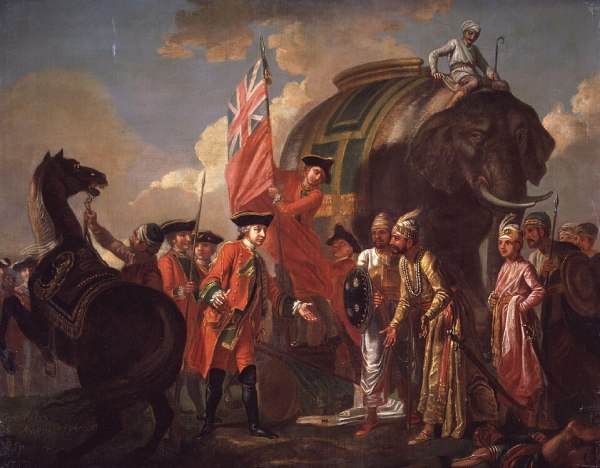 Lord Clive with meeting Mir Jafar after the Battle of Plassey in 1757 (Wikipedia)
Therefore, option (d) is the correct answer.
QUESTION 3
Consider the following statements:
1. India ratified the World Heritage Convention in 1977, becoming eligible to nominate sites of exceptional cultural and natural significance for inscription.
2. The Taj Mahal was among the first three Indian sites to be inscribed on the World Heritage List.
Which of the statements given above is/are correct?
(a) 1 only
(b) 2 only
(c) Both 1 and 2
(d) Neither 1 nor 2
Relevance:
This question tests factual recall of UNESCO World Heritage inscriptions and their chronology, an area relevant to Prelims under Art and Culture and international organisations. It also tests the ability to distinguish between closely related facts and use elimination based on chronology.
Explanation:
— India ratified the World Heritage Convention in 1977, becoming eligible to nominate sites of exceptional cultural and natural significance for inscription. Its first success came in 1983, when the Ajanta Caves, the Ellora Caves, and the Agra Fort were inscribed during the seventh session of the World Heritage Committee.
— Statement 2 is incorrect because Ajanta Caves, Ellora Caves and Agra Fort were India’s first three World Heritage inscriptions in 1983, while the Taj Mahal was inscribed in 1984.
— India’s presence on the World Heritage List expanded in 1984 with the inscription of the Taj Mahal and the Sun Temple at Konark. Over the following decades, the list grew beyond monuments to include historic cities, mountain railways, biodiversity hotspots and cultural landscapes.
— Delhi emerged as one of India’s richest centres of World Heritage, with Qutb Minar and its Monuments, Delhi, and Humayun’s Tomb inscribed in 1993, followed by the Red Fort Complex in 2007.
— The inscription of Sarnath in 2026 marks another milestone in India’s World Heritage journey, recognising one of the world’s most significant Buddhist archaeological sites and its enduring influence on religious and intellectual history.
— Unesco was established in 1945 with a broader mandate to promote peace through education, science and culture, including the preservation of cultural heritage. In 1959, after Egypt announced the construction of the Aswan High Dam, Unesco launched an unprecedented international campaign to rescue the ancient temples of Abu Simbel and Philae, which were threatened by the rising waters of Lake Nasser. More than 50 countries contributed financial and technical assistance to dismantle and relocate the monuments, demonstrating that protecting exceptional heritage could become a shared international effort. The success of the campaign inspired Unesco member states to adopt the Convention Concerning the Protection of the World Cultural and Natural Heritage on November 16, 1972, during its General Conference in Paris. The treaty established the World Heritage List.
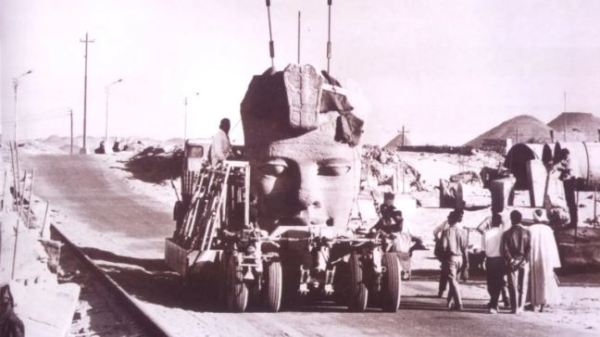 In 1959, after Egypt announced the construction of the Aswan High Dam, Unesco launched an unprecedented international campaign to rescue the ancient temples of Abu Simbel and Philae, which were threatened by the rising waters of Lake Nasser. (Wikimedia Commons)
Therefore, option (a) is the correct answer.
QUESTION 4
With reference to the archaeological sites of India, consider the following statements:
1. The ancient city was situated on the island of Khadir.
2. It featured a fortified city, a sophisticated water-management system, a large cemetery and bead-processing workshops.
3. It was inscribed as a UNESCO World Heritage Site in 2021.
Which one of the following archaeological sites is being described?
(a) Dholavira
(b) Lothal
(c) Rakhigarhi
(d) Kalibangan
Relevance:
This question is relevant to UPSC Prelims as it tests knowledge of Harappan civilisation, archaeological sites and their distinctive features. It also links ancient Indian history with UNESCO World Heritage Sites, a recurring area in Art and Culture.
Explanation:
As per whc.unesco.org,
— The ancient city of Dholavira, the southern centre of the Harappan Civilization, is sited on the arid island of Khadir in the State of Gujarat. Occupied between ca. 3000-1500 BCE, the archaeological site, one of the best preserved urban settlements from the period in Southeast Asia, comprises a fortified city and a cemetery.
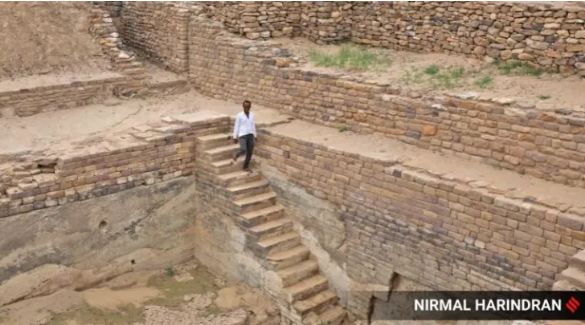 The morning after UNESCO included Dholavira as a world heritage site (2021)— the first Indus Valley settlement in India to be thus identified. (Express Photo by Nirmal Harindran)
— Two seasonal streams provided water, a scarce resource in the region, to the walled city which comprises a heavily fortified castle and ceremonial ground as well as streets and houses of different proportion quality which testify to a stratified social order. A sophisticated water management system demonstrates the ingenuity of the Dholavira people in their struggle to survive and thrive in a harsh environment. The site includes a large cemetery with cenotaphs of six types testifying to the Harappan’s unique view of death.
— Bead processing workshops and artifacts of various kinds such as copper, shell, stone, jewellery of semi-precious stones, terracotta, gold, ivory and other materials have been found during archaeological excavations of the site, exhibiting the culture’s artistic and technological achievements. Evidence for inter-regional trade with other Harappan cities, as well as with cities in the Mesopotamia region and the Oman peninsula have also been discovered.
Therefore, option (a) is the correct answer.
QUESTION 5
The term “Pyramids of Assam” is generally associated with which one of the following archaeological sites?
(a) Deoparbat
(b) Charaideo Moidams
(c) Madan Kamdev
(d) Ambari Archaeological Site
Relevance:
This question is relevant to UPSC Prelims as it tests knowledge of India’s archaeological heritage and regional historical traditions. It also assesses familiarity with distinctive cultural and architectural features associated with ancient and medieval India.
Explanation:
— The Moidams in eastern Assam — a 700-year-old mound-burial system of the Ahom dynasty — made it to UNESCO’s World Heritage List in 2024, becoming the first cultural site from the Northeast to make it to the list.
— The site, set in the foothills of the Patkai Ranges in Assam, contains the royal necropolis of the Tai-Ahom. Ninety moidams — hollow vaults built of brick, stone or earth — of different sizes are found within the property. As per a statement on the UNESCO website, for 600 years, the Tai-Ahom created these moidams accentuating the natural topography of hills, forests and water, thus forming a sacred geography.
— A moidam is a tumulus — a mound of earth raised over a grave — of Ahom royalty and aristocracy. In Assam, while Charaideo contains ones of Ahom royals, other moidams of aristocrats and chiefs can be found scattered across the eastern part of the state, between Jorhat and Dibrugarh.
— Ahom kings and queens were buried inside these moidams. Unlike Hindus who cremate their dead, the predominant funerary method of the Ahoms, originating from the Tai people, was the burial. The height of a moidam is typically indicative of the power and stature of the person buried inside. However, except for those of Gadhadhar Singha and Rudra Singha, most moidams remain unidentified.
— Inside the chambers of the moidam, the dead king would be buried along with items he needed for the “afterlife”, as well as servants, horses, livestock and even their wives. It is the similarity of the Ahom burial rites with that of the ancient Egyptians that give Charaideo moidams the moniker of “Pyramids of Assam.”
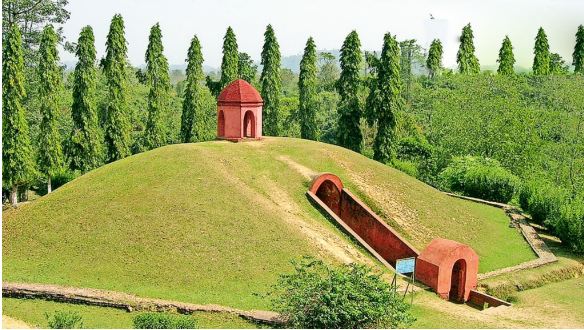 Charaideo Moidams
Therefore, option (b) is the correct answer.
Previous Daily Subject-Wise-Quiz
Daily Subject-wise quiz — History, Culture, and Social Issues (Week 163)
Daily subject-wise quiz — Polity and Governance (Week 179)
Daily subject-wise quiz — Science and Technology (Week 179)
Daily subject-wise quiz — Economy (Week 179)
Daily subject-wise quiz — Environment and Geography (Week 179)
Daily subject-wise quiz – International Relations (Week 178)
Subscribe to our UPSC newsletter and stay updated with the news cues from the past week.
Stay updated with the latest UPSC articles by joining our Telegram channel – IndianExpress UPSC Hub, and follow us on Instagram and X


Manas Srivastava is an Assistant Editor at The Indian Express Read More
 Share


