
QUESTION 1
India’s demographic transition is increasingly characterised by declining fertility and changing family structures. Examine the social and economic factors driving this transition.
QUESTION 2
The classical literature of India reflects not merely aesthetic traditions but also ethical, social and political ideas of its time. Discuss with reference to the Thirukkural.
QUESTION 1: India’s demographic transition is increasingly characterised by declining fertility and changing family structures. Examine the social and economic factors driving this transition.
Relevance: The question is relevant to GS1 – Indian Society, particularly demographic transition, changing family structures and social change. It is useful for analysing the emerging social and economic implications of India’s changing demographic profile.
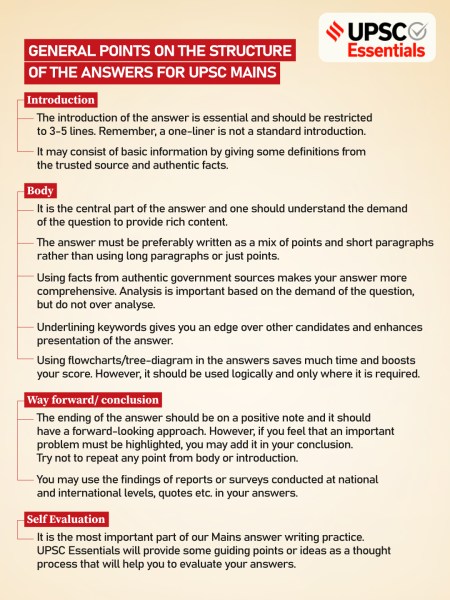
Note: This is not a model UPSC answer. It only provides you with a thought process which you may incorporate into the answers.
Introduction:
— India is experiencing a major shift in its population: nationwide birth rates have dropped to replacement level, and several states—especially in the south—now face even lower fertility and an aging population.
— This ongoing shift goes beyond just birth rates; it reflects broader changes in marriage trends, higher education and job opportunities for women, family finances, birth control decisions, and family setups.
Body:
You may incorporate some of the following points in your answer:
Social factors
— Higher levels of education, especially for women, have led to delayed family planning and a stronger focus on professional goals and personal ambitions. Shift in birth patterns is now closely tied to the choices women make throughout their lives.
— Although almost everyone in India still gets married, family life is evolving. Fewer women are having children at a young age, with educated and wealthier couples choosing to marry and start families later in life.
— More women are entering the workforce to achieve financial independence, yet they still bear the majority of housework and childcare. This imbalance creates a difficult tug-of-war between pursuing a career and raising a family.
— Although birth control use has risen alongside falling birth rates in India, couples still struggle to access methods for spacing out children and preventing unplanned pregnancies, especially when newly married.
— The debate over maternity leave in Tamil Nadu shows that longer leave for mothers isn’t enough to make parenting a equal effort. Without equal leave or duties for fathers, society continues to view raising children as strictly a woman’s job.
Economic factors
— Expenses like housing, schooling, medical care, and daycare place a heavy financial load on families. Financial instability and a lack of reasonably priced childcare often lead couples to decide against having more children.
— Working for pay increases the financial trade-offs of having children, especially in jobs that do not offer sufficient parental leave, flexible hours, or on-site childcare options.
— A lack of steady, formal jobs paired with low female workforce participation creates financial insecurity, which directly affects when people choose to marry, have children, and how large a family they build.
— Living in cities comes with steep rent and daycare expenses alongside shifting social habits. As families become smaller and move more frequently, traditional support networks like extended family care tend to break down.
Conclusion:
— The drop in India’s birth rate stems from wide-ranging shifts in schooling, career opportunities, marital trends, family desires, birth control habits, and the financial demands of raising children.
— The real task for policymakers isn’t just steering birth rates up or down, but building an environment where people can freely choose if and when to have children without financial pressure or unfair burdens at home.
(Sources: Tamil Nadu’s maternity leave scheme evades the larger question: When will mothering become parenting?, Outdated contraception, early conception: Counting the babies that India didn’t plan for, India’s real fertility crisis is about choice, not numbers, Population spectres do harm. Managing demographic change is the challenge, How should South India deal with its aging population?)
Points to Ponder
What factors are driving declining fertility in India?
How do urbanisation and the rising cost of raising children affect fertility decisions?
Related Previous Year Question
Critically examine the challenges of demographic transition in contemporary India (2026)
QUESTION 2: The classical literature of India reflects not merely aesthetic traditions but also ethical, social and political ideas of its time. Discuss with reference to the Thirukkural.
Relevance: The question is relevant to GS1 – Indian Culture, particularly classical literature and the evolution of philosophical and ethical traditions. The topic is useful for understanding the diversity and continuity of India’s literary and intellectual heritage.
Note: This is not a model UPSC answer. It only provides you with a thought process which you may incorporate into the answers.
Introduction:
— Classical Indian literature is more than just a record of creative expression; it also preserves ethical principles, social practices, political beliefs, and intellectual traditions from many time periods.
— The Thirukkural, credited to the Tamil poet-philosopher Thiruvalluvar, is an excellent example of this multifaceted literary tradition. It has 1,330 couplets divided into 133 chapters titled Aram (virtue), Porul (polity/material existence), and Inbam (love).
Body:
You may incorporate some of the following points in your answer:
Significance of Thirukkural
— Ethical ideas: The Aram part emphasises morality, virtue, and individual behaviour as the foundation of a fulfilling life. It promotes virtues like generosity, compassion, love, and moral restraint, while cautioning against greed, envy, rage, and harshness. Its ethical foundation goes beyond restricted identities, with the book highlighting principles that cross caste, creed, and religious boundaries.
— Social ideas: The text highlights the significance placed on education, virtue, and social well-being. Its depiction of Inbam portrays love as a fundamental aspect of human life, encompassing both premarital and marital relationships. By examining individual behaviour as well as interpersonal connections, it sheds light on the social and cultural ideals of its literary setting.
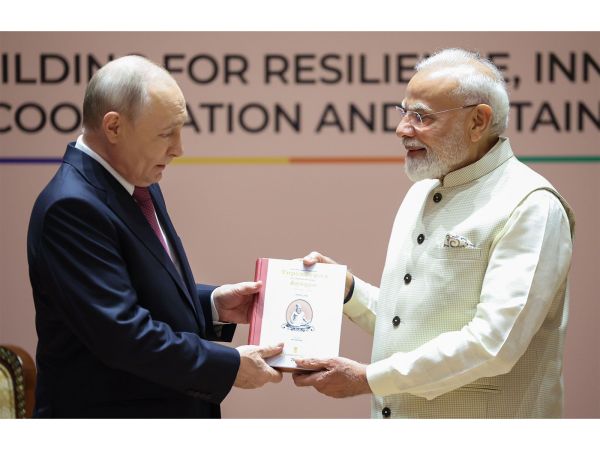
Prime Minister Narendra Modi presents Russian President Vladimir Putin with a Russian translation of the Thirukkural on the sidelines of the BRICS Summit 2026, in New Delhi on September 11, 2026. Photo: ANI
— Political and economic ideas: The Porul part discusses politics, material life, and socioeconomic ideals, illustrating that classical literature can engage with issues of governance and public life. Rather than seeing ethics as solely personal, the study ties individual virtue with societal and political organization.
— Philosophical dimension: In the first chapter of the scripture, God is associated with wisdom, compassion, morality, and love. The emphasis on the relationship between education, wisdom, and virtue exemplifies the philosophical nature of classical Tamil literature.
— Cultural significance: The Thirukkural highlights the rich diversity of India’s ancient literary traditions. The classical Tamil literature was originally kept alive by word of mouth for generations before being rediscovered and published in print. Beyond this work, the larger Sangam collection covers everyday human experiences—such as romance, conflict, community bonds, governance, and culture—showing how ancient writings give us valuable insights into life in the past.
Conclusion:
— The Thirukkural shows how ancient Indian writings could serve as art, moral advice, and political guidance all at once. Its lasting importance comes from keeping classical Tamil ideas alive while speaking to timeless human challenges that still matter today.
(Sources: Thirukkural: What is the revered Tamil text Modi gifted Putin?, Why Thirukkural by Tamil philosopher Thiruvalluvar remains relevant today, The ‘rediscovery’ of Sangam literature and how it became a source of Tamil history and archaeology)
Points to Ponder
How does classical Indian literature combine literary expression with philosophical thought?
Related Previous Year Questions
Estimate the contribution of Pallavas of Kanchi for the development of art and literature of South India. (2024)
Krishnadeva Raya, the King of Vijayanagar, was not only an accomplished scholar himself but was also a great patron of learning and literature. Discuss. (2016)
Previous Mains Answer Practice
UPSC Essentials: Mains answer practice — GS 3 (Week 172)
UPSC Essentials: Mains answer practice — GS 3 (Week 171)
UPSC Essentials: Mains answer practice — GS 2 (Week 172)
UPSC Essentials: Mains answer practice — GS 2 (Week 171)
UPSC Essentials: Mains answer practice — GS 1 (Week 170)
UPSC Essentials: Mains answer practice — GS 1 (Week 171)
Subscribe to our UPSC newsletter and stay updated with the news cues from the past week.
Stay updated with the latest UPSC articles by joining our Telegram channel – IndianExpress UPSC Hub, and follow us on Instagram and X.

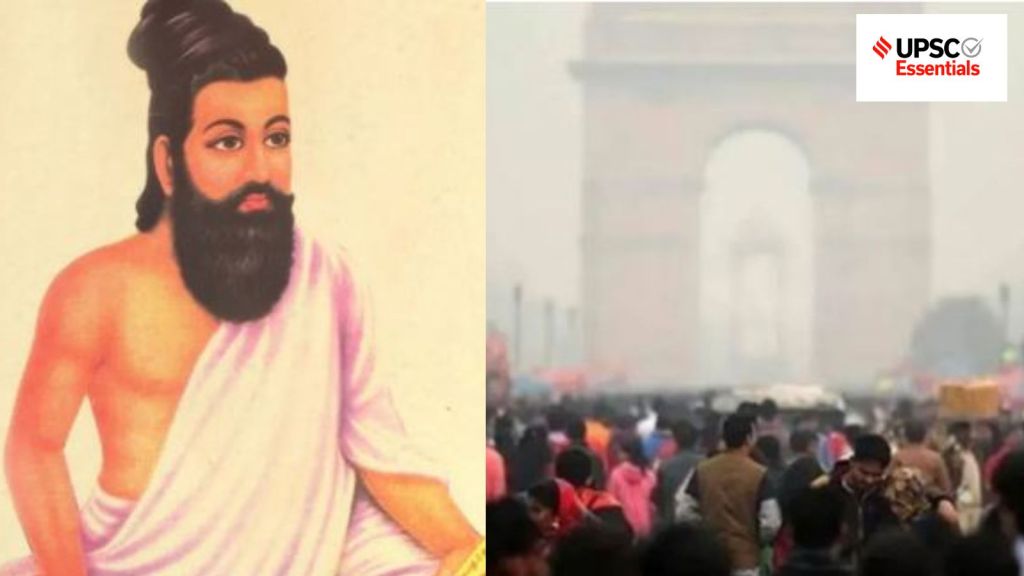 Are you preparing for Civil Services Mains Exam 2027? Attempt a question on India’s demographic transition and Thiruvalluvar in today's answer-writing practice. (File Image)

 Prime Minister Narendra Modi presents Russian President Vladimir Putin with a Russian translation of the Thirukkural on the sidelines of the BRICS Summit 2026, in New Delhi on September 11, 2026. Photo: ANI

 Share


