
Aspirants are expected to develop ethical reasoning, not ready-made answers.
UPSC Ethics Answer Practice series is an attempt to build this ability. Every week, we will take up an issue connected to contemporary developments, identify the ethical issues, dilemmas, principles, stakeholders and conflicting duties involved, and apply them through a UPSC-style question or case study. What follows the questions is not a model answer, but a thought process to help you approach the question.
Last week, we attempted questions centred around the theme of public/civil service values and ethics in public administration. This week, the questions focus on the theme of development and environment conservation.
QUESTION 1 (Theory)
Development projects often create ethical dilemmas when the pursuit of public welfare and economic growth conflicts with environmental conservation and the rights of vulnerable communities. What are the major ethical issues faced by public administrators in such situations? Discuss with suitable examples.
(AI generated)
— Environmental stewardship involves the responsible use, conservation and protection of natural resources through sustainable practices, ensuring their preservation for present and future generations. It brings in the ethical question of our responsibility towards both nature and future generations. The doctrine of public trust demands the state to hold vital natural resources — such as air, water, forests, coasts — in trust for the benefit of the public, not only of the present generation but of those yet to come. This raises an ethical question about whether public resources can be treated as expendable in the pursuit of short-term gains.
— Similarly, the principle of sustainable development implies a harmony between development, environment, resources and an emphasis on inter-generational responsibility. The principle also means that the state must make efforts to balance environmental protection and development, while preventing, minimising and addressing avoidable harm.
— In the case of Vellore Citizens’ Welfare Forum vs Union of India, the Supreme Court held that the precautionary principle and polluter pays principle are essential features of sustainable development.
— Precautionary principle emphasises taking preventive action where there is a risk of serious environmental harm, rather than waiting for damage to occur and compensating for it later. In the above case, the Supreme Court declared that the precautionary principle includes three major conditions: the state must anticipate, prevent and attack the cause of environmental degradation.
— Fundamental rights given in the Constitution of India guarantee right to a safe and clean environment, right to livelihood (Article 21) and cultural rights (Article 29-30).
— Immanuel Kant’s moral philosophy offers a useful lens here. His idea that human beings must always be treated as ends in themselves, and never merely as means, places intrinsic value on human beings.
— The constitutional framework also reflects this responsibility. Article 48A, as a directive principle of state policy advises that while framing laws or executing policy decisions, the State should endeavour to protect and improve the environment and to safeguard the forests and wildlife of the country.
— The ethical dilemma need not always result in a choice between development and conservation.
— The Delhi–Dehradun Economic Corridor is a good example of balancing development with conservation. A 12 km elevated wildlife corridor alongside dedicated animal underpasses were built to protect fragile ecosystems and species. This allows seamless economic transit while reducing human-wildlife conflict and protecting local biodiversity.
— However, when development is a necessity for public welfare and raising the standard of living of a large population, environmental trade offs become unavoidable sometimes. Such trade-offs may involve negative externalities like destruction of eco-sensitive zones or pollution due to development projects.
— This raises the question of who should bear the cost of environmental harm. The polluter pays principle seeks to ensure that those responsible for pollution bear the costs of prevention, compensation and environmental restoration.
— This brings the principle of fairness into the development-environment debate. Environmental justice promotes the idea that fruits of development should be distributed fairly, especially when the vulnerable communities face disproportionate environmental costs.
— Beyond the outcome, the decision-making process itself raises ethical concerns. Stakeholder consideration and participation become even more crucial when vulnerable communities and ecosystems have limited voice in decision-making yet face the maximum brunt of unintended consequences.
— Finally, administrators may face a conflict between professional integrity and external pressure to accelerate a project because of its economic or strategic importance or political expediency. However, also important are independent judgement, honest reporting and a willingness to raise concerns in public interest.
QUESTION 2 (Caselet)
Apply the similar framework given in the theoretical question above and use it to arrive at an ethically justifiable decision in the following caselet.
You are the District Magistrate of a district in an island state. The government has proposed a major infrastructure project in your jurisdiction to improve India’s maritime security and connectivity, create employment opportunities and strengthen the region’s economy.
The project has received the necessary approvals, but it requires the diversion of a significant area of forest land. The affected region is home to indigenous communities, including a particularly vulnerable tribal group whose traditional way of life depends on the forest.
While the government maintains that the project will bring substantial economic and strategic benefits and that adequate safeguards have been provided, environmental experts and representatives of the tribal communities have raised concerns about the possible loss of eco-sensitive zones and biodiversity, disruption of livelihoods and long-term effects on the community’s culture.
(Representational image generated by AI)
Some community representatives have also questioned whether their concerns have been adequately considered in the decision-making process, citing lack of public consultations. The project authorities, however, maintain that all required procedures have been followed.
The project is expected to generate employment and improve infrastructure in the region. At the same time, any damage to the forest or disruption of the community’s traditional way of life may be difficult to reverse. As the District Magistrate, you are responsible for coordinating the implementation of the project while ensuring that the rights and welfare of the affected communities are protected.
Questions:
(a) What are the socio-economic, administrative and ethical issues involved in the implementation of this project?
(b) What options are available to you? Examine the ethical implications of each option.
(c) What course of action would you adopt, and why?
Express Tip: ‘The Defence Tip’
Before you finish the above ethics case study, ask yourself three questions:
1. Can I defend my choice ethically?
(Why is this option morally preferable to the alternatives? Which ethical principles and values support it, and how does it address the core ethical dilemma?)
2. Have I balanced competing interests fairly?
(Is my decision sensitive to the rights, interests and consequences for all relevant stakeholders? Can I protect the larger public interest while minimising avoidable harm to those affected?)
3. Have I considered the long-term consequences?
(Have I accounted for irreversible environmental damage, inter-generational impact and the sustainability of the proposed solution?)
4. Is my decision both principled and practical?
(Does it uphold integrity and the rule of law without becoming unnecessarily rigid or insensitive? Can the decision actually be implemented, and does it offer a sustainable way forward?)
A strong ethics answer does not simply identify the ‘right’ option. It explains why the chosen course of action is morally justified, acknowledges competing interests and shows how ethical principles can be translated into a just and practical decision.
(Refer: 1. UPSC Ethics Simplified: What is Environmental Ethics?
2. UPSC Ethics Simplified: Can development come at the cost of safety?
🚨For any queries and feedback, contact raveena.baneta@indianexpress.com. Click Here to read the UPSC Essentials magazine for September 2026.
🚨 Subscribe to our UPSC newsletter. Stay updated with the latest UPSC articles by joining our Telegram channel – IndianExpress UPSC Hub, and follow us on Instagram and X.

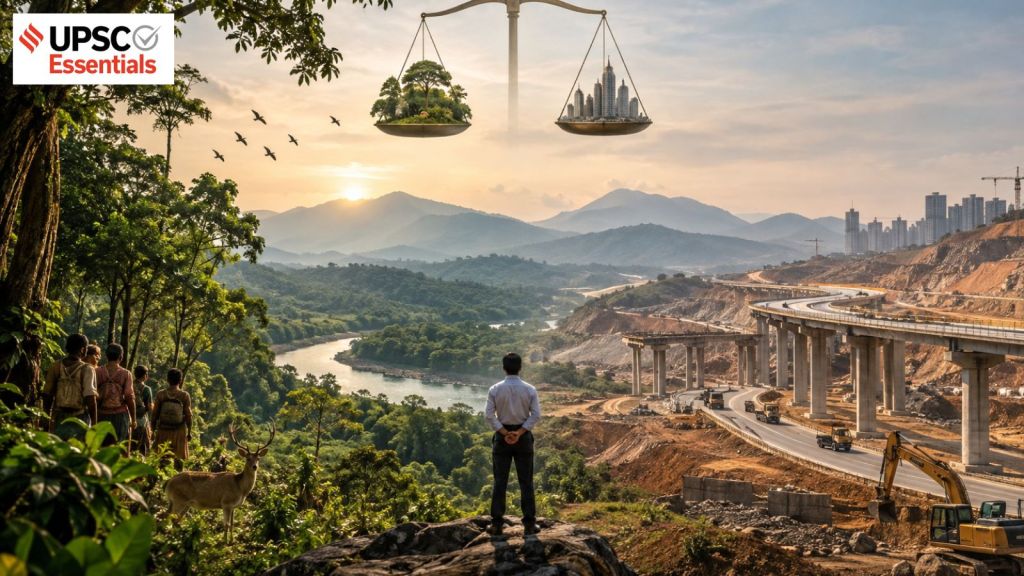 Development and conservation need not always be opposing goals, but reconciling them can pose complex ethical challenges for public administrators. (AI generated image)

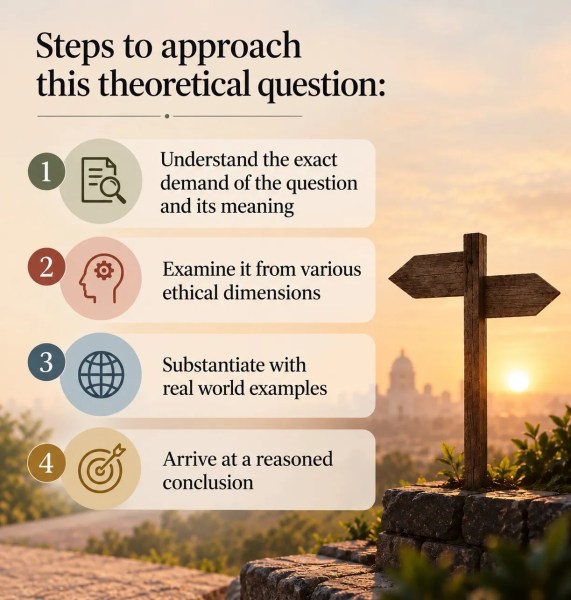 (AI generated)
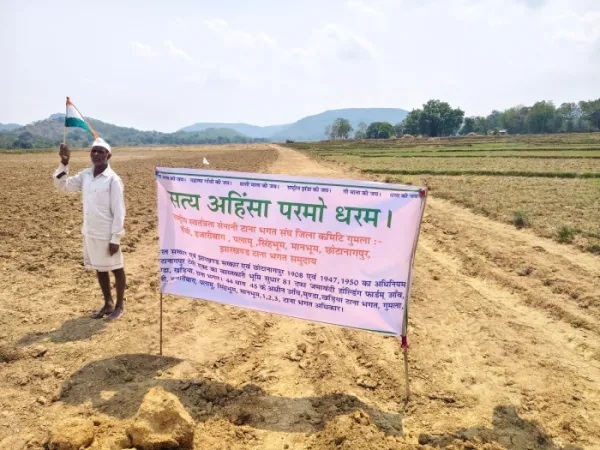 Protest against land reacquisition in Jharkhand. (Express Photo)
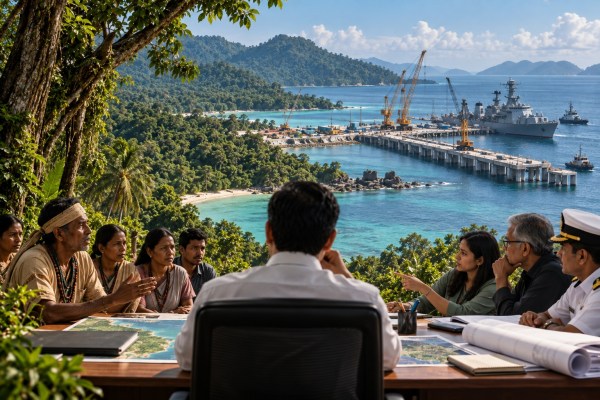 (Representational image generated by AI)


 Share


