
QUESTION 1
With reference to the Permanent Mission of India to the UN, consider the following statements:
1. The Permanent Mission of India to the United Nations is based in New York.
2. The Permanent Mission of India to the UN is headed by the Minister of External Affairs.
Which of the statements given above is/are correct?
(a) 1 only
(b) 2 only
(c) Both 1 and 2
(d) Neither 1 nor 2
Relevance: The question is relevant to understanding India’s representation and participation in the United Nations system. It covers the role of permanent missions, diplomatic representation and multilateral institutions.
Explanation
— The Permanent Mission of India in Geneva has three separate wings namely, the Permanent Mission of India to the United Nations and Other International Organizations in Geneva, the Permanent Mission of India to the Conference on Disarmament in Geneva and the Permanent Mission of India to the World Trade Organization(WTO) in Geneva. Hence, statement 1 is not correct.
— The Consulate General of India in Geneva is housed in the Permanent Mission of India to the UN in Geneva. It is headed by India’s Permanent Representative to the United Nations, not the Minister of External Affairs. Hence, statement 2 is not correct.
Therefore, option (d) is the correct answer.
(Source: pmindiaun.gov.in)
QUESTION 2
Consider the following statements:
1. Adding new permanent seats would require changing the UN Charter itself.
2. It requires a two-thirds vote in the General Assembly and ratification by two-thirds of all member states, including agreement from every existing permanent member.
Which one of the following is correct in respect of the above statements?
(a) Both Statement 1 and Statement 2 are correct and Statement 2 is the correct explanation for Statement 1.
(b) Both Statement 1 and Statement 2 are correct and Statement 2 is not the correct explanation for Statement 1.
(c) Statement 1 is correct but Statement 2 is incorrect.
(d) Statement 1 is incorrect but Statement 2 is correct.
Relevance: The question is relevant to understanding the structure, composition and reform of the United Nations Security Council. It helps in understanding the ongoing debate over UNSC reform and expansion of permanent and non-permanent representation.
Explanation
— The Security Council currently has 15 seats. Five belong to permanent members holding veto power China, France, Russia, the UK and the US while the other ten are filled by countries elected for two-year terms.
— Adding new permanent seats would require changing the UN Charter itself, which needs a two-thirds vote in the General Assembly and ratification by two-thirds of all member states, including agreement from every existing permanent member. Hence, statements 1 and 2 are correct.
— Even with Russia’s backing, the push to reform the council has made little real progress. Views among the other permanent members are divided, and China, one of Russia’s closest partners, continues to firmly resist India joining their ranks.
Therefore, option (a) is the correct answer.
QUESTION 3
Consider the following:
It is the world’s largest island, with a population of less than 57,000 — making it one of the least densely populated areas globally. It is an autonomous, self-governing country. It is located between North America, Europe, and the Arctic Ocean. It is home to the US-Pituffik Space Base, which is crucial for ballistic missile early warning and Arctic defence. The island also has vast reserves of rare earth minerals.
The above-mentioned statement refers to:
(a) Iceland
(b) Greenland
(c) Faroe Islands
(d) Svalbard
Relevance: The question is relevant to understanding the geopolitical significance of the Arctic region and its growing strategic importance. It covers strategic locations, natural resources, defence infrastructure and great-power interests in global politics.
Explanation
— Greenland, the world’s largest island, covers an area of around 2.16 million sq km, with approximately 81% covered by a massive permanent ice sheet. Its population — less than 57,000 — makes it one of the least densely populated areas globally, and nearly half of it lives in the capital city of Nuuk. Roughly, 88% of the population is Inuit or of mixed Inuit Danish heritage.
— Greenland is an autonomous, self-governing country, within the Kingdom of Denmark. Copenhagen, however, retains the responsibility of foreign policy, national defence, security, and monetary policy.
— Located between North America, Europe, and the Arctic Ocean, Greenland has immense strategic significance as it dominates sea lanes and air routes. In fact, it controls the access between the Arctic and Atlantic Oceans, which covers the Greenland-Iceland-United Kingdom gap: a vital choke point.
— It is home to the US-Pituffik Space Base (formerly the Thule Air Base), which is crucial for ballistic missile early warning and Arctic defence. The island also has vast reserves of rare earth minerals. With the melting ice caps, accessibility to its untapped resources has increased.
Therefore, option (b) is the correct answer.
QUESTION 4
The Monroe Doctrine refers to:
(a) A US policy declaring that the Western Hemisphere should be closed to further European colonisation and interference
(b) A European agreement to divide the newly independent states of Latin America among Britain, France and Spain
(c) A US policy committing Washington to avoid all political and military involvement in the affairs of Latin American countries
(d) A doctrine establishing the principle that European powers could intervene in the Americas whenever regional governments faced internal political instability
Relevance: The question is relevant to the study of major doctrines and approaches in the foreign policies of great powers. It helps understand power projection, strategic interests and regional influence in international relations.
Explanation
— The United States National Security Strategy (NSS)-2025 explicitly prioritised the Western Hemisphere with a mandate to restore American pre-eminence over the region, which was tantamount to the revival of the “Monroe Doctrine” of 1823.
— The Monroe Doctrine refers to a US policy declaring that the Western Hemisphere should be closed to further European colonisation and interference.
— James Monroe’s annual message to the United States Congress outlined two core principles that together became known as the Monroe Doctrine. The first, the non-colonisation clause, sought to prevent European powers from pursuing future colonial expansion in the Americas. The second was the principle of non-interference, which warned European powers against imposing their political systems on the Americas or threatening the integrity of newly independent states. In return, the president pledged that the United States would refrain from involvement in European affairs.
Therefore, option (a) is the correct answer.
QUESTION 5
Hurricane Polo has intensified into a Category 5, becoming one of the most powerful hurricanes to form in the region of:
(a) The Caribbean Sea
(b) The Gulf of Mexico
(c) The North Atlantic Ocean
(d) Mexico’s southwestern Pacific coast
Relevance: The question is relevant to understanding the geographical dimensions of regional security and disaster management. It connects natural hazards with regional preparedness, resilience and international cooperation.
Explanation
— Hurricane Polo has intensified into a Category 5 storm off Mexico’s southwestern Pacific coast, becoming one of the most powerful hurricanes to form in the region in recent decades.
— The US National Hurricane Center (NHC) said that Polo was nearly stationary about 325 km south of Zihuatanejo, Mexico, with maximum sustained winds of 270 kmph and a minimum central pressure of 905 millibars. The storm was expected to turn sharply northwest before moving west-northwest over the following days.
Therefore, option (d) is the correct answer.
Previous Daily Subject-Wise-Quiz
Daily Subject-wise quiz — History, Culture, and Social Issues (Week 165)
Daily subject-wise quiz — Polity and Governance (Week 181)
Daily subject-wise quiz — Science and Technology (Week 181)
Daily subject-wise quiz — Economy (Week 181)
Daily subject-wise quiz — Environment and Geography (Week 181)
Daily subject-wise quiz – International Relations (Week 180)
Subscribe to our UPSC newsletter and stay updated with the news cues from the past week.
Stay updated with the latest UPSC articles by joining our Telegram channel – IndianExpress UPSC Hub, and follow us on Instagram and X

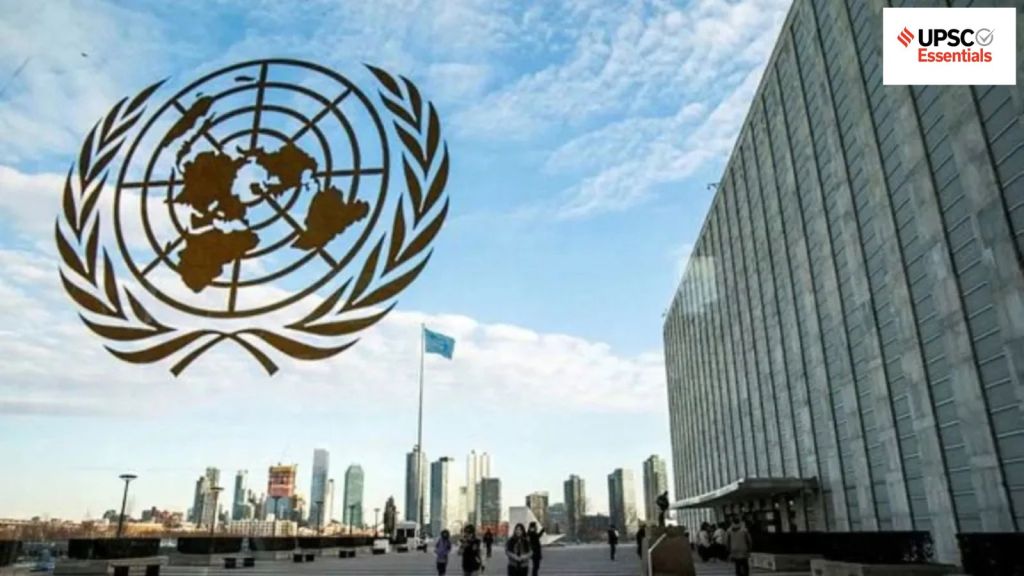 Check your progress and revise your topics through this quiz on International Relations. Find a question on the Permanent Mission of India to the UN in today's quiz. (Representative Image)


 Share


