3. The break-offs from hanging glaciers can trigger glacial lake outburst floods (GLOFs).
How many of the statements given above are correct?
(a) Only one
(b) Only two
(c) All three
(d) None
Relevance: Hanging glaciers are relevant to UPSC Prelims under glaciology, Himalayan geography and disaster management. UPSC may test definitions, geographical distribution, causes of instability and associated cascading hazards.
Explanation
— The devastating flooding in Nepal has similarities to at least four major incidents in India over the last decade-and-a-half, each involving a sudden release of large volumes of waters in the mountainous rivers.
— An April 2026 study published in Nature magazine has found that there are as many as 219 hanging glaciers in the Alaknanda basin of the Garhwal Himalayas. Nearly a third of this unstable ice, according to the study, is concentrated in the Upper Alaknanda basin.
— Unstable glaciers are essentially those whose velocity may change by an order of magnitude and more during a comparatively short period of time. The result is redistribution of ice, accompanied by geometric and structural-and-tectonic shifts.
— This instability then leads to the development of hanging glaciers on steep slopes. While these glaciers have been extensively studied in the Alps, basin-scale assessments in the Himalayas remain limited. Hence, statement 1 is correct.
— Hanging glaciers pose a significant risk of break-offs. The study’s simulations indicated that the resultant avalanche flows could exceed 50 metres in height in Uttarakhand’s Badrinath-Mana sector. Such a severe event would swallow major settlements and infrastructure. The break-offs from hanging glaciers can also trigger secondary hazards such as glacial lake outburst floods (GLOFs). Hence, statement 3 is correct.
— Hanging glaciers are not confined to Jammu and Kashmir; they are also found in other parts of the Himalayas. Hence, statement 2 is not correct.
Therefore, option (b) is the correct answer.
To read more: What are ‘hanging glaciers’ and why are they a major risk for India?
QUESTION 2
With reference to the Gandak River, consider the following statements:
1. The river originates from the north of Dhaulagiri in Tibet.
2. In India, the river flows in a southerly direction and forms the boundary between Bihar and Jharkhand.
Which of the statements given above is/are correct?
(a) 1 only
(b) 2 only
(c) Both 1 and 2
(d) Neither 1 nor 2
Relevance: The Gandak River is relevant to UPSC Prelims under Indian Geography, Himalayan rivers and drainage systems. UPSC may test river origins, direction of flow, state boundaries, tributaries and their relationship with major river basins.
Explanation
— On August 27, a Rescue and Relief Team of the Sashastra Seema Bal patrolling the Gandak river in Uttar Pradesh’s Maharajganj spotted something floating in the water.
— The Gandak River originates at an altitude of 7620 m above MSL in the north of Dhaulagiri in Tibet near Nepal border. Hence, statement 1 is correct.
— The river enters Indian territory near Tribeni town in Nepal. Thereafter, the river flows in a southerly direction and forms a boundary between Uttar Pradesh and Bihar. Hence, statement 2 is not correct.
Therefore, option (a) is the correct answer.
QUESTION 3
Which of the following lakes is/are situated on the US-Canada border?
1. Lake Ontario
2. Lake Huron
3. Great Salt Lake
4. Lake Tanganyika
5. Lake Erie
Select the correct answer using the codes given below:
(a) 1, 2, and 3 only
(b) 2, 3, 4 and 5 only
(c) 1, 2 and 5 only
(d) 1, 2, 3, 4 and 5
Relevance: This topic is relevant to UPSC Prelims under World Geography, map-based questions and major inland water bodies. UPSC can frame similar questions on lakes, international boundaries, continents, drainage systems and geographical locations.
Explanation
— US President Donald Trump signed an executive order to rename Lake Ontario, situated on the US-Canada border, as “Lake America”. The order said the lake was a “tremendous asset to the United States and part of our Nation’s heritage.”
— The following lakes border the United States and Canada: Lake Superior, Lake Huron, Lake Erie, and Lake Ontario.
Therefore, option (c) is the correct answer.
QUESTION 4
Which international agreement aims to limit global warming to well below 2°C, preferably 1.5°C, above pre-industrial levels?
(a) Kyoto Protocol, 1997
(b) Montreal Protocol, 1987
(c) Copenhagen Accord, 2009
(d) Paris Agreement, 2015
Relevance: This topic is important for UPSC Prelims under international environmental agreements and climate change governance. It can be linked with global climate commitments, mitigation targets, NDCs and international efforts to address global warming.
Explanation
— A new report by the United Nations Environment Programme (UNEP) suggests the world will likely “overshoot”, or temporarily breach, the 1.5°C target of warming above preindustrial temperatures within the next few years. The UNEP report titled “Limiting Overshoot” says crossing the 1.5°C threshold is “unavoidable”, with global temperatures expected to peak at about 1.8°C above pre-industrial levels even under an “optimistic scenario”.
— The 1.5°C target was a key outcome of the Paris Agreement, signed in 2015 by 193 countries and the European Union. Under Article 2 of the Paris Agreement, nations must commit to keep global average temperatures well below 2°C above pre-industrial levels, and ideally capped at 1.5°C.
The lower threshold matters because climate risks increase with every additional fraction of a degree of warming. The 1.5°C limit was never considered a completely “safe” level of warming, but staying closer to it reduces the severity of risks to people and ecosystems.
— For years, 2°C was the threshold widely used to assess dangerous climate change. Yale economist William Nordhaus first suggested that if global warming were to exceed 2°C, climate change would push living conditions outside the range experienced by human civilisation. Over time, scientists and policymakers increasingly used 2°C as an organising principle for climate action.
Therefore, option (d) is the correct answer.
QUESTION 5
With reference to the Neelakurinji flowers, consider the following statements:
1. The flower is associated with the high-altitude grasslands of the Western Ghats.
2. It is known for its roughly 12-year flowering cycle.
3. It is cultivated as a commercial plantation crop.
4. The plant belongs to the Fabaceae family, which includes pulses and legumes.
How many of the statements given above are correct?
(a) Only one
(b) Only two
(c) Only three
(d) All four
Relevance: Neelakurinji is important for Prelims as a species associated with the high-altitude shola–grassland ecosystems of the Western Ghats, particularly Kerala and Tamil Nadu. The topic can also be linked with Western Ghats biodiversity, endemic flora, habitat conservation and ecological significance.
Explanation
— Few natural spectacles are as striking as a hillside covered in Neelakurinji’s violet-blue blooms. Scientifically known as Strobilanthes kunthiana, the flower is associated with the high-altitude grasslands of the Western Ghats and is best known for its roughly 12-year flowering cycle. Mass flowering has been recorded across parts of Kerala, Tamil Nadu and Karnataka. Hence, statements 1 and 2 are correct.
 (Photo: Wikipedia)
— The top destinations associated with Neelakurinji are: Eravikulam National Park, Palani Hills around Kodaikanal, Nilgiri Hills, including areas around Mukurthi National Park, and hills around Chikkamagaluru.
— It belongs to the Acanthaceae family and is not cultivated as a commercial plantation crop. Hence, statements 3 and 4 are not correct.
Therefore, option (b) is the correct answer.
Previous Daily Subject-Wise-Quiz
Daily Subject-wise quiz — History, Culture, and Social Issues (Week 162)
Daily subject-wise quiz — Polity and Governance (Week 178)
Daily subject-wise quiz — Science and Technology (Week 178)
Daily subject-wise quiz — Economy (Week 178)
Daily subject-wise quiz — Environment and Geography (Week 177)
Daily subject-wise quiz – International Relations (Week 177)
Subscribe to our UPSC newsletter and stay updated with the news cues from the past week.
Stay updated with the latest UPSC articles by joining our Telegram channel – IndianExpress UPSC Hub, and follow us on Instagram and X

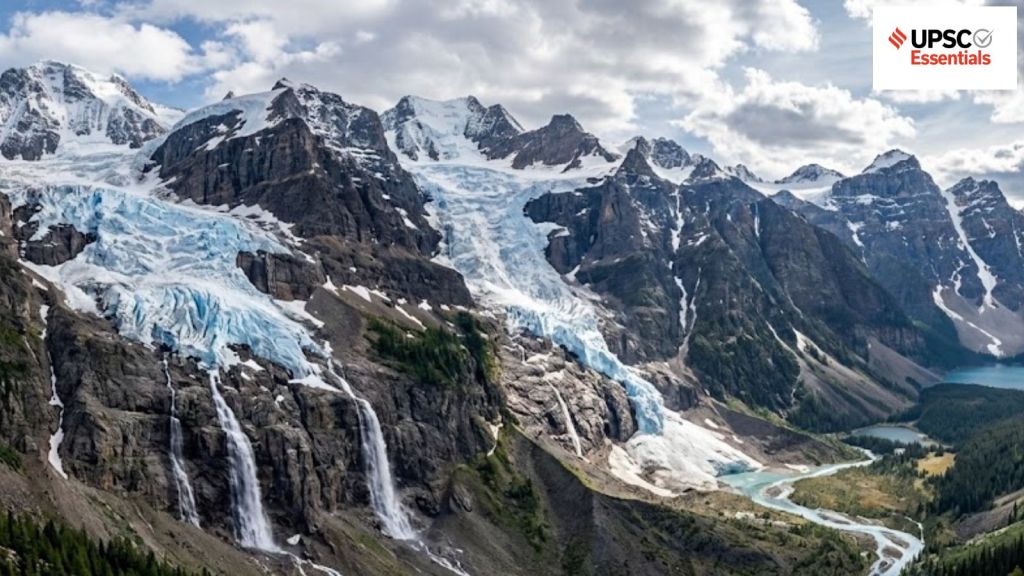 Check your progress and revise your topics through this quiz on Environment and Geography. Find a question on hanging glaciers in today's quiz. (AI-generated Image)

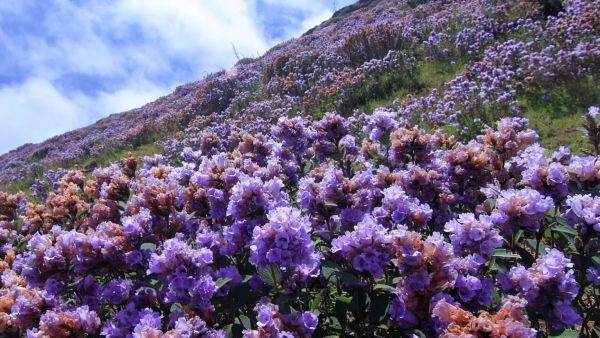 (Photo: Wikipedia)

 Share


