Key Takeaways :
The classical languages serve as a custodian of India’s heritage, embodying the essence of a community’s historical and cultural milestone.- Ashwini Vaishnaw (Union Information & Broadcasting Minister)
(1) Classical languages are considered the custodians of India’s ancient and profound cultural heritage. They preserve the rich history, literature, and traditions of their respective communities. The government grants this status to languages to honor and safeguard the linguistic milestones of India’s diverse cultural landscape.
(2) In October 2004, the Centre decided to create a new category of languages as “classical languages”. On October 12, 2004, Tamil became the first Indian language to receive “classical” status due to its high antiquity and rich literary tradition.
(3) In November 2004, a Linguistic Experts Committee (LEC) was constituted by the Ministry of Culture under the Sahitya Akademi to examine the eligibility of the languages proposed to be accorded classical language status.
(4) On July 25 of this year, the LEC unanimously revised the criteria for classical status and recommended the following languages to be considered as Classical Languages: Marathi, Pali, Prakrit, Assamese, and Bengali.
(5) Key criteria for a language to be considered a ‘Classical Language’ include:
- High antiquity of early texts, and recorded history over a period of 1500- 2000 years;
- A body of ancient literature/ texts, which is considered a heritage by generations of speakers;
- Knowledge texts, especially prose texts in addition to poetry, epigraphic and inscriptional evidence;
- That classical languages and literature could be distinct from its current form or could be discontinuous with later forms of its offshoots.
(6) The Ministry of Home Affairs initially granted classical status to the Tamil and Sanskrit languages. Later, the Ministry of Culture assumed responsibility for further implementations and future recognitions.
(7) As the “classical language” designation has been extended to Marathi, Pali, Prakrit, Assamese, and Bengali, this brings the total number of officially designated classical languages to 11. Previously, only six languages held the ‘Classical’ status: Tamil (2004), Sanskrit (2005), Kannada (2008), Telugu (2008), Malayalam (2013), and Odia (2014).
(Notably, among all the classical languages, Prakrit and Pali are the two classical languages that are not mentioned in the eighth schedule of the Indian Constitution.)
(8) Benefits of the ‘classical’ tag for languages
(i) The status of “Classical language” for languages not only elevates their stature but also facilitates efforts toward the promotion, preservation, and further research of these languages, ensuring their continued relevance in the modern world.
(ii) Classical Language status can also aid a language in addressing contemporary challenges like digitalisation and globalisation.
(iii) Classical language status is also expected to create employment opportunities in the fields of academics and research. The tasks of preservation, documentation, and digitisation of ancient texts of these languages will likely generate jobs in archiving, translation, publishing, and digital media.
(iv) The Ministry of Education takes steps to promote classical languages. Such as, three central universities were established in 2020 through an Act of Parliament for the promotion of the Sanskrit language. The Central Institute of Classical Tamil was set up to facilitate the translation of ancient Tamil texts and offer courses in Tamil.
ABOUT NEW CLASSICAL LANGUAGES
(1) Marathi: Modern Marathi descends from Maharashtri Prakrit, a Prakrit dialect used in western India which was the official language of the Satvahanas. Some Marathi scholars have claimed that this was the first among Prakrit languages, but this claim is contested. The oldest evidence of Maharashtri Prakrit can be found in a stone inscription in Pune district, dated to the 1st century BCE. The earliest evidence of the more modern Marathi can be traced to a copper-plate inscription found in Satara, dated to 739 CE.
(2) Bengali & Assamese: Both these languages can find their origin in Magadhi Prakrit, a form of Prakrit popular in East India, and the official language of the Magadha court. The exact date in which they emerged is contested, with scholars putting forward dates of origin ranging from the 6th to the 12th centuries. They took on a form which may be recognisable today well into the second millennium CE.
(3) Prakrit: There is no single Prakrit language. Rather, the term refers to a group of closely-related Indo-Aryan languages, whose defining feature was that they were the language of the masses as opposed to Sanskrit, which was restricted to the elites and high literature. Historian A L Basham wrote in The Wonder that was India (1954): “By the time of the Buddha the masses were speaking languages which were much simpler than Sanskrit. These were the Prakrits, of which several dialects have been attested.”
 The Ashokan edict in Dhauli, near Bhubaneswar. These edicts were composed in various forms of Prakrit. (Wikimedia Commons)
These vernaculars were thus also the language of popular heterodox religions that emerged in the first millennium BCE.
(4) Pali: Pali has traditionally been identified with Magadhi Prakrit, with the word ‘pali’ meaning “lines or series”, a reference to Pali being the language of the series of Buddhist texts. Some modern scholars, however, believe Pali to be a mix of several Prakrit languages (including more western dialects), which were combined and partially Sanskritised.
Pali is known as the language of the Theravada Buddhist canon. The Pali Canon falls into three general categories or pitaka (basket). Together, it is thus known as Tipitaka (“three baskets”). These include:
(i) Vinaya Pitaka (or the “Discipline Basket”), dealing with rules or discipline of the Buddhist sangha ( monastic order;
(ii) Sutta Pitaka (or the “Sayings Basket”), the largest basket comprising discourses and sermons of the Buddha himself, as well as some religious poetry; and
(iii) Abhidhamma Pitaka, the basket that further elaborates on Buddhist philosophy.
After Theravada Buddhism declined in India, Pali survived as a ecclesiastical language in Sri Lanka, Myanmar, Thailand, Laos, and Cambodia, where this Buddhist school continued to prosper.
BEYOND THE NUGGET: National Language, Offical language and Eighth Schedule
(1) More than 100 languages and 270 mother tongues are spoken across the country. However, the Constitution does not list any one language as India’s “national language”.
(2) Official language: Clause 1 of Article 343 (“Official language of the Union”) says “The official language of the Union shall be Hindi in Devanagari script”, and “The form of numerals to be used for the official purposes of the Union shall be the international form of Indian numerals.”
English, alongside Hindi, is one of the two official languages of the central government.
Article 343(2) says that “for a period of fifteen years from the commencement of this Constitution, the English language shall continue to be used for all the official purposes of the Union for which it was being used immediately before such commencement”. The Constitution of India commenced, or came into force, on January 26, 1950.
Under Article 343(3), “Parliament may by law provide for the use, after the said period of fifteen years, of— (a) the English language, or (b) the Devanagari form of numerals, for such purposes as may be specified in the law.”
On January 26, 1965, Section 3 of the Official Languages Act, 1963 came into effect, which provided for the “continuation of English Language for official purposes of the Union and for use in Parliament” even after the expiration of the 15-year period after the commencement of the Constitution.
(3) Eighth Schedule of the Constitution of India: Articles 344(1) and 351 of the Constitution contain provisions relating to the Eighth Schedule. The Eighth Schedule of the Constitution includes the following 22 languages:- (1) Assamese, (2) Bengali. (3) Gujarati. (4) Hindi. (5) Kannada; (6) Kashmiri; (7) Konkani; (8) Malayalam; (9) Manipuri; 10) Marathi; (11) Nepali; (12) Oriya; (13) Punjabi, (14 ) Sanskrit, (15) Sindhi, (16) Tamil, (17) Telugu, (18 )Urdu, (19) Bodo; (20) Santhali; (21) Maithili; and (22) Dogri.
Of these languages, 14 were first incorporated into the Constitution. The Sindhi language was added in 1967. Three additional languages, Konkani, Manipuri, and Nepali, were added in 1992. Bodo, Dogri, Maithili, and Santhali were introduced in 2004.
(Sources: Government grants ‘Classical Language’ status (IE), Which are India’s 5 new ‘classical languages’ (IE). Prakrit & Pali (IE), The language used in courts (IE)
For your queries and suggestions write at roshni.yadav@indianexpress.com
Subscribe to our UPSC newsletter and stay updated with the news cues from the past week.
Stay updated with the latest UPSC articles by joining our Telegram channel – Indian Express UPSC Hub, and follow us on Instagram and X.

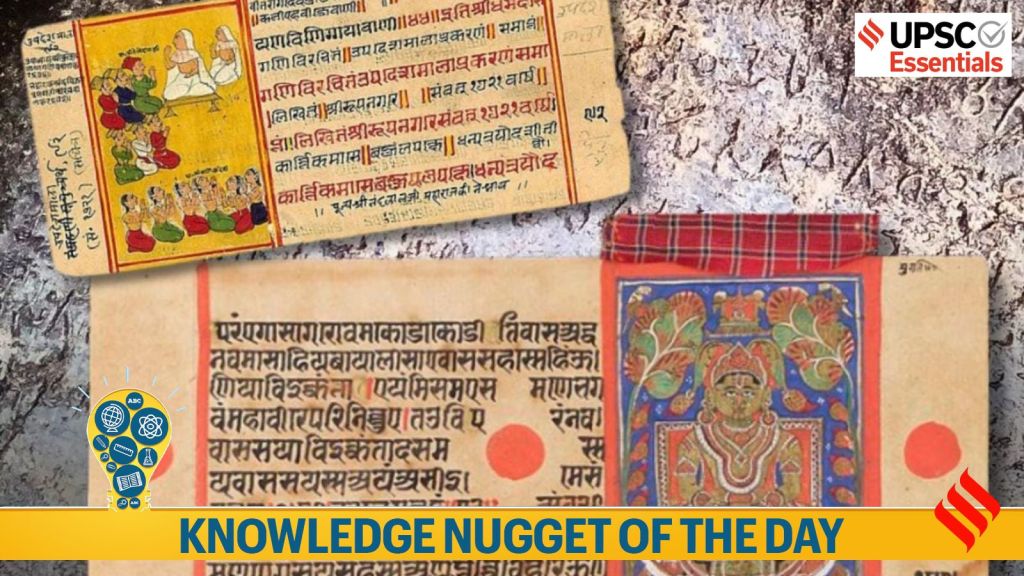 Classical languages are considered the custodians of India’s ancient and profound cultural heritage. (Images: Wikimedia Commons)

 The Ashokan edict in Dhauli, near Bhubaneswar. These edicts were composed in various forms of Prakrit. (Wikimedia Commons)


 Share


