
How food fortification and biofortification can help India minimise hidden hunger
India faces a severe and multi-pronged malnutrition problem, which includes under-nutrition, over-nutrition and micronutrient malnutrition. How can India effectively leverage biofortification and food fortification to reduce the deficiency of necessary micro-nutrients - also referred to as ‘hidden hunger’?
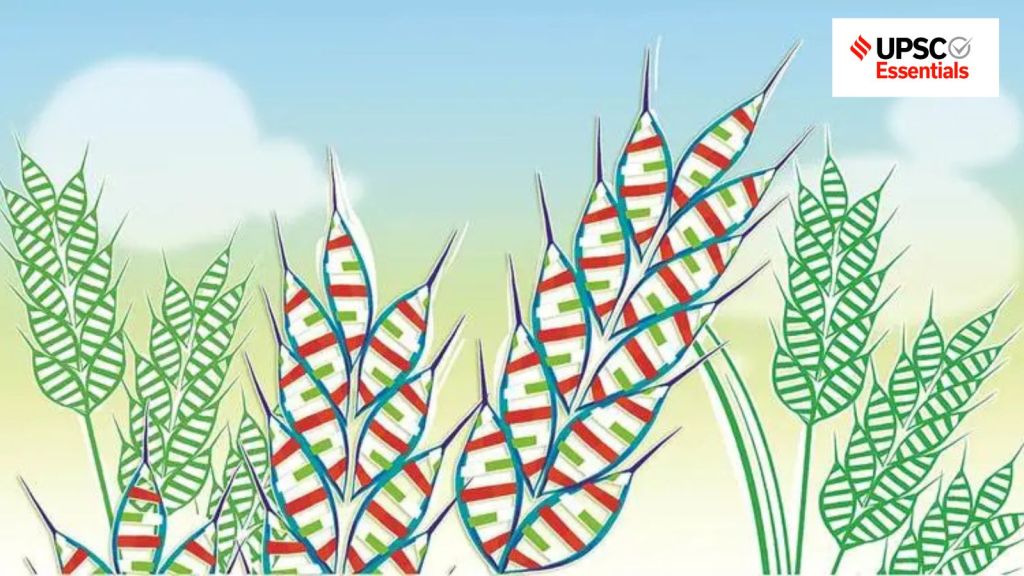 Innovations in biofortification and food fortification can help alleviate malnutrition. (Illustration: Suvajit Dey)
— Abhinav Rai
The Global Nutrition Report (GNR) 2026 estimates that about 2.6 billion people worldwide are unable to afford a healthy diet. In addition to inadequate food intake, the deficiency of necessary micro-nutrients – also referred to as ‘hidden hunger’ – remains a major challenge. Recognising that countries have failed to meet global nutritional targets, the United Nations extended the ‘UN Decade of Action on Nutrition’ from 2016–2025 to 2030.

According to the World Health Organization (WHO), India, the world’s most populous country, accounts for nearly one-third of the global undernutrition. The situation has been further complicated by the aftermath of COVID-19, ongoing regional conflicts, anthropogenic activities and climatic change. All of this has an adverse impact on food and nutritional security, and has affected the global progress towards SDG 2 (zero hunger) and 3 (good health and well-being).
Against this backdrop, biofortification and food fortification have emerged as efficient strategies to reduce micronutrient malnutrition. And India has been focusing on both approaches. To raise awareness about nutrition and related issues, India has observed the National Nutrition Week from 1-7 September since 1982.
In this context, it is important to understand the need for biofortification and food fortification, the challenges associated with their implementation and future strategies.
India's Fortification Fight: Closing the Hidden Hunger Gap
Food fortification for nutrient-rich food supply
The WHO defines food fortification as the practice of deliberately increasing the content of one or more micronutrients, like vitamins and minerals, in the staple grain in order to add additional nutrients or to restore lost nutrient content during processing.
Food Fortification with essential micronutrients is a proven and cost-effective practice to ensure a nutrient-rich food supply on a large scale, especially in countries like India, with one-sixth of the global population. Fortifying salt with iodine is one such example.
According to the Global Nutrition Report, more than 100 countries have their salt iodisation programmes, which have helped prevent nearly 750 million cases of goitre – swelling of the thyroid gland – in the past 25 years. Apart from this, at least one cereal grain is being fortified in 86 countries, and more than 30 countries have fortified their edible oils.
Promising results of biofortification
Biofortification is the process of enhancing the nutrient density of food crops using conventional plant breeding, transgenic approaches or other modern biotechnology-based interventions. This is a sustainable and cost-effective way to ensure nutrient availability for the target population.
For example, according to the WHO, multiple iron-biofortified crops have shown promising results in the Philippines (Rice), India (Pearl-millet) and Rwanda (Beans) in reducing iron-deficiency in the target population.
Between 2014 and 2024, India, through its National Agricultural Research System (NARS), developed and released 152 biofortified varieties of wheat (53), millets (26), maize (24), rice (14), oilseeds (21), pulses (9) and grain amaranth (5).
Food fortification and biofortification have shared goals, but differ in approaches. In food fortification, nutrients are added directly to the grain during processing, whereas in biofortification, nutrients are added at the production level itself.
Therefore, biofortification is relatively more cost-effective because it only requires one-time investment for the development of bio-fortified seeds. And it will be crucial in addressing India’s malnutrition challenges.
India’s multi-pronged malnutrition problem
In the 2025 Global Hunger Index, India ranks 102nd out of 123 countries. It faces a severe and multi-pronged malnutrition problem, which includes under-nutrition, over-nutrition and micronutrient malnutrition. According to UNICEF, the first 1000 days are most critical for any child to develop to their full potential, and that requires good nutrition. The WHO also recommends exclusive breastfeeding for the first six months for every child.
The National Family Health Survey (NFHS-6), conducted on 6.79 lakh households across 715 districts during 2023-24, underlines the country’s nutritional challenges. The findings show that only 55.8 per cent of infants (below six months) are getting exclusive breastfeeding, and only 15.3 per cent of children between 6 and 23 months are receiving an adequate diet.
The survey also notes that about 29.3 per cent of children under the age of 5 years are stunted (low height-for-age), 19 per cent are wasted (low weight-for-height), and 31.8 per cent of these are underweight (low weight-for-age).
Among adults, 30.7 per cent of women and 27.3 per cent of men are obese (overweight), a sharp increase from the 24 per cent (women), 22.9 per cent (men), respectively, in NFHS-5 (2019-21). At the same time, 19.7 per cent of men and women are underweight.
The situation underscores the need to ensure not only the food availability but also the dietary quality and nutrient adequacy. Notably, the government has taken policy initiatives towards this, and food fortification is one of them.
Emphasis on fortified food grains
The emphasis on fortified food grains started mainly with the Ministry of Health and Family Welfare’s Anemia Mukt Bharat [AMB] initiative in 2018. Soon, a pilot programme for rice fortification with iron, folic acid and vitamin B12 was launched in 2019.
It was gradually scaled up, and by March 2024, the Union government decided to replace the distribution of all custom-milled rice with fortified rice under all government schemes such as the Public Distribution System, ICDS, PM-POSHAN, PMGKAY, etc.
Last year, this scheme was extended until December 2028, with a central government allocation of Rs 17,082 crore. Under the PM POSHAN scheme for schoolchildren, the Department of School Education and Literacy has also instructed to use Double Fortified Salt (DFS) and fortified edible oil containing vitamins A and D, along with fortified rice.
But in February 2026, following the review of the Pradhan Mantri Garib Kalyan Anna Yojana (PMGKAY), the government decided to temporarily discontinue the rice fortification scheme for PMGKAY and its allied schemes, based on an IIT Kharagpur (IIT-K) report, while searching for a more robust and effective nutrient delivery. However, it will not affect operations under the PDS, ICDS, or the Mid-Day Meal Schemes.
Benefits and challenges of food fortification
One of the key advantages of food fortification is that it can use existing processing and welfare systems to deliver micronutrients rapidly. However, its implementation faces various challenges across India’s diverse geographical and climatic conditions, as well as packaging material and storage conditions, which may adversely affect the shelf life of fortified rice during transportation.
Nonetheless, biofortification is an effective method that can integrate nutrition into agricultural production. But its wider adoption requires greater awareness among farmers about its health benefits, as well as government support through measures like subsidised seed availability, assured minimum support prices, and other required inputs.
To sustain its economic and social progress, India needs to address not only food security but also nutrition security, especially for children, through access, affordability and adequate availability of healthier diets. The impact of childhood malnutrition goes beyond physical growth and can reduce the overall productivity in adulthood.
To minimise ‘Hidden Hunger’, India currently needs both approaches, and the success will be determined through improvement on nutritional indicators, not merely the quantity of fortified food distributed or the number of crop varieties released.
Post read questions
1. India’s nutrition challenge is no longer merely a question of food availability, but of access to affordable, diverse and nutrient-dense diets. Discuss in the context of India’s nutritional security.
2. India faces a ‘triple burden’ of malnutrition—undernutrition, micronutrient deficiencies and overnutrition. What policy challenges does this pose for the Indian state?
3. How far can food fortification address India’s problem of ‘hidden hunger’? Discuss its potential as well as limitations.
4. How can biofortification contribute to making Indian agriculture more nutrition-sensitive? Discuss the role of farmers, research institutions, markets and government policy.
5. What explains the persistence of malnutrition in India despite the expansion of food-based welfare programmes? Analyse the structural and governance-related challenges.
(Abhinav Rai is a Doctoral candidate at the Department of Geography, Delhi School of Economics, University of Delhi.)
Share your thoughts and ideas on UPSC Special articles with ashiya.parveen@indianexpress.com.
Click Here to read the UPSC Essentials magazine for August 2026. Subscribe to our UPSC newsletter and stay updated with the news cues from the past week.
Stay updated with the latest UPSC articles by joining our Telegram channel – IndianExpress UPSC Hub, and follow us on Instagram and X.

 Share


