The concept of propaganda has been traced far back in history, but its negative use was particularly analysed during WWI. Pointing to the use of the concept for the advocacy of an opinion or faith, some scholars, including Jowett and O’Donnell, trace its origin to Ignatius of Loyola, the founder of the Jesuit Order, who introduced the concept of “propaganda fide” into the language of the church.
Jowett and O’Donnell underline how the meaning of propaganda evolved, from initially referring to any organisation established to propagate a doctrine, to describing the doctrine itself, and eventually meaning the techniques employed to change opinions and spread the doctrine. Thus emerged the modern-day usage of propaganda.
Propaganda in modern warfare
At the turn of the 20th century, industrialisation and modernisation disrupted the older ways of life and gave rise to what scholars later described as “mass society” inhabited by “atomised individuals” (disconnected from traditional communities). As the century progressed, modern mass media began reaching larger audiences, prompting concerns over its potential for persuasive communication and propaganda.
The onset of WWI was seen as a turning point, with warring sides making use of propaganda campaigns to mobilise people. In his classic book, Propaganda Technique in The World War (1927), Harold Lasswell famously wrote, “There are abundant signs of interest in international propaganda since the War of 1914”. Others like the American journalist and author Walter Lippman focused on the formation of pubic opinion, while the American publicist Edward Bernays’ discussion of propaganda shaped the professional practices of public relations.
Battling for public opinion
During WWII, propaganda was again used to influence public opinion. Nazi Germany, for instance, recognised the propaganda value of radio. History records how Hitler’s Propaganda Minister Joseph Goebbels turned the Nazis’ 1943 defeat in Stalingrad during WWII into a campaign for “total war”.
Furthermore, the Six-Day Arab Israeli war in 1967 offers yet another example. Egypt’s state radio service, The Voice of the Arabs or Sawt Al-Arab, broadcast false claims of victory even as the Egyptian forces suffered a devastating defeat.
In the 1980s, Edward Herman and Noam Chomsky, in their book Manufacturing Consent: The Political Economy of the Mass Media (1988), introduced their “propaganda model” to explain how the mass news media contributed to the manufacturing of consent in capitalist society. The sophisticated use of misinformation and propaganda supporting the US invasion of Iraq in 2003 can be seen as a case in point.
From manipulation to democratic persuasion
However, with the advancement of technologies, the concept of propaganda is evolving further. Misinformation, fake news, computational propaganda, cyber propaganda, etc., have prompted scholars to examine the concept through a broader range of techniques and methods of influencing people.
Reports point to the use of AI-generated content and deepfakes by several states in the given context of wars, conflicts, and geopolitical uncertainty. For instance, AI-generated LEGO-style pro-Iran videos mocking US President Donald Trump are seen as a shift in digital propaganda tactics.
So, does this mean that propaganda only has a negative connotation? Not really. Scholars have also analysed the democratic potential of propaganda. In her article, Martin Luther King Jr. on Democratic Propaganda, Shame, and Moral Transformation (2022), M Krishnamurthy interprets Martin Luther King Jr.’s famous “Letter from Birmingham Jail” in the broader context of his work to argue that it is a piece of “democratic propaganda”. She defines it as “truthful propaganda that is aimed at promoting and fostering democratic political action by stirring readers’ emotions.”
Send your comments to ashiya.parveen@indianexpress.com.
Click Here to read the UPSC Essentials magazine for August 2026. Subscribe to our UPSC newsletter and stay updated with the news cues from the past week.
Stay updated with the latest UPSC articles by joining our Telegram channel – IndianExpress UPSC Hub, and follow us on Instagram and X.

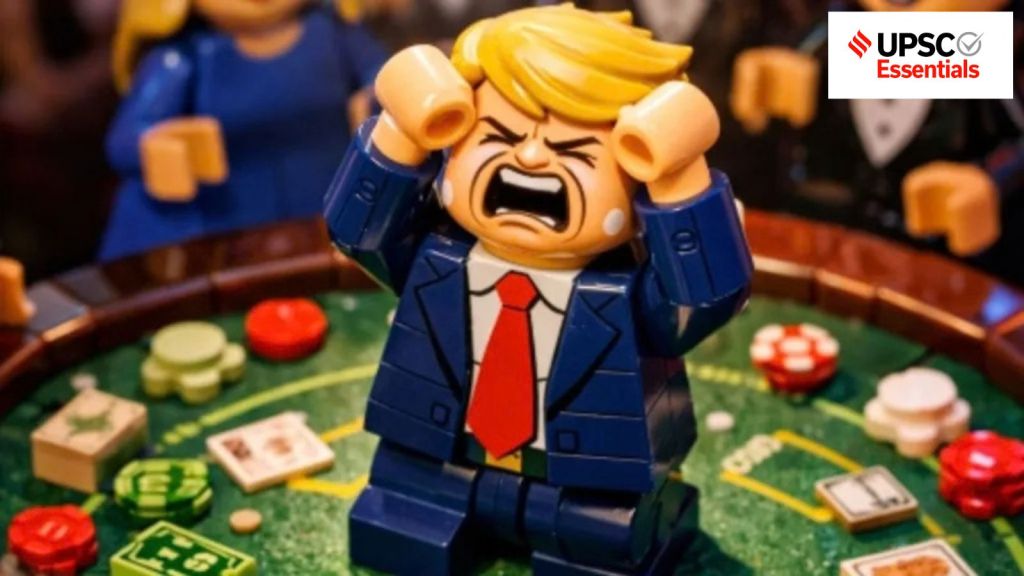 AI-generated LEGO-style pro-Iran videos mocking US President Donald Trump. (Photo/@ExplosiveMediaa)



 Share


