


- Tags:
- CEO
- Uber
- work culture
- Work life balance
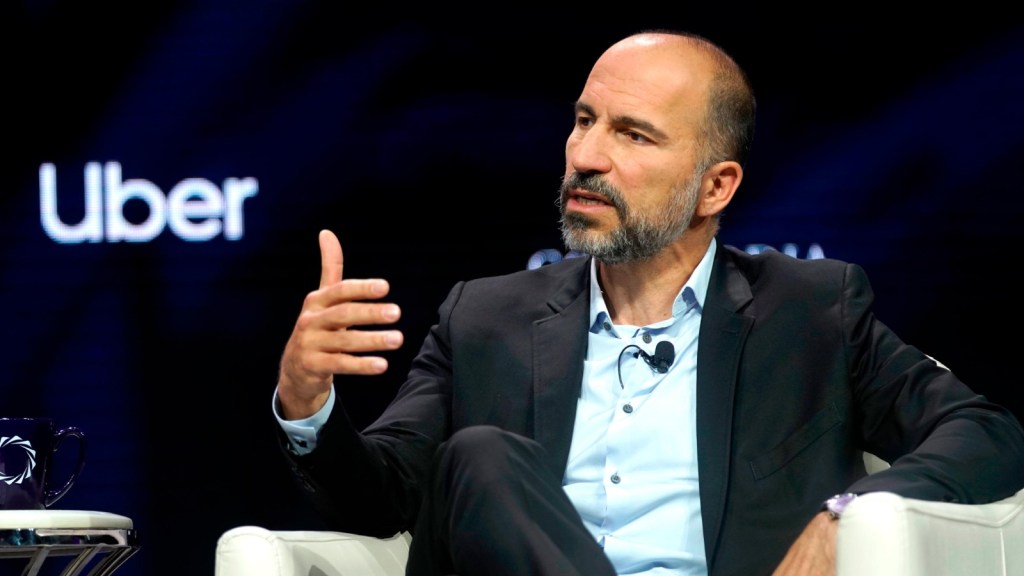 Khosrowshahi maintains that working hard and having flexibility can coexist, although doing both requires accepting certain compromises.
Uber CEO Dara Khosrowshahi has a straightforward message for people considering a job at the ride-hailing company: if you are looking for an easy-going workplace where weekends are completely off-limits for work, Uber may not be the right place for you.
In an interview on the Diary of a CEO podcast, Khosrowshahi described Uber’s workplace culture as “really demanding” and said employees are expected to take their responsibilities seriously. As quoted by Fortune, he warned prospective employees, “Don’t come here if you want to coast.”
“We’re going to be really demanding,” Khosrowshahi said. “If you’re not performing, we’re going to let you know. And if you don’t fix it, we’re going to push you out.”
His approach to work culture took shape after he became Uber’s CEO in 2017, when the company was going through a difficult period. The company was losing between $2.5 billion and $3 billion annually, and Khosrowshahi said the business had become too comfortable with the success it had already achieved.
He responded by changing the company’s strategy and taking a closer look at how his teams worked, including what was expected outside regular office hours.
“Part of working hard is sending emails to the team on a Saturday,” he said. “And if I don’t get a response on Saturday, sending them an email on Sunday with a question mark. What’s going on?”
Khosrowshahi pointed to Uber’s financial performance as evidence that the strategy change has delivered results. He said the company generated $9.8 billion in free cash flow last year.
Still, he acknowledged that working at Uber can be demanding. At the same time, he said employees have considerable freedom in their roles, learn a great deal, and have opportunities to make a meaningful impact.
“While you will have worked hard, you’re going to have a great time,” Khosrowshahi said. “But don’t come here if you want to coast.”
For Khosrowshahi, the emphasis on hard work goes beyond Uber’s corporate culture. He considers it one of the most important qualities a person can develop. “To me, the most important skill in life is a skill of working hard,” he said on the podcast.
The CEO also argued that people often spend too much time worrying about choosing the perfect career. Whether someone becomes a programmer, doctor, or pursues the liberal arts is less important, in his view, than the effort they put into whatever they choose to do.
Khosrowshahi said he has passed the message on to his children and follows the principle himself.
“I’m not going to let anyone outwork me,” he said. “They may be smarter, more talented, etcetera, but I’m not going to let anyone outwork me. And I think that’s a huge advantage that you have, and over a period of time, that advantage compounds.”
That does not mean Khosrowshahi gives up all of his personal time for work. He said he protects two hours for dinner with his family whenever he is in town.
Once dinner is over, however, he returns to work. He said he checks his emails at around 9.30 pm and goes through his inbox again after waking up at 5.30 am.
Khosrowshahi maintains that working hard and having flexibility can coexist, although doing both requires accepting certain compromises.
“We believe in flexibility. People confuse lack of flexibility to working hard: You can work hard, and at the same time you can have flexibility,” he said. “Of course, there are tradeoffs. Life is about tradeoffs.”