When you enter a restaurant and ask for the menu, chances are you are told to scan a QR code with your phone to view and order food and drinks – no paper menu needed. Similarly, many people now scan a QR code daily to buy fish and vegetables from a local shop. Since the pandemic, QR codes have popped up everywhere: on payment apps, coconut water carts, and even billboards. They have become a signature of our digital lives, especially in India. But have you ever wondered where this pixelated black-and-white square comes from?
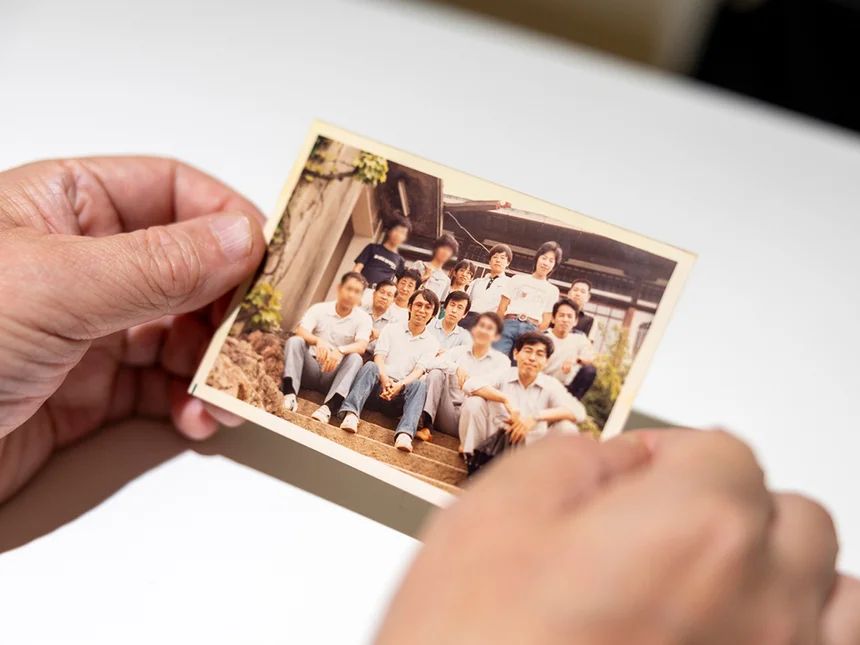
 Masahiro was inspired by the board game Go and invented the black-and-white data square now used by millions of people every day. (Image credit: Desno Wave)
The story starts in Japan. It was 1994 and Masahiro Hara, who was working at Denso Wave, a Toyota car-parts subsidiary, got the idea to create the QR code. Hara, a lead in automobile manufacturing, was playing the ancient strategy game Go at work when he noticed the arrangement of the black and white stones on the board. The concept of placing black and white dots on a grid sparked the idea behind the QR Code, which stands for “Quick Response Code”.
Before QR codes
In the early 1990s, barcode scanning wasn’t new – it was already being used in Japan and other parts of the world. Barcode technology was first patented in 1949 by Joseph Woodland and Bernard Silver. Their patent described the basic structure of using pairs of lines to represent numbers – a method still used today. Interestingly, the first barcode didn’t include vertical lines at all; instead, it used a series of concentric circles.
Barcodes had been used to track parts, but the system was inefficient. (Image credit: Denso Wave)
Woodland and Silver initially struggled to get companies interested in their invention. But that changed in the 1960s, when engineer and physicist Theodore H Maiman built the first working laser, making it possible to quickly decode a barcode’s line patterns. The first official barcodes soon began to be adopted in some industries. However, a major issue emerged: different stores in the US launched barcode pilot projects using vastly different types of barcode symbols.
By the late 1960s, grocery stores across the US were facing challenges such as rising labour costs and difficulties in tracking inventory. Barcodes were seen as the ideal solution to automate the process – but only if everyone in the industry agreed to use the same symbol. To address this, the industry formed an ad hoc committee in the early 1970s to develop a workable barcode system. This committee created the Universal Product Code (UPC), which was designed to be compatible with different types of barcode symbols.
Hara and his team basically transformed a one-dimensional barcode into a compact, two-dimensional grid that could be read swiftly — QR stands for “quick response.” (Image credit: Denso Wave)
The committee then had to choose a standard symbol. They invited submissions from various companies, narrowed the list down to seven finalists, and after three years of deliberation, chose IBM’s design. The IBM symbol has become synonymous with the word “barcode”. It became the industry standard, and the very first UPC barcode was scanned at a grocery store in Troy, Ohio, on June 26, 1974.
Limitations of barcodes
Hara knew the standard UPC barcode was far from perfect and had several limitations. These barcodes were one-dimensional, encoding information horizontally through the width and spacing of vertical lines. One major issue was that if part of the barcode was torn or damaged, the machine couldn’t read it. Another limitation was that each barcode could hold only about 20 characters of data.
Story continues below this ad
At that time in Japan, the automotive industry was going through a transitional phase. Hara had been receiving requests from field workers to develop a better way to scan inventories. A single box of components often carried as many as 10 barcodes that had to be scanned individually. There was a clear need for a less labour-intensive method to store more information.
Hara wanted to change that. He and his team set out to solve the problem by creating a “better barcode” that could efficiently track automobiles and auto parts during manufacturing. Hara eventually came up with the concept of the QR code, which could decode up to 10 times faster than its predecessors and store approximately 7,000 characters.
He developed a two-dimensional barcode in the shape of a square, which addressed the issue of limited data capacity. However, Hara faced early challenges with the new 2D barcode design. When barcodes were printed alongside other text, scanning machines often failed to detect them, making the square barcodes impractical. One day, while looking out a subway window on his way to work, Hara noticed how skyscrapers stood out distinctly from the surrounding landscape. This observation helped him find out a way to make square barcodes visually stand out from text. After a lot of iterations, he came up with the idea of embedding three small squares – each with a specific black-to-white ratio – at the corners of the barcode. This design worked, and scanners could recognise and read the code, regardless of its orientation. Not only that, the QR code designed by Hara could still be read even if it was smudged or partially damaged.
ISO certification
Part of the reason why QR technology worked so well was that its two-dimensional design allowed more data to be accessed by optical scanners at any given time. The code could also be scanned from a variety of angles and distances. This was especially useful on assembly lines and worked well for machine parts – many of which had unique and different shapes.
Story continues below this ad
Since Hara worked for a car components manufacturer, the QR code was originally designed with the automobile industry in mind. Japan’s leading carmaker, Toyota, showed interest in Hara’s QR code and adopted it in its factories – a testament to the technology’s potential and its ability to improve efficiency in the manufacturing process. But it was the beginning of something much bigger. Not even Hara could have predicted that his invention would not only transform industries but also create entirely new segments and markets.
QR codes began to be widely adopted when Hara’s employer, Denso Wave, made the technology freely available to the public without charging licensing fees, despite holding the patents. A new wave of adoption began when the QR code received ISO certification in Japan in 2000, and the technology started to find its way into everyday life.
New lease of life
By 2012, many began to question whether QR technology was dead or still had life left. Businesses weren’t using QR codes as widely as initially projected. In fact, QR codes were even called “dead”. However, in China, the QR code found a new lease of life, thanks to the smartphone boom that had begun in the country. QR codes started to be used for making mobile payments, accessing key services, claiming discounts, and enabling entirely new apps and services to be built. WeChat is a prime example of how the app utilised QR codes and created new services and features around them.
One of the major advantages of the QR code is their vast data storage capabilities. (Image credit: NPCI)
As smartphones gained popularity, businesses found new ways to take advantage of the phone’s cameras, making the QR code an underlying technology behind many popular and mainstream apps and services. What had been successfully implemented in China in the early 2010s was then introduced elsewhere, including in India, during the height of the pandemic. Local businesses began to adopt QR codes, allowing users to simply scan them with their phone camera to access a new service or website. However, what many hadn’t anticipated in India was how QR codes could introduce digital payments to over a billion people.
Story continues below this ad
UPI revolution
With the launch of the Unified Payments Interface (UPI), an infrastructure created by the country’s top payments processor, the National Payments Corporation of India (NPCI), mobile apps built on the UPI infrastructure could securely access multiple bank accounts and merge services such as making digital payments and peer-to-peer money transfers in real time. Today, UPI is one of the most dominant methods of digital payment in India. UPI transactions hit Rs 24.77 trillion in value and 19.78 billion in volume in March 2025, showcasing how cashless payments using QR codes have caught on in India.
India is taking a lead in cash-less payments, thanks to UPI.
Yes, QR codes are everywhere, but ironically, Japan – where the QR code was invented – has been left behind. In Japan, cash is still king, and the country is still warming up to the idea of cashless payments and QR codes. Consumers and businesses are reluctant to change, even as other countries are already on the path to becoming cashless societies. However, Covid-19 led to a push toward contactless solutions, including QR codes in Japan. The government also began promoting cashless initiatives by offering incentives to businesses and consumers.




 Masahiro was inspired by the board game Go and invented the black-and-white data square now used by millions of people every day. (Image credit: Desno Wave)

 Barcodes had been used to track parts, but the system was inefficient. (Image credit: Denso Wave)
 Hara and his team basically transformed a one-dimensional barcode into a compact, two-dimensional grid that could be read swiftly — QR stands for “quick response.” (Image credit: Denso Wave)
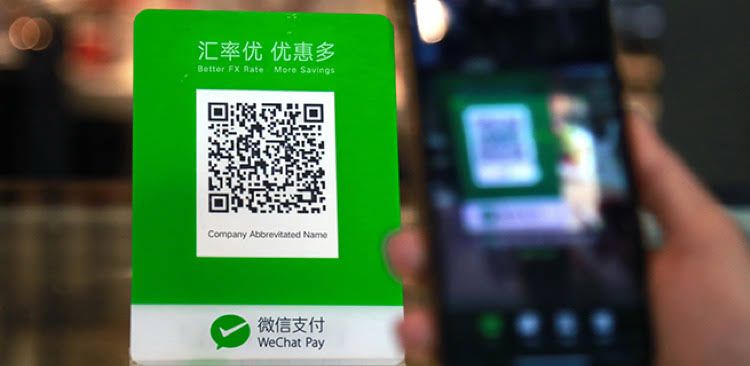 The credit of revival of QR codes goes to China.
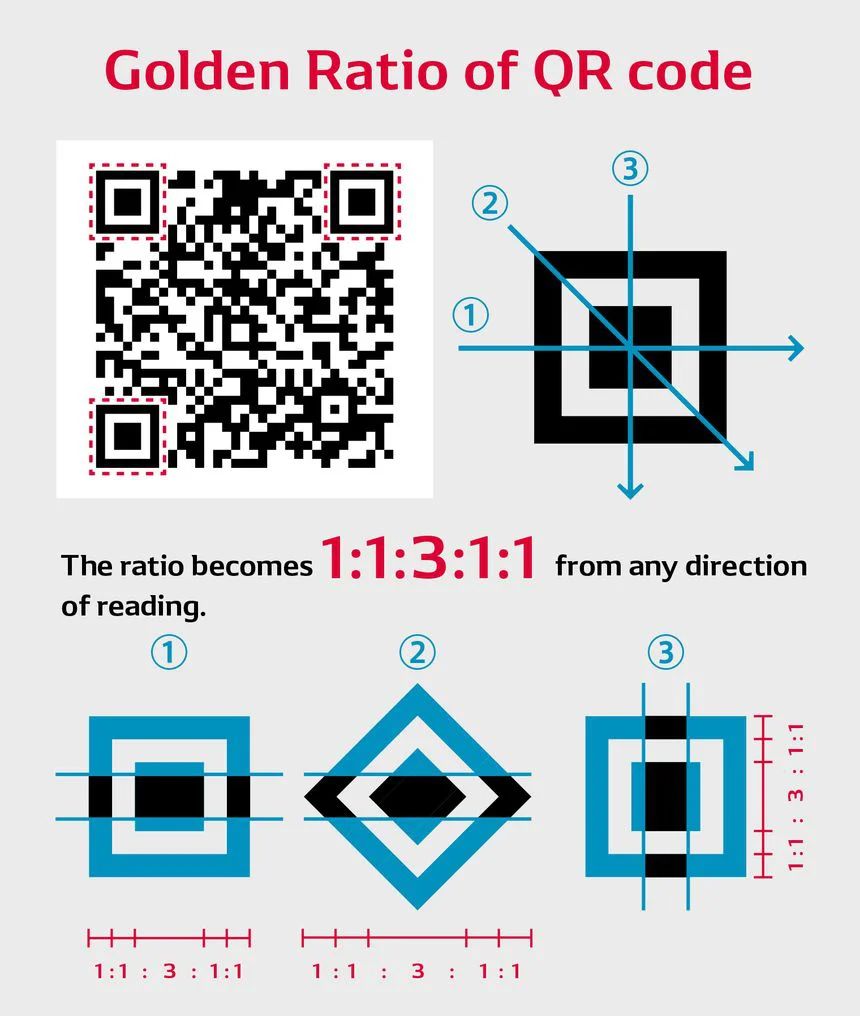 A QR code is characterised by a two-dimensional pattern of square black and white dots. (Image credit: Denso Wave)
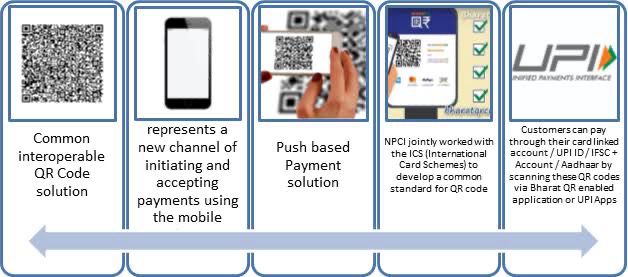 One of the major advantages of the QR code is their vast data storage capabilities. (Image credit: NPCI)
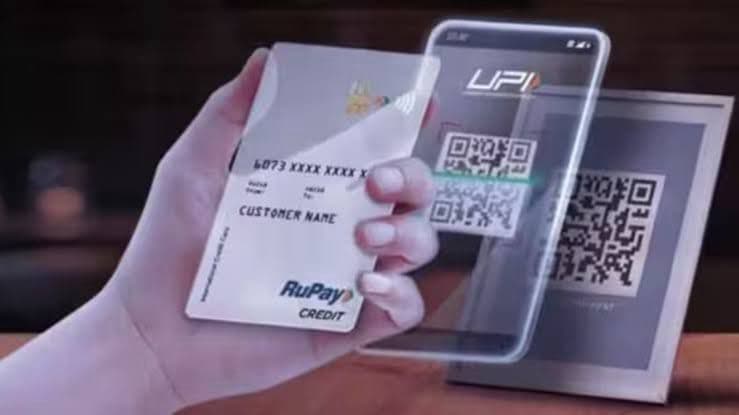 India is taking a lead in cash-less payments, thanks to UPI.