4 min readThalasseryJun 6, 2022 08:18 AM IST
First published on: Jun 2, 2022 at 02:35 PM IST
Engineers at MIT and the Technical University of Munich have designed a new type of glucose fuel cell that measures just 400 nanometres thick– this means it is thinner than a sheet of paper that is about 100,000 nanometres thick. The researchers envision that this cell could be used to power medical implants and sensors in the human body, without batteries or other energy storage devices.
The team behind the fuel cell has authored a research article titled, “A Ceramic-Electrolyte Glucose Fuel Cell for Implantable Electronics,” published in Advanced Materials. Co-authors of the paper include Philipp Simons, Steven A. Schenk, Marco A. Gysel, Lorenz F. Olbrich, and Jennifer L. M. Rupp.

The fuel cell can use glucose to generate about 80 milliwatts of electricity per square centimetre, which the researchers claim is the highest power density of any glucose fuel cell to date. Apart from its size and efficiency, the new device is also durable. It can reportedly withstand temperatures up to 600 degrees Celsius.
The idea for the device occurred to thesis supervisor and corresponding author Jennifer L M Rupp when she was in the doctor’s office pregnant with her second child, getting a diabetes test. According to Rupp, she was a “bored electrochemist,” wondering what could be done with blood sugar in the human body.
“There is a huge market for in-body implants like pacemakers or brain implants. But the problem with them is that current batteries are too bulky and their energy density is not great. Also, there is a chance of a patient dying during a battery replacement surgery,” Rupp told indianexpress.com via an email.
So, instead of having to store bulky batteries inside the human body to power medical implants, fuel cells like these could potentially be used to directly derive energy from the glucose in our bodies.
An experimental setup used to characterise 30 glucose fuel cells in rapid sequence (Image credit: Kent Dayton / MIT)
“As technology develops, there will be more medical implants that can be put in the human body to make life easier for us. For example, these could be sensors or maybe even devices that would automatically deploy medication. All such smart devices would have a silicon chip that needs to be powered. That is where we see the niche application where such micro fuel cells could be employed,” she said.
Currently, the ultra-thin glucose fuel cell developed by the team is still in an early stage of development and is yet to get FDA (US Food and Drugs Administration) approval.
🚨 Limited Time Offer | Express Premium with ad-lite for just Rs 2/ day 👉🏽 Click here to subscribe 🚨
“Conventionally, solid oxide fuel cells would last something like 10,000 hours. Ideally, this device should stay in the human body for a long time without needing approval. But it is too early in the research stage to confirm that,” she explained when asked about the lifespan of the device.
Rupp envisions that such a device could see early stages of real-world development in as little as three years, provided that the research gets the right funding and resources.
According to the research article, power requirements for implantable sensor-like devices typically vary from 100 nW to 1mW, which means such fuel cells can potentially power them. But for more power-hungry devices like pacemakers, there might be a requirement for multiple fuel cells to be implanted to generate enough power.

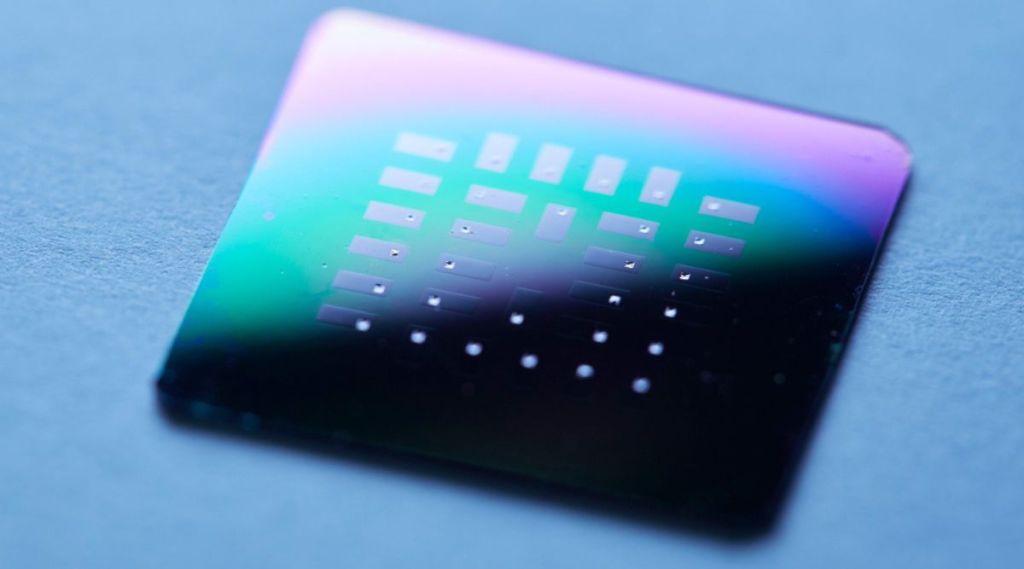 A silicon chip with 30 individual glucose micro fuel cells. (Image credit: Kent Dayton / MIT)

 An experimental setup used to characterise 30 glucose fuel cells in rapid sequence (Image credit: Kent Dayton / MIT)

 Share


