
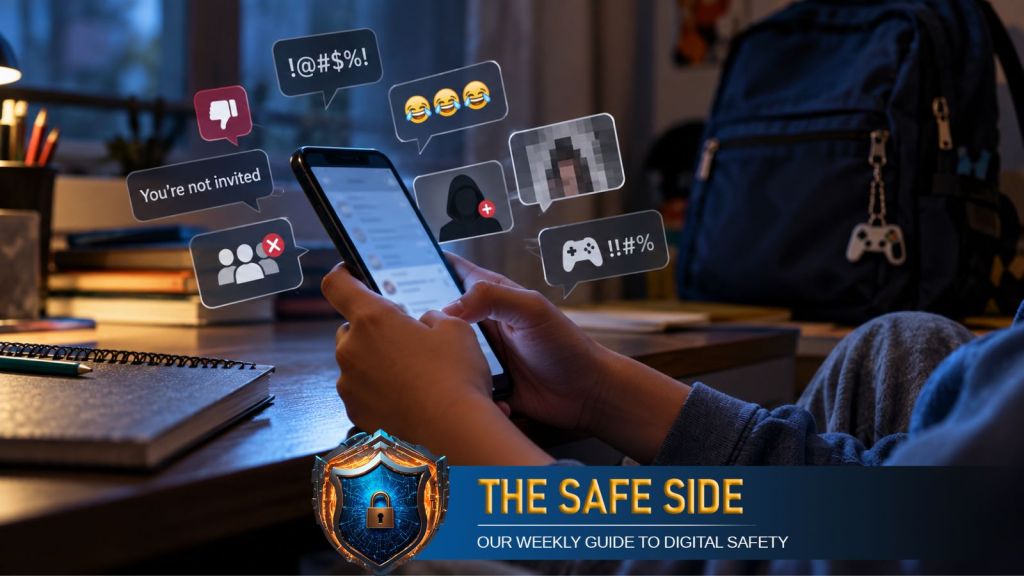
For children growing up with smartphones, social media and online games, the school day no longer ends when they reach home. A disagreement in the classroom can continue in a WhatsApp group. A joke made at school can become a meme shared among classmates. A child can be deliberately excluded from an online group, targeted while gaming, or find a fake social media account created in their name. And unlike traditional bullying, there may be no obvious end point to it.
A 2022 report by McAfee, found that 85 per cent of surveyed Indian children had experienced cyberbullying, the highest proportion reported among the countries covered. The study said 45 per cent were bullied by strangers and 48 per cent by people they knew, with trolling, personal attacks, sexual harassment and doxing among the common forms of abuse.

“The biggest change is that bullying does not stop at school anymore,” says Bikash Barai, founder of FireCompass, who has worked on cyber-education initiatives covering more than 100 schools.
Children, he points out, do not necessarily separate their online and offline worlds like adults. Their friends, games and conversations exist across both.
“Now AI has added another problem. Creating a fake account was already easy. Now creating a fake photograph, voice or video is also becoming easy. You don’t need a lot of technical knowledge to do this anymore,” he said.
It doesn’t always look like bullying
For parents, one of the biggest challenges is recognising cyberbullying in the first place.
An abusive message or an explicit threat is easy to identify. But bullying can also be disguised as ordinary online behaviour. A child may be repeatedly removed from a WhatsApp group, while another group is created specifically to make fun of them. A private conversation may be circulated. Someone may create a fake social media account or repeatedly target the child during online gaming.
“Even a meme can become bullying. Somebody takes a photograph of a child. Edits it. It starts circulating in the class. Everybody else may think it is funny. The child at the centre of it may not find it funny at all,” Barai said.
Harish Kumar, CEO of Quick Heal Technologies, says parents should also watch for repeated trolling, public shaming, rumours, impersonation and sharing photographs or screenshots without consent. “Gaming-related harassment is another area parents may overlook. A child may face repeated insults, targeted attacks or humiliation based on their performance, gender or other personal characteristics while playing online,” Kumar tells.
Why online bullying can feel inescapable
Traditional bullying may end when a child leaves the school premises. Cyberbullying can travel home with them.
A message can arrive at night. A photograph can be forwarded from one group to another. Someone can screenshot a post and reshare it, taking it far beyond the people who originally saw it.
“What happens inside a classroom — maybe 20 or 30 people see it. Put the same thing in a WhatsApp or Instagram group, and it can reach hundreds of people,” Barai says. Once content is copied and forwarded, the child has very little control over where it goes.
Harish Kumar similarly notes that the scale and permanence of digital content can intensify the experience, with repeated online harassment potentially contributing to emotional distress, anxiety, social withdrawal and sleep disturbances.
Don’t look for a checklist. Look for a change.
There is no single behaviour that proves a child is being cyberbullied. Instead, parents should pay attention to changes from the child’s normal behaviour.
A child who once played a particular game every day may suddenly stop playing it. Someone active in a particular online group may become reluctant to open it, Barai adds. Conversely, a child may begin checking their phone repeatedly because they are anxious about what somebody might have posted.
Changes in sleep, mood, school attendance, friendships, concentration or interest in activities can also be warning signs. Increased secrecy around devices is another possible indicator. None of these signs, on its own, establishes that cyberbullying has occurred. But a noticeable change is a reason to start a conversation.
Sandeep Kumar, founder of the COP child online protection app, says sometimes a sudden change in a child’s relationship with their phone can tell parents more than screen time itself. Withdrawal, anxiety, poor sleep, secrecy around devices, or suddenly losing interest in apps and games once enjoyed may warrant attention.
The first response matters
One of the biggest reasons children hesitate to report cyberbullying is fear of what will happen after they tell an adult, says Harish Kumar, CEO, Quickheal Technologies.
They may worry that their parents will take away their phone, restrict internet access, or confront the person responsible. They may also feel embarrassed about something they shared online or fear being blamed for talking to someone they were not supposed to.
That is why the first response can determine whether a child speaks up again.
“Don’t start with, ‘Why did you send this?” Barai says.
‘First understand what happened’
Parents should listen before reacting, avoid blaming the child, and resist the immediate urge to confiscate the device. The objective is to reassure the child that speaking up was the right thing to do and that the problem can be addressed together.
Parents cannot carry the entire burden of keeping children safe online
Amit Relan, co-founder and CEO of mFilterIt, argues that schools, technology companies, gaming platforms and policymakers also have a role in creating safer digital environments. He stresses that digital safety should be an ongoing part of children’s education rather than a one-time awareness programme, particularly as AI makes the creation of convincing fake identities and manipulated content easier.
For parents, however, the starting point is relatively simple: remain approachable.
A child should know that reporting an uncomfortable online interaction will not automatically mean losing their phone, being blamed or being publicly confronted. The goal is to build enough trust that when something goes wrong online, the child thinks of a parent, teacher, or another trusted adult as someone to approach—not someone to hide the problem from.
The safe side
As the world evolves, the digital landscape does too, bringing new opportunities—and new risks. Scammers are becoming more sophisticated, exploiting vulnerabilities to their advantage. In our special feature series, we delve into the latest cybercrime trends and provide practical tips to help you stay informed, secure, and vigilant online.


 Share


