
Behind the iPhone Duo’s timing is pure economics
Apple's first foldable comes after years of competitors building the market. The iPhone Duo is aimed at capturing a big share of a small but growing premium market.
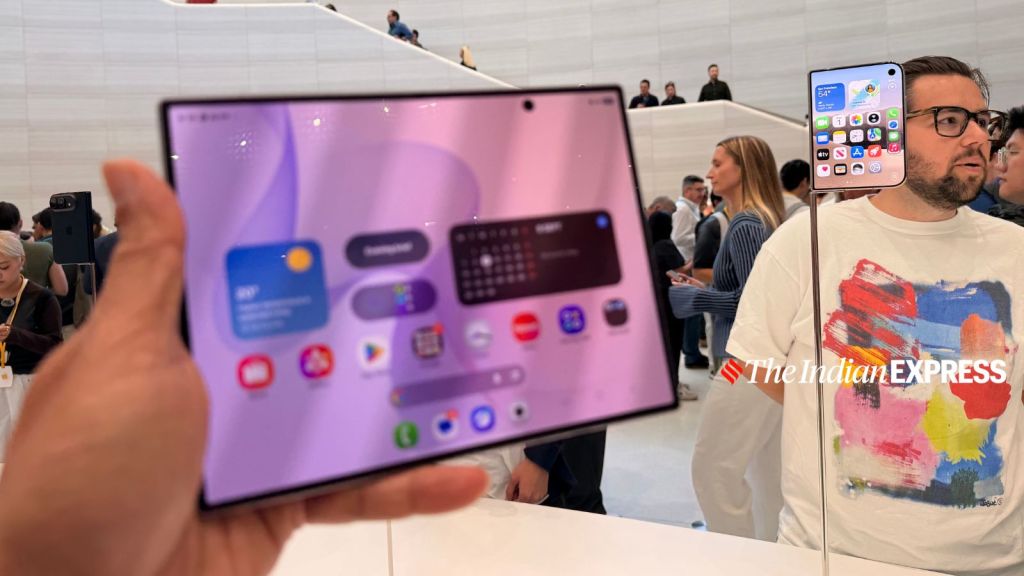 Apple's iPhone Duo, in the foreground, alongside Samsung's Galaxy Fold, highlighting Apple's entry into a foldable market shaped by Android rivals. (Image: Nandagopal Rajan/The Indian Express)
Holding the new iPhone Duo, Apple’s first foldable device unveiled this week, it’s clear the company spent years watching Samsung’s Galaxy Fold line and other foldables evolve before making its move. Nothing about the Duo feels like a first attempt.
Seven years on, the biggest talking point with any foldable is still the crease. Apple has played it smart, disguising the crease rather than eliminating it, using a nano-texture display finish that reduces glare and visibility at the fold line. It’s as if Apple is telling the competition it was all optics from the start. The effect is a screen that opens into something closer to a seamless, iPad-like display than two phones stuck together.

To its credit, the Duo doesn’t lean too heavily on Samsung’s design language. It instead feels like a device the industry had largely forgotten: the Microsoft Surface Duo. Apple appears to have begun work on this form factor around the time Microsoft announced its own foldable six years ago — the name itself reads like an ode to that original attempt.
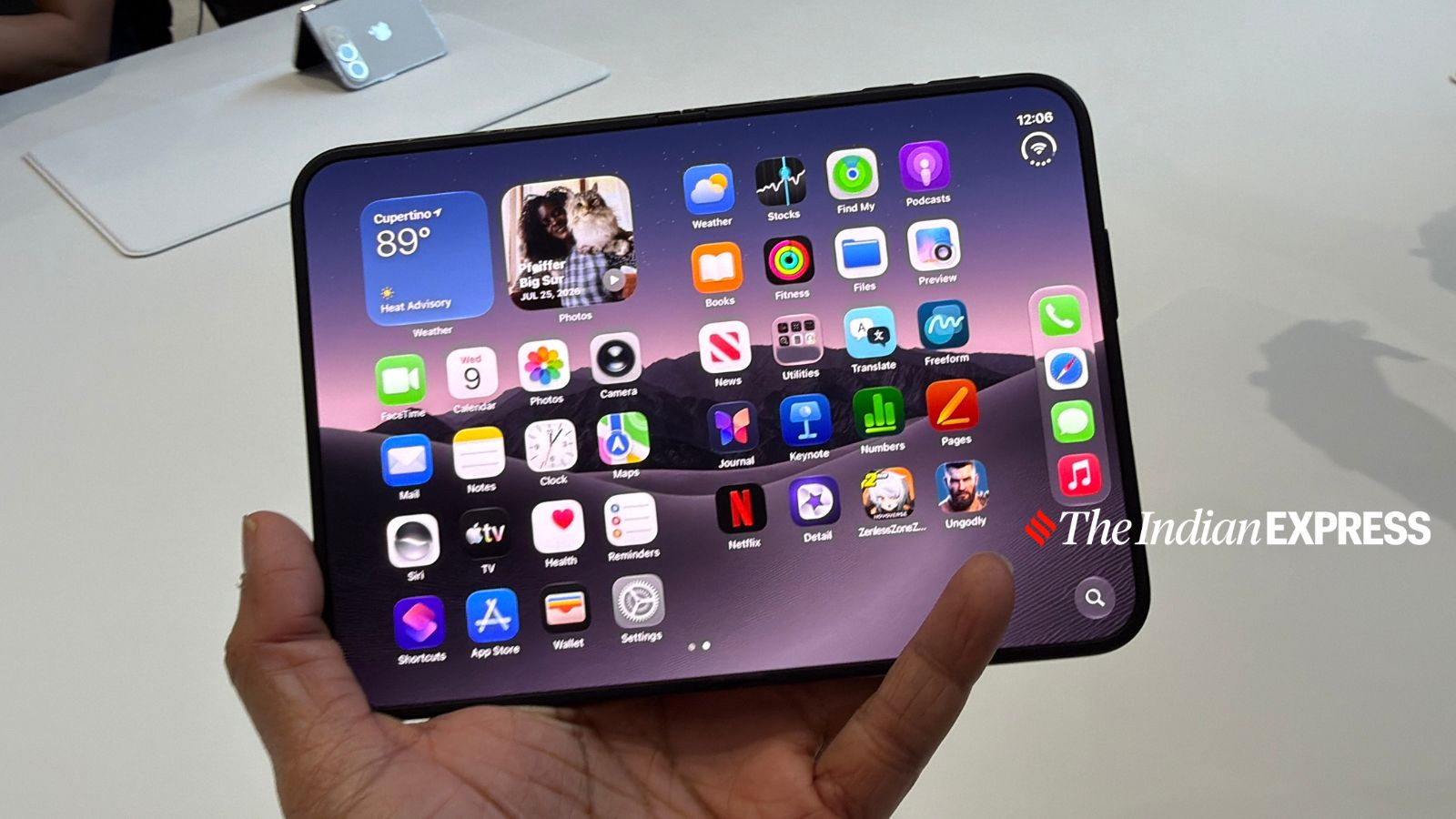 Apple has used a nano-texture display finish on the iPhone Duo to make the foldable’s crease less visible. (Image: Nandagopal Rajan/The Indian Express)
But hardware aside, what’s really driving Apple into this category now is economics.
Why now
Android manufacturers spent nearly a decade priming premium buyers for foldables: absorbing the early pain of sharp edges, stiff hinges, and a sceptical market in the process. Apple has let that groundwork happen without it, and is now positioned to capture pent-up demand from iOS users who have watched the category from the sidelines for years. It’s a familiar Apple pattern: let competitors take the early risk of establishing a category, then enter once the market is ready. However, this is a notable contrast to the Steve Jobs-era instinct to define categories outright rather than wait for them to mature.


 Share


