
Toxic air wake-up call: We get tired and our recovery is slower when we train outdoors, writes para world champion Sumit Antil
Paralympic gold medallist Sumit Antil and Gajendra Singh, husband and coach of Paralympics bronze medalist Simran Sharma, speak up on the pitfalls of training outdoors under thick layer of air pollution
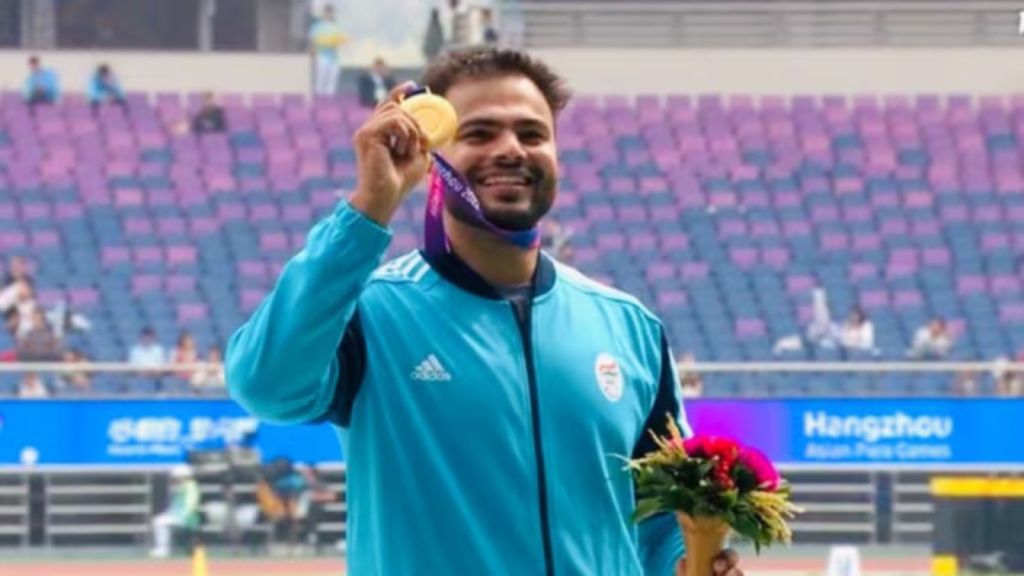 Sumit Antil after getting gold medal at Tokyo Paralympics. (FILE)
The window for athletes to train is shrinking in and around the National Capital Region because of toxic air in winter and searing summers. As the country makes a pitch for the 2036 Olympics, The Indian Express spoke to coaches and athletes from a wide range of sports — boxing, wrestling, athletics and para-athletics, cycling, shooting, hockey and also experts — on the impact of the conditions on health and training. International badminton stars, in Delhi last week for the India Open, have complained to the International Olympic Committee about the air pollution, and have cited health concerns.
Sumit Antil writes:

My training base is Sonepat but this place also has bad AQI. In winters, though most of the training happens indoors (in the gymnasium) for javelin throwers as it is the off season. But when we do practice throws outdoors, we face the issue. It does have an effect on our body as well as health. We get tired and recovery is slower when we train outdoors. So the focus is training indoors and using air purifiers as much as possible when indoors. For most throwers, the months of November to February are off season in Europe too. So the training intensity is not that high. But I have to spend 24 hours in the high AQI levels, both indoor or outdoor. We try to increase the intake of Vitamin C as well antioxidants in our diet.

 Share


