India’s nineteenth-century railway boom has often been narrated as a story of British engineers, imperial capital, and Indian labour. Between them, however, stood a less visible group of intermediaries: contractors who sourced materials, machinery, tools, and, not least, labour for railway construction. Unlike the large-scale British contractors who led and managed construction projects in Europe as well as India, in situ contractors and sub-contractors worked to complete both minor and substantial sections of railway lines.
Sub-contracting, in particular, offered an opportunity for European men who held no official position in the British administration to make considerable profits while benefiting from its professional networks, racial hierarchies, and expanding infrastructure. The empire was British, but its opportunities and profits opened pathways to professional mobility for European men willing to try their luck.
Joseph Stephens was one such contractor. Born in Stockholm, raised partly in Copenhagen, and connected through his family to British railway engineers, he arrived in Bombay in 1860 at the age of nineteen.
“Everyone wants to send their sons to India,” Stephens’s older sister wrote from Copenhagen in 1865. Her remark captures a wider European aspiration. For middle-class families with the right connections, British India appeared not only as a colony but also as a field of professional advancement and private enrichment. Stephens’s fortune was not simply a matter of luck or coincidence. Going to India was a calculated choice made possible by professional networks, British family ties, and the racial order of colonial rule.
Stephens began as an apprentice, became a subcontractor, and eventually a contractor who secured contracts on the Great Indian Peninsula Railway (GIPR), which famously first connected Bombay with Thane before extending into the hinterlands of western India. He undertook a three-year civil-engineering apprenticeship under his brother-in-law. Throughout his life, he would use the title ‘C.E.’ — Civil Engineer — first as a contractor in India and later as a member of the Upper House of the Swedish Parliament.
When Stephens arrived in Bombay, he could hardly have imagined that he would own an estate in Sweden in less than a decade. The Huseby Estate, then a run-down ironworks surrounded by forest and agricultural land, would become the place where Stephens invested both the colonial profits and the skills he had acquired in India, helping fuel industrial expansion in southern Sweden.
His career was remarkable in its success but commonplace in its ambition. Few succeeded as spectacularly as Stephens, and even fewer left behind an archive through which their careers could be reconstructed. Stephens’ contracts, letters, bills, notes and pay sheets from India survived for almost 140 years in a trunk in the attic of his Swedish manor house. Now preserved in the Huseby Archives at Linnaeus University, these papers offer rare glimpses of the workers and artisans who built India’s railways. They also expose an imperial underbelly of cost-cutting, improvisation, and ambitious European contractors navigating British colonial hierarchies in search of profit.
 The manor house at the Huseby Estate, 1870, which Stephens acquired with the earnings as a contractor in India. (Photograph by A. W. Kirchhoff, Copenhagen. Courtesy Huseby Bruk AB)
The making of a civil engineer
At the time of Stephens’s arrival in Bombay, the ‘railway mania’ that had begun in Britain had spread across Europe and the colonies. His years as a contractor fell within what historian Ian J Kerr, in his book Building the Railways of the Raj, 1850-1900, describes as the pioneering period of Indian railway engineering, from 1853 to 1870. Initially promoted as an instrument of progress and a ‘civilising’ force, the railway became increasingly tied to the extension of the presence and power of the colonial state after 1857.
Stephens’s arrival on the subcontinent coincided with a turning point in the engineering profession in South Asia. The expansion of the Public Works Department after power passed from the East India Company to the British Crown elevated engineering as a form of useful colonial knowledge. In the 1860s, contractors operated on several levels and played a particularly important role on the GIPR, whose lines were constructed according to the contract system. Under the departmental system, too, where engineers were more directly engaged with construction, much of the work was carried out through the sub-contracting of labour and material.
In Denmark, Stephens’s sister Ingeborg had married a British railway engineer trained at the Fox, Henderson & Co. in England. He was one of several British engineers employed by the firm to construct the Zealand railway in the early 1850s. British engineers dominated railway construction in Denmark, as they did elsewhere during this early phase of railway development. When the Danish project was completed, the engineer’s next destination was Bombay, where he joined the construction of the GIPR.
When Ingeborg and her husband arrived in India in 1857, the Stephens family was already considering the possibility of the then-too-young Stephens joining them later. When he arrived in the 1860s, the apprenticeship contract between his father, himself, and his brother-in-law stipulated both working terms and living arrangements, including a diet that provided meat for three years.
Engineers, contractors and railway staff at the Bhore ghat incline, 1860s. (Huseby Bruk AB)
Contracts and Contracting
Contractors were central to railway construction everywhere: in Britain, Europe, and India. European contractors often occupied an intermediate position between British railway engineers and Indian labour intermediaries. They issued instructions or subcontracted work to foremen and contractors who recruited and supervised the skilled and unskilled labourers on whom railway construction depended. Indian contractors could also win construction contracts or collaborate directly with Europeans.
Stephens’s life as a contractor was spent far away from the colonial clubs and elite circles of British administrators in the metropoles. His daily work mainly involved supervising progress on sections of railway, ensuring the quality of stonework, and checking levels of ballasting. This meant spending long hours on horseback and making mundane notes about the quality of chunam, or recording complaints from labourers and foremen demanding higher pay or failing to show up for work. His social life included dinners, beers, and hunting with men like himself, who lived in tents, sheds, and sometimes bungalows along the dusty construction sites of the railways.
According to literary scholar Alexander Bubb, the contractor became a durable figure in colonial and postcolonial culture. Almost invariably male, he appears as a menacing type in Rudyard Kipling’s writing and remained a stock villain in Indian cinema throughout much of the twentieth century. Contractors were cast as risk-takers who collaborated with colonial authorities, supplied public works, raw materials, or labour, and pursued profit with scant concern for quality.
That reputation had material foundations. Contractors could increase their ‘cut’ by underpaying workers or reducing the quantity and quality of construction materials. Stephens acknowledged the same logic more amiably when reflecting on his fortune. “If I have any talent at all,” he wrote, “it is in being able to manage things cheaply.” The sections of the Northeastern Extension on which Stephens worked in the 1860s were extensively constructed through European sub-contracting. Kerr notes in his book on the Indian railways that some contractors took on larger contracts while acting as little more than financial speculators. The work was often done “slowly, cheaply and shoddily,” frequently failing or requiring repairs throughout the 1870s.
Seal of Joseph Stephens as contractor in Khandesh and Berar in the mid-1860s, in the archival collection of Huseby Estate AB. (Photographer Eleonor Marcussen)
Contracting allowed railway companies to push risk down the chain. Contractors had to absorb delays, difficult weather, labour shortages, and fluctuating prices. Their profits depended on controlling the costs of materials and labour. The relationship between contractors and Indian workers was therefore not incidental to the railway business. It was central to how that business generated profit.
Profiting from expansion
Historians have described Europeans who used imperial routes and markets without belonging to the ruling power as “imperial hitchhikers.” They benefited from the infrastructures and protections created by the British, French, and German empires without bearing the costs of formal rule. The metaphor captures how large colonial empires opened career opportunities to aspiring middle-class Europeans whose own states did not govern the territories in which they worked.
Such figures formed part of the networks of people, power, and commodities that connected multiple sites of empire, both imperial and extra-imperial, as historians David Lambert and Alan Lester argue in Colonial Lives Across the British Empire: Imperial Careering in the Long Nineteenth Century.
Stephens gives this imperial hitchhiking a human biography. He did not serve the British state, but his career depended on the infrastructures, racial hierarchies, and commercial opportunities produced by British rule. His career reveals colonialism without colonies in practical form.
The colonial archive tends to foreground officials and credentialled professionals. Yet the infrastructural expansion set in motion in the 1840s and intensified after 1857 opened opportunities for Europeans from far more varied backgrounds. Before this period, too, a motley crew of European seamen, missionaries, and military men had formed part of the foreign workforce on the subcontinent. Under Crown rule, however, railways, police forces, workshops, and factories created new lower-level positions for them.
European privilege, however, contained hierarchies of its own. Men like Stephens occupied the lower rungs of colonial society but stood above the “low” and “mean whites” whose lives historian Sarmistha De captures in Marginal Europeans in Colonial India: 1860-1920. Faster shipping and communications made careers in India accessible to a wider European population. But access did not erase distinctions of class, nationality, or race.
The careers of such contractors were products of a wider transformation. Railways, steamships, the electric telegraph, and, by the end of the decade, the Suez Canal changed both the speed and scale of global movement. Information, people, and goods could move faster and in greater volume. These accelerating flows developed alongside British colonial ambitions for trade and commerce.
India had long been integral to world trade. Under colonial rule, however, the railways helped reorient its economy towards the export of raw materials and the consumption of British manufactured goods.
Timing also mattered. The American Civil War disrupted cotton supplies to Britain and produced a speculative boom in western India in the early 1860s. Contractors could diversify into cotton trading and other ventures, but the window was short. Railway lines were laid partly to carry cotton and other commodities to ports and to bring imported goods into interior markets. Between British mill owners seeking new buyers and Indian weavers and artisans whose livelihoods were being eroded, the infrastructure economy created lucrative openings for European intermediaries.
Empire’s reach
To the Huseby Estate, Stephens brought more than capital. He carried skills and connections to networks of imperial actors like himself, as I have written about in the chapter Circulation of Knowledge, Capital, and Goods: Scandinavia and the British Empire. He had travelled from Copenhagen to Bombay in search of professional training and profit, and he returned successful. Settling at the Huseby Estate in Sweden, he moved into an economically peripheral region where, only a couple of years earlier, the inauguration of the railways had made large-scale exports from the province possible.
In 1867, the same year Stephens bought Huseby Estate, Sweden was experiencing the end of its so-called Last Hunger. Crop failures, landlessness, and social and religious pressures helped propel the mass emigration that followed. Over the next decades, more than a million Swedes left the country. As many departed, Stephens used capital earned in India to purchase a landed estate at falling prices.
Money accumulated through colonial infrastructure in western India gave Stephens buying power in a distressed Swedish countryside. The empire connected two economically poor yet resource-rich regions, but it did so on sharply unequal terms. As historian Gunnel Cederlöf notes with reference to colonial careers in the anthology The Imperial Underbelly: Workers, Contractors, and Entrepreneurs in Colonial India and Scandinavia, “the broader migration flows of poor or middle-class Europeans outside the imperial heartlands remain to be investigated”.
In Stephens’s case, his colonial career shows that many tried, but few succeeded as spectacularly as he did, and even fewer left traces in official archives.
At Huseby Estate, Stephens saw an opportunity to use his colonial networks as the region’s industrial breakthrough gathered pace in the 1870s. His colonial career did not end when he left India. Through partners in Britain and India, his engagement with imperial trade and technology continued. Rather than relying solely on local Swedish markets, Stephens treated his estate as a node in a global trading network.
Through British trading firms and Anglo-Scandinavian merchant houses, he sought international markets for Huseby’s timber and iron goods, including in Great Britain. On a journey from Bombay to Copenhagen in 1867, Stephens visited the Universal Exhibition in Paris, where the first pedal-driven cycles were on display and made a sensation: the Michaux velocipede. Two years later, he shipped 12 velocipedes from Sweden to Rogers & Co. in Bombay. Examples of these early bicycle models are now displayed at Huseby and the National Museum of Science and Technology in Stockholm.
A Huseby Velocipede, the model which was exported to Bombay in 1869 by Stephens. (Photographer: Truls /Tekniska Museet (cc-by))
The bicycle may look like a curiosity, but it captures the larger story. Capital earned on Indian railway sites financed a Swedish estate. Knowledge, goods and business contacts then travelled back through the same imperial circuits. The railways did not merely bind India more tightly to British rule. They also carried colonial wealth far beyond Britain, into the estates and industries of Europeans who stood outside the formal apparatus of British rule.
This article is based on research conducted at Linnaeus University Centre for Concurrences in Colonial and Postcolonial Studies and funded by the Swedish Research Council grant 2025-01142.
Further reading
-
Alexander Bubb, “An Element of Risk: The Corrupt Contractor in Indian Fiction and Film, 1886–1983”, The Cambridge Journal of Postcolonial Literary Inquiry 4(1) (2017), pp. 109–126.
-
Gunnel Cederlöf (ed.), The Imperial Underbelly: Workers, Contractors, and Entrepreneurs in Colonial India and Scandinavia (Routledge India, 2022). Open access at https://doi.org/10.4324/9781003317227.
Sarmistha De, Marginal Europeans in Colonial India: 1860–1920 (Kolkata, 2008).
-
Ian J. Kerr, Building the Railways of the Raj, 1850–1900 (Oxford University Press, 1995).
-
David Lambert and Alan Lester (eds), Colonial Lives across the British Empire: Imperial Careering in the Long Nineteenth Century (Cambridge University Press, 2006).
-
Eleonor Marcussen, “Circulation of Knowledge, Capital, and Goods: Scandinavia and the British Empire”, in Gunnel Cederlöf (ed.)
-
The Imperial Underbelly (Routledge India, 2022), pp. 135–160
*This article is part of ‘The Lesser Colonisers of India’, a series that uncovers how commercial enterprises from countries other than Britain played a significant role in shaping colonial India. The first story was about a Swedish matchbox company that shaped colonial India, followed bye the story of the Swiss company Volkart Bros, the Czech shoe company Bata, the popularity of German labels in colonial India, a forgotten story of Austria’s colonies in the subcontinent, and the Danish presence in India.

 When Stephens arrived in Bombay, he could hardly have imagined that he would own an estate in Sweden in less than a decade.

 Joseph Stephens, Sweden, 1867. (Photographer C.F. Linge & Co., Stockholm. Courtesy Huseby Bruk AB)
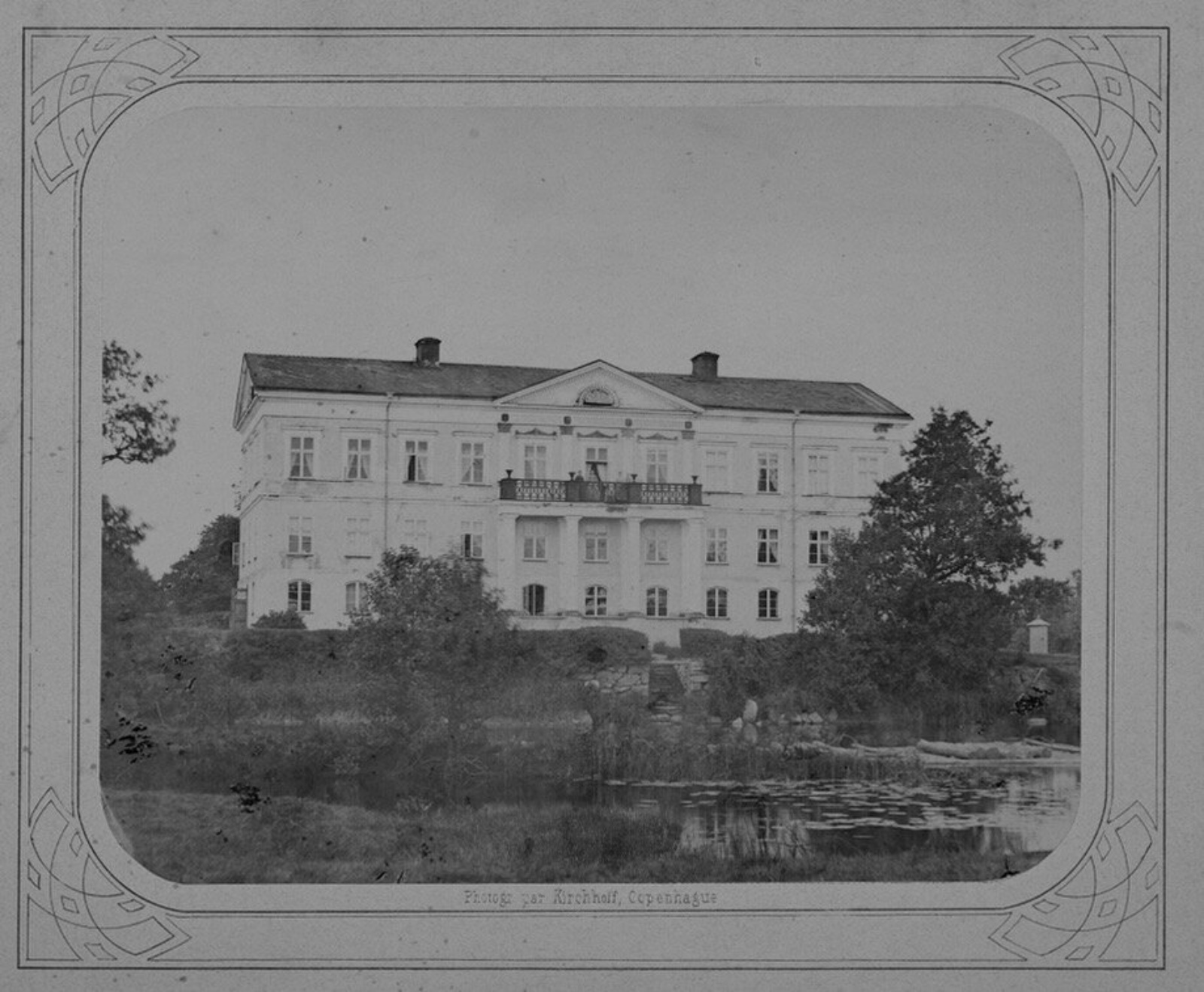 The manor house at the Huseby Estate, 1870, which Stephens acquired with the earnings as a contractor in India. (Photograph by A. W. Kirchhoff, Copenhagen. Courtesy Huseby Bruk AB)
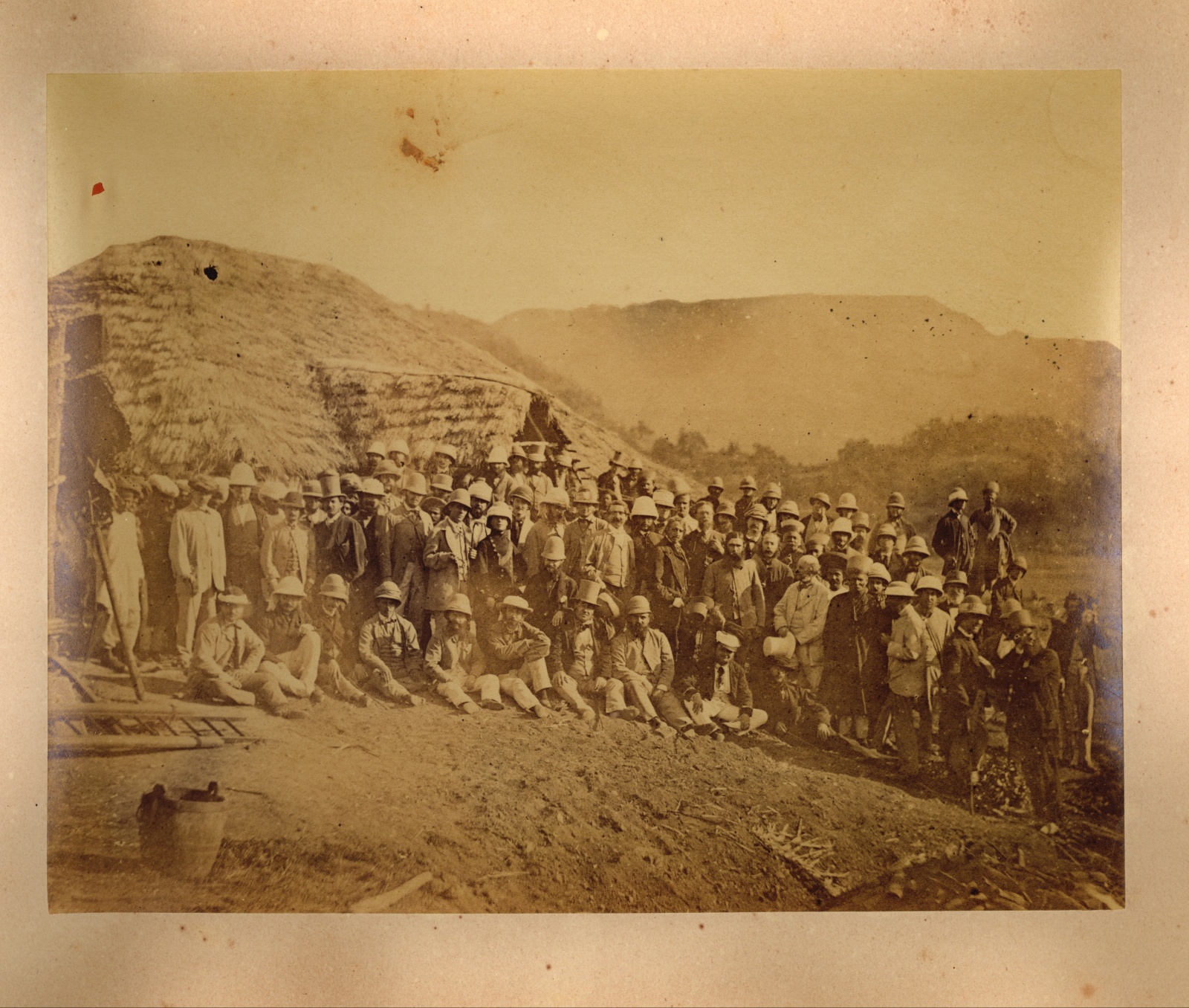 Engineers, contractors and railway staff at the Bhore ghat incline, 1860s. (Huseby Bruk AB)
 Seal of Joseph Stephens as contractor in Khandesh and Berar in the mid-1860s, in the archival collection of Huseby Estate AB. (Photographer Eleonor Marcussen)
 A Huseby Velocipede, the model which was exported to Bombay in 1869 by Stephens. (Photographer: Truls /Tekniska Museet (cc-by))

 Share


