
Caste or biradari? How ‘privilege and descent’ plays out among Indian Muslims
In the South Asian experience of religion, caste is often associated with Hinduism. Yet as sociological research on the lived experience of Islam in India has shown, caste is very much intrinsic to South Asia and practised by Muslims as well, albeit the nature of it might differ from that in Hinduism.
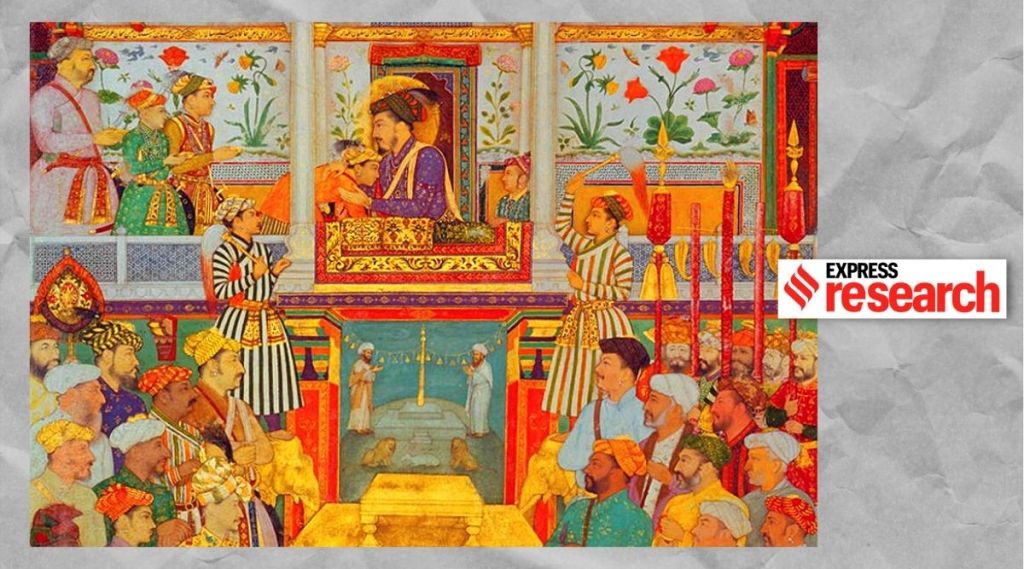 In the South Asian context, three main social divisions among Muslims emerge: Ashraf, Ajlaf, and Arzal. (Wikimedia Commons)
Ahmad Ali’s classic novel ‘Twilight in Delhi’ (1940) portrays a vivid picture of the city and its Muslim inhabitants as it existed in the early 20th century when Mughal rule was at its decline. In Ali’s narration of everyday lives of the characters in his novel, we come across the notion of caste as it existed among the Muslims of South Asia. Asghar, one of his prime characters, falls in love with Bilqueece, a girl from a lower caste. He is torn as he realises his father’s opposition to the union on grounds of caste differences. “The different race and caste (his people came of Arab stock and prided themselves of being Saiyyeds, direct descendants of the Prophet Mohammad) and this low blood in her veins were bound to stand in the way of his father giving consent to the marriage,” writes Ali.
In the South Asian experience of religion, caste is often associated with Hinduism. Yet as sociological research on the lived experience of Islam in India has shown, caste is very much intrinsic to South Asia and practised by Muslims as well, albeit the nature of it might differ from that in Hinduism. In a 1967 paper, political sociology professor Imtiaz Ahmad suggests that social hierarchies may not just be an outcome of purity and pollution as is the case with caste among Hindus. Rather they can also be premised on “privileges and decent” as it plays out among Muslims.

“The problem is the religionisation of caste, it must not be captured through the prism of Hindu or Muslim,” avers sociologist Khalid Anis Ansari. But the question emerges as to how caste enters the Islamic framework, when egalitarianism is sanctioned by its religious scriptures. Ansari answers this by saying “religions have to be understood in the lived context. Every religious text is interpreted differently depending on the region in which it is operating”.
There are others, however, who deny the existence of caste among Muslims. “To suggest so is based on a political premise to fragment what is already a geographically dispersed community. Besides, it takes away from the genuine caste issues faced by the Hindu Dalit groups which are endorsed by theology and ritualised discrimination endorsed by religious scriptures,” says historian Yusuf Ansari. He insists that instead of ‘caste’ the term ‘biradari’ must be used to identify different groups among Muslims in India.
Caste hierarchies among Indian Muslims
Ahmad in his work explains the existence of two diametrically opposing views to explain the existence of caste among Muslims in India. One view suggests that caste among Muslims can be traced to Hindu influence and by the fact that a large number of Muslims in India are converts from Hindu castes. “A second view is that in the course of its journey through Persia, Islam had already imbibed the notion of social hierarchy,” writes Ahmad. “From this perspective it would appear that caste among Muslims in India was not only a result of local Hindu influence, but a form of social stratification that had already come to be accepted as a result of its cultural contacts with other Muslim cultures which had evolved hierarchical structures.”
There are others who emphasise on the nature of Islamic society at its origins to understand the existence of caste. In his article “Muslim castes in India”, scholar of religion Remy Delage writes, “It should be remembered that the war of succession to the Prophet in the 7th century was based on family, tribal and therefore political rivalries. From then on, belonging to the Prophet’s close family, clan or tribe became criteria for social differentiation within Arab society.”
When this criteria was transported beyond the borders of the Arab peninsula, particularly to the Indian subcontinent from the 8th century, it gave rise to newer forms of social stratification between Arabs and non-Arabs. Within the second group there was further differentiation between those who converted during the first wave of Islamisation and the newly converted.
In the South Asian context, three main social divisions among Muslims emerge: Ashraf, Ajlaf, and Arzal. Delage explains that these divisions begin to appear in texts from the 13th century onwards when the Delhi Sultanate established a sustainable political power in the region. Within these broad categories we find smaller units which are interdependent and mostly endogamous.
At the top of the hierarchy are the Ashrafs or nobles of Arab, Persian, Turkish or Afghan origin who lay claim to a prestigious lineage that can sometimes be traced back to the Prophet, like the Sayyids who claim to have kinship with the Prophet’s daughter. “Many among the Ashrafs were converted from Hindu upper castes. They too claim to have a lineage tracing back to the Prophet, even though it is hard to verify,” says sociologist Tanweer Fazal.
There is a popular notion of mostly lower castes among the Hindus converting to Islam given the appeal of egalitarianism in the latter religion. Scholars however note that several upper caste Hindus too converted to Islam, which went on to play a role in the sustenance of the caste system among Muslims. The reasons for conversion were in fact multifaceted and rather complicated. “For instance, during the Mughal rule, there was a tendency among several upper and middle castes to adopt the rulers’ traditions and practices in order to become part of the nobility. The process was similar to how a section of the Indian elite westernised themselves during the British rule,” says Fazal.
“Several among the Gaur Brahmins of Western UP for instance converted to Islam,” says Ansari. “Then there are the converts from the Tyagi community who are known as Taga Musalmans.” Similarly several Rajput clans, like the Sherwanis, converted to Islam and carried with them a mirror image of their caste experience into the new religion.
A most interesting case of upper caste conversion is that of Allahdiya Khan, the founder of the Jaipur gharana of Hindustani music. His family originally belonged to the Adya Gaud Brahmin community. In her book, “The music room”, author Namita Devidayal explains how one of Khan’s forefathers was a court musician and head priest of a small princely state called Anup Shahar near Delhi. “During a spate of territorial takeovers, the king of Anup Shahar was captured by the emperor of Delhi,” writes Devidayal. That is when the court musician of the state travelled all the way to Delhi, performed in front of the emperor and as a prize for his impressive performance asked for his king to be released. The emperor agreed on the condition that he converted to Islam. Upper castes, writes Devidayal, converted for “reasons of patronage” and included many professional musicians like Khan’s ancestors.
In the hierarchisation of castes among Muslims, the middle rung is occupied by the Ajlafs or the low borns, whose status is defined by birth and occupation (unlike that among the Ashrafs). Their identity is defined as being descendants of converts to Islam. Many castes of intermediate status fall in this category like the Ansaris and Julahas who belong to professional groups like weavers, farmers, traders etc.
At the bottom of the social categorisation come the Arzals, a group mostly of those converted from the untouchables among the Hindus like the tanners, laundrymen or dhobi, barbers and the like.
Delage writes that this tripartite division is not found in all parts of India. In Tamil Nadu, for instance, the status of a Muslim group “is not so much the result of belonging to a caste as the level of socioeconomic development of a group.” Similarly, in Kashmir and Uttar Pradesh too, the three groups do not form part of local vocabulary. In Kerala on the other hand, the Moplahs of Malabar are divided into five ranked sections called the Thangals, Arabis, Malbaris, Pussalars and Ossans.
How caste is practised among Indian Muslims
In the history of early Muslim society, caste did play an important role in determining status of an individual. “In the administrative system the positions of status and authority were assigned to members of the families of foreign origin who had either originally accompanied the invading armies or had descended from the original immigrants,” writes Ahmad. Early Turkish sultans, for instance, were particularly contemptuous towards Muslims of local origins. Ahmad provides the example of the Mamluk king, Shamsuddin Iltutmish, who is known to have dismissed 33 persons from government service on account of their low birth.
Scholars agree that even though the intensity of discrimination against lower castes among Muslims is lesser, it still exists. “For instance you will find separate cemeteries for Muslim lower castes in several parts of Bihar,” says historian Mohammad Sajjad. Caste discrimination is particularly pronounced in case of marriages.
A recent depiction of the challenges of inter-caste marriages among Muslims is shown in the first story of the web series ‘Modern Love Mumbai’. The protagonist, Lalzari, is shown to speak aloud about the challenges she faced while convincing her family to allow her to marry Lufti who belonged to a lower caste.
Journalist and politician Ali Anwar in his book, ‘Masawat ki jung’ (fight for equality) talks about the lack of representation of Muslim lower castes in various religious bodies like the Muslim Personal Law body and how they have not found suffient political representation either. Writing about the plight of Muslim scavengers of Patna, he notes, “Close to the Imarat-e-Shariah office there is a huge settlement of Halalkhors (Dalit Muslims). Cholera broke out in the halakhors locality a few years ago killing six poor people. Not to speak of providing any material assistance, the Imarat-e-Shariah’s office bearers did not even prefer to meet the affected families and inquire about their welfare”
In his book, “Muslim Politics in Bihar” (2014), Sajjad notes that in Bihar since the 1990s, organisations such as the All India Backward Muslim Morcha, the All India Pasmanda Muslim Mahaz, the Inquilabi Muslim Conference and the Muslim Intellectual Forum, have been demanding political empowerment and socio-economic justice for the Muslim lower castes against the Ashraf-led feudal leadership. They also demand justice for Dalit Muslims, who according to the Backward Muslim Morcha, account for 20 per cent of Muslims in Bihar.
Lack of adequate empirical evidence is one of the biggest challenges in determining the status of Muslim lower castes in India. Perhaps the most cited report on condition of Muslim lower castes is the Sachar Committee Report of 2006, which suggests that 40.7 percent of Muslims are Muslim OBCs, which is 15.7 per cent of the total OBC population in India. The report also observes that the condition of Dalit Muslims did not improve after conversion. A 2008 report for the National Commission for Minorities concludes that about 47 per cent of Dalit Muslims in urban India live below poverty line, a figure that is significantly higher than that among Dalit Hindus and Christians. More recently, an article in the Journal of International Development notes that a section of Muslims in almost all South Asian countries continue to be treated as untouchables, both by the upper castes in their own community and by those from the majority Hindu community, thereby experiencing “double disadvantage”.
However, there is also a consensus among scholars that the Muslim caste structure is a lot less rigid than among the Hindus and sufficient access for social mobility exists. Places of worship, for instance, are open to all castes among Muslims and we do not come across any counterpart of the temple entry movement of the Hindus. “The imams in a large majority of madrasas are lower castes,” says Sajjad. He explains the reason for it being that the higher and middle castes opt for modern education, whereas the lower castes, due to their weaker economic and educational backgrounds are restricted to madrasas.
“You will not find any instances of a Muslim man being whipped for drinking water from a ‘wrong’ well or for standing next to a another Muslim at prayer, irrespective of their birth or economic status.” highlights Yusuf Ansari. “Although you might find that the lower castes stand behind everyone else while offering namaaz at a mosque,” says Fazal. “It is not enforced by the religious bodies, but is a product of lack of self-confidence owing to the existing social order.”
Fazal says that similar to the process of Sanskritisation among Hindus, we also find Ashrafisation taking place among Muslim lower castes. “This is particularly the case with the Ansaris (weavers) and Qureshis (meat sellers), among whom the emergence of political consciousness took place during the colonial period and they also became more prosperous over time,” says Fazal. “They began claiming that their origins are associated with the Prophet or the noblemen close to the Prophet.”
As far as policy is concerned, the Indian constitution does not recognise the Muslim lower castes among the Scheduled Castes (SC) of India. Since the implementation of the Mandal Commission Report for central government services in 1990, about 85 per cent of the Muslim lower castes have been identified as Other Backward Castes (OBCs) and are therefore eligible to benefits of reservation offered to them along with backward groups of other religions. However, the Dalit converts to Islam continue to be left out from constitutional benefits on account of being excluded from the SC category.
Constitutional provisions aside, there is much debate within the Muslim community about the existence of caste among them. Ahmad in his paper writes that there are two distinct types of tendencies among Muslims. While some believe that instead of caste some other terminology needs to be coined to designate Muslim groups, there are others who deny the existence of caste among Muslims at all, arguing that Islam is an egalitarian religion. “Both tendencies arise from Muslim anxieties about their position in India,” writes Ahmad. While in case of the former, the anxieties arise from the fact that if caste was used it would betray affinity with the Hindus, in case of the latter, the insecurity stems from wanting to project Muslims as a monolith community in context of it being a minority in India.
Further reading:
Remy Delage; “Muslim castes in India”, 2014
Imtiaz Ahmad; “The Ashraf and Ajlaf Categories in Indo-Muslim Society”; Economic and Political Weekly, 1967
Imtiaz Ahmad (ed.) “Caste and Social Stratification among Muslims in India”; Manohar, 1978
Mohammad Sajjad; “Muslim Politics in Bihar”; Routledge; 2014
Ali Anwar; “Masawat ki jung”; Indian Social Institute; 2005
Adrija Roychowdhury leads the research section at Indianexpress.com. She writes long features on his... Read More
 Share


