While the BJP-led NDA government has suggested an increase in the number of the Lok Sabha constituencies, maintaining the existing proportion among states, as well as the Assembly seats on the basis of the 2011 Census, and not the current Census, in a bid to implement the Women’s Reservation Act, its proposed move is likely to face various legal and constitutional challenges.
The government has mooted the proposal during its talks with some Opposition parties and NDA allies as part of its attempt to evolve a consensus for implementation of the Nari Shakti Vandan Adhiniyam or Women’s Reservation Act, 2023, which provides for 33% quota for women in the Lok Sabha and the state Assemblies.

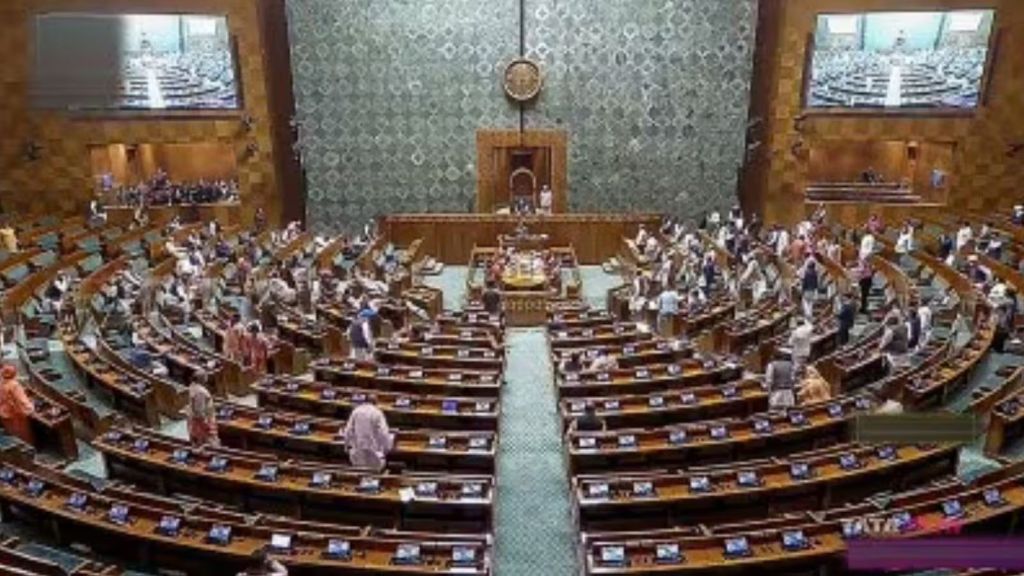
Under this plan, the government intends to raise the number of the Lok Sabha seats by 50% to 816 from the present 543 – with 273 seats to be reserved for women – after delimitation based on the 2011 Census.
Here is a look at the existing constitutional basis of allocation of the Lok Sabha seats within and across states besides the potential hurdles that the government may face in its attempt to push the proposal.
Constitutional provisions
Article 81 of the Constitution provides for the “one person, one vote, one value” principle. Article 81 (2) (a) says, “There shall be allotted to each State a number of seats in the House of the People in such manner that the ratio between that number and the population of the state is, so far as practicable, the same for all States.”
Article 81 (2) (b) says, “Each State shall be divided into territorial constituencies in such manner that the ratio between the population of each constituency and number of seats allotted to it is, so far as practicable, the same throughout the State.”
The only exception the Article makes to the norm is for very small states with a population not exceeding 6 million, so that they can still get proper representation in the Lower House despite their small population.
Article 82 of the Constitution states: “Upon the completion of each census, the allocation of seats in the House of the People to the States and the division of each State into territorial constituencies shall be readjusted by such authority and in such manner as Parliament may by law determine.”
Delimitation freeze
The current freeze on delimitation is a result of two constitutional amendments, one in 1976 and the other in 2001. The first froze for 25 years the definition of “last preceding census” in Articles 81 and 82, for the purpose of allocation of seats among states, to mean the 1971 census. In 2001, Articles 81 and 82 were amended again to extend the freeze till the “relevant figures for the first census taken after the year 2026 have been published”. It will thus automatically expire once the current census figures are out.
Among the reasons for these amendments was the concern of the southern states that because their population had stabilised by then, and the population of some northern states had begun to grow at a rapid pace, their relative representation in the Lok Sabha would go down if delimitation of seats would take place on the basis of population after each census, as mandated by the Constitution.
Roadmap ahead
If the government does not extend the freeze on delimitation, the step forward could be the passage of a Delimitation Act by Parliament.
“Under Article 82 of the Constitution, the Parliament by law enacts a Delimitation Act after every census. After the commencement of the Act, the Central Government constitutes a Delimitation Commission. This Delimitation Commission demarcates the boundaries of the Parliamentary Constituencies as per provisions of the Delimitation Act. The present delimitation of constituencies has been done on the basis of 2001 census figures under the provisions of Delimitation Act, 2002,” says the website of the Election Commission (EC), referring to the last intra-state delimitation exercise based on the 2001 Census – which is different from the inter-state delimitation status quo since 1976.
“Notwithstanding the above, the Constitution of India was specifically amended in 2002 not to have delimitation of constituencies till the first census after 2026. Thus, the present constituencies carved out on the basis of the 2001 census shall continue to be in operation till the first census after 2026,” the EC adds.
Legal tests
As per the government’s suggestion, once the Delimitation Commission is constituted, it would use the 2011 Census data to redraw the Lok Sabha seats, with Articles 81 and 82 being perhaps amended suitably in this regard.
The move would be bound by Article 81 — with the 2011 population data being the basis to ensure that each constituency has roughly the same population – unless this Article is itself amended to exempt the proposal from the “one person, one vote, one value” principle.
“A Delimitation Commission will be bound by Articles 81 and 82 of the Constitution and cannot increase 50% seats per state without looking at the 2011 census figures that they will consider as the last preceding census,” Vikas Singh, senior Supreme Court advocate, told The Indian Express. “If women’s reservation is delinked from the next census and subsequent delimitation by amending the Nari Shakti Vandan Adhiniyam, which linked the two, there is no need for a Delimitation Commission and the reservation will automatically come into force,” he said.
He added that any violations of the Constitution by the Delimitation Commission can be challenged in court, and so can be the amendment of Article 81 itself.
Doing away with the “one-person, one-vote, one-value” principle by amending Article 81 (2) (a) could face legal challenge on the ground of violation of the right to equality, and thereby the basic structure of the Constitution. Even if the principle of reasonable classification in Article 14 — likes to be treated alike, a principle that permits positive discrimination leading to measures like reservation — is evoked, it would have to be based on the argument that better social and economic indicators require special protection for southern states – something on which the Indian system till now offers no special safeguards, with the latter being based on backwardness.
However, since Article 81 (1) (a) limits the strength of the Lok Sabha to 550, it will have to be amended to increase the strength of the Lower House to pave the way for the reservation of women without cutting down the seats available to men.
Senior advocate Rakesh Dwivedi said that since there are constitutional amendments to be made, Parliament may devise some “compensatory principle” to address the concerns of southern states.

 If the goal is simply to accommodate one-third women’s reservation while maintaining ratios, a more modest 25 per cent increase in seats would suffice. This would provide enough room for rotation and reservation without swelling the House to unmanageable proportions, better preserve functionality, limit North-South imbalances in absolute terms, and protect political diversity.



 Share


