4 min readNew DelhiJan 22, 2024 11:39 AM IST
First published on: Jan 18, 2024 at 07:59 PM IST
On February 8, 1855, Major General G B Outram of the Awadh Frontier Police wrote to Wajid Ali Shah, the Nawab of Awadh, that there was a strong possibility of a Hindu-Muslim clash in Ayodhya. His fears came true five months later, when a bloody clash on July 28 left 75 members of the Muslim community dead.
In his recent book Tryst With Ayodhya, journalist-turned-BJP leader and former Rajya Sabha MP Balbir Punj quotes Outram’s letter: “It appears that Shah Ghulam Hussein has assembled a large force of Musalmans at the Kotuahain neighbourhood of Faizabad and is intent upon committing some dreadful breach of peace and is determined to destroy and ruin Hanuman Garhi, which is inhabited by Hindus. His Lieut. (asst.) called the Maulvee Sahib is even more diabolically inclined and ready for strife; hence the mendicants and devotees, who are there at the Hanuman Garhi (temple) in defence of their lives, have been obliged to arm themselves. Therefore, the Resident feeling exceedingly anxious on this subject, entreats His Majesty to dispatch a very swift camel messenger with all possible speed, most peremptory orders to cause the immediate apprehension of Ghulam Hussein and his coadjutors.”

In its November 2019 judgment granting the Ayodhya title suit to the Hindu side, the Supreme Court too referred to the clash. “The Janmasthan is within a few hundred paces of Hanuman Garhi. In 1855, when a great rapture took place between the Hindus and Muhammadans, the former occupied Hanuman Garhi in force, while the Musalmans took possession of the Janmasthan. The Muhammadans on that occasion actually charged up the steps of the Hanuman Garhi, but were driven back with considerable force. The Hindus then followed up this success, and at the third attempt, took the Janmasthan, at the gate of which 75 Muhammadans are buried in the martyrs’ grave (ganj-e-shahid). Several of the King’s Regiment were looking on all the time, but their orders were not to interfere.”
The judgment added: “It is said that up to that time, the Hindus and Muhammadans alike used to worship in the mosque-temple. Since British Rule, a railing has been put up to prevent disputes, within which is the mosque (where) the Muhammadans pray, while outside the fence, the Hindus have raised a platform on which they make their offerings.”
In his reference to the violence, Punj says that Naga sadhus and Bairagis, along with other Hindus, had gathered there, and were part of the clashes.
Punj argues in his book that even as early as 1751, when the Marathas were on the ascendant, they had appealed to the Nawab of Awadh – whom they had helped vanquish Pathan forces in the Doab region – to transfer control of Ayodhya, Kashi and Mathura to them. In 1756, too, when Nawab Shuja-ud-Daula sought their help against an imminent Afghan invasion, the Marathas requested that the three sites be transferred to them.
However, the Nawab changed sides later, and the Maratha demand became irrelevant. They also lost the Third Battle of Panipat soon afterwards to Ahmed Shah Abdali, which precipitated the decline of the Maratha Empire.
Punj later writes about another unsuccessful attempt to capture Hanuman Garhi made by one Amir Ali Amethawi, who was killed by British troops.
This sparked from an FIR filed by a Mohammad Salim on November 30, 1858, against some Nihang Sikhs, who had installed the Nishan Sahib and performed a havan inside the Babri Masjid, also writing ‘Ram’, says Punj.
All this happened against the backdrop of the events of 1857-58, variously called the Sepoy Mutiny or India’s First War of Independence.

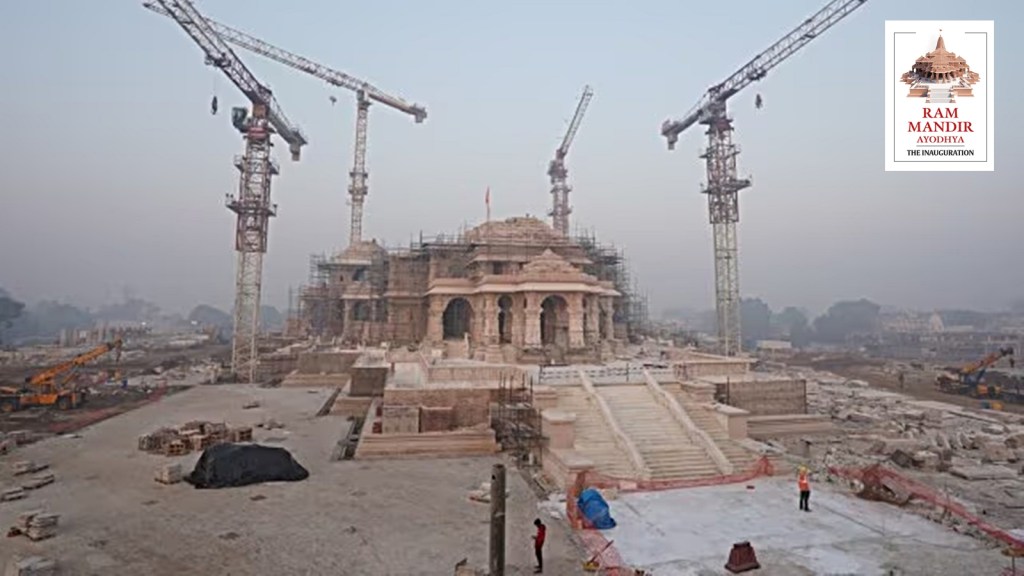 As early as 1751, Marathas had appealed to the Nawab of Awadh to transfer control of Ayodhya, Kashi and Mathura to them. (X/ ShriRamTeerth)



 Share


