


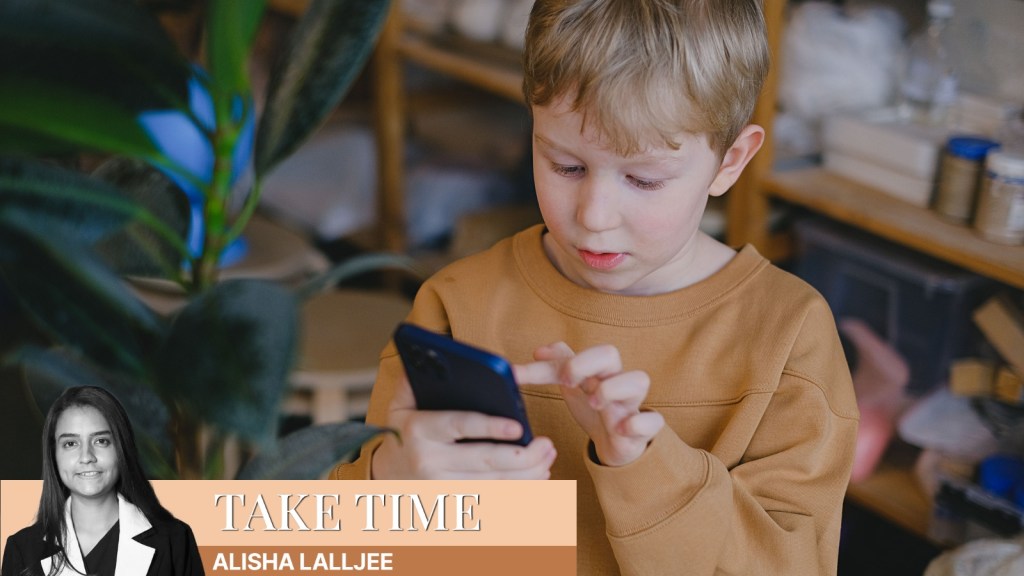


There was a time when children came home from school and told their parents almost everything. From an argument with a friend to a teacher they did not like, there was always something to talk about. Today, a child having a difficult day might turn to artificial intelligence (AI) instead. They can ask questions, share their worries or talk about something they find embarrassing without worrying about being judged.
AI is available whenever children need it, responds instantly and does not interrupt them with advice they may not want to hear. While this can make it easier for children to express themselves, it also raises an important question. With AI becoming an increasingly accessible companion, are children slowly finding it easier to talk to technology than to their own parents?

 Sometimes, they simply want someone to listen without making them feel that they have done something wrong.
Sometimes, the problem is not that children have nothing to say, but that they are unsure how their parents will react. A child shares a problem with a friend, and the conversation quickly turns into a lecture about choosing better friends. They express anxiety about an examination, and they are reminded to study harder. They admit to making a mistake, and suddenly, it becomes a lesson about responsibility. Parents usually mean well, but children do not always need solutions. Sometimes, they simply want someone to listen without making them feel that they have done something wrong.
When sharing their feelings becomes uncomfortable, children may begin keeping things to themselves or looking for easier ways to express them. AI can appear to offer that space, but an immediate response is not necessarily an accurate one, and a chatbot cannot replace the understanding that develops through a genuine human relationship.
This does not mean that children should never talk to AI. It can help them learn, explore ideas and sometimes find words for feelings they struggle to explain. The concern is when it becomes their first or only source of emotional support. Children need to learn that technology can make mistakes and that certain problems require the guidance of a trusted adult.
Criticism, unwanted advice: The stumbling block
Parents, too, need to look at the way they communicate with their children. We do not always have to turn every conversation into a teaching moment. Sometimes, putting our phones aside, listening without interrupting and saying, ‘I can understand why that upset you’, can do more than a long explanation. Children are more likely to open up when they know they can speak honestly without every conversation ending in criticism, interrogation or unwanted advice.
Perhaps the real question is not whether children will talk to AI, but whether they will still feel comfortable talking to us. As children grow older, they naturally seek privacy and independence, and that is a healthy part of growing up. We cannot expect them to share every thought with us, nor should we treat every interaction with AI as a problem. What matters is that they know they have someone to turn to when life gets confusing, difficult or overwhelming.
 Parents can strengthen their bond with their children by making them feel heard
We may not always have the right answers, and we certainly cannot protect our children from every disappointment. But we can make sure they never feel that their feelings are too small, their mistakes too embarrassing or their problems too complicated to bring to us. AI may be able to answer our children’s questions, but as parents, we need to make sure they never stop asking us the ones that matter.
Let them feel heard
Parents can strengthen their bond with their children by making them feel heard rather than turning every conversation into a lecture. Sometimes, children do not need advice or solutions; they simply want someone to listen without judging them. Spending time together, putting phones aside during conversations and showing genuine interest in their everyday lives can make a difference.
Parents also need to accept that children may not always agree with them or feel ready to share everything, and that is okay. What matters is creating an environment where children feel comfortable talking about their worries, mistakes and fears without being afraid of criticism. A simple “I’m glad you told me” can go a long way. Children may find it easy to talk to AI, but parents can offer something technology cannot: a relationship built on love, trust, shared experiences and the reassurance that they will be there even when things go wrong.