5 min readNew DelhiMar 15, 2026 07:43 PM IST
First published on: Mar 15, 2026 at 07:27 PM IST
Dear Express Reader
In 1979, the Iranian revolution triggered a global oil shock. As the country’s oil production declined — according to some estimates, by 7 per cent of world output — the price of oil soared from $13 per barrel in mid 1979 to $34 per barrel by the 1980s. The price shock was felt the world over, and India was no exception. India was then struggling to emerge from what has been described as probably the worst 15-year stretch for its economy. The decade and a half from 1962 to 1977 had seen three wars, droughts, a sharp pivot towards socialism, an oil shock in 1973-74 and a national emergency. The oil shock in 1979-80 pushed up inflation, worsened the country’s balance of payments and exerted pressure on foreign exchange reserves.

Fast forward to the present. The current conflict in the Middle East, which has sent oil prices soaring, has also come after several shocks to the Indian economy over the past decade and a half. From the taper tantrum of 2013 to demonetisation in 2016, the Covid pandemic in 2020-21 and the Russia-Ukraine conflict in 2022 — these back to back shocks have been inflationary and have exerted pressure on the rupee and the twin deficits and impacted the country’s growth momentum.
India, again, is no exception. No matter what their point of origin, the reverberations of these crises — the most recent ones have caused severe dislocations in real economic activity which have then spilled over to financial markets — have been felt the world over, having not only economic but political consequences as well. In 2022, the surge in energy prices had contributed, in part, to the fall of the Imran Khan government in Pakistan and in Sri Lanka defaulting on its debt obligations. If the ongoing conflict in the Middle East continues — it is of a much higher order of magnitude — the damage to countries could be far greater. Even the proposed release of 400 million barrels of oil by the IEA members — equivalent to roughly 20 days of oil that flows through the Strait of Hormuz — has not been enough to calm the markets. Perhaps because the market believes that the conflict will last longer than that.
However, when compared to 1979, the Indian economy is considerably bigger and has a greater capacity to absorb shocks. Some of the constraints that existed in the past and complicated economic management — food, forex and domestic savings — are either less of a constraint now, or no longer exist. But, the energy constraint — India imports 85 per cent of its crude oil requirement, 50 per cent of its natural gas needs and over 60 per cent of its LPG demand – is unlikely to disappear anytime soon, making it particularly vulnerable, despite the steady expansion in alternate energy capacity.
While some estimate that the price shock now, when adjusted for inflation, is lower than that during the Iranian revolution in 1979 or during July 2008, if the energy market disruptions sustain, they can exert pressure on India through many channels, some of which are already evident. Economic activities will get disrupted — restaurants and hotels are already feeling the pain, as per some reports. Rationing and hoarding will follow, impacting households and firms — a black market for LPG cylinder is already said to have emerged. Inflation will rise — price pressures are reportedly being felt across several commodities. The rupee will come under pressure — money is already flowing to the US dollar. And so will the twin deficits — the fisc will possibly take a hit as governments try to cushion the blow owing to political compulsions, while a widening current account deficit at a time when capital inflows have slumped, will make macroeconomic management challenging. History is likely to repeat itself, even if imperfectly.
With the pain now being felt, though not in equal measure, by the sellers of energy — Iran and the Gulf countries — and the buyers — India is not alone, European consumers will feel the pain as will the American — the calculus of the conflict should change. A prolonged war will soon become politically unpalatable as the thresholds of pain are breached. In the US, the cost of gasoline has now crossed $3.5 per gallon, up around 60 cents from a month ago. Donald Trump is unlikely to want the midterm elections to be held in the shadow of a stock market in the red and oil above $100. Domestic political compulsions should, hopefully, prevail.
Till next time,
Ishan

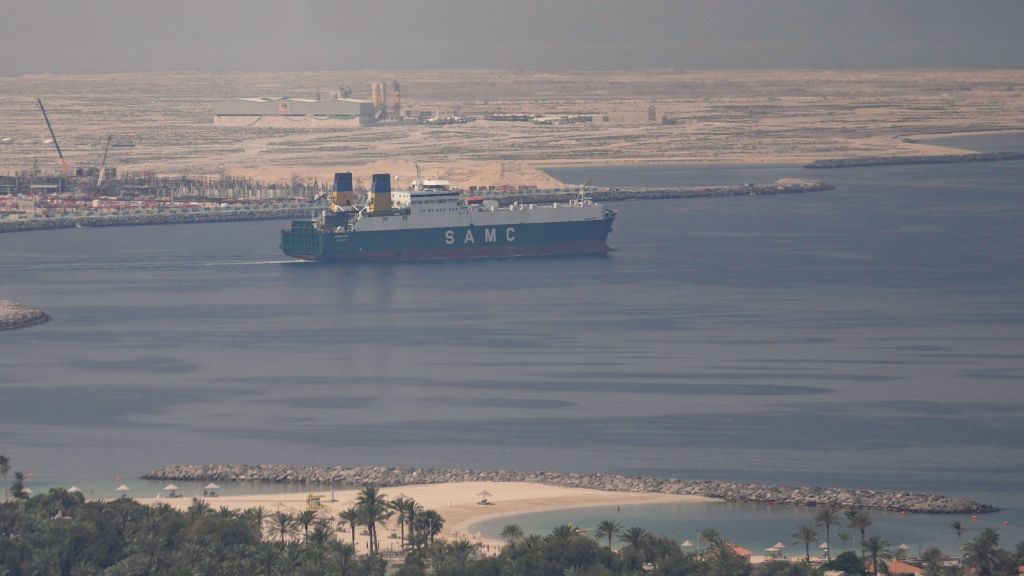 If the ongoing conflict in the Middle East continues — it is of a much higher order of magnitude — the damage to countries could be far greater. (AP)


 Share


