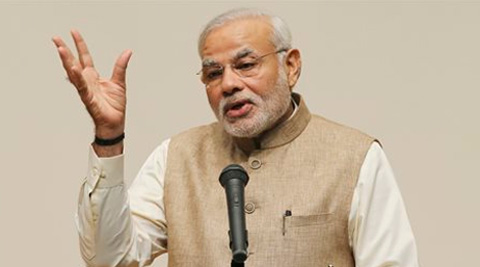
Prime Minister Narendra Modi’s alliterative vocabulary for international relations needs a third leg. In Japan, he made a contrast between two kinds of international behaviour: vistarvad (politics of expansion) and vikasvad (politics of progress). Whether this contrast displayed deep strategic insight, sent a subtle message to China or is merely a useful distinction is an open question. But in focusing on this contrast, he arguably left out a tendency that is proving to be far more potent in world politics today: vishadvad (politics of regret and nostalgia).
Agents in world politics seldom operate on singular motives. But, at the risk of oversimplification, this can be said: the most destabilising and intractable actors in world politics today are not driven by territorial expansion in the traditional 19th-century sense, nor simply a desire for progress. The ideological impulses animating these actors are a potent mix of nostalgia, historical memory and an unresolved sense of hurt. These tendencies are often exacerbated by strains of authoritarianism, or a historical experience that does not find it easy to institutionalise a narrative of national purpose built around democracy and capitalism. And the more a state is in decline, the more the pull of vishadvad. It opens up the space for politicians manipulating a sense of self-esteem, often in dangerous ways. This politics has made a comeback with a vengeance.

A quick survey of conflicts makes this apparent. Russia President Vladimir Putin mobilises nostalgia for a narrative of possible greatness, captured in the territorial influence of the erstwhile Soviet Union. Add to this a dash of Slavic tragedy, a pinch of authoritarian ruthlessness and you have political behaviour that, in his own mind, is not about territory or progress; it is about a fantasy born of the past. The triad of China, Japan and South Korea is shaped profoundly by historical memories of the first half of the 20th century. The ideological underpinnings of China’s role in Asia are governed by a narrative of past humiliation, and a desire to restore China to its preeminent place in Asia. Japan has been a less powerful actor in Asia, in part because it has not fully come to terms with its historical legacies, the source of deep psychological tensions with both China and South Korea. While we focus on Sino-Japanese tensions, we should not underestimate Korean-Japanese tensions, exacerbated by memories of the past. Arguably, the India-Pakistan relationship can never be understood in the traditional framework of progress versus expansion; it is grounded in the politics of self-esteem.
This politics is pronounced in other parts of the world. Some of the ideological foundations of Turkish foreign policy are animated by memories, if not of the political form of the Ottoman Empire, at least of its reach and influence. And the new, most murderous kid on the block, the IS, again seems to mix a potent narrative of humiliation and a fantasy of the political form of the Caliphate. Al-Qaeda, now targeting India, builds on narratives of humiliation and a fantasy of an umma that can overcome the nation state form. Almost all the states in West Asia, from Saudi Arabia to Qatar, are going to struggle in their political transitions at some point. The forms of those states, a combination of authoritarianism and easy rents, do not allow their narratives to easily embrace vikasvad. It is not an accident that these states have variously invested in all kinds of narratives, from the most fatally fundamentalist to the bought trappings of modern culture. But none has acquired a stable political form.
Not recognising the depth of vishadvad matters. It leads those who seek to intervene to consistently make mistakes. It is almost as if two incommensurable games are going on in world politics. One set of countries, like the United States, thinks all we need to do is get the balance of force and the economic incentives right. Others are playing a psychologically different game, nourished by a politics of resentful historical memory. Unlike a politics of just territory or progress, a politics of self-esteem is not amenable to easy compromise. In the Middle East, this has produced disaster after disaster. Every intervention, while it may displace some bad characters, creates an institutional vacuum and feeds exactly that politics of self-esteem, which has the power to draw in more recruits. The US also has had this fantasy that some incentives and conditionalities would alter the behaviour of Pakistani generals towards their own democracy or the neighbourhood. The IS is a big challenge, not just for what it represents, but for the competition it can unleash for tapping into that combination of resentment and fantasy. It is being said that the IS is concentrating the minds of the states of the Middle East. The ideal solution would be the states of the Middle East coming together to crush it, rather than the West producing yet another cycle of intervention and resentment.
Asia will become more precarious if the politics of competing historical memories takes deeper root. Territorial expansion for its own sake is not the big driver. As the Chinese often say in their own defence, which of the P-5 members of the Security Council are more likely to have attacked another country in the past 20 years? On the other hand, the risks of competing narratives of humiliation and fantasies of respect that derive from a sense of the past are not inconsiderable. At best, they make disputes more intractable; at worst, they can be easily mobilised by a politics of nationalism.
India would do well to remember this. In some international contexts, the use of force or economic power may be warranted. But these will come to nought if they are not aligned with political processes that can address the deep psycho-historical dynamics that influence the behaviour of states. You cannot imagine a more stable world order emerging if these cycles of resentment and nostalgia are not replaced by new political narratives. India has to do a complicated tango in Asia with countries where these narratives matter.
Second, India has a huge advantage. Despite problems, its democracy has been successful in taming vishadvad to a certain degree. Despite big failures it has managed to keep the faith of most of its citizens on a forward-looking project, pragmatic and democratic. But vishadvad bubbles up from time to time, sometimes in Modi’s own party, invoking fantasies and resentments of the past that scare some citizens and makes us look back. Vishadvad, arguably, stands in the way of vikasvad more than vistarvad. Our best policy, both domestically and internationally is to keep it at bay.
The writer is president, Centre for Policy Research, Delhi, and a contributing editor for ‘The Indian Express’
express@expressindia.com

 Putin mobilises nostalgia for a narrative of possible greatness, captured in the territorial influence of the erstwhile Soviet Union.

 Share


