
Written by VR Raman and Kanika Singh
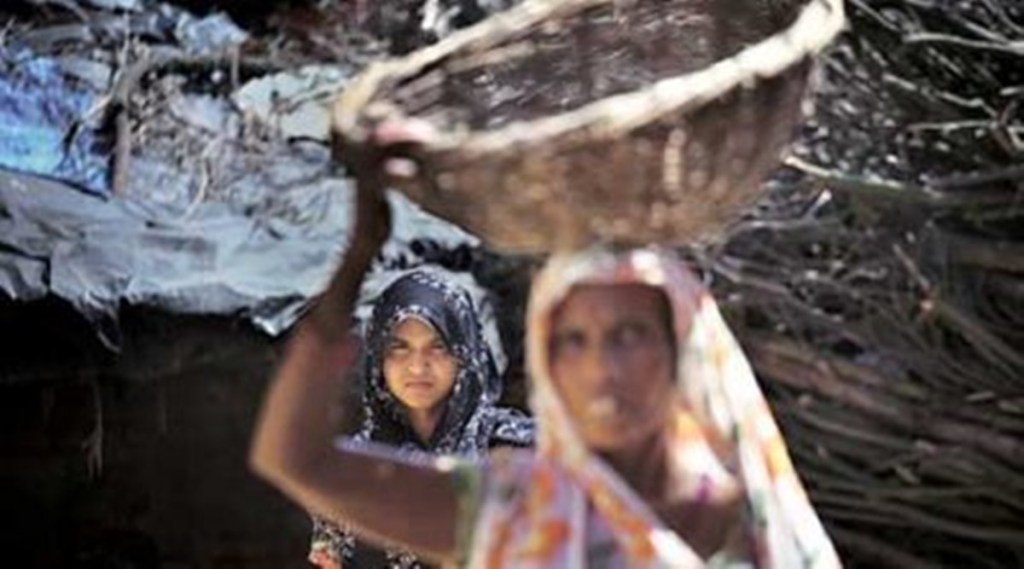
In India, even today, many women continue to be engaged in one of the most inhuman and undignified forms of manual scavenging, which involves cleaning of insanitary dry latrines with bare hands, carrying the basket or bucket containing the human faeces on their head, and disposing of it, on a daily basis, despite the practice being forbidden by law. Due to the deep-rooted societal and systemic challenges these women face, most of them are unaware about their entitlements and rights, let alone have the voice to demand them. On the occasion of International Women’s Day, as the world commits to “Choose to Challenge”, it is critical to acknowledge the historical neglect and apathy these women have faced, understand their harsh realities, and prioritise action to support them.

Despite the existence of legal frameworks which strictly prohibit the practice of manual scavenging and mandate respectful and lawful rehabilitation of these workers, and the Karnataka High Court having noted this practice as “most inhuman” and violative of the fundamental rights guaranteed under Article 21, it still continues in pockets across the country. When one thinks of “manual scavenging”, the image that usually comes to mind is of men risking their lives while cleaning sewer lines, toilet tanks and drains. However, most of us don’t realise that women, too, work as manual scavengers, and while they may not face an imminent risk of death like men, the daily humiliation, health hazards, and lifelong neglect they are subjected to are no less excruciating.
There’s a lack of clear government estimates of the number of women engaged in manual scavenging, owing to which we have limited understanding on the extent of women’s engagement in this practice as well as their socio-economic vulnerabilities. However, estimates by several organisations suggest that more than 75 per cent of manual scavengers are women.
Such woman are usually from Dalit caste groups including those referred to as Bhangi, Valmiki, Mahar, Mehtar. A considerable number of women have started to leave this work in recent years, as a result of increasing awareness, as well as due to the success of large-scale sanitation drives under the Swachh Bharat Mission. However, in absence of a viable alternative income source, they struggle for the basic necessities. The double burden of discrimination they experience — as women and as members of the most marginalised social groups — adds to their woes. The pandemic has heightened their distress. In the absence of dedicated institutional arrangements to support these women, the question of who would take the lead in ensuring their empowerment and rehabilitation remains unanswered.
India has several legal mandates, government programmes and institutional structures to support manual scavengers. The Prohibition of Employment as Manual Scavengers and Their Rehabilitation (PEMSR) Act, 2013 and the subsequent orders by the Supreme Court of India mandate justice, rights and freedom for manual scavengers. Institutions such as the National Commission for Safai Karamcharis, National Safai Karamcharis Finance and Development Corporation, state-level counterparts of these bodies, and district level authorities have been set up for the implementation of these. Furthermore, though there are programmes like the Self-Employment Scheme for Rehabilitation of Manual Scavengers (SRMS), the budget utilisation is far less than the allocation, indicating implementation gaps. Many recent national-level policy initiatives have shown commitment to this cause, including a proposed inter-ministerial action plan for the elimination of manual scavenging. The Ministry of Urban and Housing Affairs’ programmes such as the Emergency Response Sanitation Unit (ERSU) and the Safaimitra Suraksha Challenge, and the Odisha government’s recent scheme “Garima” for the safety and dignity of core sanitation workers, are other recent examples.
However, in practice, most of the government schemes focus on improving the safety of sewer and septic tank cleaners. While the significance of these programmes cannot be denied, there is a lack of focus on women workers.
Moreover, systemic apathy towards such marginalised communities among the local administration has resulted in implementation gaps in the initiatives for identification and supporting women engaged in manual scavenging. For example, a 2018 baseline survey, undertaken under WaterAid India’s project aimed at strengthening the rule of law to advance rights and freedom of manual scavengers, identified close to a thousand such women who are currently or till recently were engaged in manual scavenging in just 36 urban locations across four states. However, the local administrations were not ready to accept that manual scavenging existed in their jurisdictions. As a result, most of these women struggled to even get enrolled under the government programmes. More recent field insights suggest that while the number of women currently working as manual scavengers have gone down due to Swachh Bharat Mission and similar initiatives, the majority of these women struggle to make ends meet and are yet to be recognised under the law, in order to access rehabilitation support and related entitlements, and take up alternative sources of livelihood.
In their hurried bid to declare cities and towns manual scavenging-free, many urban administrators seem to have reported the non-existence of the practice of manual scavenging, leaving many of these workers uncounted, which could have led to the inability or reluctance of the current administrators to formally enrol and support these women further. This might also explain the incomplete status of several enrolment surveys initiated so far, as well as the discrepancies in the available data. Among the few who do manage to get enrolled, a very small number of women are able to access their entitlements.
A series of stringent measures is required to ensure empathy and support to persons engaged in manual scavenging, with a conscious focus on women.
First, the guidelines for the SRMS need to be revised to include specific schemes, plans, targets, budgets and indicators for all categories of work that come under the definition of manual scavenging. This might be the only way of ensuring that women engaged in manual cleaning of insanitary dry latrines are prioritised and covered by such schemes.
Second, all the affidavits, declarations and submissions made in the past by various urban and district authorities, which claim that their area is free of manual scavenging, should be declared as null and void, and a fresh identification of specific categories which have been left out should be mandated, with specific instructions for including women currently/ previously engaged in manual cleaning of insanitary dry latrines. In addition, a special mandate must be given to the urban and district administration to organise camps that ensure the enrolment of all these women and their families under schemes for supporting manual scavengers, as well as under other programmes around health, education, nutrition, social welfare, employment/livelihoods among others. Incentives need to be provided to officials who accelerate the identification, enrolment and provision of benefits for persons, including women, engaged in manual scavenging. Punitive measures need to be introduced for cases wherein the officials fail to enrol them and provide the mandated benefits.
Third, coverage of women currently or previously engaged in manual scavenging should be ensured under the National Urban and Rural Livelihood Missions. Inclusion of these women can be specifically recommended under the National Urban Livelihoods Mission’s existing mandate which ensures that at least 10 per cent of the persons covered under the SHGs and other initiatives are the vulnerable urban poor.
Fourth, the enrolment of children of persons engaged in manual scavenging in schools, educational institutions and skilling programmes must be mandated, while also ensuring access to scholarship and other support measures. This would be essential to break the inter-generational cycle of inhuman work and oppression.
Finally, special financial incentives must be provided to households with insanitary dry latrines, wherever present, for conversion to sanitary latrines.
Acknowledging the existence and challenges of these manual scavengers, especially the women who continue to remain unseen and unrecognised, is a necessary first step towards ensuring that their rights are recognised and guaranteeing their freedom from this inhuman practice. Only by “Choosing to Challenge” this situation, can we support them in their quest towards justice, dignity, and sustainable alternative livelihoods.
VR Raman is a systems and policy expert who has worked on large-scale programmes and policies across India and multiple development sectors, with a focus on the most marginalised sections of society. Currently, he is head of policy, WaterAid India
Kanika Singh is the lead for sanitation policy initiatives at WaterAid India. She works on policy research and advocacy on issues around sanitation, with a focus on equity and inclusion

 Share


