The first major elections of 2025 have taken place in Germany, Europe’s largest economy, to elect 630 members to the 21st Bundestag. The Christian Democratic Union of Germany (CDU) and its Bavarian sister party, the Christian Social Union (CSU), emerged as the leading party bloc, followed by the far-right Alternative for Germany (AfD). The incumbent “traffic light” coalition performed poorly: Chancellor Scholz’s Social Democratic Party (SPD) and the Greens fell behind the AfD, while the Free Democratic Party (FDP) failed to cross the five per cent threshold. A similar fate awaited the left-conservative Sarah Wagenknecht Alliance (BSW), while Die Linke (The Left) performed better than expected.
The CDU/CSU centre-right bloc will likely partner with the SPD, ensuring government stability. Thus, the overall outcome has not been surprising. The traditional parties have managed to lead the polls once again and keep the government together. From the outside, all of this seems normal. Normal because Germany once again will have a two-party coalition, a better or a less bickering alternative than the just ousted three-party traffic light coalition. Normal because CDU, the party of Adenauer, Kohl and Merkel, is back in power. Normal because these outcomes are on the expected lines. But then the question arises: Are things really normal? “For the times they are a-changin’” — across the world, in Europe and most definitely in Germany.

German normalität has been shaken as the far-right AfD has taken centre-stage in the country’s polity. Founded in 2013 with a focus on economic issues, especially opposition to the German bailout of Southern European countries, the AfD gained traction through its strong stance on immigration, particularly after the 2015 refugee crisis. Exacerbating economic challenges, such as the Covid-19 pandemic, the Ukraine war, and the energy crisis, further fueled discontent with the existing government while strengthening the AfD. The party successfully linked economic struggles to immigration, creating a populist narrative that resonated with voters.
The AfD set the agenda for the federal elections, forcing other parties to engage with its rhetoric. In the last week of January, the Bundestag debated stricter immigration policies following a fatal knife attack by an Afghan immigrant in Aschaffenburg in Bavaria. The CDU leader, Merz, proposed stricter migration measures via a successful non-binding motion and a subsequent unsuccessful bill, gaining support from the AfD, which sparked political uproar and protests against breaking the so-called “firewall (brandmauer in German).” This debate dominated the election discourse, raising a critical question: Who is right, and who is Right?
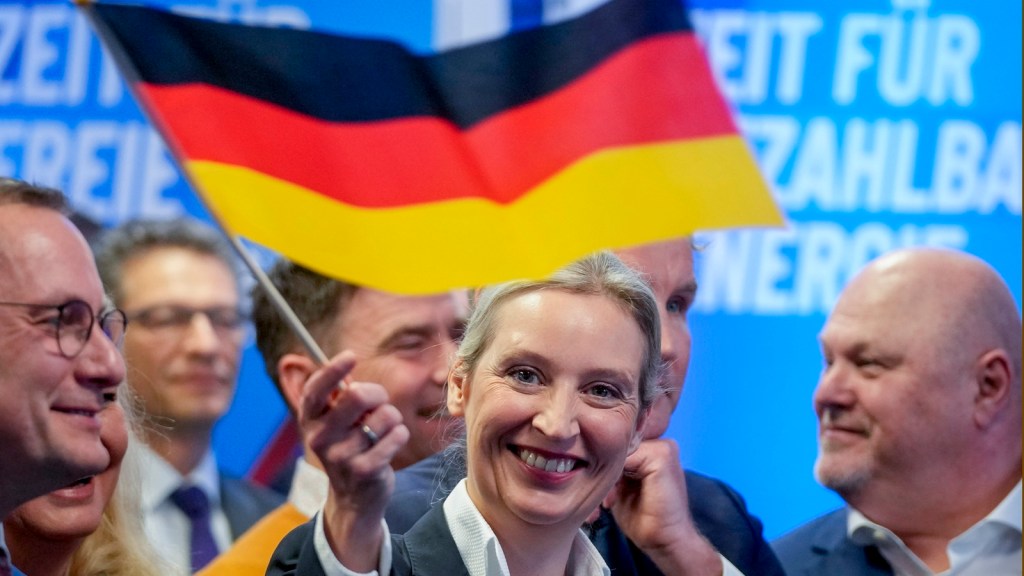
The AfD’s performance in the elections underscores its growing influence. With 20.8 per cent of the vote, it trailed CDU/CSU by 7.7 per cent but surpassed the SPD by 4.4 per cent. This marks a doubling of its vote share from 2021 (10.4 per cent), positioning the party as the election’s real winner. Preliminary post-election data sheds some light on AfD’s triumph through three key trends: Voter migration, regional voting patterns, and age demographics.
The AfD attracted voters from across the political spectrum: Two million non-voters/new voters, one million from the CDU/CSU, 890,000 from the FDP, 720,000 from the SPD, and smaller numbers from the Left and the Greens. The only loss was 60,000 to the BSW. A stark east-west divide emerged, with CDU dominant in the west and the AfD leading in the east (except Berlin). Most notably, young voters leaned towards the AfD. In the 18-24 age group, 21 per cent supported the AfD, second only to 25 per cent favoring the Left. AfD led among voters aged 25-34 (23 per cent) and 35-44 (26 per cent), while older generations backed CDU/CSU, preventing the AfD from seizing power.
These results raise questions about the future of traditional German parties. Was this their last hurrah before the AfD took over? The AfD seems well on the trajectory to emerge as the single largest party as early as 2029, challenging the CDU/CSU, from which it has already drawn significant support. As the principal opposition party, AfD will have an opportunity to keep the CDU-led government in check while attempting to make further inroads in their voter base. Youth support presents a paradox: In 2021, young voters favoured the FDP, while now they are split between the left and far right. If economic concerns persist, more young voters may shift towards the AfD. Additionally, new voters, who overwhelmingly supported the AfD, will further bolster its base in future elections.
However, political volatility means these trends are not set in stone. A well-governed CDU-led administration could consolidate its position and curb the AfD’s momentum. Growing public concern over far-right politics might further antagonise the AfD and draw the moderates away from them. If the CDU delivers on its immigration policies, it could neutralise the AfD’s core issue.
Nevertheless, the old German political order is in its twilight years, and a new one has already taken root. The AfD is poised to lead this new order, and the only way for the old order to find a place is to follow its dictates. The question remains: Are things really normal? The answer: This is the new normal. For the times, they are a-changin’.
The writer is a foreign policy and political analyst based in Berlin. He was a German Chancellor Fellow (2023-24) and is currently working on an election observation project for the German Federal Elections 2025



 Share


