
Opinion Why Zohran Mamdani embodies what Indian liberals only preach
In standing up for centrism or universalism, intellectuals like Tharoor seem to completely misread the current public mood which is enthused by ideological clarity rather than bland status-quoism
 While there is a justifiable critique to be made about Indians who take their virtue-signalling cues from the West rather than confront injustices in their own backyard, fewer political observers concern themselves with what really ails liberalism – for one, no liberal today appears to want to identify themselves as one.




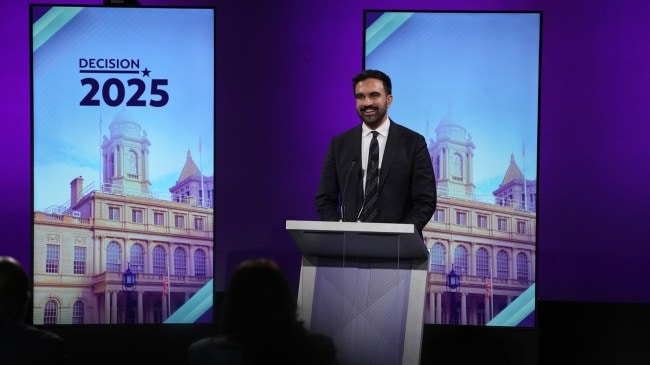
Liberals “like” Zohran Mamdani for his impeccable English and classy public persona and, in their ignorant ways, mourn the absence of such a leader in India — so argued a contributor to The Indian Express recently (‘Why Indian liberals love Zohran Mamdani but ignore Chandrashekhar Azad’, October 23). Notwithstanding the fact that Mamdani unequivocally states his political position as “democratic socialist” and that there has been a conspicuous silence about his candidature among the usually vocal Indian origin notables in the diaspora, it behoves us to ask who the erring liberals in this situation are. One can only assume that the term liberal is used as a convenient placeholder for that small minority of elite, English-speaking, urban, deracinated Indians. This latest addition to the long list of omissions and commissions of the Indian Liberal indicates that the label “liberal” is used in public discourse primarily in a pejorative sense, much like its deviant progeny, “neo-liberal”. Despite the writer’s efforts to steer clear of a “strawman” argument, the article, unfortunately, strays into this territory.
While there is a justifiable critique to be made about Indians who take their virtue-signalling cues from the West rather than confront injustices in their own backyard, fewer political observers concern themselves with what really ails liberalism – for one, no liberal today appears to want to identify themselves as one. Political commentary that focuses on hypothetical liberals, risks diverting its attention away from what political figures actually do/say. This way, we fail to hold the said leaders accountable.

The problem with liberalism is not the unnamed cliques who may be conveniently labelled (and ridiculed as) liberal in popular discourse, but, rather, the current lack of ideological clarity and a reticence from using the label even among leaders and writers who embody its values. Take, for instance, Shashi Tharoor’s recent columns in The Indian Express. One week, he rhetorically asks readers why Indian-Americans do not speak up against Trump’s attacks on India as if he really did believe that their cultural chest-thumping had anything ever to do with India’s strategic interests. Another week, he resorts to reducing the essence of Left and Right politics, urging us to think beyond ideological rigidity and work towards a collective vision of India.
His “radical centrism” is but a reiteration of a liberal egalitarian constitutional democracy committed to secularism, pluralism, federalism, and social justice. It is a Nehruvian framework with an updated version of a mixed economy that combines a market economy with social welfare. It is “centrist” in its ardent critique of the Left – for identity politics (again taking a cue from Western political discourse against “wokism”) and its attempt to reclaim nationalism from the Right. Despite making a case for civic as against ethnic/religious nationalism, Tharoor appears to have internalised the right-wing critique that the nationalist credentials of all other political ideologies are suspect. As someone who once self-identified as “instinctively liberal”, his espousal of centrism betrays a fear that using the L-word would immediately banish him to the hellscape where liberals reside, as per popular commentary. One can argue that his retreat from liberalism has been a long time coming — it likely began when he reversed his position on the issue of women’s entry into the Sabarimala temple and lent support to majoritarianism.
Like Tharoor, German-American writer, Yascha Mounk, also asked us not to fall into the “identity trap”, but work towards a collective, nationalist vision that can save “us” and save democracy. This call for action urges us to abandon making specific claims based on gender, race, sexuality or caste and retreat to a universalism in order to counter the surge of the right. In standing up for centrism or universalism, Tharoor and Mounk seem to completely misread the current public mood which is enthused by ideological clarity rather than bland status-quoism. The public appears less bothered with conventional labels and more eager to see a political vision that can provide clear analysis of and specific strategies to address pressing issues.
Centrist politics is unable to reinvent itself because its prominent proponents want people to forget what the past 20-plus years have taught us about structural inequalities, identity politics, decolonisation and the rise of the oligarchs rather than move forward and evolve itself. Unlike what these writers argue, liberalism and socialism have not been as much eclipsed as redefined, and for the better. But there have not been many who can and will articulate this ideological metamorphosis.
Mamdani’s appeal lies precisely in his ideological clarity and the ability to articulate an alternative to a compromised centrist politics that assumes that to stop the surge of the right one needs to take over its key talking points. The grassroots mobilisation of his campaign brought together a broad coalition of ethnic groups and a social justice framework that can potentially benefit a cross-section of New Yorkers. His campaign has shown that we can effectively combine collective bargaining with the valuable insights of identity politics, making it the perfect answer to Trumpian America — a state controlled by corrupt oligarchs who use racist, Islamophobic political messages as their foot soldiers. Mamdani’s campaign holds out the possibilities of dialogue and conversation which does not demand an a priori commitment to a single cause or position.
The challenge for progressive politics in India would be to uphold liberal rights and values rather than give in to the temptation to compromise on it in order to hold on to and/or expand their political appeal. In the Indian context, perhaps only one politician, Rahul Gandhi, still lays claim to the liberal label despite the risk of ridicule. The agenda that he has championed as part of the INDIA bloc brings together the promises of economic redistribution, social justice, and preservation of cultural diversity — religious and regional — under the framework of rights-based constitutionalism. The success of this refurbished liberalism would require liberal ideologues to not be tentative in their communication and for popular commentary to be more discerning in their usage of the term liberal.
Janaki Srinivasan is assistant professor, Panjab University and Rama Srinivasan is an anthropologist and author

 Share
Share


