Written by: Shailaja Menon
4 min readMay 26, 2025 12:25 PM IST
First published on: May 26, 2025 at 12:25 PM IST
A few days back, we attended the orientation programme for our child who is in high school. The purpose was to make parents/guardians aware of the Central Board of Secondary Education (CBSE) guidelines on promotions based on the NEP 2020. Notably, most of the parents wanted the school to offer foreign languages — French, German and Spanish — instead of Hindi for Class X and above, on two grounds. First, it is difficult to score high marks in Hindi, and second, the foreign languages increase their future employability.
How does one read this demand alongside the CBSE’s latest directive to offer education in the mother tongue or the dominant language prevalent in the state at the primary level? The idea aligns with the objective of NEP 2020, which emphasises education in the mother tongue. Although it is a laudable initiative, it is fraught with many practical problems.

First, in linguistically diverse cities like Delhi, which language will be given preference? Many children speak in different dialects at home, but their mother tongue is considered Hindi. Second, is it possible for the school to recruit teachers and build up other academic infrastructure based on the students’ linguistic preferences? Who will bear the expenses for the extra resources required?
If the CBSE was really serious, it would have conducted assessment studies to understand the specific requirements of the students based on regional diversity, language preferences and would have trained the teachers accordingly. The pedagogy and curriculum of the teachers’ training institutes also need to be changed. The schools located in non-metropolitan cities would suffer more due to their lack of infrastructure and resources.
The process of knowledge production in India is dominated by the English language right from primary to institutions of higher learning. This is more apparent in technical, medical and scientific research. The policy to impart engineering education in Hindi was not very successful. Most of the Hindi textbooks contained many English words. The nodal agency to promote translation in India under the National Translation Mission is the Central Institute of Indian Languages in Mysore. One wonders whether the CBSE sought its expertise as the textbooks (links are provided in the CBSE circular) carry multiple English words even in the translated textbooks.
To illustrate, lesson No 10 of the Class II Mathematics textbook in Telugu, titled “Joyful Mathematics”, depicts kids at a funfair. The entire event is described in English. There are 13 words used in English, such as project, market, pen, bread packet, snacks, notebook, etc. Similarly, in the Class III Gujarati textbook for Art and Visual Images, Activity 7 contains nine English words to explain various activities for children. A simple Google search will provide the translation for these English words into Telugu or Gujarati. What purpose do these half-baked textbooks serve?
There are numerous families in India where parents belong to different regions, and the children speak multiple languages at home. Who decides which will be the mother tongue? Many families with transferable jobs or even migrants will find it difficult to cope with such policies. Studies have found that, barring North India, where children are mostly proficient in only one language, in other regions of the country, children grow up speaking two or more languages. So, in northern India, if the schools fail to recruit teachers for multiple languages, they would end up falling back on Hindi only. Easy availability of Hindi textbooks will further facilitate such a choice.
The Supreme Court of India, in a recent judgement, observed that it is not mandatory for states to implement the NEP 2020. Will this circular of CBSE end up doing it? If one takes into consideration the demands of the parents to opt for languages that guarantee a better future for their children, it seems that the CBSE is unaware of the needs and aspirations of its stakeholders.
The writer teaches History at the School of Liberal Studies, Ambedkar University Delhi. The views expressed are personal

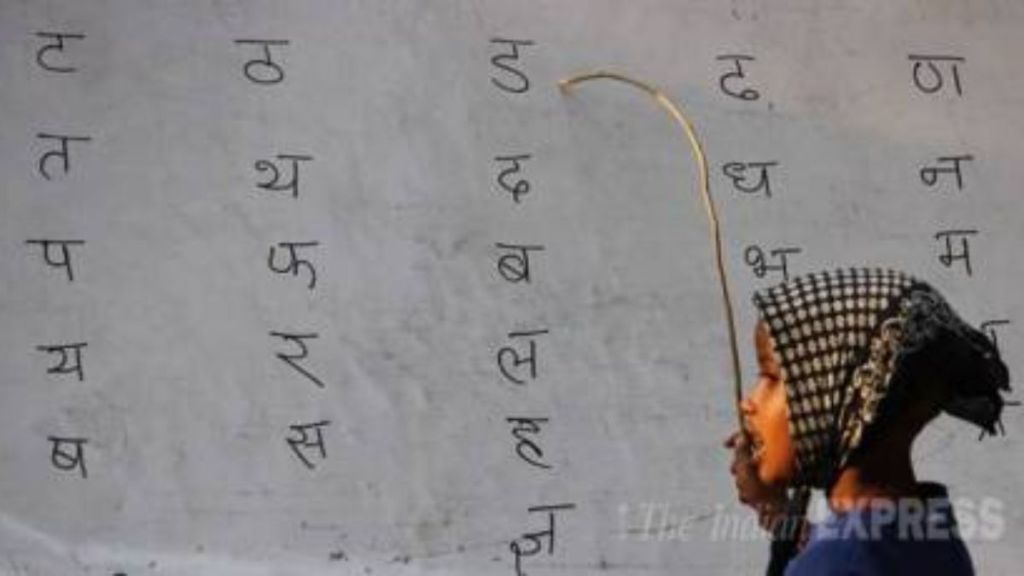 Studies have found that, barring North India, where children are mostly proficient in only one language, in other regions of the country, children grow up speaking two or more languages


 Share


