On November 23, the first power-generating unit of the Zangmu hydropower complex on the Yarlung Tsangpo or the Brahmaputra in China’s Tibet Autonomous Region became operational. The 510 MW Zangmu dam is not as large as some of China’s other large dams, or those that India is building or planning to build on the Yarlung Tsangpo/ Brahmaputra river system. Zangmu, however, underscores the limited channels of cooperation that exist between India and China to govern the rivers they share. Until recently, Indian officials relied on satellite images of construction sites to learn about China’s plans. It took the Chinese some time to acknowledge the existence of dam-building projects on the Yarlung Tsangpo. Things have improved since. But there is no water sharing agreement between India and China. Nor is one on the horizon.
As an “up-stream superpower”, China avoids multilateral entanglements. More than two-thirds of the 40 major transboundary rivers that flow through China and 16 other countries originate in China. China was one of three countries to vote against the adoption by the UN General Assembly of the 1997 UN Convention on the Law of the Non-Navigational Uses of International Watercourses , which seeks to strike a balance between upstream and downstream interests. The convention commits state parties to the utilisation of transboundary rivers in “an equitable and reasonable manner” and requires them to take “all appropriate measures to prevent the causing of significant harm” to co-riparians. India abstained in that vote.

China has since signed bilateral agreements with a number of co-riparians. But as Selina Ho of the National University of Singapore points out, while China has been willing to cooperate with southeast Asian countries on the Mekong, it has not been as forthcoming with India on the Brahmaputra. Ho attributes it to the historical animosity between the two countries, the territorial disputes and “the incongruence between China’s traditional perception of India as a regional power without global reach and India’s growing status as a rival for influence and resources worldwide”. It is not surprising that potential conflicts between India and China feature prominently in most scenarios of future “water wars”.
A day after Zangmu became operational, a Chinese foreign ministry spokesperson was asked about its impact on downstream countries like India and Bangladesh. China is “always responsible in developing and utilising transboundary rivers,” asserted Hua Chunying. China, she added, shares hydrological data with India as per a 2013 MoU. That, she said, would continue, as would cooperation in forecasting floods and the handling of emergencies.
India can hardly take umbrage at Chinese projects. Chinese and Indian policies on the Yarlung Tsangpo/ Brahmaputra river system have been more alike than different. India adopts an upstream strategy not only with regard to downstream Bangladesh, but arguably even vis-à-vis communities located downstream within India. Indeed, controversies over the hydropower dams being built in Arunachal are often about the impact on downstream Assam.
In recent years, the idea of hydropower as clean energy, though deeply problematic, has dramatically changed the politics of dam-building. Both China and India have been going through a dam-building boom — albeit on different scales. The hydropower dams they have built, or plan to build, include those on the world’s last free-flowing rivers in northeast India and southwest China. These projects threaten fragile ecosystems, wetlands and protected forests.
The vocabulary of environmentalism dominates the debate on dams. But it does not convey the full impact of these projects on the livelihoods of people where these dams are being built. To use the language of political economy, the most immediate effect is the enclosure of the water commons. It adversely affects people who depend on the water commons for their livelihood. Apart from those displaced in a physical sense in the immediate project area, hydropower dams can displace thousands of people who depend on small-scale fishing and subsistence agriculture.
Two small examples would suffice. Rivers carry sediments. The blocking of sediment-borne nutrients by dams is sure to negatively impact traditional flood-recession agriculture. Second, dams obstruct fish passage and this dramatically impacts the life-cycle of many fish species. In most of these regions, fish is a major source of caloric intake. There are few regions in the world where the cumulative negative impact of dams on flood-recession agriculture and subsistence fisheries will be more devastating to rural food security than in northeast India, Bangladesh and southeast Asia.
Water may be a renewable resource. But it is hard to justify destroying the world’s last free-flowing rivers and some of the most fragile and biodiverse ecosystems in the name of hydropower as clean energy. From the perspective of thousands of poor people who bear almost no responsibility for the climate crisis and yet are at risk of losing their livelihoods, this action is patently unjust.
It has been said that tunnel vision can bring an aspect of a problem into focus. But it does so only by obscuring the complex reality of which it is a part. Something of this sort seems to be happening in the debate on climate change and the love affair with hydropower. By rejecting the greenwashing of hydropower, India can pioneer an alternative road to climate change mitigation. Preserving rivers and ecosystems that support low energy-intensive livelihoods of rural populations, and helping make those livelihoods more sustainable, could be an alternative to building hydropower dams. Such an approach to rivers is unlikely to cause any harm to co-riparians, a major principle of modern transboundary water laws. It is also sure to disappoint those who have been warning of the inevitability of water wars.
The writer is professor of political studies at Bard College, New York

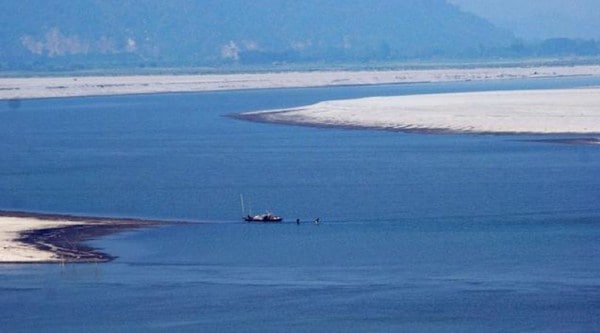 The vocabulary of environmentalism dominates the debate on dams. But it does not convey the full impact. To use the language of political economy, the most immediate effect of dams is the enclosure of the water commons. (Source: PTI photo/file)

 Share


