
The compelling virtue of treason
For democracy to survive, the national conversation must include dissenting voices.
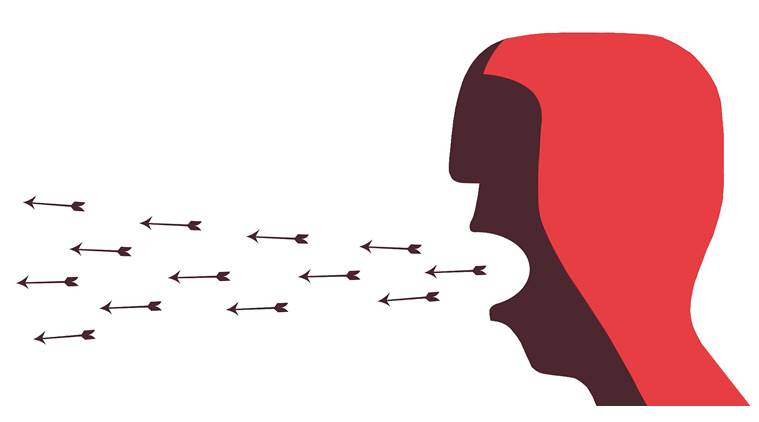 Illustration by C R Sasikumar
In 425BCE, with the great city of Athens locked in the savage, grinding Peloponnesian Wars, its citizens gathered for the Dionysia, the second-most important festival of the year, marked by theatrical performances. The highlight that year was a play by a writer, who had just turned 20. The young Aristophanes’ work focussed on on the region of Acharnia, which had been devastated by the Spartans’ annual raids. The raids had destroyed the Acharnians’ olive trees and fields, forcing its inhabitants to live as refugees inside the walls of Athens.
For a moment, pause to imagine how a movie set against such a backdrop might run were India at war today. Then, consider the incredible character of Aristophanes’ world. The main character of the play, The Acharnians, isn’t a soldier or war-hero. Instead, it’s an Athenian farmer, Dicaeopolis, who manages to negotiate a personal peace with Sparta, allowing him to live a hedonistic life, free from the hardships of war. In the final scenes, we see the general, Lamachus, packing his arms to repel a Spartan attack, while Dicaeopolis packs food and drink for a party. As Lamachus is carried back injured, Dicaeopolis staggers back supported by two girls playing flutes.

Everybody has freedom but that does not mean that you raise slogans to weaken the country,” Minister of State for Home Kiren Rijiju said last week. That’s just what Aristophanes did, with his country’s support. His later plays continued to mock Athens’ reasons for going to war, and called for a peace treaty. Cleon, Athens’ key hawk and victorious general, raged like Rijiju, but could do little except bring private lawsuits for libel.
That it is so hard to imagine an Indian version of The Acharnians being performed today — let alone performed at Rajpath on Republic Day — tells us something important about ourselves. The recent violence in Delhi University is merely a small part of noisy confrontations over identity and ideology that demonstrate that the idea of India has never been as contested as it is today. Yet, our everyday culture, broadcast on television or performed by mobs on the streets, has shown itself incapable of enabling something creative to emerge from the contestation.
It is easy, too easy, to attribute this simply to the naked violence of the Hindu nationalist project, real as that is. The fact is India has too many such tyrannical projects, from Left authoritarians and Islamists armed with machettes and guns, or community lynch-mobs and families exercising tyranny in the name of tradition.
From the early days of our Republic, India’s élite viewed freedom of expression with deep suspicion: Prime Minister Jawaharlal Nehru and Home Minister Sardar Valabhbhai Patel, who saw eye-to-eye on little else, agreed on the need for control of the Communist and Hindu-nationalist media. The first amendment of the Constitution allowed “reasonable restrictions” on free speech, a decision made in the wake of Supreme Court judgments striking down pre-censorship and circulation bans.
This historical background stands in stark contrast to other major democracies. In Europe, the experience of Fascism made all efforts to restrict individual rights, whether by the state or communities, illegitimate. The US descended into anti-Communist paranoia after 1945, but that very experience, paradoxically, led to a zealous reclamation of free-speech rights during the 1960s.
Prime Minister Indira Gandhi’s Emergency, similarly, taught Indians to be suspicious of state overreach into the domain of personal freedoms. The experience, though, focussed awareness mainly on the need to protect the institutions of democracy — not the need to build a mass culture that was democratic. Indeed, many of the Emergency’s opponents represented various forms of cultural reaction.
Engagement and contestation between ideas at the level of mass culture remains rare, witness the ideological uniformity of film, television and pop music, especially where contentious questions of religion and communitarian identity are involved. There are few institutions in mass culture to negotiate sharp arguments.
For years now we’ve thus lived in a society where free speech consists of the outraged, incoherent shout, not the well-conceived argument: The noise of BJP MP Sakshi Maharaj demanding Muslims be cremated as there is no land to bury them, while Karnataka’s Home Minister G. Parameshwara blamed western dress for sexual assault in Bengaluru, while Kolkata cleric Maulana Noorur Rahman Barkati threatened, on live television, to slit the throat of gadfly commentator Tarek Fateh.
From the experience of other democracies, we know this kind of noise is not exceptional. The messages of a small, irrelevant élite of radical artists, academics, and politicians, the historian Andrew Hartmann has pointed out, largely failed to reach Americans until the 1960s: Society was bound together by belief in hard work, God, and the notion that “their nation was the best in human history”. The civil rights movement and the loss of the lives of the sons of the middle-class in Vietnam, however, opened the way for a questioning of what it meant to be American.
From the late 1970s, the right wing fought back — a story that is not so well known. In 1979, Jerry Falwell declared a “holy war” was on for the very survival of the family. Phyllis Schlafly spearheaded the anti-Equal Rights Amendment (ERA) movement, maintaining that if men and women had equal rights, fathers would cease to care for families. Her campaign just stopped the ERA’s ratification in 1972. In a famous 1973 debate, iconic feminist Betty Friedan told Schlafly in words that would be instantly familiar to Indian television-debate audiences: “I would like to burn you at the stake. I consider you a traitor to your sex, an Aunt Tom.”
Yet, significant gains have been won. “A growing majority of Americans now accept and even embrace” the cultural change wrought by the 1960s, Hartmann notes. In spite of the neo-conservative backlash represented by the rise of President Donald Trump, no one bar a neo-Nazi fringe seriously disputes the notion that Black citizens ought enjoy equal rights, or that women should receive equal pay for equal work. Inside a generation, gay rights have become entrenched.
It isn’t that that this transition has been painless: Clinics offering women abortions have been bombed; racial attacks by White Nationalist groups have surged. But a new consensus has, unmistakably, evolved.
The story after the curtain fell on The Acharnians first performance helps understand why the Athenians valued free speech. Four years later, Cleon and his Spartan counterpart, Brasidas, both fell in battle, their countries worn. The two adversaries signed the peace deal Aristophanes had called for. It lasted only six years, though: Athens had begun walking down a road that would lead, inexorably, to destruction.
For democracy to avoid that outcome, we must learn to start listening, to those voices we despise most — and to each other.
 Share


