The British Broadcasting Corporation (BBC) is the public service broadcaster of the United Kingdom. Setup under a Royal Charter, the BBC’s principal funding is through license fees collected from the citizens of the UK. In recent years public funding for the BBC has come under severe pressure and intense scrutiny within the UK. The reasons for the public debate on continued funding support for the BBC range from audiences moving to OTT and digital platforms to several deep questions on the editorial culture at the BBC, including allegations of political bias. While the BBC claims independence and neutrality, its role in aiding the British intelligence services in furthering the country’s strategic interests over the decades is well documented in the public domain. The BBC’s editorial conduct in India in recent years has raised several questions of bias, specifically its provocative reporting on the CAA-related violence in Delhi in early 2020 and its insensitive reporting on the Covid-19 deaths in India. It is thus no surprise that the BBC has chosen to air a two-part documentary focused specifically on Prime Minister Narendra Modi and the Muslim community.
While the documentary’s first part, which aired on January 17, raises several questions, it would be in order to point out that the publicly-funded BBC’s operations outside the UK in countries like India are a commercial venture. This puts its penchant for click-bait journalism and polemical headlines into perspective. Interestingly, the airing of the documentary, which focuses substantially on the Gujarat 2002 riots, comes at a time when the BBC, in a separate item by its India correspondent, reported extensively on how large-scale public violence in India has declined over the past two decades. It is puzzling why the BBC would choose to focus its attention on exploiting communal fault-lines in India at a time when the nation at large has turned its back on such large-scale violence.

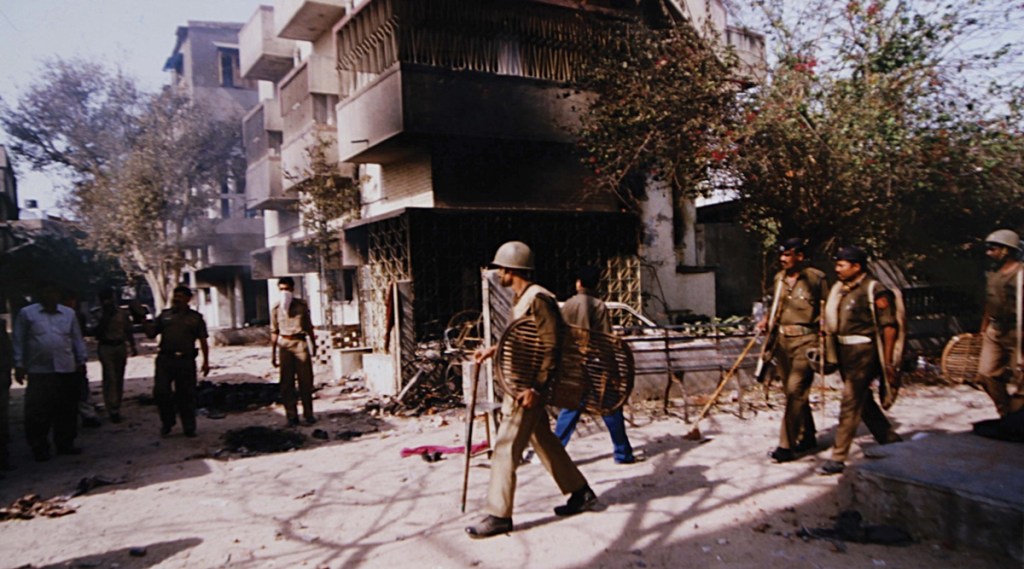
Nevertheless, the BBC’s treatment of the subject of the documentary must be put to critical scrutiny for it not only seeks to raise questions on a subject on which the highest court of the land has already opined, but it attempts to imperil diplomatic relations between India and the UK at a crucial political juncture in either democracy. The first part of the documentary devotes its entire focus to the 2002 riots and their aftermath. Using archival footages of BBC’s coverage of the riots in Gujarat and clippings from its interview with then Chief Minister Narendra Modi, the documentary is largely a regurgitation of flawed arguments and failed activism that have litigated the riots and their aftermath for two decades before being tossed out by the Supreme Court of India. Relying largely on known detractors of PM Modi, the documentary brings little that is new to the discourse beyond its attempt to reopen old wounds and provoke anger and hate.
Five specific problems arise from the material presented in the documentary that merit elucidation. The first has to do with its selective chronicling of events. The documentary, while going from the Godhra incident in February 2002 to the Gujarat elections in December 2002 in its attempt to paint a picture of polarisation, makes neither a mention of the dastardly terrorist attack on Akshardham in September that year nor does it cover the exemplary handling of the aftermath of the attack. The second has to do with its shallow accounting of facts related to the violence. While going to graphic lengths to exaggerate certain incidents of violence, the documentary makes no attempt at presenting the complete factual picture of the police handling of the 2002 riots. The BBC, it seems, was oblivious to these facts — 4,247 cases filed, 26,974 arrests made, 15,369 shells of tear gas lobbed for mob control, 5,450 rounds of firing by police in the first 72 hours which accounted for the death of 101 rioters. The third problem with the documentary has to do with its reliance overly on double hearsay with no new witnesses or new evidence to present. In fact, the entire two-decades old campaign to somehow personally implicate Narendra Modi in the 2002 riots has all along relied on false claims by dubious individuals which have been discredited by the courts and on double hearsay from unnamed sources which amounts to nothing more than rumour-mongering and slanderous gossip. The fourth problem with the documentary has to do with the cavalier manner in which individuals quoted in the documentary have labelled the SIT’s findings as superficial, thus casting aspersions on the institutional integrity of the Supreme Court of India. The fifth and most serious problem with the documentary has to do with the so-called secret diplomatic enquiry by the British Foreign Office into the 2002 riots which once again was riddled with double hearsay and no new facts.
However, by featuring a former British foreign secretary to speak on record on this so-called secret enquiry of questionable provenance, it would seem the public broadcaster of the UK wants to conduct its own foreign policy quite unmindful of the diplomatic consequences. The BBC’s latest attempt at stoking communal fires in India seems to be a desperate act of survival for a broadcaster already on life support. Recently the head of the BBC spoke of a future where it drops broadcasting altogether from its public service mandate. It now appears that the BBC is abandoning “public service” as well as jeopardising the UK’s relations with India in its blatant attempt to undermine the stability of Indian democracy and the integrity of India’s institutions.
The writer is former chairman of Prasar Bharati



 Share


