
A transparency deficit
The allegations by the judges also raise serious doubts about the independence of the judiciary, given that an estimated 45 to 70 per cent of litigation involves the government.
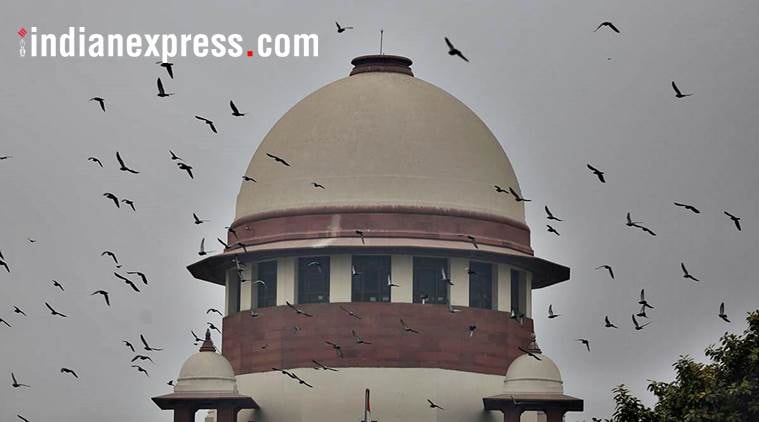 The Supreme Court. (Express Photo by Tashi Tobgyal)
The January 12 press conference by Supreme Court (SC) judges exposed deep faultlines in the judiciary. The trigger for the unprecedented step seems to have been the arbitrary allocation of benches by the Chief Justice of India (CJI). This raises fundamental questions on the credibility of the institution and its ability to dispense justice. The allegations by the judges also raise serious doubts about the independence of the judiciary, given that an estimated 45 to 70 per cent of litigation involves the government.
It must be ensured that benches are allocated in a rational, fair and transparent manner. While the recent move to publish the SC’s roster is welcome, the allocation of benches leaves much to be desired. The CJI is, no doubt, the Master of the Roster. However, discretion cannot be construed to mean arbitrariness. It is important that the CJI prepare the roster in consultation with other judges, at least the members of the collegium. Cases must be allocated among judges according to their expertise, and if there is more than one judge dealing with a particular subject, cases should be allocated randomly to them.

Politically-sensitive cases and matters involving constitutional disputes need to be decided by a bench consisting of the five senior-most judges, or randomly allocated among them. That said, it is important to recognise that at the heart of the current crisis is the larger issue of accountability of judges.
The courts have held that the right to information is a fundamental right flowing from Article 19 and Article 21 of the Constitution, and that transparency in the working of public functionaries is critical in a democracy. Unfortunately, however, after the passage of the RTI Act in 2005, the courts have not been very forthcoming in providing information about their own functioning.
In the last few years, five such matters seeking vital information related to the accountability of the judiciary reached the apex court. Three were referred to a constitution bench in August 2016 and await adjudication. One case relates to information about the appointment of judges: The applicant sought a copy of the correspondence between the CJI and other concerned constitutional authorities relating to the appointment of three SC judges, superseding the seniority of three others. In the second case, the RTI applicant sought information related to the declaration of assets held by the judges of the SC and high courts in their own name, or in the name of their spouse or any person dependent on them.
In the third case, quoting a media report, an RTI application was filed with the SC seeking copies of the correspondence between the then CJI and a judge of the Madras High Court regarding the attempt of a Union minister to influence judicial decisions of the said high court.
The two other matters, wherein petitions against denial of information were dismissed by the SC, also raised matters of great public interest. One sought information about cases pending with the apex court in which the arguments had already been heard but judgments had been reserved. In the other matter, the applicant sought information on the total amount of public money spent on the medical expenses of individual judges reimbursed by the SC. By resisting transparency in all these matters, the judiciary has evaded accountability to the people of India.
Opaqueness in the process of judicial appointments has also been a matter of much public debate. The SC’s 2015 judgment in the NJAC matter underlined the need to enhance transparency in the functioning of the collegium system. Justice Chelameswar’s refusal to attend meetings of the collegium on the grounds that its functioning lacks transparency, to the extent that even some members of the collegium are unaware of the basis on which judicial appointments are made, pointed to the deep malaise that afflicts the judicial appointments process.
Though some measures have been taken recently to place resolutions of the collegium in the public domain, the Memorandum of Procedure (MoP) related to the appointment of judges, which has been referred to in the letter by the four judges, continues to be kept under cover. Neither has the draft MoP prepared by the collegium been put in the public domain, nor have the comments of the government, if any, been communicated to the public.
The lack of transparency and accountability in the functioning of the judiciary erodes public trust in the institution which people look towards to uphold democratic principles and deliver justice.
The writers are members of the Campaign for Judicial Accountability and Reforms
 Share


