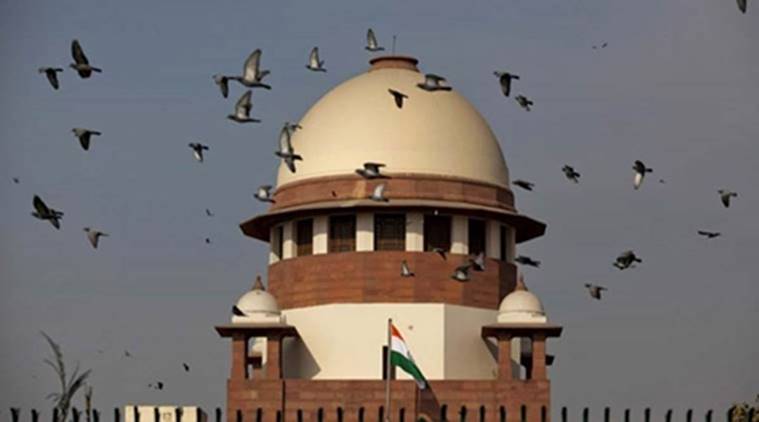
The pattern is disarmingly familiar. The Supreme Court, with all its majesty, will enunciate a grand, even utopian principle. The aspiration will be undeniably correct. The principle will have a kind of populist appeal: It will promise to cure an ailing democracy of many of its greatest infirmities. The principle will be anchored to the Constitution or a statute. But the Court will claim to give the relevant text a new and revolutionary meaning, invoking a methodological approach like purposive interpretation. But the net result will be greater and almost unimplementable uncertainty in the law, a likely violation of legal integrity, and almost certain expansion of the Court’s powers. And oddly, the judgment will answer, every question other than the one it was supposed to.
This is exemplified in the majority judgment Abhiram Singh v/s C.D. Comachen (dead) by Lrs and Ors. The majority judgment has been rightly taken to task in one of the more brilliant dissents in Indian legal history, by Justice D.Y. Chandrachud. The issue is the interpretation of Section 123(3) of the Representation of People’s Act (RPA). Appeals to religion, caste etc have always been prohibited.

But the core issue has been the nature and scope of that prohibition: When does an appeal become a religious appeal, for example? Or to what kinds of speech does this prohibition apply? Must the violation be systematic, or will even a one of reference attract disqualification?
There is a further challenge with the RPA: It is applied after an election. So the risks of overturning popular mandates based on either fuzzy interpretations or mere technicalities are high.
It is to address these complex questions that the RPA was amended in the fifties and sixties. The courts have evolved a complex case law that goes into exactly these thorny issues. In Abhiram, the plea was to clarify the scope of this law. The majority judgment addressed this in two ways. It has expressly articulated the idea that the prohibition does not apply just to caste, religion, race etc of those standing for election; it applies to any appeal to the electors. Second, it seems to, without expressly going into the matter, overrule a case history that had grappled with complex terms like what counts as an unwarranted religious or caste appeal. It now seems to expand the scope to include any appeals to religion, caste, language etc that furthers election prospects.
The moral commitment to secularism, that every Supreme Court judgment has affirmed, is laudatory. But this is a poor judgment in four ways. First, there is the methodological problem. The Court has devoted more pages to explicating purposive interpretation than clarifying the substantive issues. Ironically, both the majority and dissenting judgment use purposive interpretation to come to opposite conclusions. This should lend credence to the suspicion that method has, to borrow Stone’s phrase, also become a class of “illusory references”. But more seriously, purposive interpretation, needs to not just look at legislative history, but the case law. How does the law operate in practice? What are the effects of particular words? The judgment goes into interpretative philosophy more than the case law of election cases.
In this sense, the judgment lacks legal integrity. For instance, we often forget that the much discussed “Hindutva” case, where Justice Verma declared Hindutva to be a way of life not a religious appeal, pointed to exactly these difficulties. As V.S. Rekhi had pointed out many years ago, the distinction between “religious” and “non religious” appeals is not self-evident. Often bad law will lead to redescriptions. Beef ban (as we have done) will be recast as a claim about animal husbandry; the claim that there was a Ram temple can be construed as a historical not a religious claim. In fact, the Court seems to completely ignore the fact that the problem is not just that we invoke religion in politics. It is that what counts as, and gets defined as, religion is inherently political in the first place. And this politics is also reflected in its own drawing of these lines. It is all very well for the Court to expand the scope of Article (123) of the RPA. But to do so without any guidance on of what kinds of appeals will count as religious, is avoiding the question. If we take existing precedents, this case will turn out to be much ado about nothing. If we take an expanded definition, a large chunk of democratic politics will be threatened.
The broad interpretation will produce even more uncertainty. It seems to “outlaw” parties like the Akali Dal, whose very name violates the new interpretation. It also has uncertain implications for, as Justice Chandrachud rightly points out, the grammar of social struggle that has characterised Indian politics. Are language movements going to be outlawed? The Court makes heavy weather of the fact that religious appeals produce violence. But the RPA, as so many other provisions in our penal law, already regulates hate speech or speech that produces enmity. Fourth, the Court should surely have expended more energy on reconsidering Jamuna Prasad Mukhariya v/s Lachi Ram that gave rather short shrift to the question of whether these restrictions violate free speech. Purposive interpretation requires keeping up with a requirement of a modern free speech law.
The dissent is a model of disciplined interpretation, and a deeper understanding of the interface between law and society. If the Supreme Court kept this high a standard of argument consistently it would be fine. But Chief Justice Thakur’s last day in Court was a mix: High moral principle but dubious law (RPA); judicial overreach (the wholesale takeover over BCCI); accountability (ordinance subject to judicial review); avoidance (a range of important constitutional cases including demonetisation).
But there is something deeper in the RPA case that should disturb us. The RPA was essentially concerned with civic standing of representatives: It was a quest for a modern language of representation, where the identity of the candidates mattered less than what they stood for or argued for. But the RPA, like much of our free speech law, has also been based on paternalistic premise: The people as full of destructive passion that the state needs to regulate. While superficially appealing, this diagnosis corrodes democracy and liberty. Our appetite for paternalism is growing under the guise of doing good. The judges are fond of quoting Learned Hand. They would be well advised to heed his warning: That a democracy that is constantly looking for saviours outside the democratic process to save it from the people will lose its liberty.

 The principle will be anchored to the Constitution or a statute. But the Court will claim to give the relevant text a new and revolutionary meaning, invoking a methodological approach like purposive interpretation.

 Share


