5 min readApr 28, 2026 04:49 PM IST
First published on: Apr 28, 2026 at 04:48 PM IST
The crisis in the Strait of Hormuz has settled into a dangerous equilibrium. With prospects for talks uncertain, Iran and the US remain locked in a tense standoff — neither willing to yield, both prepared to impose costs. This is not merely an episode of strategic posturing with collateral consequences. It is far more consequential: An unravelling of the long-settled relationship between law and power at sea. For perhaps the first time in contemporary maritime practice, a critical global chokepoint is subject to competing coercive regimes, each seeking to regulate access through force. Commercial shipping, in turn, is no longer operating within a settled legal order; rather, it navigates a contested space in which the right of transit passage in an international strait is neither acknowledged nor reliably assured.
This is a profound departure from the logic that has long governed maritime transit. Since Hugo Grotius articulated the idea of mare liberum in the early 17th century, the principle of open seas has underpinned the evolution of modern maritime law, finding formal expression in the United Nations Convention on the Law of the Sea. At its core lies the proposition that geography should not be permitted to hold commerce hostage. The transit passage concept was intended to ensure that narrow waterways such as Hormuz are not subject to unilateral control; the right it establishes is non-suspendable and legally binding. Yet, as so often happens in moments of acute crisis, the law has yielded to force.

With Iran and the US imposing their own logic of access in the strait, commercial operators find themselves in an untenable position. As the US Navy interdicts vessels that it believes sustain Iran’s economic capacity, and the IRGC Navy targets and turns back shipping it deems non-compliant, virtually every stakeholder with trade interests in the region finds itself in the crosshairs of the rivalry. This is something more destabilising than a blockade in the classical sense. What we are witnessing is a duelling assertion of control in which neither side can fully close the strait, yet both render its use perilous.
The ramifications are already evident. War-risk insurance premiums have been withdrawn or repriced to prohibitive levels, significantly deterring commercial transit. With shipping lines delaying, rerouting, or suspending operations, flows of crude oil and LNG have been sharply curtailed. The disruption extends to petrochemicals, fertilisers, aluminium, and other industrial goods that underpin regional and global supply chains. The scale of disruption could well deepen. Left unresolved, the shocks could ripple across the global economy on a scale comparable to the oil crises of the 1970s.
Even so, the strategic logic underpinning the US and Iran’s actions in Hormuz is increasingly open to question. Washington appears to assume that constricting Iranian maritime exports will impose decisive economic pressure. Yet it has failed to reckon with the reality that sustained disruption of traffic in Hormuz would inevitably impose costs on US allies and partners, and risks escalation with other stakeholders. Tehran, for its part, is leveraging its geographic position to raise the costs of coercion. In doing so, it risks broadening the conflict and inviting forms of retaliation that may exceed its capacity to manage.
For India, this presents a stark dilemma. As a trading state dependent on external energy flows and open sea lanes, it cannot afford to accept the erosion of transit norms as a new normal. New Delhi, however, has neither the leverage nor the incentive to directly challenge either belligerent. The appropriate response lies in calibrated pragmatism. Operationally, India must ensure the safe transit of Indian shipping through naval escorts and careful deconfliction, while avoiding entanglement in escalation dynamics. Diplomatically, New Delhi must work to underscore the wider stakes involved and support efforts to restore a measure of normalcy to the strait.
At a deeper level, the events in Hormuz carry a more enduring lesson. Long-held assumptions about universal access to the maritime commons are no longer tenable. Chokepoints — from Hormuz to Malacca — are increasingly susceptible to great-power contestation and coercive manipulation. For countries dependent on maritime trade, this is not a temporary disruption but a structural condition. The challenge is not simply to navigate the present crisis but to adapt to a future in which access at sea may no longer be guaranteed by law alone. That requires not just naval capability, but strategic foresight — and a recognition that the balance between law and leverage at sea is once again in flux.
The writer is a retired naval officer and former head of the maritime policy initiative at ORF, New Delhi

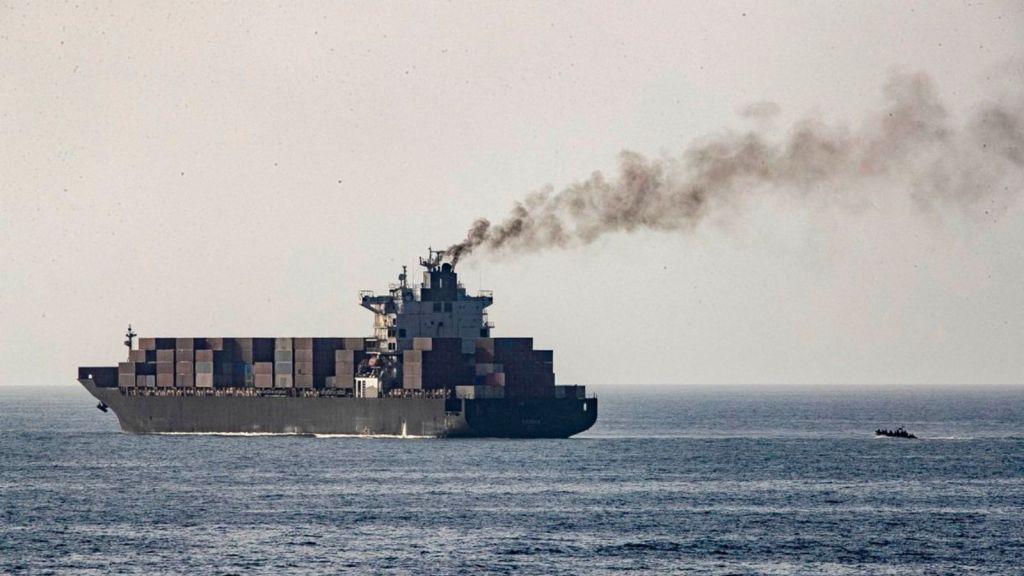 The U.S.-led maritime task force’s announcement marked the start of the effort to revive traffic and restore confidence among commercial vessels transiting the strait.(File Photo)


 Share


