
ISIS claiming responsibility for terror in Sri Lanka points to the danger of its expansion in the Subcontinent
The Islamic State (IS) has lately taken responsibility. Yet, the international connection is a matter of piecing the complex jigsaw of international terror, Islamist networks, the situation post the 2009 war with LTTE and other events.
 Informed theorising can help put together motives, assess potential and piece ideas together to create a narrative.
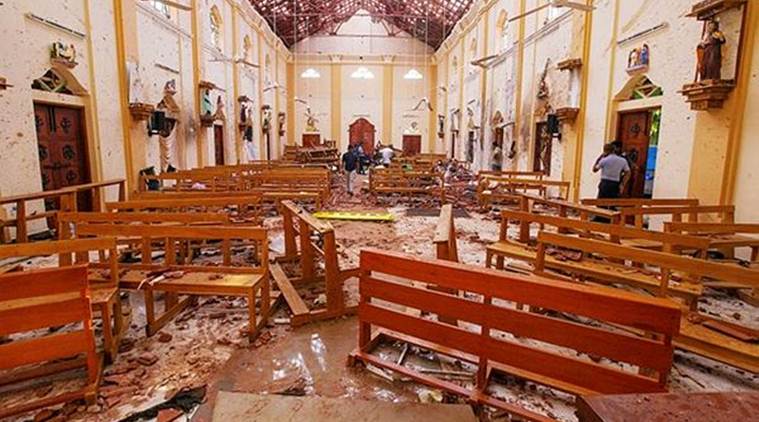
God has often been unkind to the island nation of 21 million people. Such a beautiful land and such good people but Sri Lanka seems doomed to its unfortunate fate of violence of different forms. The latest carnage involving bombings by as many as seven suspected suicide bombers, leading to over 250 fatalities at eight locations, is apparently a manifestation of some large-scale clandestine external support to a set of proxies. Since investigation is underway, there is as yet informed conjecture about the National Thowheed Jamath (NTJ), an Islamic entity. It is suspected to be a radical Islamist group, which came into the spotlight only in 2017 after the Buddhist radical group Bodu Bala Sena reportedly undertook a campaign against the Muslim minority in Sri Lanka. At this stage, it is sufficient to believe that religious and ethnic differences are behind the carnage. The Islamic State (IS) has lately taken responsibility. Yet, the international connection is a matter of piecing the complex jigsaw of international terror, Islamist networks, the situation post the 2009 war with LTTE and other events. How this deadly cocktail comes together to smother a quiet island nation perhaps needs deeper investigation. At this moment we can, at best, theorise.
Informed theorising can help put together motives, assess potential and piece ideas together to create a narrative. It commences with the immense potential for sectarian violence in Sri Lanka. There is the defeated LTTE, which would desire to rise again since the Tamil population remains as un-integrated and, perhaps as subjugated as it was during the 30 years of the civil war. The government has done little to prevent its resurgence and diaspora networks remain fully alive. The LTTE is expected to return one day with vengeance, but not yet. Besides, the LTTE is hardly likely to target Christians and their places of worship because many are Christians themselves. For them to act as subsidiary of another international group is least likely. International intelligence agencies including those from India had warned Sri Lanka on April 11 about the possibility of NJT undertaking some form of terrorist action around Easter.

Sri Lanka has a 7.4 per cent Muslim minority; an undetermined number are from the Wahabi sect and others are Sufis. However, in that country’s majority and hard-boiled nationalism, everyone other than Sinhala Buddhists are suspected of being anti-national. A severe trust deficit exists based upon years of internal civil war and internecine violence between various faiths and groups. As an island nation under the larger shadow of India, where 190 million Muslims reside, its sectarian tend to be ignored. It is just the kind of situation tailor made for two things; first, a demonstration of international radical extremist capability; second to send home a message that these terror networks exist across the world and mother organisations still control them. That is why the finger of suspicion points to confirmation of the IS, which has staked claim for the carnage.
After its defeat in the Middle East, the IS has made efforts towards sustaining itself in third countries or locations. Efforts are on in Afghanistan and Pakistan. In Southeast Asia it was the Philippines where it attempted to ride on a surrogate group such as Abu Sayyaf. In the competitive world of international terror, the IS perceives a need to continue retaining its current primacy; any leeway given to other major groups such as al Qaeda will see many years of effort in the Middle East wasted. With an intelligence appreciation, placing oneself in the shoes of IS leadership, it is not difficult to determine that with the loss at Marawi in the Philippines, little progress in Af-Pak and the recent losses at Idlib in Syria, the IS was desperate to show case itself. Targeting the Sinhala majority would be counterproductive as the retaliation from radical Sinhala groups such as Bodu Bala Sena would be intense. Targeting the Tamil community would similarly be counterproductive since the LTTE’s networks may eventually be needed. The Christian community is 9.7 per cent of the population and historically no Christian-Muslim feud exists in the island. That is all the more reason that the chances of retaliation against Muslims would be low.
A second chain of events involving bombings remains alive as per the US intelligence agencies. The IS, with its caliphate-like aspirations, would have viewed the killings at Christchurch, New Zealand as just the event to avenge with an act against Christians anywhere on the globe. Easter was the most appropriate time as was the selection of churches and five-star hotels where western tourists (again largely Christian) would be present in large numbers. The questionable part of this rationale is the short interval since the Christchurch killings — March 15 to April 22. The type of suicide bombings witnessed in Sri Lanka would have called for resource collection, planning, motivation of seven suicide bombers and very careful coordination without even an iota of a leak. Five weeks to plan is far too little time. Christchurch probably only became a justification. The IS’s organisational skills are well known. It could be deduced that the operation was in the planning stages already and given greater justification by Christchurch. It is reported that just a year ago, a cache of explosives and ammunition linked to NTJ was found just north of Colombo.
For us in India, it’s a narrow escape. It could well have happened in southern India but the Indian intelligence system is a reasonable dampener for the IS. Little do we realise the worth of our intelligence agencies, which have kept India safe ever since 26/11 with no major targeting outside J&K (excluding Pathankot which too is a military station). If the narrative built above is true, then the IS has obviously sneaked in through surrogate returnees who fought its cause in the Middle East. Maldives nearby too has many, Sri Lanka some. India has over a hundred, mostly logistic support personnel — many could be motivated as potential suicide bombers. With the same threat developing in J&K, these are dangerous portents. India and Sri Lanka need intense intelligence cooperation and even more an understanding of social dynamics which contribute to the hard ideologies behind such acts.
This article first appeared in the print edition on April 27, 2019, under the title ‘Anatomy of an attack’. The writer, a former corps commander of the Srinagar-based 15 Corps, is currently associated with the Delhi Policy Group and the Vivekananda International Foundation.
 Share


