
Opinion Parvesh Sahib Singh’s slap is about more than abuse of power
A minister’s abuse of power deserves accountability. But India’s larger crisis is a civic culture in which rage is increasingly mistaken for courage and restraint for weakness
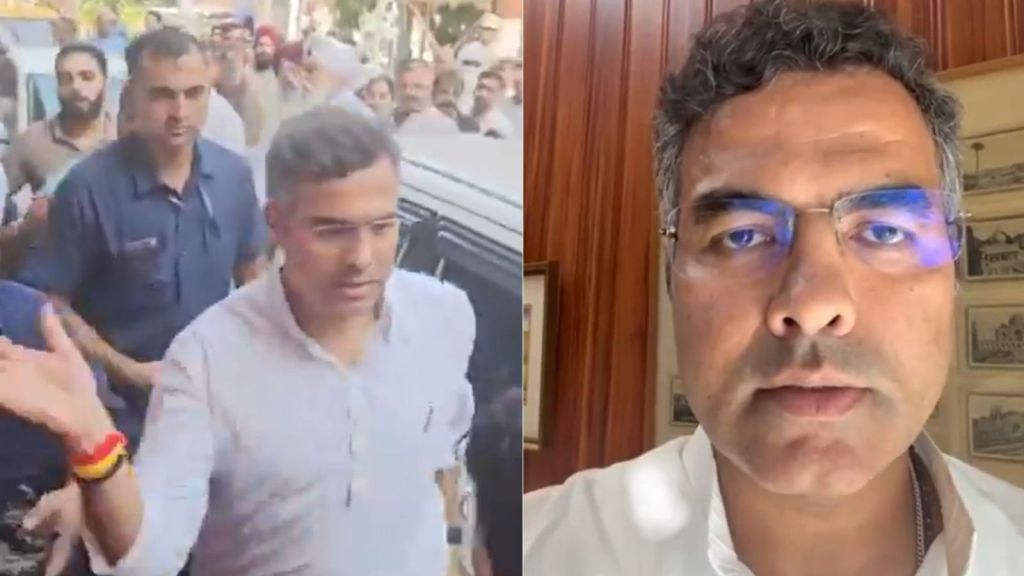 In the video, Pravesh Verma was seen pushing down the man's mobile phone with his hand before appearing to slap him across the face. (Credit: X)
A slap in public always has an echo that carries far. Its reverberations can trigger many of us to reveal what upbringing and “sanskar” have taught us to overcome or suppress.
Anyone doing a survey of public opinion on the incident where Delhi PWD Minister Parvesh Sahib Singh slapped an ordinary citizen may find an avalanche of conflicting responses. There will, hopefully, be broad condemnation of a person in power ill-treating a citizen. But the survey is also likely to show that many people wish they could express their rage, or even plain irritation, in public with as much impunity as the minister.

It could be argued that when an elected official has violated basic norms in public is not the appropriate moment to dwell on the wider problem of escalating rage and frustration. However, there is a direct link between abuse of power by its formal custodians and a public mood which validates citizens venting their anger and frustration.
The video of the incident shows people plucking pieces of the road surface with their bare hands. Someone who has long suffered badly-made, unsafe roads might already be on edge. To then watch the minister responsible for that road slapping a protesting citizen can look like a sufficient provocation for blinding rage.
Let us assume that enough people will pause long enough to acknowledge that acting out of blinding rage will only make things worse. The more insidious problem now is that once the provocation is felt to be valid, some form of “venting”, or retaliatory action, is treated as being automatically justified. At the next level are those who argue that to not express and vent your anger is to become a coward.
It is difficult to know the exact extent to which elementary principles of civil behaviour have been abandoned in Indian society as a whole. Regardless of the scale, the core problem is now large and threatens the stability of everyday life. So, what kind of social energy is now required to restore and nurture a civic ethos?
The first, and seemingly elusive, requirement is that the institutions through which formal power operates actually honour the letter and spirit of the law. Naturally, this means that those who hold office in these institutions must be speedily prosecuted for any violations.
Who is to make this happen and how? Prospects for this look more hopeful now than at any time in the last decade or more. The pall of fear that had settled over samaj may not have lifted entirely, but it is sufficiently cracked for the light of courage and defiance to filter through.
A great deal now depends on what ethos the young people, who are demanding change, choose to adopt. Yes, there have been incidents of venting blind rage, but by and large the emerging youthful energy seeks to build formations and processes that foster participation and cooperation — rather than an order and command culture.
Above all, they are curious and keen to learn from the experiences of earlier generations. The old Jayaprakash Narayan slogan “Hamla chahe jaisa hoga, haath hamara nahin uthega” (no matter how we are attacked, we will not retaliate with violence) is faintly audible in the background.
However, young people cannot do this alone. There is no substitute for a more active and substantial participation by people of all ages in demanding accountability from institutions of power — regardless of which ideological group or party each individual supports.
Such work may not be as dramatic as “venting” your anger, but it will foster what currently looks like a pipe dream to many: Basic well-being.
The writer is the founder of the YouTube channel ‘Ahimsa Conversations’

 Share


