As mourners gather in the small village of Nemra in Ramgarh district, beneath Jharkhand’s expansive sky, the echoes of a people’s struggle rise once again from the margins. Shibu Soren, Dishom Guru, the revered architect of Jharkhand’s Adivasi assertion and one of India’s most enduring mass leaders, is carried on his final journey through the land that shaped him, and that he, in turn, helped transform. For millions, including those like myself who grew up in the heart of a predominantly Adivasi mohalla in Ranchi, Guruji’s legacy extends far beyond politics, it’s personal, intergenerational, and profoundly unfinished.
I was barely eight years old, a student in the second standard, on November 15, 2000, the day Jharkhand was born. That afternoon, the JMM office in our mohalla overflowed with celebration. Green gulal clouded the sky, drums echoed through the lanes, and our elders, including my father, a longtime JMM worker, sang slogans they had carried for decades: “Abua Dishom, Abua Raj,” and “Kaise liya Jharkhand, lad ke liya Jharkhand.” For people, green was more than a colour, it was a memory, a promise, and the living emblem of a movement that had finally carved out a state.

At the centre of those celebrations was the image of Shibu Soren, on banners, in conversations, and etched into memory. Though it was already known he would not become the first Chief Minister, many still clung to a quiet, if improbable, hope. For over three decades, Soren had been its most consistent and compelling voice — the face through which the movement spoke, rallied, and endured.
But by evening, the inevitable was confirmed: Babulal Marandi of the BJP had been sworn in. There was no protest, just a heavy silence, as if the cost of realism had caught up with the dream. Even at that moment, though, the mood was not entirely one of loss. It became clear that Soren’s power was never merely about office. His true achievement lay in awakening a political confidence among those long pushed to the margins. Electoral democracy had denied him the throne, but he had already won something deeper, an enduring place in the moral and political imagination of Jharkhand.
From Nemra to Nation: Journey of Shibu Soren
Since his childhood, after the gruesome murder of his father by moneylenders, adversity became the forge for Soren’s revolutionary spirit. Rather than succumbing to despair, he channelled grief into organised resistance. He challenged the oppressive mahajani system through movements like “Dhan Katni”, reclaiming land for dispossessed Adivasis. These actions transcended mere economic gains; they restored dignity to a community long subjugated by colonial and postcolonial exploitation.
Shibu Soren’s leadership was deeply personal and intimately connected with the people he led. He lived and struggled alongside them, surviving assassination attempts, betrayals, and continuous threats. His charisma, discipline, and ethical clarity, insisting on justice and integrity even within resistance movements, earned him immense respect. For countless Adivasis, he was simultaneously revered as a wise elder and a fearless rebel.
Institutionalising resistance
The JMM emerged in the early 1970s as a confluence of grassroots struggles led by three key figures — Binod Bihari Mahato, A K Roy, and Shibu Soren. Each brought with them a constituency shaped by decades of local activism: Mahato through the Shivaji Samaj working among the Kurmi and non-Adivasi backward castes, Roy through his trade union work with coal miners in Dhanbad, and Soren through his fierce campaigns against moneylenders and land alienation in Adivasi regions. While their social bases differed, their shared goal of a separate Jharkhand state led to a historic convergence. Recognising that the statehood movement had remained marginal partly due to its perceived tribal exclusivity, they envisioned a broader coalition that would unite Adivasis and non-Adivasis, workers and peasants, in a common political project.
The formation of JMM in 1973 symbolised the transition from fragmented resistance to organised mass politics. It was a strategic shift from localised agitation to a region-wide movement that foregrounded questions of dignity, land, labour, and self-determination. The JMM did not merely demand a new state; it gave voice to generations of people excluded from the developmental imagination of postcolonial India. In doing so, it altered the political landscape of Bihar and eventually forced the Indian state to acknowledge Jharkhand as a legitimate political aspiration.
Power, controversy, and the double standard
Across his long political career, as Member of Parliament, Union Minister, and during brief stints as Chief Minister, Shibu Soren navigated the volatile terrain of Indian realpolitik. His path was far from unblemished. Legal controversies, including the Chirrudih massacre and the Shashi Nath Jha case, shadowed him persistently and were seized upon by detractors to question his moral legitimacy.
Yet to reduce his political journey to these episodes is to overlook the structural asymmetry in how leaders from marginalised communities are judged. In India’s public discourse, power exercised by subaltern figures is often subjected to a heightened moral gaze. While controversies involving elite or upper-caste politicians are normalised, forgotten, or reframed as the “cost” of leadership, those surrounding Adivasi or Dalit leaders become defining narratives. This selective scrutiny does more than tarnish individual reputations; it functions to reassert caste and class hierarchies under the guise of moral accountability.
Shibu Soren’s true contribution lies not in his electoral résumé but in the affective and political transformation he enabled among Jharkhand’s marginalised. He carved out a grammar of leadership rooted in collective dignity rather than charisma alone. Within his movement, he demanded ethical discipline, accountability, and sobriety, not just as virtues, but as political strategies against internal decay.
Even as the JMM entered the messiness of coalition politics and electoral give-and-take, Soren’s persona continued to carry symbolic power. In villages and mining towns, in rallies, courtrooms, and legislative assemblies, his presence could summon both tears and clenched fists. To many, he was not just a representative but a living archive of resistance, a reminder that dignity, once demanded collectively, could not be easily taken away.
His was not the legacy of flawless governance, but of foundational change. He taught a people not only to dream of justice, but to organise around it.
In a political culture that often forgets its dissenters and flattens histories of resistance, Shibu Soren’s legacy endures. It is found not just in institutional memory, but in the continuing assertion of rights, dignity, and self-determination by Jharkhand’s Adivasi and moolvasi communities.
The writer is an Academic Fellow at National Law School, Bengaluru, and a researcher from Jharkhand

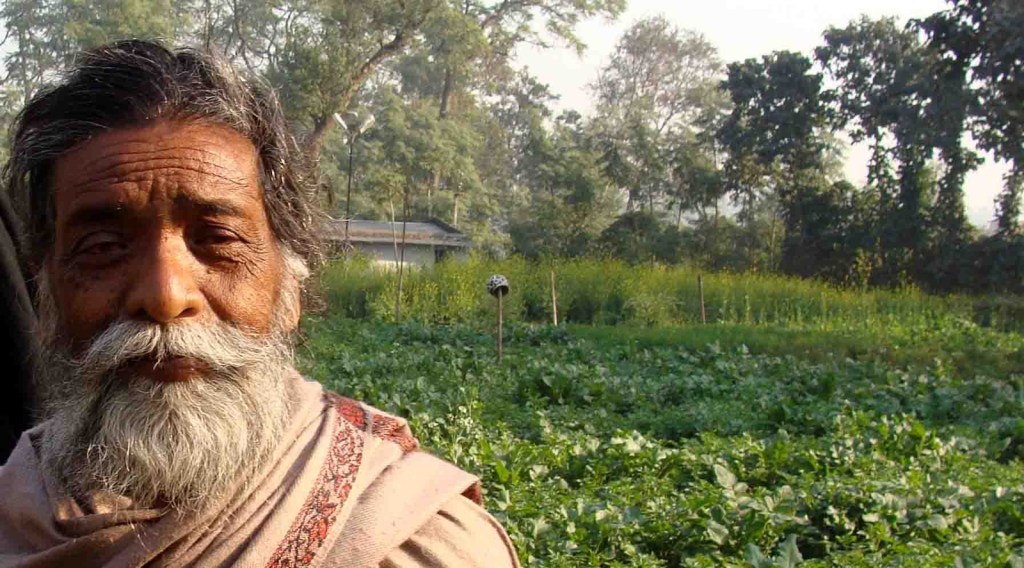 For people in Jharkhand, Shibu Soren remains a symbol of their long-fought struggle for identity and self-rule. (Express Archive)


 Share


