
She is the answer
Gender equality is key to food security. But policymakers don’t seem to recognise that
 Many even claim that all SDGs depend on the achievement of ‘Goal 5’.
Countries globally, including India, have agreed to fulfil the Sustainable Development Goals (SDGs), launched by the UNDP in 2016 as “a universal call to action to end poverty, protect the planet, and ensure that all people enjoy peace and prosperity”. Among the 17 goals and 169 targets to be achieved by 2030, SDG 5 on gender equality is seen as a key goal, both in itself and for achieving other goals. Many even claim that all SDGs depend on the achievement of “Goal 5”. Is this claim justified? Household food security provides a lens to examine this. As argued below, and detailed in my 2018 paper in Current Opinion in Environmental Sustainability, SDG 5 holds substantial potential for promoting food security but also has serious limitations. For success, it will need to create synergies with several other goals.
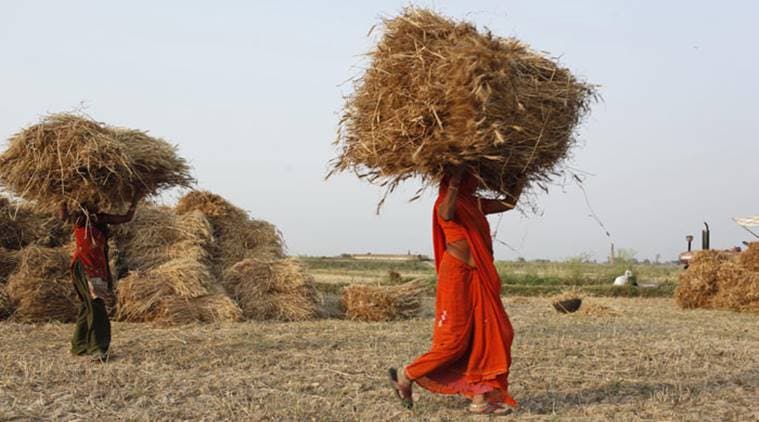
Women play key roles in food provisioning as producers, home food managers, and consumers. As producers, they constitute a high and growing proportion of farmers. In India, 35 per cent of agricultural workers are women (NSSO 2011-12) and women farm operators grew from 12.8 per cent to 13.9 per cent between 2010-11 and 2015-16 (agricultural censuses), not counting women working on male-managed farms. But women’s productivity depends crucially on access to land, which is highly gender unequal due to male bias in inheritance, government land transfers, and market access. Even in the southern states of Karnataka and Kerala, only 19-20 per cent of landowners are women. They also have poor access to credit, irrigation, inputs, technology and markets.

Moreover, as agriculture gets feminised, the challenge of dealing with climate change, which is predicted to greatly lower food-crop yields, will increasing fall on women. But few of them have access to technical advances such as heat-resistant crops or water-conserving practices. And higher temperatures will increase their labour in food processing and preservation. A fall in household food will also affect females more than males due to unequal intra-household allocations, as evident in anthropometric and malnourishment measures, and female anaemia — 53 per cent of Indian women are anaemic as compared to 22 per cent men in the 15-49 age group. Besides, as family food managers, women’s autonomy in food allocation decisions is adversely affected by their limited asset ownership: Child survival, nutrition and health are found to be notably better if the mother also has assets.
Women also contribute to food systems through forests and fisheries. One in six persons globally depends on forests for supplementary food, green manure, fodder, firewood, etc. Women and girls are the main gatherers of forest products, especially food and firewood; the latter continues to be the primary cooking fuel in most of rural India, cooking energy is essential for food security. Over time, we must shift to cleaner fuels, given the ill-effects of kitchen smoke from unprocessed biofuels on human health, but in the short term women need more firewood through greater access to forests and commons.
Similarly, seafood is globally the main source of protein for a billion people. Women constitute 46 per cent of workers in small-scale fisheries and 54 per cent in inland fisheries. Although marine products are harvested mainly by men, it is aquaculture — more in women’s domain — which is the fastest-growing, and predicted to provide over 50 per cent of fish consumed globally by 2020 (according to World Bank figures).
Against this backdrop, SDG 5 has both potential and limitations. The potential lies in its focus on women’s access to land and property, and natural resources. Secure land rights for women can improve both their productivity as farmers and family nutritional allocations. Women can obtain land via the family (especially inheritance), the market and the state. Target 5A only mentions inheritance laws, but since 86 per cent arable land in India is privately owned, gender equality in family land would improve tenure security for women farmers. Also, SDG 5 mentions financial services. Affordable credit would help women farmers invest in necessary inputs. Similarly, SDG 5 emphasises natural resources. Although it does not specify forests or fisheries, if policymakers so interpret it, it could enhance nutritional diversity, given women’s roles in forest food and fisheries. Moreover, Target 5.5 emphasises women’s participation in public life. Although it focuses on legislatures and village councils, this could be extended to community institutions managing forests and water.
However, the limitations of SDG 5 in delivering food security are also notable. Target 5A on inheritance is diluted by the clause “in accordance with national laws”, which provides a loophole to bypass the goal’s mandate. Also, social norms obstruct legal rights, such as “good sisters” foregoing their claims to parental property, or distant marriages reducing women’s ability to manage inherited land. Government policy cannot directly change norms, but SDG 5 is silent even on government land transfers to women, which policy can affect. And women farmers need inputs beyond the financial services mentioned in Target 5A. Similarly, the failure of SDG 5 to explicitly recognise access to forests and fisheries, or the challenges of climate change, restricts its potential.
In contrast, other SDGs which are central to food security disregard gender equality, such as SDG 14 (life below water) which covers marine ecosystems, and SDG 15 (life on land) which covers forests. Both goals emphasise conservation, ignoring fisheries and forests as food sources, and even missing links between gender equality and conservation itself. As I demonstrate in Gender and Green Governance, committees with 25 to 33 per cent women have significantly better conservation outcomes than groups with few or no women.
Weighing these potentials and limitations, there are four ways in which SDG 5 can further the goal of food security. First, it can interpret women’s access to natural resources to specifically cover forests, fisheries, and irrigation. Second, it can connect with SDG 1 (no poverty) and SDG 2 (zero hunger) which recognise the need for women to access land, credit, knowledge and markets. Third, it can interpret goals which mention gender to include support for women farmers, as in SDG 13 on climate change. Fourth, it can engender SDGs which bear crucially on food security but at present disregard gender, viz. SDG 15 on forests and SDG 14 on marine resources.
Finally, beyond SDGs, we need institutional innovations. In my research on Kerala, I found that women’s group farms outperformed individual farms in annual productivity and profits. Farming in groups could provide an unexplored pathway for enhancing food security and strengthening SDG 5.
 Share


