
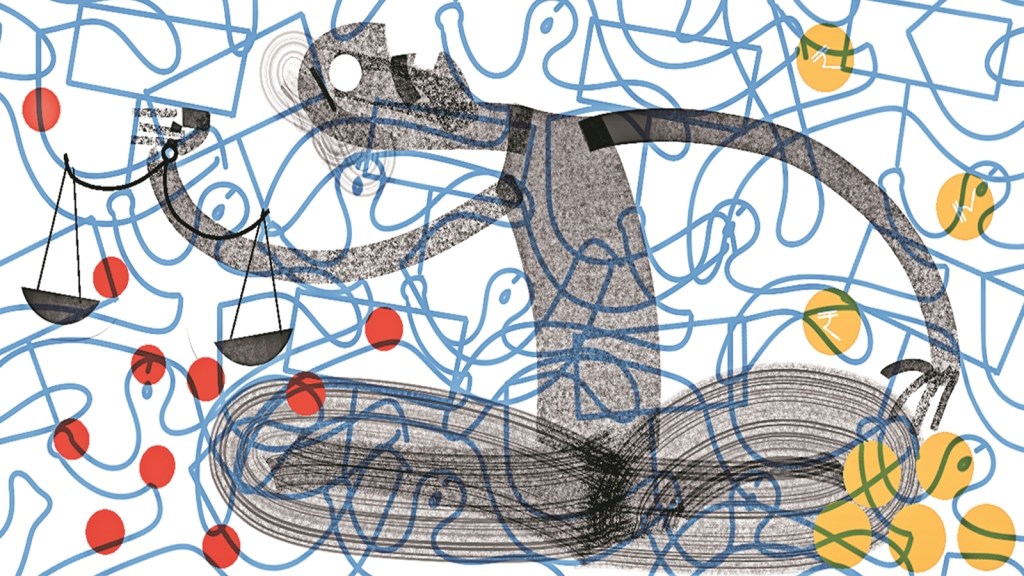
Peaceful protest is a democratic right and can secure remedies for serious institutional failures. Its justification depends on the merits of the grievance, the response of the authorities, and the costs of the tactics employed. When disruption becomes a bargaining instrument, however, its costs may fall on citizens who had no say in the decision to disrupt daily life, and most heavily on the poor.
The protests in Delhi on October 10 by the Cockroach Janta Party and INDIA bloc parties illustrate the problem. Ahead of the protests, the Delhi Metro shut down 45 stations and traders’ associations advised closures in several places. The president of the Khan Market Traders Association put the loss from a day’s closure at Rs 1 lakh to 1.5 lakh per shop, with rent and salaries due regardless. Traders in Chandni Chowk pointed out that festival stock is bought on credit or bank loans. Navratri began the next day.

When a road or a market is shut, it imposes a negative externality. The ordinary commuter, the shopkeeper, the daily-wage worker, and the patient bear much of the cost. As the private cost of disruption to its organisers is lower than its social cost, more of it may be supplied than is socially efficient. Thousands of bystanders cannot negotiate with an organiser, and the organiser is rarely held liable for damages. These costs fall disproportionately on poorer households.
In December 2020, ASSOCHAM put out a rough estimate of the loss from the farmers’ agitation at Rs 3,000 to 3,500 crore per day for Punjab, Haryana, Himachal Pradesh, and Jammu and Kashmir. Lost turnover overstates lost output because some purchases are deferred to another day or another shop. But Ahsan and Iqbal find that multi-day political strikes in Bangladesh reduced the likelihood of a firm making an export shipment by 6.3 percentage points. Some shipments can be rescheduled, but countries with higher levels of political disruption face a comparative disadvantage as foreign buyers seek stable markets.
The political problem is larger than any single protest. In every democracy, a large share of voters supports the side that lost. In the 2024 Lok Sabha election, the NDA won 43.8 per cent of the vote and the INDIA bloc 41.5 per cent — more than 26 crore votes for the opposition alliance alone. The parties representing these voters have cadres, funds and networks to sustain collective action. If disruption becomes an accepted instrument of bargaining, the losing side of every election holds a standing option to impose costs on the economy until it obtains concessions it could not win in Parliament.
Economists call this a hold-up. A party that can impose costs on others can extract terms with no relation to the merits of its claim. Governments anticipating unrest tilt policy towards the groups most able to mobilise. Policy follows the capacity to disrupt rather than the merits of competing claims.
An examination paper leak illustrates why the merits of a grievance matter. Students who have spent years preparing for a competitive examination have a legitimate reason to protest if leaked papers undermine fair selection. Where authorities fail to investigate or provide a credible remedy, collective action can help secure accountability and restore confidence in the examination system. Those benefits can justify some disruption, provided the tactics remain proportionate and protect essential access. The economic argument is not that every protest must be costless; it is that its expected public benefits must be weighed against the costs imposed on others.
Students have a stronger agenda to put before their government. How will it prepare young people for jobs that artificial intelligence may transform or displace? How will education, retraining, and support for displaced workers keep pace? How will climate policy protect livelihoods and encourage investment that creates productive employment? Political attention and the government’s capacity to respond are scarce resources: Mobilisation around one issue can crowd out work on another.
Two objections deserve a direct answer. The first is that disruption built Indian democracy. Indeed, the freedom movement relied on hartals and civil disobedience. That movement confronted a colonial government that Indians could not vote out. Even then, Gandhi suspended the non-cooperation movement in February 1922, after the violence at Chauri Chaura.
The second is that some grievances concern the electoral process itself, as the current dispute over the revision of voter rolls does. Allegations of “vote theft” are serious, but their seriousness makes evidence more necessary, not less. The electoral record poses an awkward question for those who portray the system as an instrument to guarantee BJP victories. In 2019, the BJP won 303 Lok Sabha seats, and Narendra Modi won Varanasi by 4,79,505 votes. In 2024, the BJP fell to 240 seats, losing its own parliamentary majority, while Modi’s margin narrowed to 1,52,513 votes. His party lost 63 seats, and his personal victory margin shrank by more than two-thirds. These results do not establish that every electoral roll is error-free or rule out specific instances of wrongdoing. They do, however, demand an explanation from those advancing a sweeping claim that the electoral machinery is rigged to secure the ruling party’s dominance.
The proper forums for testing such claims are the courts, the Election Commission, and Parliament. If those institutions fail, the case for protest grows stronger. The case remains one for peaceful protest. A blockade only measures which side can impose a higher cost on third parties; it does not establish that votes were stolen.
Albert Hirschman’s distinction between exit and voice explains why protest can be valuable when citizens cannot readily leave an institution and ordinary channels of representation fail. A collective voice can bring neglected grievances to public attention and prompt corrective action. Protesters should, however, be careful not to mistake their visibility for evidence that they speak for the majority. Equally, governments cannot count silence as approval. Citizens who stay away may support a grievance, reject a tactic, or simply be unable to afford participation.
An electoral victory does not certify every government decision as sound, just as a compelling grievance does not make every protest tactic defensible. The economic test is whether a proposed path produces lasting improvements in public welfare, at a reasonable social cost, and without imposing disproportionate burdens on the poor.
Peaceful protest has a legitimate place in democracy. It gives citizens a platform to voice their concerns, challenge government policy, and demand better from their representatives. That right must remain protected between elections. But protest cannot become a licence for violence, or a means of overturning an electoral mandate through coercion. Street mobilisation can be a tool to demand accountability, but cannot confer a mandate to govern. Those who seek to govern in the name of the Constitution must seek the people’s approval at the ballot box.
Agarwal is professor of Finance, National University of Singapore and president, Asian Bureau of Finance and Economic Research.
Alok is associate professor of Finance, Indian School of Business

 Share


