Written by: Avinash Godbole
6 min readSep 15, 2023 06:16 PM IST
First published on: Sep 15, 2023 at 06:16 PM IST
While the Indian External Affairs Minister S Jaishankar downplayed Chinese President Xi Jinping’s absence from the G20 leaders’ summit and the G20 Sherpa Amitabh Kant praised China’s “constructive role” in the multilateral processes, India-China relations have entered a tougher and more competitive phase after the G20 Summit held in Delhi.
India’s China challenge exists at multiple levels. At the bilateral level, there are issues of the unsettled border and imbalanced trade relations, transactional economic relations, and absent social relations. At the regional level, relations are plagued by competition and rivalry. At the international level, India and China are now engaged in a competition over the ability to create and promote ideas and discourses that are palatable to the world, and the G20 New Delhi Summit adds to it in a considerable manner. The recently concluded G20 has highlighted this point. This is going to be a significant aspect of the future India-China rivalry because China has seen itself as the new maker of the global order and as a spokesperson of the global south. In the year of its G20 presidency, India has shown itself as someone willing to discuss global problems and propose solutions that challenge China’s methods as well as the discourse.

China’s domestic and foreign policies have always been dominated by slogans and statements of propaganda. This works by way of motivating the cadre for their tasks. For example, “win-win cooperation” has been a long-term slogan of Chinese diplomacy and it is something that India has liked to call “mutually beneficial partnerships”. Another long-held slogan that helps build a discourse in favour of the party and has been used to justify nearly all of China’s nationalist claims on contested territories is “century of humiliation”. As China has grown in power and confidence, it has advanced its discourse to achieve its strategic objectives but also to make its policies palatable to the foreign audience. Slogans like “community of common destiny for all mankind” and “harmonious world” have become the bedrock of China’s new and confident foreign policy; while the former is the foundation of policies like the Belt and Road initiative, the latter offers Chinese solutions to the problems of the world and justifies China’s natural move, from the Chinese perspective, closer to the centre of the world power. Also, in saying that the Chinese vision is indeed of a harmonious world, the previous great power, i.e., the United States, has created an acrimonious order and only pursued selfish interests.
From the Chinese perspective, after having achieved material capability, it is now searching for discourse power and, parallelly, recognition as a great power. China’s three new offerings to the world — the Global Development Initiative (GDI), the Global Security Initiative (GSI) and the Global Civilisational Initiative (GCI) — bring together the Chinese vision to the table.
Challenging China’s search for discourse, India has stood firm in opposing the rationale as well as the methods of the BRI, and the competition to lead has taken the form of a rivalry. Since 2015, India has led the International Solar Alliance, which has acted against China’s monopoly on the manufacturing of solar power panels and other components but also against its hidden subsidies that hindered the progress of competent industries in other countries. In January 2023, India hosted the Voice of Global South Summit, which was attended by more than 120 developing countries, where it discussed issues like post-pandemic recovery, food and fuel prices, the Ukraine War, and the debt crisis. At G20, India worked to include the African Union as a permanent member. At the New Delhi Summit, the India Middle East Europe Corridor (IMEC) was also announced in partnership with the United States. This firmly challenges BRI’s expansion in the west of India. Previously, India has announced the Asia Africa Growth corridors and created Project Mausam as well. This is alongside established initiatives like the Quad, which, with its motto of the free and open Indo-Pacific, challenges China’s desire to dominate the blue waters to its periphery and take unilateral actions in disputed territories.
For its part, China is keenly aware of the attention and success India was receiving as the G20 host. The China Institutes of Contemporary International Relations (CICIR), China’s major think tank under the Ministry of State Security, published an article by a resident scholar that accused India of “small-mindedness” and organising a summit “characterised by even more rifts, rivalries, and other discordant elements”. It also accused India of unfairly using the notion of the debt-trap diplomacy to create fears about China’s BRI. In the early days, China had also objected to “Vasudhaiva Kutumbakam”, the Sanskrit maxim for this year’s G20. This war of words is not likely to end anytime soon.
This goes to show that India, on the other side of Asia, has chosen to work on the liberal side of the order and with the recently held G20 has made a significant, if not decisive, shift towards that side. India and China have always been in competition to lead the developing world. It has been going on since the days of Mao and Nehru, when both the leaders saw their countries leading the post-colonial order, which can also be seen as one of the reasons for the bilateral discord and the 1962 Sino-Indian War. China’s view of Asia is hierarchical and aimed at creating a Sino-centric order. For China, Asia is the laboratory of experiments before it sets out to dominate the world. It may already be seeing India’s moves as challenging China’s rise. This is reflected in its postures and bargaining strategies on the border issues as well.
The writer is associate professor and associate academic dean, Jindal School of Liberal Arts and Humanities, Jindal Global University

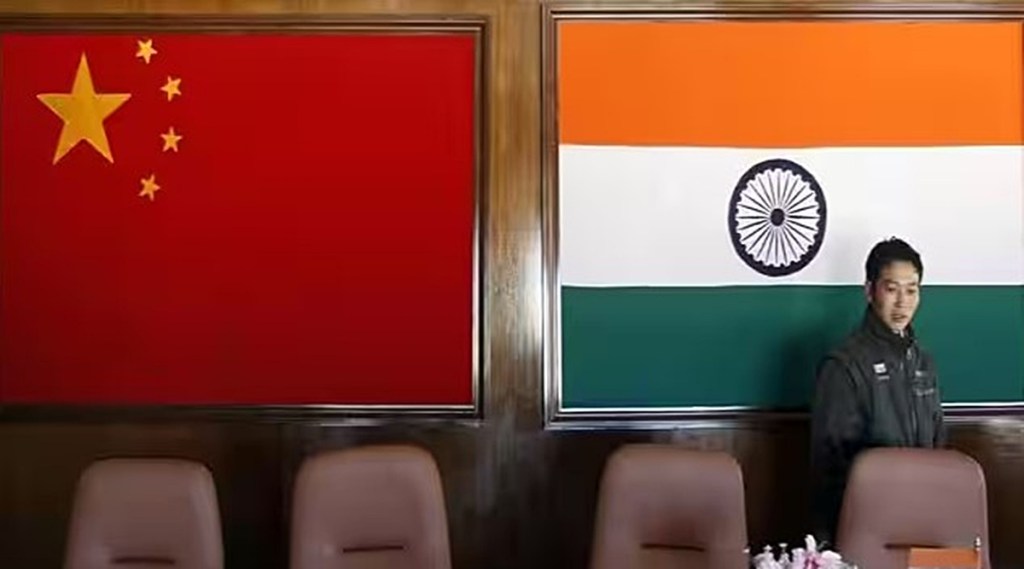 India’s China challenge exists at multiple levels. At the bilateral level, there are issues of the unsettled border and imbalanced trade relations, transactional economic relations, and absent social relations. (File)

 Share


