There is something deeply disturbing about the way the marketing and sale of Ayurveda, Siddha and Unani (ASU) medicine is going on. In November 2023, the Supreme Court had given directions to Patanjali Ayurveda to stop publishing misleading advertisements but a day later, to establish its credibility, the company issued a press release reporting that it has conducted preclinical and clinical trials on a database of more than one crore people, to test the efficacy of its products.
Earlier this week, the matter came up again before the apex court, which took umbrage at the continued issue of advertisements despite having been given an assurance. The next date is March 19.
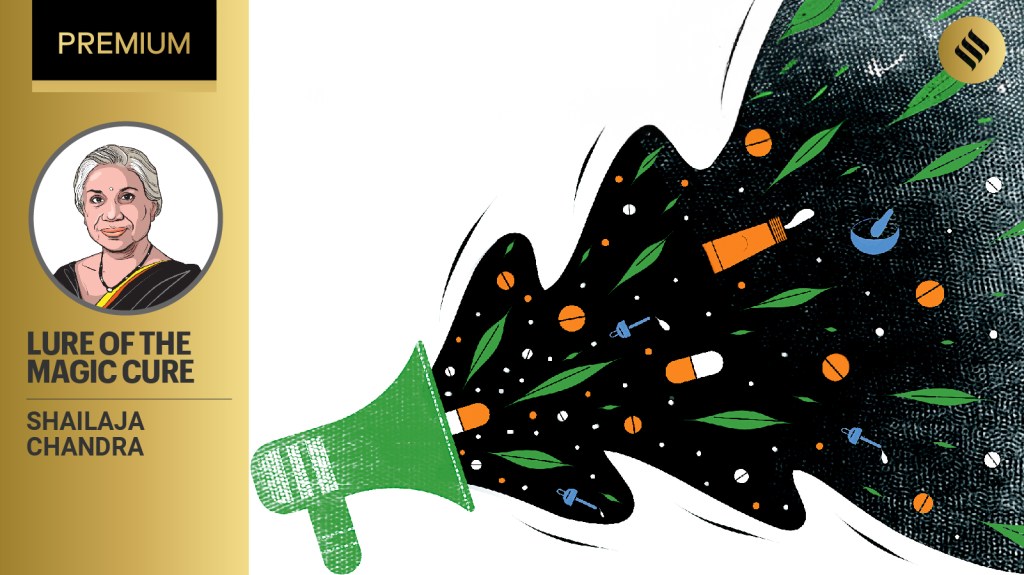
Advertising drugs purported to treat or cure certain diseases is prohibited under DMR, that is, the Drugs and Magic Remedies (Objectionable Advertisements) Act 1954, which applies to all systems of medicine. Promoting drugs intended for the treatment and cure of 54 specific medical conditions, which include cancer, diabetes, heart disease and blood pressure, is explicitly barred.

For decades, the prohibitions under the DMR Act have been more flouted rather than respected. Seeing countless advertisements for treating and curing any number of conditions displayed in newspapers, and the electronic media, consumers have become inured to risks. Even as the claims are made with growing impunity, no visible action seems to have been taken by the state governments to whom the Ministry of Ayush has sent hundreds of complaints. The regulatory watchdog, Advertising Standards Council of India, has failed to take effective cognisance or to set guidelines.
The extant case is against Patanjali, but the ramifications raise broader issues. The Drugs and Cosmetics (D&C) Act was enacted in 1940 and a new Chapter IV A was introduced in 1964 for ASU medicine. The difference between classical medicine and patent and proprietary medicine is explained there. Classical ASU medicine refers to drugs that are manufactured strictly in accordance with the authoritative ancient texts (granthas or samhitas) listed under the D&C Act. Patent and Proprietary (P&P) medicine refers to manufacture of ASU drugs by modifying the classical recipe and introducing new combinations.
For this category, the efficacy and safety of the medicine is required to be proven by following the Good Clinical Practice Guidelines issued by the Ministry of Ayush — to document evidence of safe and effective use. A large proportion of P&P medicine professes to treat new conditions that aren’t mentioned in the ancient texts — for instance, fits, heart disease, hypertension, obesity, or cancer, to name a few.
To obtain a manufacturing licence, citing scientific sources is essential and if unavailable, pre-clinical or clinical trials are required to be held along with clinical data as stipulated. During Covid, the Ayush Ministry had mandated the registration of all medical research projects with the Indian Council of Medical Research’s CTRI — Clinical Trials Registry of India database — which has been established to cover medical research involving human subjects — without distinction between allopathic or ASU research. The objective was to promote evidence-based clinical practice to ensure patient safety. Not only Patanjali, but several others too have been proactively promoting their P&P drugs but whether they have complied with CTRI requirements is unclear.
The intention behind the DMR Act is, however, different, limited and specific. Quite simply, it was enacted to control misleading claims and advertisements involving medicinal substances and products. Whether the products have been licensed or not, whether they are evidence-based or otherwise, whether R&D has been done, goes beyond the ambit of DMR. The news about Patanjali which has been flashed countrywide is disturbing because it highlights the vulnerability of the consumer who assumes that some regulatory body would have checked that nothing unsafe, hazardous, or ineffective is sold as medicine.
In the case of ASU drugs (of which Ayurveda constitutes more than 75 per cent), there is greater danger, because the consumer assumes all products are natural and consequently safe. When she sees advertisements about efficacious treatment and cure of intractable diseases, she goes for self-medication instead of being diagnosed by a vaidya or medical practitioner, trained to diagnose the overall constitution of the individual in a holistic way. Prompted by advertisements, she purchases P&P medicine over the counter. But unlike chemists dispensing allopathic drugs whose credentials are checked (notwithstanding several gaps), selling ASU medicine requires no sale licence and all pharmacists, and even general stores and groceries, have the latitude to sell these drugs, possessing zero knowledge of the drug use, dosage, or ingredients — including presence of heavy metals.
This can be dangerous, because many ASU drugs can be unsafe if ingested through self-medication, especially by those in compromised health. Unfortunately, the need for a sale licence for ASU products has been negated by the Drugs Technical Advisory Board (DTAB); likewise, the progressive Rule 170 introduced in 2018, which required clearance of advertisements from the state licensing authority (as a preventive against misleading advertisements,) has also been nullified for now, by the DTAB.
On implementation, however, the buck stops with the Ayush state drug controllers, and considerable patchiness exists in the way the two Drug Acts are being administered — be it licensing, quality control, enforcement or advertising. The country needs a unified structure and system for regulating and administering the licensing, manufacture, sale, safety monitoring and drug advertising of ASU drugs when sold across states in inter-state commerce. This will instil not just oversight of safety but will bring greater ownership among new consumers worried about quality and claims. The vagaries of the state drugs control systems (where posts lie vacant for months or are handled by non-qualified persons and enforcement is ineffective), will otherwise take their toll.
And finally, in the fight between IMA and ASU, the goodness of ASU treatment which has helped countless people, must not be lost. Even so, advertorials and advertisements on anything related to drugs or therapeutics, whether they emanate from the modern medicine sector or from ASU, must not be stomached. Consumer safety comes first.
The writer is a former health secretary and former chief secretary of Delhi



 Share


