
Written by Mahendranath Sudhindranath and John Bosco Lourdusamy
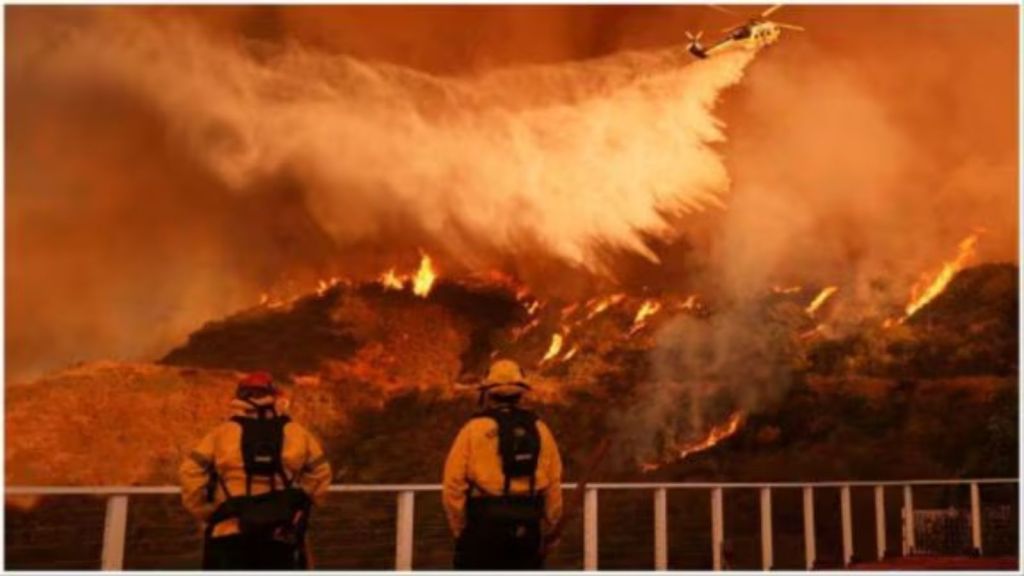
“The forests staggered, rocked, exploded, and then shrivelled under the holocaust…Great red balls of fire rolled up the mountainsides,” wrote a spectator who has seen more than 3 million acres of forest burned across the states of Montana, Idaho, and Washington. This description of the Great Fire of 1910 reminds us of what has happened 115 years later in the Southern California Wildfires of 2025. Closer home, a few months back, newspapers carried a news item from August 5, 1924, that pointed to the “remarkable feature” of landslips in Wayanad and the diverse characteristics of Wayanad’s life: Plantation economy, the vulnerability of isolation in the event of a disaster, floods washing away bridges, and the employment of “coolies” in reconstruction. This again resonates with the disaster that literally shook Wayanad a century later, in July-August 2024.

While one may find history repeating itself, it would be fruitful to look at specific areas and indeed, learn from the past. In this case, it would be instructive to pay serious attention to patterns and lessons from history concerning disasters.
Origins of Disaster History
Right through history, the lived experience of particular regions, empires, and countries have been shaped by calamities (and subsequent recoveries and rebuilding) of various kinds. However, not much attention has been given to systematic studies and understanding of disasters from a historical perspective. A set of studies on the Great Lisbon Earthquake of 1755, or the 1920 sociological study on a dynamite explosion in Halifax, Canada, are exceptional examples. These pioneering studies explicated varied facets of the respective disasters ranging from the events, religious significance, social psychology, and social organisation — all of which can amply contribute to future preparedness.
Overcoming such exceptionality, the field of Disaster Studies began to acquire greater traction among social scientists, particularly after World War II amidst Cold War tensions. Since the beginning of this century, American scholars have taken up Disaster History as a serious discipline. In the context of Hurricane Katrina (2005), for instance, scholars discussed the deep fault lines that the disaster exposed — including elements of race and class. Since then, many educational institutions in the US have initiated courses on Disaster History. The recent Greater Los Angeles wildfire evoked a larger interest in Disaster History in the US, where numerous studies on historical wildfires pointed towards the native people’s practice of “light firing” which allowed the intentional burning of forest to renew it during the cold season. The traditional ecological knowledge and landscape management gave way to centralised firefighting just after the Great Fire of 1910. Thus, the discipline also gives opportunities to introspect past policies and refresh our mitigation strategies.
Disaster in the age of anthropocene
Today, the classification of disasters goes beyond the binaries of “natural” and “man-made”. A natural occurrence becomes a disaster when it affects human interests. But, in the long term, humans have impacted and transformed their physical world in myriad ways. The geological impacts of these actions have led to the current epoch being labelled as the “Anthropocene”. Some scholars like Jason Moore have gone further to pin the blame specifically on capitalism and to term the epoch as the “Capitalocene”.
With regard to modern India, one important fountainhead of disasters was colonialism and its parasitic modes of accumulation of wealth. While political and economic histories highlight the exploitative and “drain-of-wealth” aspects of colonialism, it is important now to highlight colonialism as a seedbed of long-term ecological woes. The deeper historical chain of causality with regard to floods and landslides in Kerala or Karnataka, points to the rapacious promotion of plantation crops and procuring of timber for railways and ship-building at the cost of the evergreen forests of the Western Ghats. Colonialism also corroded rural India in varied ways — spawning urban slums in today’s cities like Mumbai, Chennai, and Kolkata — which become the worst affected in times of floods. Post-independent regimes, too, have not been too different in terms of extraction from natural sources. Ecological hotspots around the Himalayas and the Western Ghats were subject to further predatory onslaughts in the name of development and promotion of tourism.
Patterns from Disaster History
When we look at the history of earthquakes, India has always been a hotspot — with inter-plate (where Indian and Eurasian plates collide) and intraplate (within the Indian plate) tectonic events. The triggering of the 2001 Bhuj earthquake (intraplate) that killed more than 13,000 people is attributed to coulomb stress transfer — going back to the 1819 Rann of Kutch earthquake. Apart from the geological and other natural elements, much of the destructive aspects of earthquakes, landslides, and forest fires are attributable to patent human interventions like deforestation, monocropping, unscientific infrastructural projects, and unhindered encroachments.
The Great Flood of 1924, which devastated major regions of present-day Kerala, clearly shows the similarities in patterns that are not restricted to the causes alone. The contemporary reports compared 1924 with the mega-flood that afflicted the region in 1824. The 2018 Kerala flood, which immediately brought back memories of the 1924 deluge, was indeed similar to the latter in terms of causes (unusual rainfall and
unscientific dam management), extent (same localities were affected in both floods), and response from the state and civil society. Archival records also shed light on caste inequalities (for example, different food timings in relief camps in 1924 Travancore respecting caste hierarchy) and economic disparities that created uneven and unfair disaster mitigation for significant portions of the population.
Disaster History in Curriculum
As the world enters a phase of more frequent and destructive disasters, it is important to inscribe salient aspects of past disasters in popular memory as one way of fostering social resilience. Including Disaster History in the school and college curricula will not only help coming generations have a more nuanced and scientific understanding of past disasters but will also acquaint them with the best mitigation practices and lessons from the worst failures. For instance, the rest of the country can be apprised of the lessons from Odisha (the “disaster capital” of the country), which developed a successful community-based disaster risk reduction system in the early 21st century. Such training also will open students’ eyes to persistent social inequalities which get exposed in particularly damaging ways during a disaster.
“Water, Water, everywhere! The villagers all fled in search of land…The three-room upper floor in the temple tower is crammed with sixty-seven children, three hundred and fifty-six older people, dogs, cats, goats, fowls, and other domestic creatures living together in peaceful coexistence”. One would be tempted to guess that these lines are from a news item about the recent flood-like situation in Kerala. But it is rather an uncanny portrayal of the conditions of the Great Flood of 1924 by Jnanpith-winning author Thakazhi Sivasankara Pillai in his short story In the Flood.
There is a considerable world of archival, literary and other forms of material that await historical understanding, reconstruction and dissemination. Forgetting the trauma is an essential component of recovery and rebuilding, but that should not itself lead to forgetting the lessons.
Sudhindranath is Senior Research Fellow, Department of Humanities and Social Sciences, IIT Madras, and Lourdusamy is Associate Professor, Department of Humanities and Social Sciences, IIT Madras, and coauthor of Moving Crops and the Scales of History (2023, Yale University Press)

 Share


