4 min readMar 5, 2026 06:12 AM IST
First published on: Mar 5, 2026 at 06:12 AM IST
The Rights of Persons with Disabilities (RPwD) Act, 2016 mentions “the rights of all persons with disabilities to have a cultural life and to participate in recreational activities equally with others”. In India, video entertainment — comprising linear television and streaming or OTT — is the most dominant use of leisure time. Recently, India’s more than 100 million visually impaired and hearing-impaired people suffered a disappointment with respect to their right to video entertainment.
In October 2025, the disability rights community welcomed the Ministry of Information and Broadcasting’s (MIB) proposed “Guidelines for accessibility of content on platforms of publishers of online curated content (OTT platforms) for persons with hearing and visual impairment”. There were two key points that sparked tremendous optimism. First, within six months of the guidelines’ publication, OTTs would ensure that all new content carried two accessibility features at the minimum: Either same-language captions or Indian Sign Language (ISL) for the hearing impaired, and audio description for the visually impaired.

Second, for existing content, OTTs would provide accessibility features in 30 per cent within 12 months, 60 per cent within 18 months, and 100 per cent within 24 months. With this farsighted guideline, India would demonstrate how accessibility could be achieved in multilingual countries while championing reading literacy, language conservation and learning at scale.
Then came the jolt, a day before a contempt hearing in the Delhi High Court on the notification of the guidelines. MIB published the guidelines with two significant changes. OTTs would have 36 months to make all new content accessible, up from the proposed six. For existing content, OTTs were “encouraged” to provide accessibility features “on best effort basis”.
One can only assume that the OTTs and/or their self-regulating bodies succeeded in persuading MIB to kick the can down the road for three more years for new content and, perhaps more detrimentally, agree to no enforceable commitment for making existing content accessible. Disability rights groups were dismayed.
A key reason for these relaxations seems to have been that the originally proposed requirements would disadvantage smaller OTT players, who may not have the automated tools or budget global giants possess. If indeed that is the argument, then the giants could have led the way. JioHotstar, Netflix and Amazon Prime Video together have a 67 per cent OTT market share in India. The original guidelines could have kicked in with them, with smaller OTTs given a longer runway. MIB need only have followed its own precedent when it laudably framed the accessibility standards for films. Big-budget films were given six months and all others got two years to comply.
Regarding automated tools, India just hosted the AI Impact Summit, where Sarvam AI’s foundational model tailored to India’s linguistic diversity was featured. AI is rapidly providing solutions for cost-efficient language work, and integrating accessibility features into video content is no longer onerous. At the summit, for example, PM Narendra Modi’s speech featured a real-time AI-enabled translation into ISL.
The budget required for accessibility features in media production is already only a tiny fraction of the production cost. OpenAI’s Sam Altman said in an interview, “By the end of 2028, more of the world’s intellectual capacity could reside inside data centers than outside them.” This picture is at odds with claims that the video entertainment industry, at the very moment AI is on the launchpad, finds it costly and effortful to integrate accessible features in all video content.
OTTs and their self-regulating bodies have an opportunity to be more inclusive of PwDs. Beyond the moral argument, OTTs are missing out on an opportunity to build industry-wide value around the power to serve the reading literacy and language skills of consumers. The frontier for OTT growth in India is rural. The ones that will win out will offer entertainment that can be leveraged for educational goals, too.
The writer is adjunct professor at IIT-Delhi’s School of Public Policy and leads the Billion Readers (BIRD) initiative

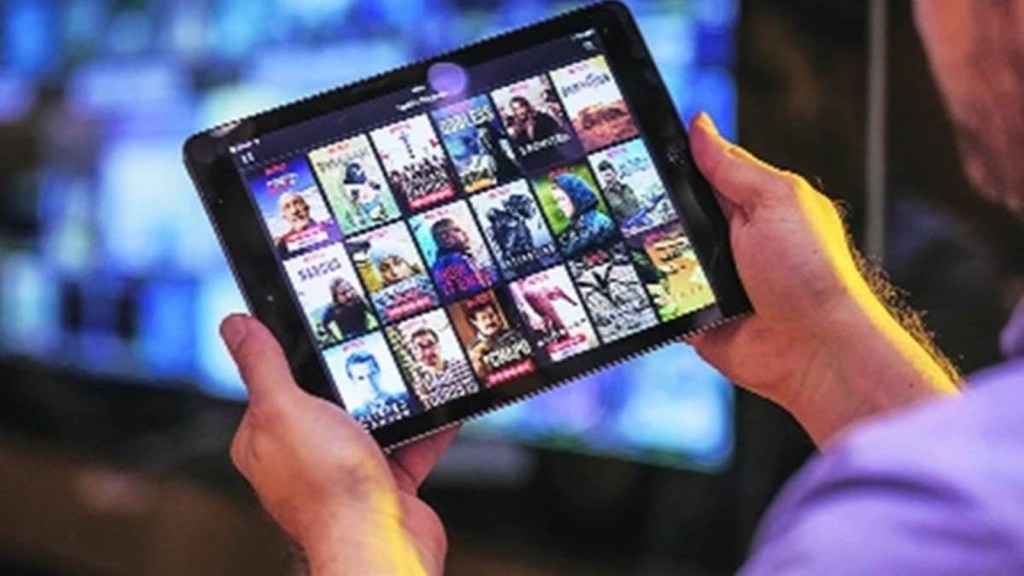 MIB published the guidelines with two significant changes. OTTs would have 36 months to make all new content accessible, up from the proposed six. For existing content, OTTs were ‘encouraged’ to provide accessibility features ‘on best
effort basis’.


 Share


