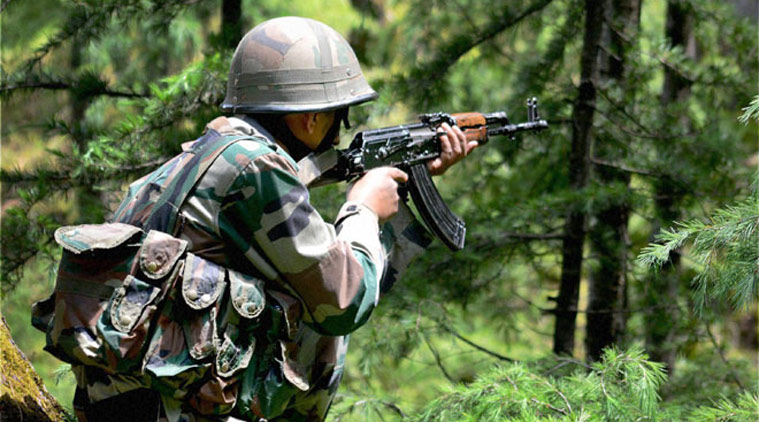
First there is the operation; then there are the optics. Based on available reports, the cross-border operation in Myanmar seems to have been professionally executed. The army’s statement was appropriately terse. The operation was not without precedent. But the government deserves credit for putting in place all the diplomatic, intelligence and other ingredients that made it possible in quick time. But the messaging around the operation seems to have muddied the waters. Some of the muddying is on familiar themes. The chest-thumping of some ministers seems quite out of proportion and potentially dangerous. India has a more complicated history with effective cross-border operations than is usually acknowledged. The political narrative around the operations, not the facts, is what seems to be changing. But let us look at the politics of messaging in different frames.
Any political establishment is understandably tempted to take credit for a successful operation. This is particularly true for a government whose self-image is so muscular and whose core constituency gets energised by such events. But aggressive domestic political messaging runs two risks. First, it probably makes cross-border operations subject to more overt scrutiny of the wrong kind. Operational details put out to make its impact more vivid can potentially damage the integrity of covert operations. If there is spin, one has to be careful that it does not damage the credibility of the government. Exactly how “cross-border” was this cross-border operation? But more seriously, aggressive domestic messaging creates a new sense of habituation and expectation, which can in turn reduce the government’s room for political manoeuvre later. Such operations have to be mounted when conditions are right and the risks manageable. But if you have a political culture that expects these operations routinely, where after every incident the government is compelled to explain why it isn’t going after targets, the risk of misjudgement becomes higher. Covert ops and cross-border raids are kept covert not just for operational reasons, but because you want to be careful about the culture of expectation they set up. You also risk embarrassing friendly governments that support you.

Minister Rajyavardhan Singh Rathore claimed that this operation sends a message to countries like Pakistan. It is a bit of nonsense to suggest this. Pakistan and India both know that the nature of their military, political and nuclear relationship is different. But there are two elements to the message that this government has been trying to send to Pakistan and other neighbours. First, that India’s security red lines are clear and there will be less waffling. There is no incompatibility between asserting these lines clearly and extending a hand for cooperation in other areas. In fact, politically, one can enable the other — clear articulation of security concerns can give the cover for concessions in other areas.
The second element, which is more public, is this: There has been an assumption that, because Pakistan is a nuclear state, India’s hands are tied. In an obvious sense, this is true. But many have felt that nuclear blackmail should not prevent India from exploring other retaliatory options that fall below a certain threshold. India’s hands may be tied, but not completely. In various contexts, this government has made it abundantly clear that it is willing to consider those options. The underlying thought is that, if your adversary believes you will act as if your hands are tied, you have effectively given them a free hand, without fear of consequences. That can itself provoke conflict. On the other hand, there is the fear that it is hard to define the threshold that won’t escalate matters to unmanageable proportions. John Foster Dulles’s claim “that the ability to get to the verge without getting into war is the necessary art” should make people nervous. What is this verge? India has not entirely escaped the necessity of practising this art. The question is, how can it be practised intelligently, safely and with minimal cost?
Has anything changed? Again, structurally, no. Let us put it this way: It would be surprising if India has had as strict an interpretation of borders as has generally been assumed, when the risks and circumstances warranted action. But it is in the nature of such things that you don’t sing about them. What seems to be changing is the political use of these circumstances. There seems to be a lot more self-congratulation and chest-thumping. This would be fine if it served strategic ends. Whatever operations you conduct send a message to military establishments everywhere; you don’t have to announce them. But a broad-based escalation of public rhetoric is damaging in three ways. First, in Pakistan, you have to play for both objectives: the military and long-term public opinion formation. Why give public opinion in Pakistan more reason to rally around the military? Second, a state that projects the use of power with glee, rather than ultimate regrettable necessity, will always damage itself. Third, why lay a trap for yourself by not keeping your trap shut? It is understandable that the Indian government might want to play good cop-bad cop, signalling that it is capable of taking certain kinds of action. But overtly aggressive rhetoric does not help you meet security objectives. It only gives ammunition to those who want to assume the worst about your intentions. Indeed, Rathore’s bombast risks overshadowing the army’s professionalism.
The messaging around such operations becomes muddied because you are simultaneously trying to send different messages to different audiences. But it is important not to complicate matters by encasing exercises of power in needless narratives. The hallmark of true power is that it never needs to be described; it is effective by its mere presence and exercise.
India’s security challenge is complex. But its strategic communication, official and unofficial, needs a lot more maturity. We have an uncanny ability to cast shadows over our own achievements. And as the great Atal Bihari Vajpayee — no stranger to covert operations and cross-border engagement — said: Kahani shuru toh sab ko karni aati hai, khatam kaise karenge kisi ko nahi pata (everyone knows how to start something, but no one knows how to end it). This is a lesson the United States has still not learned. So while it is important to take all wise action, it is equally important not to get trapped by your own stories, by the myth of your power.
The writer is president, Centre for Policy Research, Delhi, and a contributing editor for ‘The Indian Express’

 Aggressive domestic messaging creates a new sense of habituation and expectation, which can reduce the government’s room for political manoeuvre later.

 Share


