
On Taiwan Strait, Beijing’s gambit, Taipei’s gamble
With the lack of consensus between the DPP and the KMT on vital national issues, Cheng Li-wun’s meeting with Xi Jinp ing could also be seen as elevating Taiwan’s vulnerabilities, not mitigating them
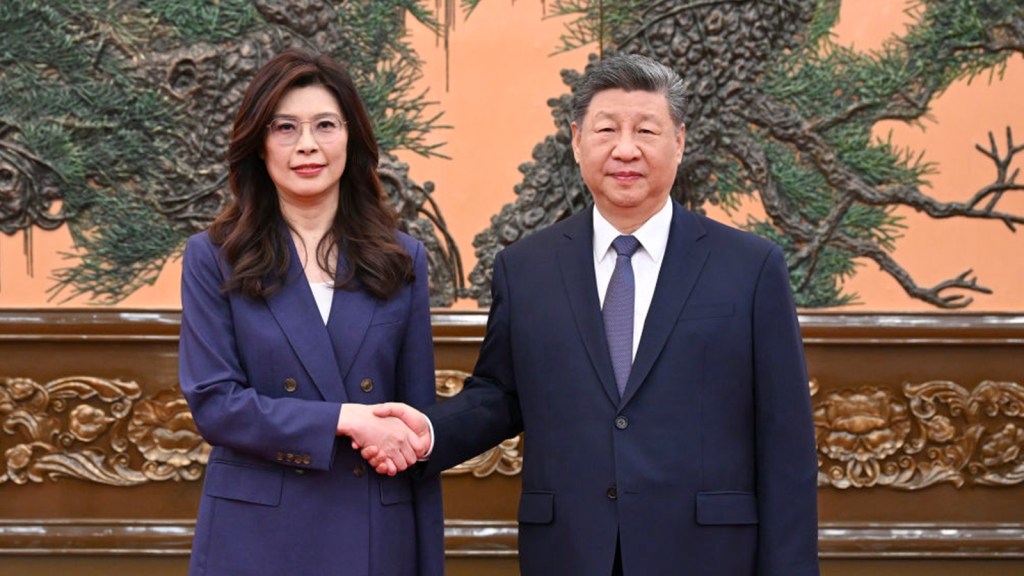 Chinese President Xi Jinping, right, shakes hands with Kuomintang (KMT) party leader Cheng Li-wun in Beijing on April 10, 2026. (Photo: Xie Huanchi/Xinhua via AP)
Given the traditional interactions between the Kuomintang and the Communist Party of China, the meeting earlier this month between Cheng Li-wun of Taiwan’s main opposition party and Chinese President Xi Jinping could have been treated as a routine affair. But it assumed significance for several reasons.
First, there is a growing realisation in China that its aggressive policies have emboldened the Taiwanese to assert self-rule, enabling the Democratic Progressive Party (DPP) to remain in power for the last decade. By inviting the KMT’s chairwoman, President Xi aimed to reaffirm historical, social, cultural, and ancestral linkages that connect people across the Taiwan Strait. Second, Cheng Li-wun’s visit was intended to depict that a peaceful solution to tensions regarding reunification could be possible if the KMT came to power in the 2028 presidential election. Third, it sent a message of peace and reconciliation to the rest of the world.


 Share


